




Seventeenth Century Gateleg Table
A seventeenth century gateleg table offers versatile folding leaves and sturdy turned supports, making it a practical antique centrepiece for modern dining spaces.
Seventeenth Century Gateleg Table
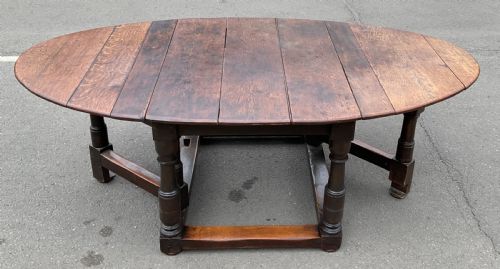
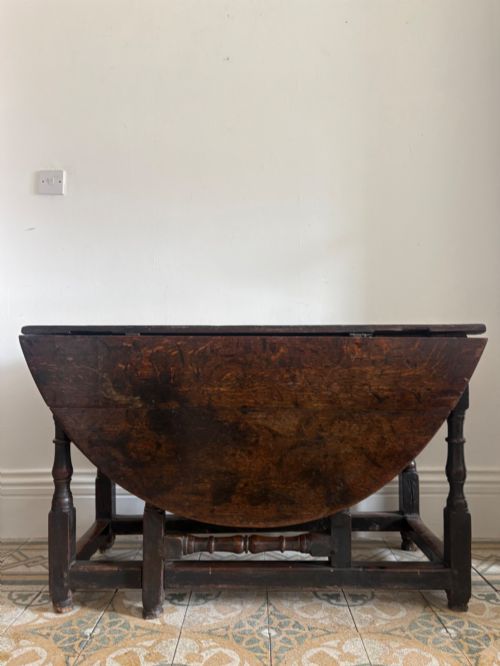
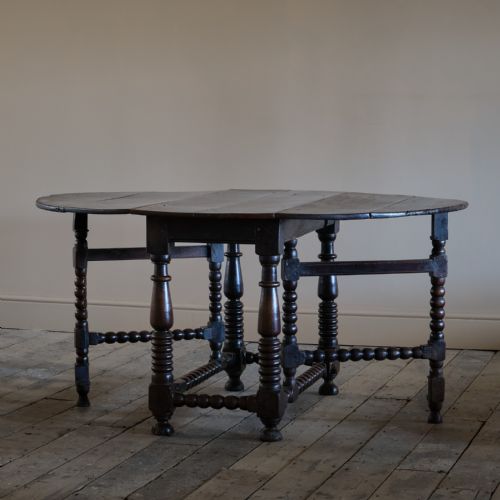
A seventeenth century gateleg table is a form of drop-leaf dining or side table designed to expand on swinging supports, known as gates. These pieces appear primarily in oak and occasionally in walnut, reflecting the domestic woodwork of the period.
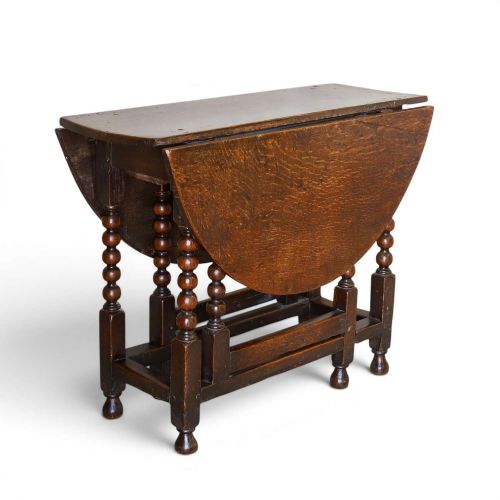
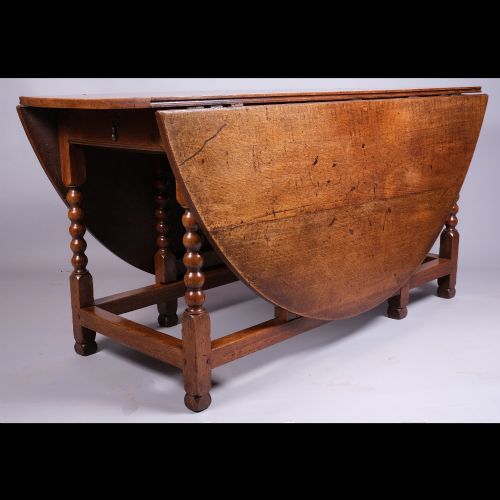
The versions most common on this page date from the seventeenth century and around seventeen hundred, alongside occasional nineteenth century interpretations in the Jacobean style. Forms range from compact small tables to large six-seater dining tables suitable for daily use.
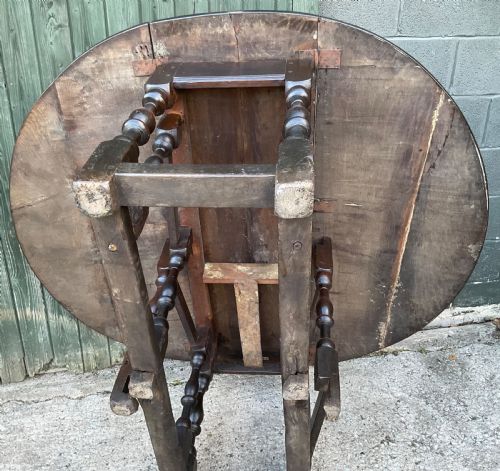
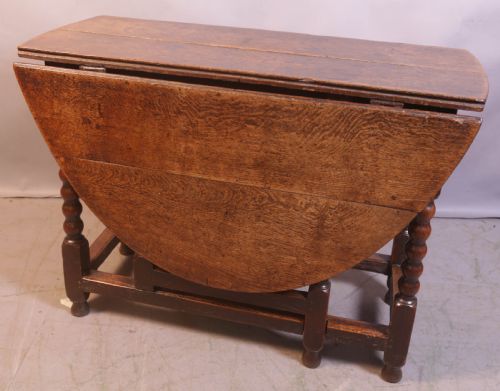
Makers constructed these tables with plank tops and hinged flaps that fold down when not in use, supported by hinged legs that swing outward. This clever mechanism allows a large surface area to collapse into a narrow footprint against a wall.
What varies in quality
The grade of timber and the complexity of the turned legs set different examples apart. Tables featuring intricate bobbin turned legs or substantial plank tops represent the finer end of the scale.
Proportion and scale also dictate quality, as larger six-seater dining tables require more complex framing to support the swinging gates than smaller side tables do.
Listings feature items spanning the seventeenth century, seventeen hundred, the eighteenth century, and eighteen fifty, constructed from oak, walnut, iron, and brass.
The Seventeenth Century Gateleg Table Glossary
- Gateleg table
- A table with hinged leaves supported by legs that swing outward like a gate. This design provides robust support for the drop leaves when open.
- Bobbin turned
- A style of turning on a lathe that produces a series of rounded, spool-shaped segments along the length of a leg. It appears frequently on seventeenth century furniture.
- Drop-leaf
- A hinged table leaf that folds down when unsupported and lifts up to expand the surface area. It rests on the swinging gate structure.
- Baluster leg
- A vertical architectural support shaped with a swelling contour, often found on seventeenth century tables. These turned elements provide solid structural framing.
- Jacobean style
- A heavy, formal design style associated with the early seventeenth century. It influences many oak tables produced in this period.
Seventeenth Century Gateleg Table: Frequently Asked Questions
How do I use a gateleg table daily?
Keep one or both leaves dropped against the wall to save space as a side table, then lift the flaps and swing the gate supports outward when you need a dining surface.
Ensure the swinging leg locks securely beneath the leaf before placing heavy items on the expanded table top.
What rooms suit a seventeenth century gateleg table?
These tables fit well in dining rooms, large kitchens, or living spaces where flexibility matters. The warm tones of solid oak complement both traditional and modern interiors.
Their narrow profile when folded makes them useful in hallways or behind sofas as occasional surfaces.
How can I tell the period of a gateleg table?
Examine the timber, construction marks, and turning styles to gauge age. Seventeenth century examples typically show solid oak construction with hand-turned bobbin or baluster legs.
Later nineteenth century revival pieces in the Jacobean style often display different tool marks and cleaner timber uniformity than genuine period items.
Are these tables sturdy enough for dining?
The structural design relies on swinging gates that take the downward pressure of the drop leaves. When properly aligned, the frame bears standard dining weight securely.
Avoid dragging the table while the leaves are extended and loaded, as lateral force can stress the hinge mechanisms and leg joints.