


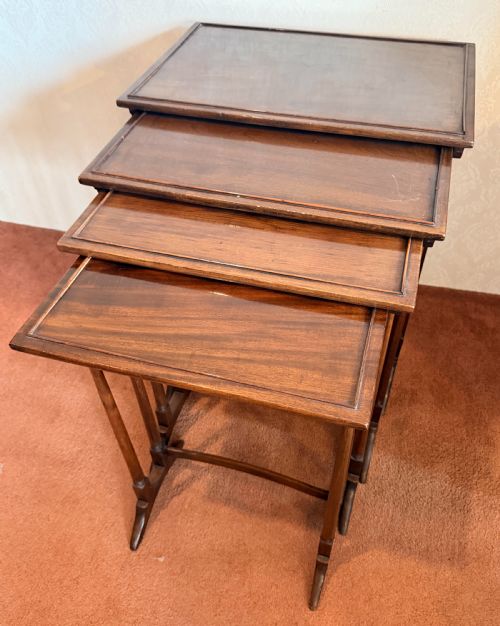
Set of Nesting Tables
A set of nesting tables offers multiple surfaces that tuck neatly together when space matters.
Set of Nesting Tables
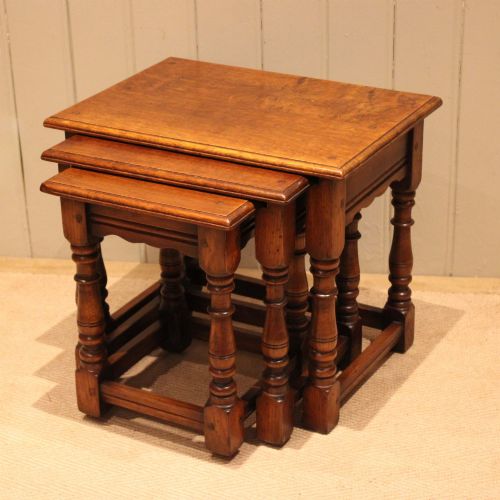
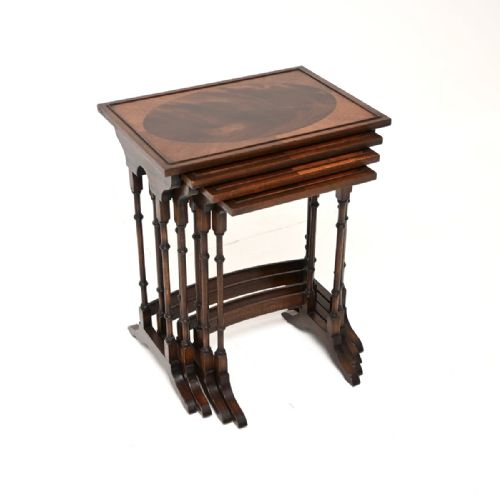
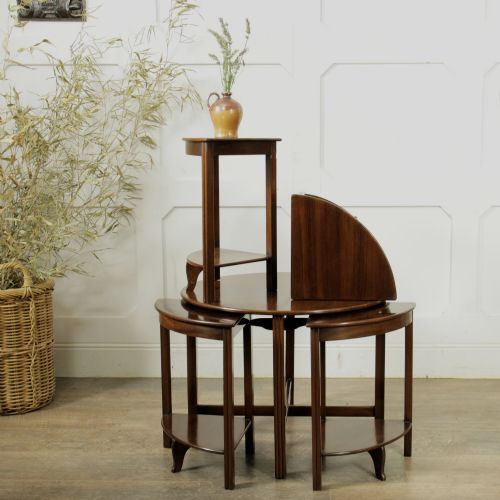
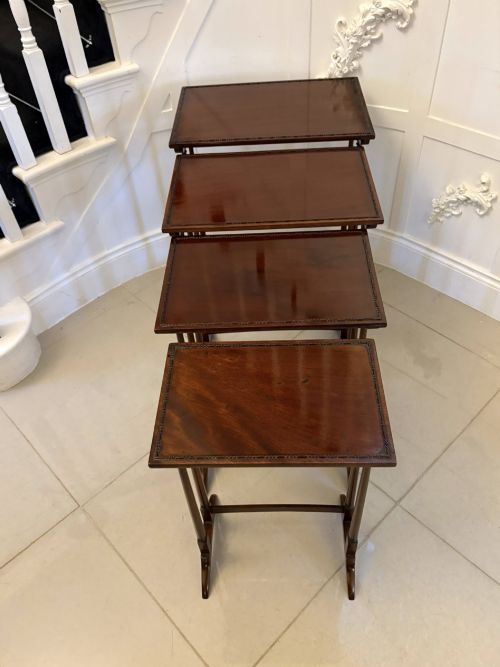
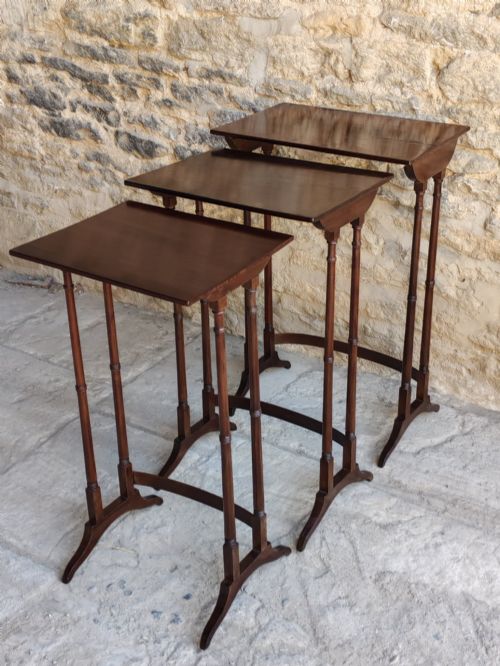
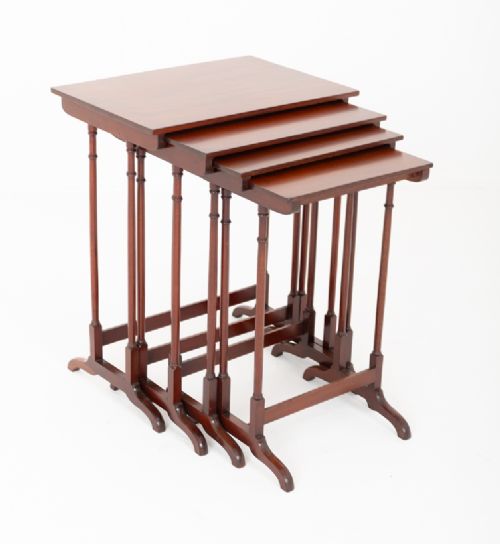
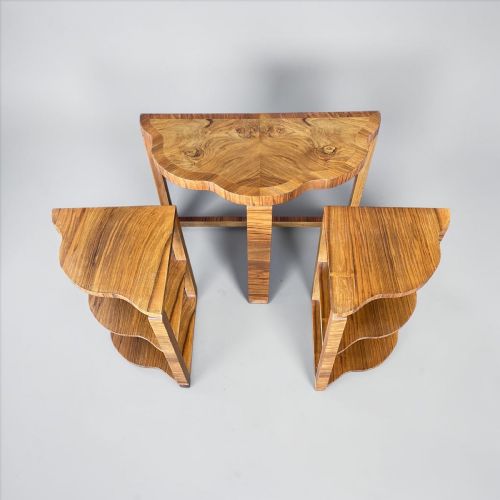
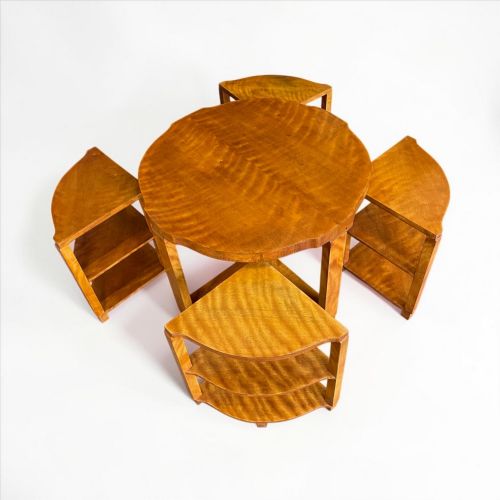
A set of nesting tables consists of graduated tables designed to slide one beneath another for compact storage. When you examine a set of nesting tables on this page, you will most frequently encounter Edwardian or 19th century examples alongside Art Deco pieces. These groupings typically comprise three or four pieces, though five-table sets and quartetto configurations appear regularly.
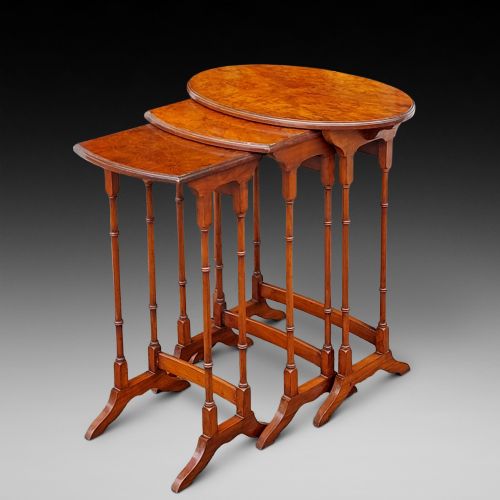
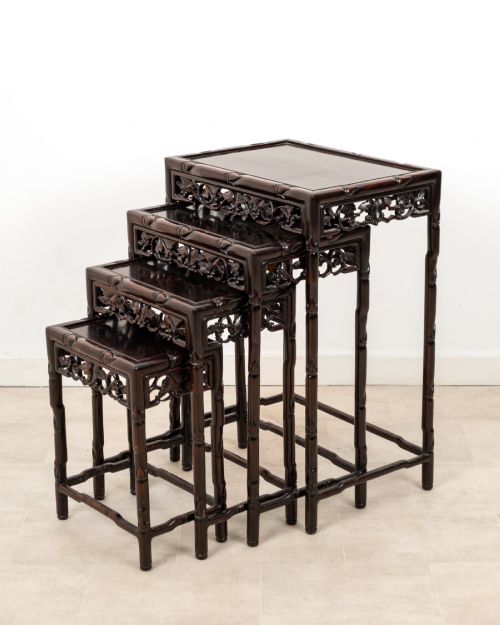
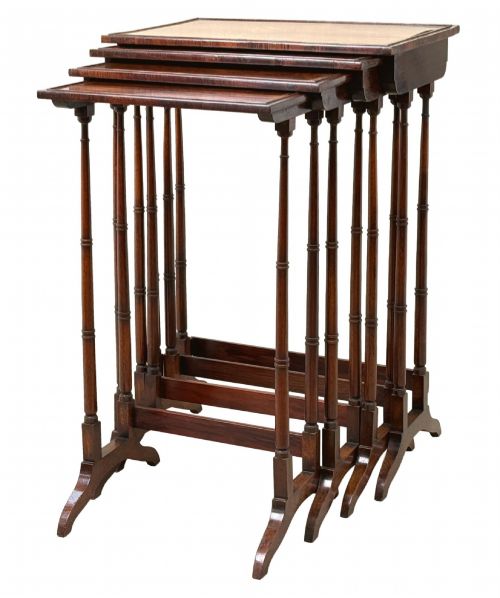
The forms range from rectangular coffee tables and circular tops to serpentine shapes in the Sheraton style. Workshops created them as occasional furniture, serving tea or holding small items in principal rooms without crowding the floor. Alongside standard timber versions, you find Chinese carved hardwood items and specialised sets incorporating lacquer or campaign styling.
How they were made
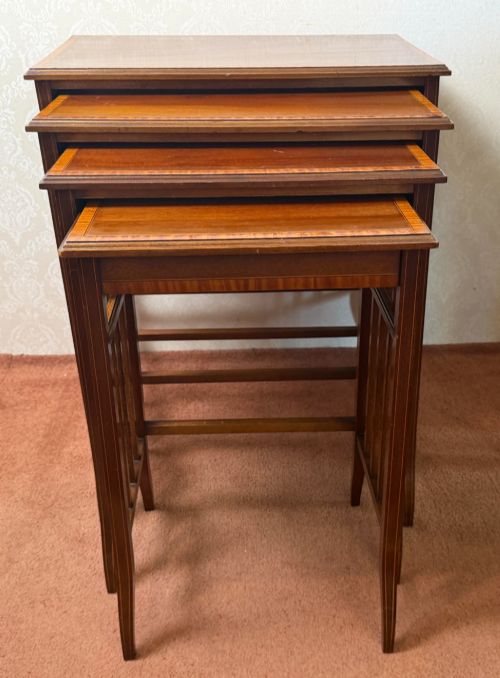
Cabinetmakers constructed these tables using timbers such as mahogany, walnut, rosewood, and satinwood, often applying burr veneers or cross banding to the primary surfaces. Many Edwardian and 19th century examples rely on square tapered legs for support, while inlaid decoration and painted floral details finish the tops. Chinese and Japanese pieces utilise dense hardwoods or lacquer techniques, sometimes featuring carved relief motifs.
Joinery had to remain precise because each frame needed to clear the legs and aprons of the table stored above it. Tables described as quartetto sets demonstrate this careful sizing, ensuring the smaller pieces slide smoothly into position. Finishers applied French polish or varnishes to protect the wood grain while highlighting figures in walnut and mahogany.
The archive records specialised sets including military campaign variants and pieces associated with the Cadbury family.
What varies in quality
Quality in a set of nesting tables shows in the crispness of the timber selection and the precision of the scaling. Better examples employ figured mahogany, burr walnut, or rosewood with matched veneers across the whole graduation. Finer sets include subtle inlay, satinwood cross banding, or detailed carving that remains sharp down to the smallest under-table.
Construction integrity dictates how well the tables survive daily sliding in and out of the main frame. Superior sets maintain tight joints and stable legs without excessive wobble in the smaller tiers. The handling of secondary woods and the neatness of the internal clearances separate standard utility pieces from high-workshop production.
Harry and Lou Epstein·Heal's·Gordon Russell
The Set of Nesting Tables Glossary
- Quartetto
- A matched set of four tables designed to nest together. This term appears frequently in 19th century and Edwardian cataloguing.
- Graduated
- Describing tables made in decreasing sizes so each smaller piece fits beneath the preceding one. This construction defines the nesting form.
- Cross banding
- A border strip of veneer laid around the edge of a table top with the grain running perpendicular to the centre panel. It frames the primary wood.
- Satinwood
- A pale, hard timber from tropical trees utilised for stringing, inlay, or full veneering on fine furniture. It provides a bright contrast to darker woods like mahogany.
Set of Nesting Tables: Frequently Asked Questions
What is a quartetto set?
A quartetto set is a specific arrangement of four tables designed to graduate in size and slide completely under one another. The term is common in nineteenth century and Edwardian descriptions.
These sets were built to occupy minimal floor space when not in use while providing multiple surfaces for tea or books.
How were nesting tables used?
They served as occasional furniture in drawing rooms and sitting rooms, pulled apart when visitors arrived. Individual tables could hold cups, reading material, or small decorative items.
When the gathering ended, the smaller tiers slid back into the main frame to clear the room.
How do I identify Edwardian examples?
Edwardian sets often feature inlaid satinwood stringing, mahogany frames, and lighter proportions than their Victorian predecessors. They frequently adopt Sheraton revival styles with square tapered legs.
Look closely at the secondary woods and the style of inlay to distinguish them from later twentieth century revivals.
Are Chinese nesting tables different?
Chinese nesting tables typically use heavy hardwoods such as huanghuali or dense rosewood, often featuring carved motifs or recessed panel construction. They follow traditional joinery methods distinct from European cabinetmaking.
These pieces emphasise carved relief and structural grain rather than applied veneer or inlaid stringing.