
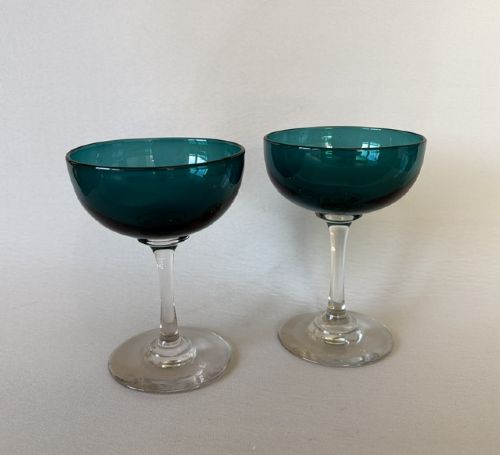
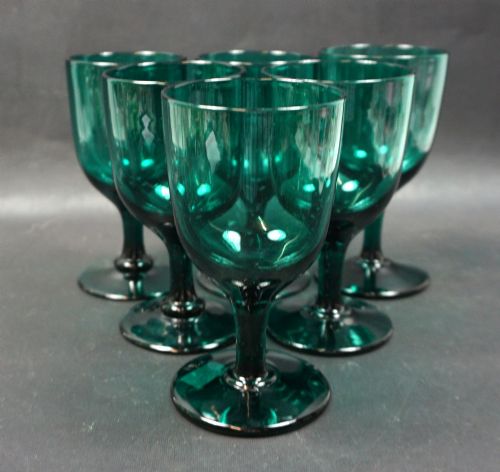


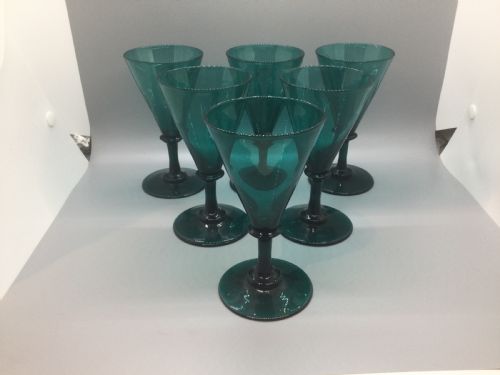


Set of Green Goblets
These set of green goblets bring distinctive colour and historical form to the table, offering a vibrant drinking vessel that collectors prize for period dining.
Set of Green Goblets
A set of green goblets comprises matched drinking vessels designed for wine, hock, cordial, or liquor, spanning periods from the Georgian era through to the early twentieth century. You meet English Bristol green examples alongside continental pieces from Bohemia, Germany, and Austria.
The forms range from tulip-shaped wine glasses and tall pale roemers to cut glass and enamelled crystal. Most listings consist of assembled sets of six or eight pieces, reflecting how these items survive together from past dining rooms.
Materials and methods of production
These pieces rely on glass, coloured glass, green glass, and crystal, frequently shaped through traditional blown glass and hand-blown glass techniques. Artisans achieved the characteristic colour through metallic oxide additions during the melting process.
Decoration includes applied enamel decoration and gold leaf details, alongside hand-cutting techniques that faceted the glass to catch the light. Continental workshops such as Theresienthal utilised precise enamelling upon crystal vessels.
Some nineteenth-century drinkers favoured emerald green glass because it allegedly disguised murky wine.
Distinctions in quality
Quality rests upon the depth and uniformity of the coloured glass, the precision of the hand-blown or cut facets, and the crispness of any enamel decoration. Earlier Georgian and Biedermeier examples demonstrate heavier metal and deeper hand-finished character.
The completeness and consistency of a set dictate its standing among collectors, as matched groupings of six or eight retain greater integrity than mixed survivals. Fine gilding and delicate hand-painted enamel work elevate the stature of late nineteenth and early twentieth century items.
The Set of Green Goblets Glossary
- Bristol green
- A deep, vibrant shade of green glass historically associated with English production around the port of Bristol. The colour varies from deep forest tones to lighter hues.
- Roemer
- A traditional continental European drinking vessel featuring a large bowl set on a ribbed or studded stem. They appear frequently in pale green glass from nineteenth-century Bohemia.
- Theresienthal
- A historic German glassworks known for producing fine crystal tableware and decorated stemware. Their pieces often feature intricate enamel work and high clarity.
- Biedermeier
- A Central European style spanning the mid-nineteenth century characterised by clean lines and functional elegance. Glassware from this period often displays skilled cutting.
- Hock glass
- A tall-stemmed wine glass traditionally used for white wine. These frequently appear in coloured glass variations with decorative bowls.
Set of Green Goblets: Frequently Asked Questions
What were green goblets used for?
These vessels served for drinking wine, hock, cordial, and liquor during formal meals and gatherings. The coloured glass helped mask the sediment in older wines while adding visual richness to the table.
Over time, specific forms evolved for different beverages, with smaller bowls reserved for cordials and larger tulip shapes dedicated to wine.
How do I date an old set?
Dating relies on examining the manufacturing technique, pontil mark evidence, glass tone, and decorative style. Georgian pieces show different weight and pontil characteristics compared to Victorian or Edwardian items.
Comparing the silhouette and cutting style against documented period pieces helps narrow down the decade of production.
Are these glasses safe to use?
While many collectors use antique glassware for special occasions, hand-washed care is essential to preserve fragile enamel and gold leaf. Sudden temperature changes should be avoided to protect the old glass.
Enamelled and gilded pieces require particularly gentle handling to prevent the loss of decorative details.
Why are some sets different sizes?
Hand-blown antique glassware naturally exhibits slight variations in height, bowl shape, and wall thickness between individual pieces. These differences confirm the manual methods used by historical glassmakers.
Complete sets often survived together because they remained in the same household cabinet for generations.