



Emerald Glass Stemware
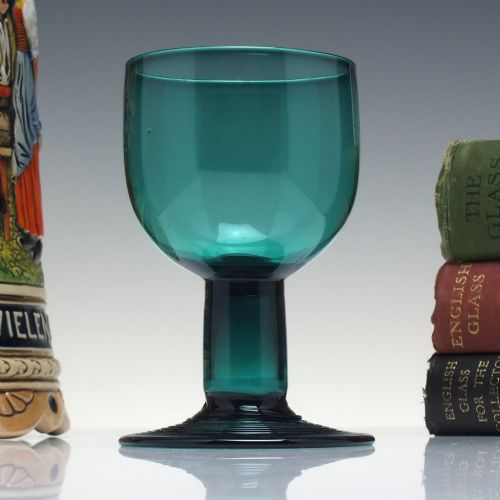
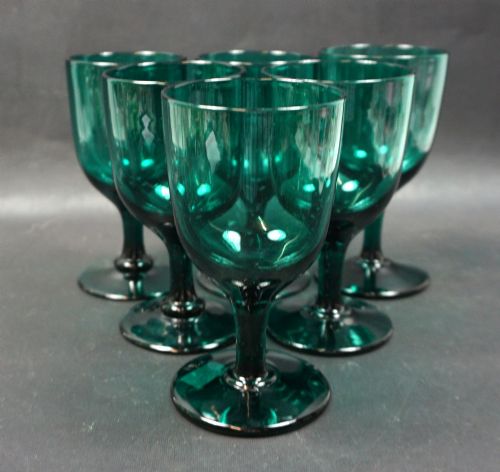
Emerald glass stemware brings rich colour to the table through Georgian, Victorian, and twentieth-century drinking vessels designed for wine and champagne.
Emerald Glass Stemware
Emerald glass stemware encompasses drinking vessels formed in striking green shades, spanning periods from the eighteenth century to the early twentieth century. Buyers seeking emerald glass stemware encounter various forms, most commonly wine glasses, hock glasses, dram glasses, and champagne coupes.
The selections on this page range from Georgian examples down through Biedermeier, Victorian, Edwardian, and Art Deco eras. English Bristol green glasses sit alongside French pieces from makers such as Baccarat and St Louis, as well as Bohemian Biedermeier work.
Materials and construction
These pieces rely primarily on glass, coloured glass, green glass, and hand-blown glass, shaped by hand or mould. Lead glass and lead crystal provide weight and clarity to the finer examples.
Makers utilised cased glass and cut crystal techniques to create depth of colour. Over-crystal methods involve layering green glass over clear crystal before cutting back the surface to reveal contrasting panels.
Some nineteenth-century drinkers favoured tiny dram glasses so deep in green they kept secrets from the bottom of the cup.
Assessing quality
Quality in emerald glass stemware rests on the depth and saturation of the green colour alongside the precision of the glassmaker's form. Hand-blown pieces show individual character in the bowl and stem, while cut crystal relies on crispness of facet work.
The complexity of the technique distinguishes the range, particularly where cased glass and overlay methods demand exact thermal control. Sets demonstrate higher uniformity and careful matching across every glass in the grouping.
Baccarat·St Louis·Massenet
The Emerald Glass Stemware Glossary
- Bristol green
- A strong, dark green glass traditionally associated with English production around the Bristol area. The colour derives from metallic oxides added during the melting process.
- Hock glass
- A tall-stemmed wine glass traditionally used for German white wines. These often feature coloured bowls, such as deep green, paired with clear or tinted stems.
- Cased glass
- Glass made from two or more distinct layers of different colours fused together while hot. Artisans then cut through the outer layer to expose the contrasting colour beneath.
- Dram glass
- A small drinking vessel used for spirits during the eighteenth and nineteenth centuries. They possess sturdy feet and short stems to suit robust everyday use.
- Champagne coupe
- A shallow, broad-bowled stemmed glass designed for sparkling wine. The wide bowl allows the bubbles to dissipate quickly while offering an elegant silhouette.
Emerald Glass Stemware: Frequently Asked Questions
How do I clean antique green wine glasses?
Wash these pieces by hand using warm water and mild detergent. Avoid abrasive sponges and dishwashers to protect the historic glass surface.
Dry them immediately with a soft linen cloth to prevent water spots and maintain the clarity of the coloured glass.
Can I use these glasses for modern dining?
Many collectors enjoy using antique stemware for special occasions. Hand-blown and cut crystal vessels add considerable visual weight and historic charm to a contemporary table.
Exercise care when handling eighteenth and nineteenth-century pieces, keeping them away from sudden temperature extremes.
What is the difference between Bristol green and cased glass?
Bristol green describes a solid, homogenous green glass body pigmented throughout. The rich tone is part of the base material rather than an applied coating.
Cased glass involves fusing a layer of green glass over a clear crystal core. Cutting through the green layer reveals the clear glass underneath in patterned designs.
How do I date antique emerald stemware?
Dating relies on observing form, pontil marks, weight, and cutting styles. Georgian and early Victorian pieces often show pontil scars on the underside of the base where the punty rod was detached.
Later Edwardian and Art Deco pieces display machine-smoothed bases, uniform mould seams, or distinct factory patterns associated with twentieth-century French glassworks.