

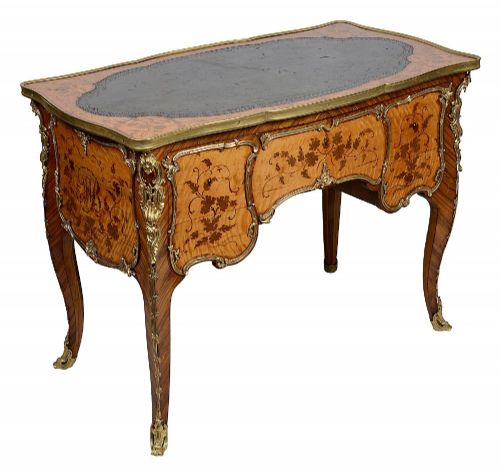
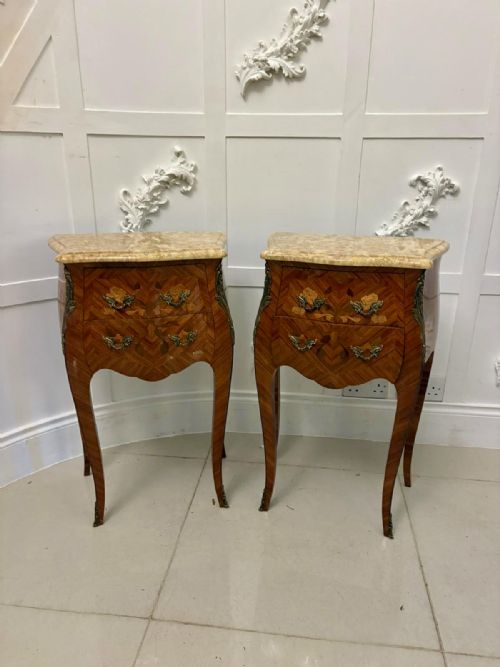
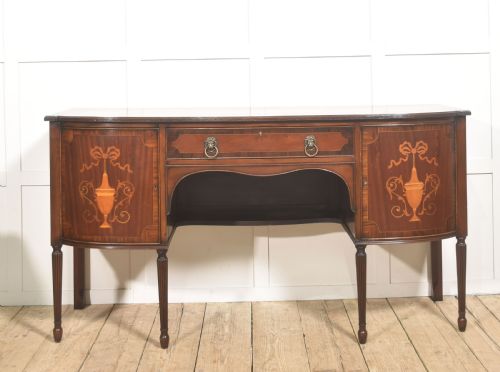
Serpentine Marquetry Table
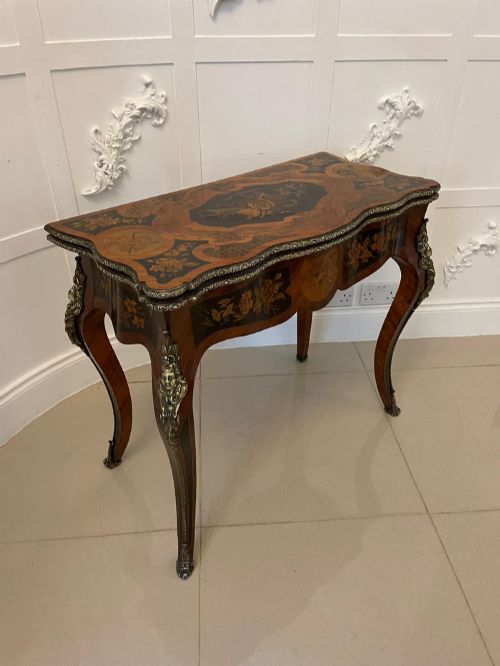
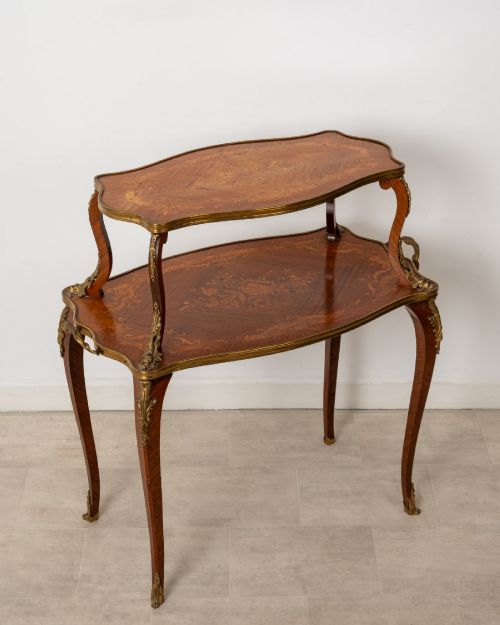
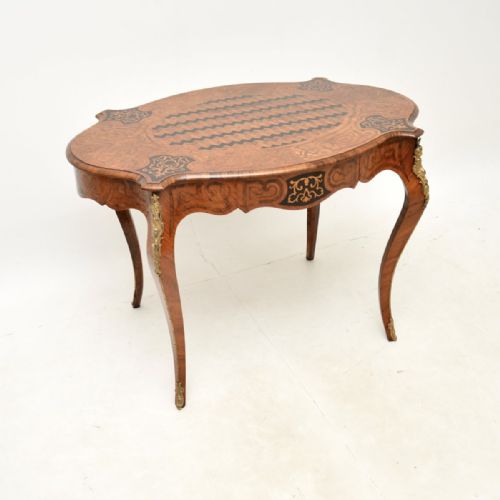
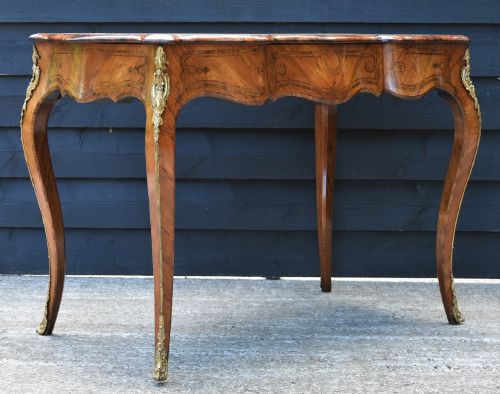
A serpentine marquetry table brings fluid curves and intricate wood inlay together, offering a centrepiece of refined continental and British craftsmanship.
Serpentine Marquetry Table
The pieces on this page stem largely from the nineteenth and early twentieth centuries, spanning Victorian, Edwardian, and various French revival periods. Continental workshops, particularly French makers inspired by Louis styles, produced many of the surviving examples found here.
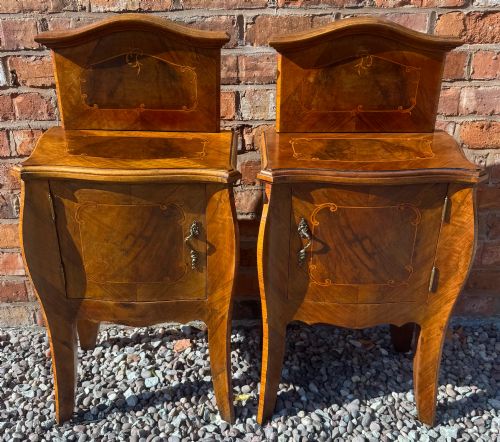
Buyers also encounter occasional British iterations influenced by Sheraton designs, utilising mahogany and satinwood alongside walnut. These tables served varying functions in historic drawing rooms and boudoirs, shifting from gaming surfaces to display furniture.
How they were made
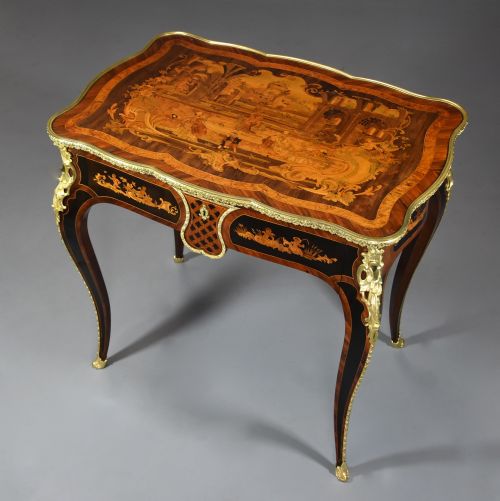
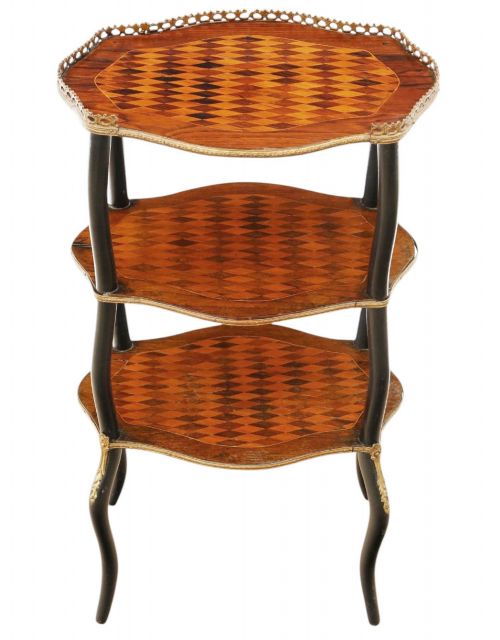
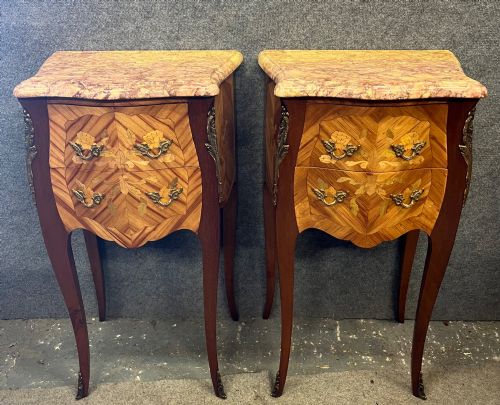
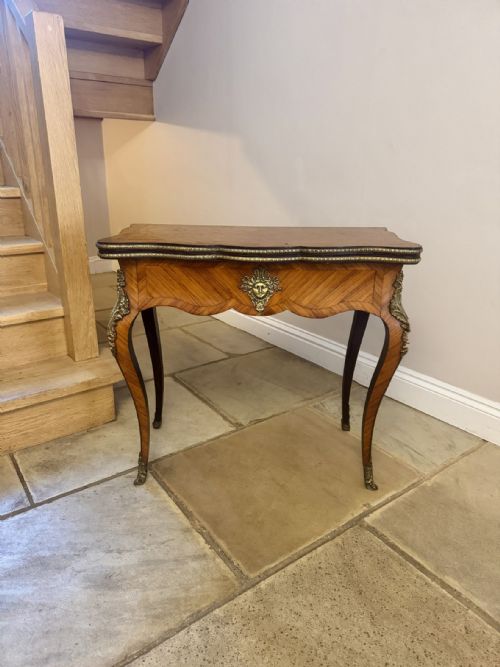
Cabinet makers built these tables using dense secondary timbers as carcases, onto which they laid fine veneers of kingwood, walnut, satinwood, and rosewood. Craftsmen cut contrasting wood veneers into floral and geometric pictorial motifs, assembling them by hand before gluing them to the curved surfaces.
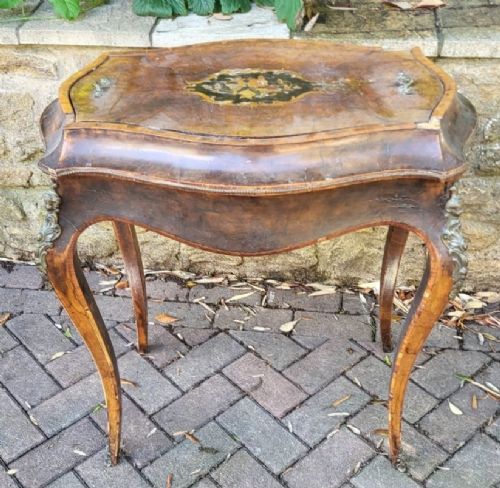
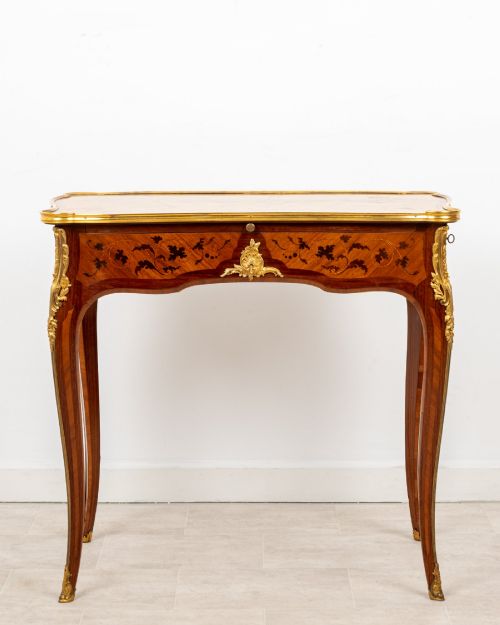
The undulating serpentine shape required precise shaping of the timber frame to ensure the inlaid veneers conformed to the sweeping contours without buckling. Ormolu mounts, cast in brass and gilt, were frequently added to protect and decorate vulnerable corners and legs.
Serpentine Marquetry Table Retail Price Guide 2026
Typical asking prices for serpentine marquetry table among the pieces listed under this phrase on Sellingantiques today, from the lower quarter to the upper quarter. They describe what is for sale here now, not the wider market.
Some tables hide clever compartments designed solely for secret notes or tiny trinkets.
What varies in quality
The precision of the veneer cutting and the complexity of the floral or geometric marquetry patterns dictate the upper tier of the range. Simpler surfaces with minimal inlay sit lower down, relying on the timber grain rather than pictorial skill.
The quality of the cast ormolu mounts and the smoothness of the serpentine curve execution separate standard production from exhibition pieces. Heavier, crisper mounts and seamless joining of the curved woodwork distinguish finer historic workshops.
Durand·Maison Millet·Edwards and Roberts·Gillows
The Serpentine Marquetry Table Glossary
- Marquetry
- Decorative veneer work forming pictures or patterns by assembling pieces of different coloured woods.
- Serpentine
- A curved furniture shape that sweeps inward centrally and outward at the ends.
- Ormolu
- Gilt bronze mounts applied to the edges and legs of fine furniture.
- Kingwood
- A dense, richly figured Brazilian timber frequently used in French veneer work.
- Étagère
- A set of open tiered shelves used for display.
- Bureau Plat
- A freestanding writing desk fitted with drawers.
Serpentine Marquetry Table: Frequently Asked Questions
What rooms suit a serpentine marquetry table?
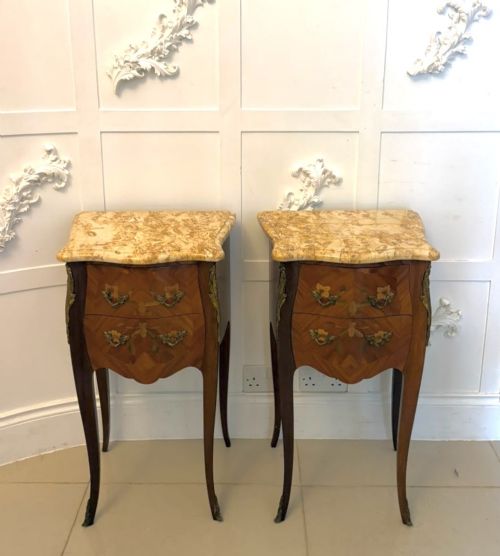
These tables find a natural home in drawing rooms, living areas, or large hallways where their curved silhouettes can be viewed from multiple angles. Card and writing variants function well as practical surfaces, while smaller bedside cabinets suit sleeping quarters.
The intricate wood inlay and polished veneers demand careful placement away from direct heat sources and strong sunlight. Pairing them with neutral backgrounds allows the detailed marquetry work to remain the focal point of the interior.
How do I care for antique wood veneer?
Maintaining these surfaces involves gentle dusting with a dry, soft cloth and avoiding silicone-based polishes. Occasional application of quality beeswax helps nourish the historic timber without harming the finish.
Keep the tables away from radiators and windows to prevent the underlying wood from drying out and causing the delicate veneer or inlay to lift. Stable room humidity preserves both the timber and any applied ormolu mounts.
Are these tables sturdy enough for daily use?
Most historic examples were built for active domestic service, though their decorative nature means they benefit from considerate treatment. Card tables and writing desks feature hinged tops or drawers designed for regular operation.
Heavier items like centre tables and sideboards provide solid support, but smaller occasional tables should not bear excessive weight. Checking joints and mount stability periodically ensures the piece remains secure.