


Secret Drawer Writing Box
A secret drawer writing box offers a neat private recess hidden beneath the fitted interior, rewarding the owner with a clever mechanical surprise.
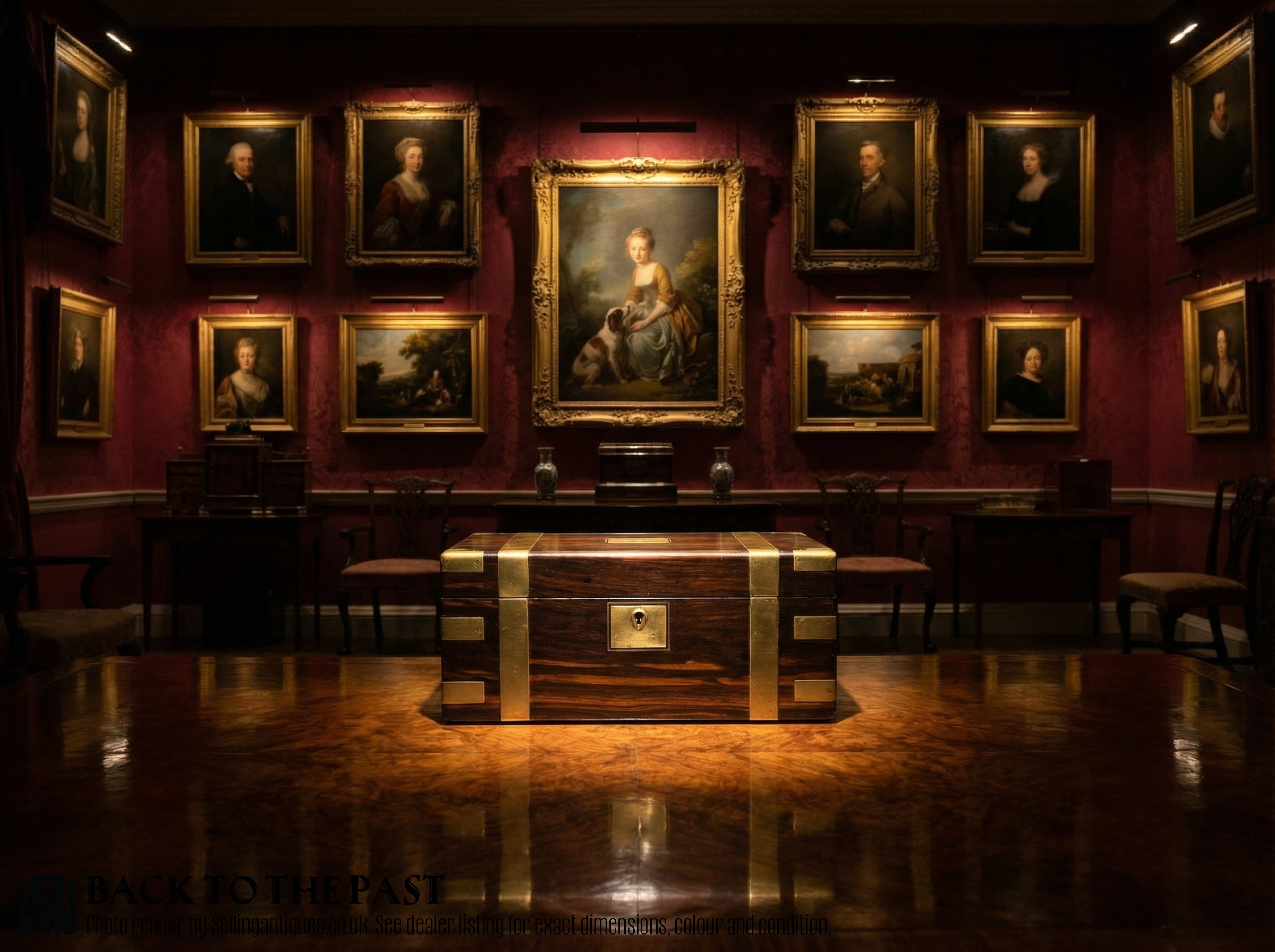
Secret Drawer Writing Box
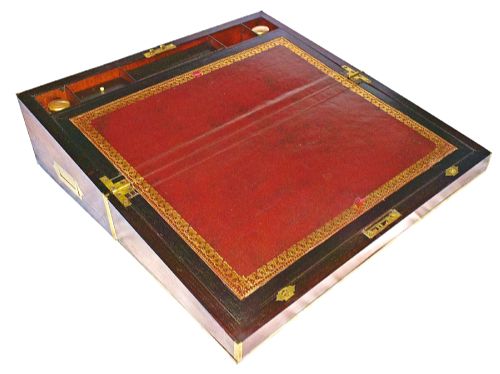
A secret drawer writing box is a portable desk designed for correspondence, constructed primarily during the Georgian and Victorian periods. These pieces open to reveal a sloping writing surface alongside compartments for inkwells and pens.
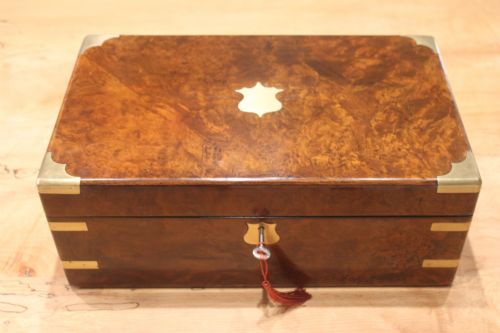
The versions met most frequently on this page are Victorian examples finished in figured walnut, burr walnut, or rosewood. Many incorporate campaign styling or brass binding designed to withstand travel.
How they were made
Cabinet makers utilised dense hardwoods such as mahogany, rosewood, and coromandel, often applying figured walnut veneers to the exterior surfaces. Timber selection governed both the visual richness and the structural stability of the box.
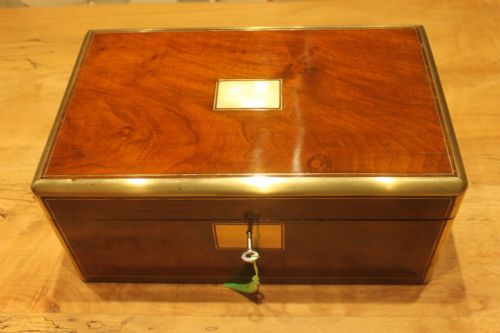
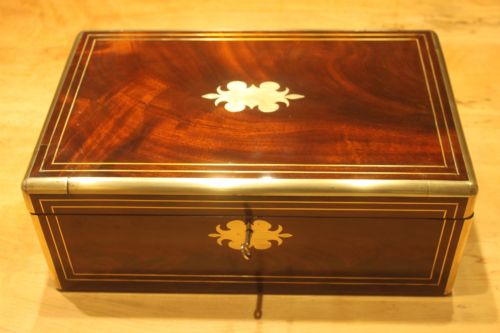
Brass featured heavily as an exterior reinforcement, appearing as flush corner mounts, edge banding, and intricate inlay work. High security was achieved through specialised mechanisms like Bramah locks fitted to the main compartment.
Listings feature Victorian and Georgian pieces constructed from walnut, rosewood, mahogany, and coromandel wood.
What varies in quality
Quality rests upon the selection of timber veneers and the precision of the brass work integrated into the exterior. Superior pieces display book-matched figuring across the walnut or rosewood surfaces and tight, exact joinery around the secret compartments.
The sophistication of the internal mechanism separating the secret drawers from the main stationery well marks the difference between standard production and superior craftsmanship. Original locks and integrated keys further elevate the standing of an individual box.
George Austin of Dublin
The Secret Drawer Writing Box Glossary
- Writing slope
- A portable box with a hinged, slanted lid designed to hold paper and provide a firm angle for handwriting.
- Bramah lock
- A patented high-security cylindrical lock mechanism invented by Joseph Bramah in the eighteenth century.
- Campaign style
- Furniture constructed for military travel, typically featuring recessed brass handles and reinforced protective corners.
- Coromandel wood
- A dense, heavily figured tropical timber prized for dark brown colouring and contrasting pale stripes.
Secret Drawer Writing Box: Frequently Asked Questions
What is a secret drawer writing box?
A secret drawer writing box is a portable wooden desk containing hidden compartments accessible only through specific mechanical releases or by removing internal partitions.
These boxes date primarily from the Georgian and Victorian eras, designed to keep personal correspondence and valuables secure.
How do you find the secret drawers?
Finding the secret drawers often involves lifting internal stationery partitions, sliding false floors, or releasing hidden spring catches within the pen wells.
Cabinet makers designed these concealed spaces to blend seamlessly with the surrounding timber when fully closed.
What woods were used for these boxes?
Maker workshops utilised dense hardwoods including mahogany, rosewood, coromandel, and walnut, frequently enhancing the exterior with figured or burr veneers.
Brass banding and corner mounts were commonly added to protect the edges during transport.
How do I date a writing box?
Dating relies on timber choices, brass hardware styles, and construction methods associated with Georgian or Victorian periods.
Georgian boxes tend to favour mahogany and rosewood with subtle inlay, while Victorian examples frequently showcase figured walnut and robust brass corner bindings.