
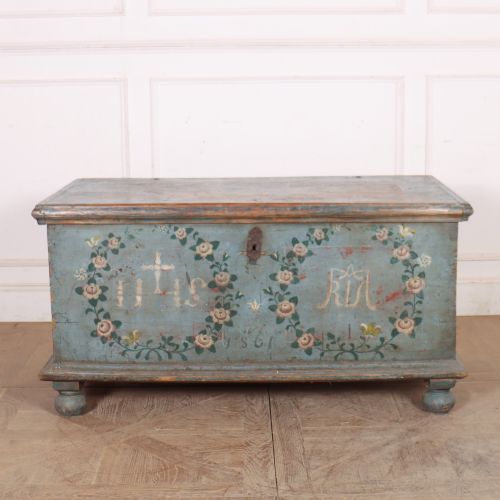


Scandinavian Country Trunk
A Scandinavian country trunk brings rugged folk art history into a modern room, offering durable storage with centuries of character.
Scandinavian Country Trunk
When you search for a scandinavian country trunk, you are looking at utilitarian storage pieces shaped by Scandinavian country life across the eighteenth and nineteenth centuries. These items range from dome-top coffers and marriage chests to small painted strong boxes and log bins.
The pieces you meet most often on this page are pine and oak structures carrying original hand-applied paint, pigment, or graining. They serve equally as practical blanket boxes or striking decorative accents in a rustic farmhouse interior.
How they were made
Local woodworkers built these items primarily from solid pine and oak, relying on robust joinery to withstand daily domestic use. Wrought iron and brass hardware, including strap hinges and metal bindings, reinforced the lids and corners of strong boxes and dome-top coffers.
Makers finished the timber with applied pigment and paint, creating distinct folk art surfaces that patinated deeply over generations. Woven pine also appears in utilitarian baskets designed for heavy household chores.
Several pine boxes on this page were once tasked with holding bridal linens before settling down as rustic coffee tables.
What varies in quality
Quality rests heavily on the integrity of the original paint surface and the survival of early pigment. Pieces retaining vibrant, untouched folk art decoration stand far above those stripped back or heavily retouched in later decades.
Construction details also dictate value, distinguishing simple utilitarian bins from finely dovetailed marriage chests and iron-bound coffers built by skilled regional joiners.
The Scandinavian Country Trunk Glossary
- Dome top
- A curved lid construction designed to shed water and increase internal capacity. This form is common on larger coffers and strong boxes.
- Marriage box
- A special gift container commissioned for weddings, often inscribed and decorated with folk art motifs. These pieces frequently date back to the eighteenth century.
- Pigment
- Coloured powder mixed with a binder to create the rich painted finishes found on Scandinavian folk pieces. Original pigment layers provide vital clues to a piece's age.
- Strong box
- A heavily reinforced wooden chest secured with iron bands and robust locks for valuables. They combine practical security with decorative rustic charm.
- Grained paint
- A decorative technique mimicking the richer patterns of exotic hardwoods using common pine. Painters applied this finish to elevate everyday furniture.
Scandinavian Country Trunk: Frequently Asked Questions
How do I clean a painted wooden trunk?
Dust the surface gently with a soft, dry cloth to protect fragile historical pigments. Avoid modern chemical polishes and water, which can damage delicate nineteenth-century paint.
Keep the trunk away from direct sunlight and severe temperature shifts to prevent the pine or oak from drying out and cracking.
Were these chests used for travel?
Most of these pieces served as stationary domestic storage within Scandinavian farmhouses rather than luggage. Strong boxes and dome-top coffers held family documents, textiles, and valuables securely in the home.
Their sturdy iron bindings and heavy wood construction made them practical for occasional relocation, but their primary life was settled.
How can I tell an eighteenth-century box from a nineteenth-century one?
Earlier eighteenth-century pieces often display distinct folk art marriage motifs and deeper patination accumulated over centuries of use. The construction methods, nail types, and pigment composition also shift perceptibly as you move from the 1700s into the Victorian era.
Examining the underside and interior boards reveals tool marks that help establish the era of manufacture.
What is Scandinavian folk art style?
This rustic aesthetic reflects the isolated rural traditions of northern Europe, where craftspeople decorated utilitarian objects with vibrant local pigments. It combines practical necessity with expressive painting, turning simple pine boxes into works of art.
The style embraces natural materials like wrought iron, wood, and pigment to create functional items with immense visual warmth.