


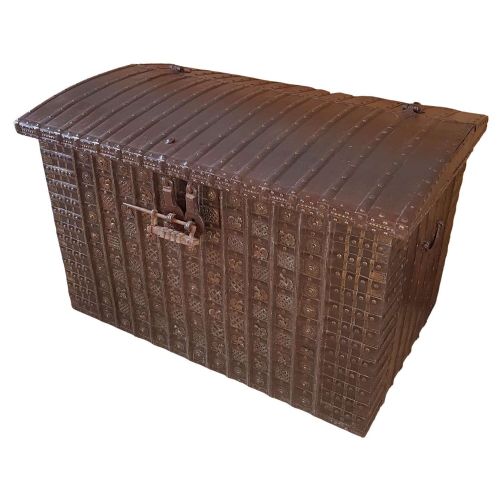


Metal Strapped Wooden Box
These metal strapped wooden box pieces are robust storage solutions offering historic character and enduring practical utility.
Metal Strapped Wooden Box
A metal strapped wooden box combines solid timber construction with supportive iron or brass bands to create durable containers designed for storage and travel. You will frequently encounter nineteenth century pine and oak examples, alongside older Scandinavian dome top coffers and dowry chests.
The assortment spans diverse regional origins, including English silver chests, German Renaissance caskets, Rajasthani dowry trunks, and Scandinavian folk art pieces. These items served distinct purposes from domestic linen storage to secure transport across land and sea.
Storage trunks and blanket boxes dominate the forms available, often featuring hinged lids and reinforced corners. Such pieces bring tangible historic texture into contemporary interiors while retaining their original utilitarian function.
Materials and construction
Carpenters constructed these items using native timbers such as oak, pine, and teak, joined to withstand heavy daily use. Wrought iron and brass bands were then applied across the exterior to reinforce the wooden panels against splitting and structural strain.
Blacksmiths hand-forged the metal straps, hinges, and corner plates, securing them with iron rivets or screws directly into the timber. Many pieces incorporate specialised locking mechanisms, adding security to the substantial wooden framework.
The documented periods span from the 16th century through the Victorian era up to 1910.
Distinctions in quality
Quality rests upon the integrity of the original timber and the craftsmanship evident in the metalwork. Finely forged iron straps and intact locking mechanisms elevate a piece above standard utility items.
The preservation of original surface finishes, whether waxed pine, painted folk art decoration, or polished oak, dictates the desirability of an example. Complete hardware and sound structural joinery distinguish superior survivals.
The Metal Strapped Wooden Box Glossary
- Dome top
- A rounded lid construction designed to shed water during travel and increase internal storage capacity. This profile appears frequently on eighteenth and nineteenth century trunks.
- Coffers and chests
- Heavy rectangular storage containers typically used for valuables or household textiles before the widespread adoption of fitted wardrobes. They represent some of the earliest forms of domestic furniture.
- Damchiya
- A traditional low dowry chest from Rajasthan, characterised by robust wooden framing and decorative iron banding. These regional pieces often feature intricate front panels and specialised locking systems.
- Silver chest
- A heavy-duty fitted storage trunk reinforced with iron straps, designed specifically to transport and protect valuable silverware. English oak examples often retain internal baize-lined compartments.
Metal Strapped Wooden Box: Frequently Asked Questions
How were these boxes used originally?
These containers served multiple roles, functioning as secure transport trunks for travel, domestic storage for blankets and linen, and dowry chests for household goods.
Heavier oak silver chests protected valuable tableware, while smaller caskets held documents and precious items.
What woods were commonly utilized?
Makers relied on durable local timbers suited to the region of origin, predominantly oak, pine, and teak.
Pine appears frequently in domestic blanket boxes and painted Scandinavian pieces, whereas English silver chests and Scandinavian coffers typically employ dense oak.
How do I date a metal strapped box?
Dating relies on assessing the construction techniques of the timber frame alongside the style of the forged iron straps and hinges.
Sixteenth and eighteenth century examples display hand-hewn joinery and distinctive blacksmith work, while nineteenth century pieces often incorporate factory-produced hardware and standardised locks.
Where were these pieces manufactured?
Production occurred across diverse global workshops, ranging from English cabinetmakers to German metalworkers and Rajasthani vernacular craftsmen.
Regional aesthetic traditions heavily influenced the decoration, resulting in distinct Scandinavian painted finishes and Anglo-Indian detailing.