


Scalloped Walnut Coffee Table
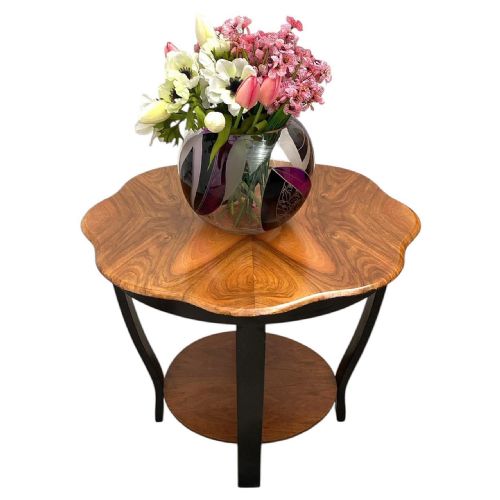
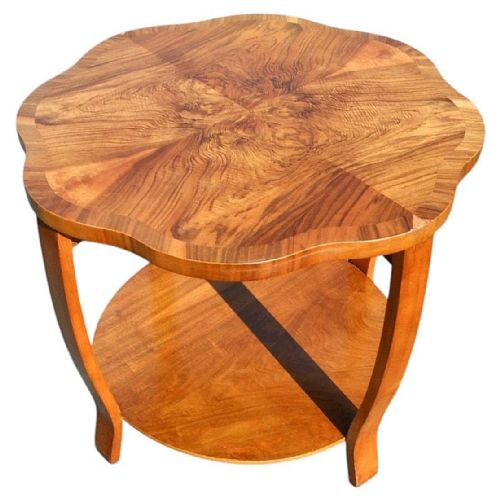
A scalloped walnut coffee table brings warmth and grain to a room, offering the distinct shapes seen across Art Deco and revival periods.
Scalloped Walnut Coffee Table
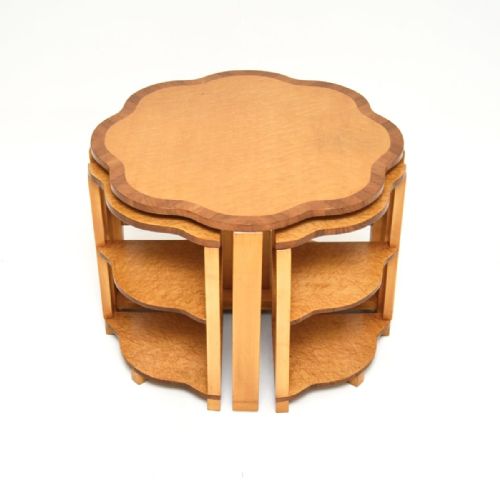
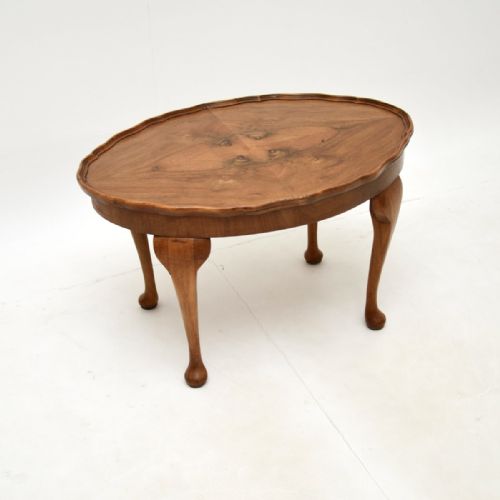
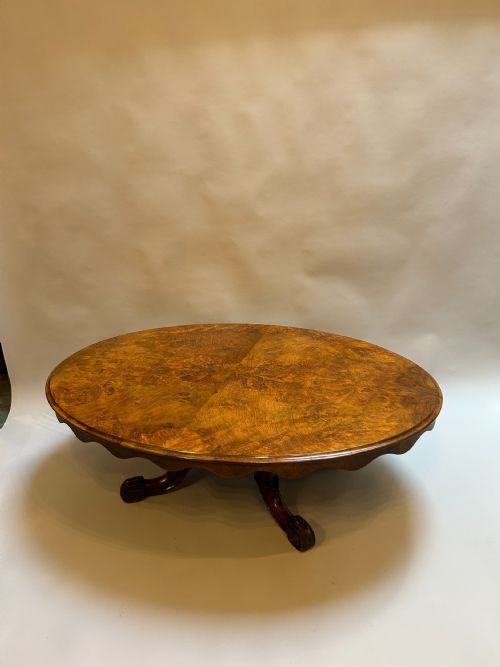
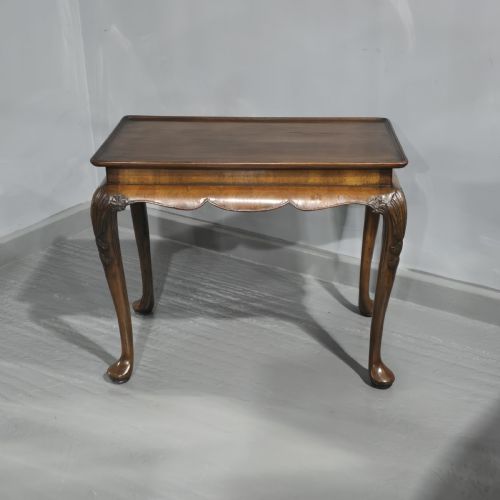
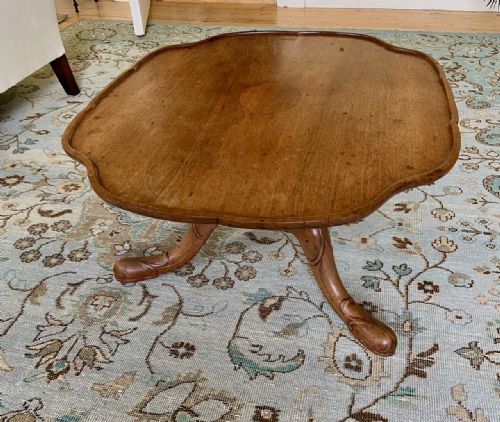
When you search for a scalloped walnut coffee table, you find low tables defined by shaped edges, circular tops, and nested forms. These pieces span the nineteenth century through the Art Deco era and mid twentieth century, drawing on Victorian, Edwardian, and Queen Anne styles.
You are most likely to meet examples from the nineteen thirties, often featuring figured veneer and tiered designs. Some pieces adopt traditional pie crust edges, while others lean into clean geometric lines or incorporate bird's eye maple.
Materials and construction
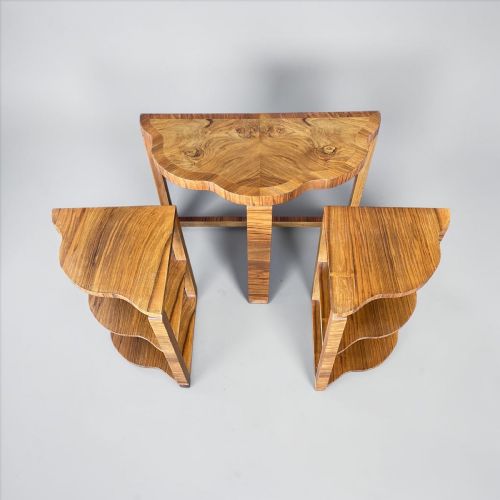
These tables rely on timber and veneer, utilising figured walnut, burr walnut, and standard walnut to create striking grain patterns across the surface. Cabinet makers applied thin veneers over solid wood foundations to showcase the natural figuring of the material.
Alternative timbers such as bird's eye maple appear in multi-tiered nesting sets, whilst occasional pieces incorporate copper or brass elements within brazier forms. Construction methods combine traditional joinery with period veneering techniques.
One unexpected inclusion steps outside standard table forms entirely, offering a nineteenth-century Spanish brass brazier.
Markers of quality
Quality rests in the choice and matching of the veneer, where book-matched figured walnut creates symmetrical patterns across the table top. The crispness of the shaped or pie crust edge also dictates the refinement of the piece.
The integrity of the multi-tiered structures and nesting fits separates standard production from finer workshop output. Maker attribution, such as work by Whytock and Reid, elevates the standing of an individual table.
Whytock and Reid
The Scalloped Walnut Coffee Table Glossary
- Pie crust edge
- A raised, scalloped perimeter carved or moulded onto a circular table top. This decorative border resembles the fluted edge of pastry.
- Figured walnut
- Timber exhibiting irregular, highly decorative grain patterns caused by growth anomalies. Cabinet makers prize this wood for table surfaces.
- Burr walnut
- Wood taken from the wart or burl of a walnut tree, producing dense, swirling clusters of knots. It creates a rich, mottled texture on antique furniture.
- Nesting tables
- A set of graduated tables designed to fit neatly beneath one another. They save space while providing multiple surfaces when needed.
Scalloped Walnut Coffee Table: Frequently Asked Questions
What periods do these tables come from?
The pieces span from the nineteenth century through the Edwardian era and into the Art Deco period of the nineteen thirties.
Most examples lean towards twentieth-century modernism or revivals of earlier traditional designs.
How do I identify figured walnut?
Figured walnut shows distinctive, wavy grain patterns that catch the light differently across the surface.
It differs from plain timber through its decorative movement and rich colour variation.
Are nest of tables practical?
Nesting sets offer flexible surface space that stores away beneath the main table when not in use.
They work well in smaller rooms where floor space is at a premium.