





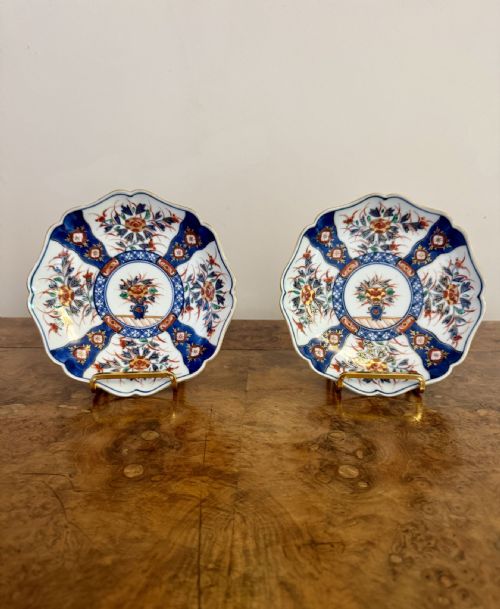
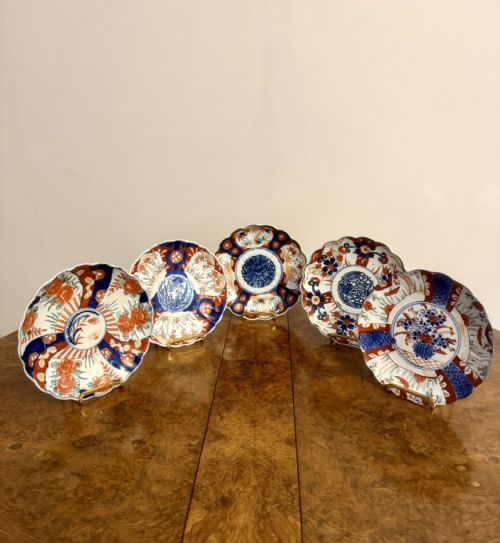
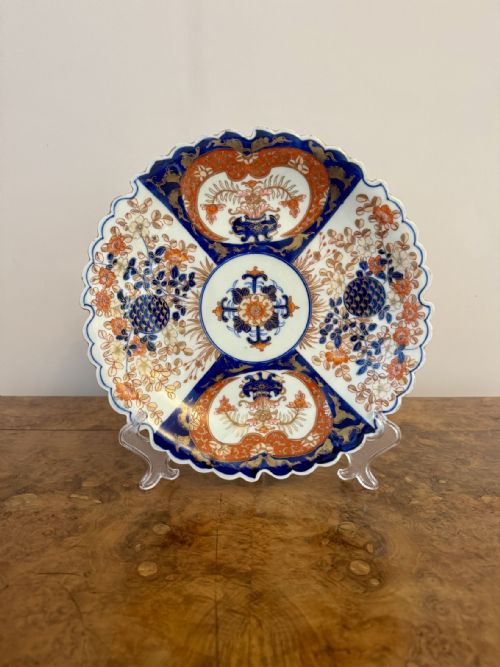
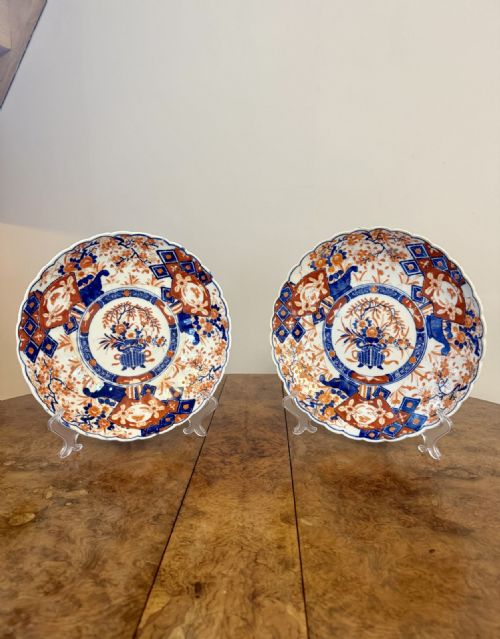

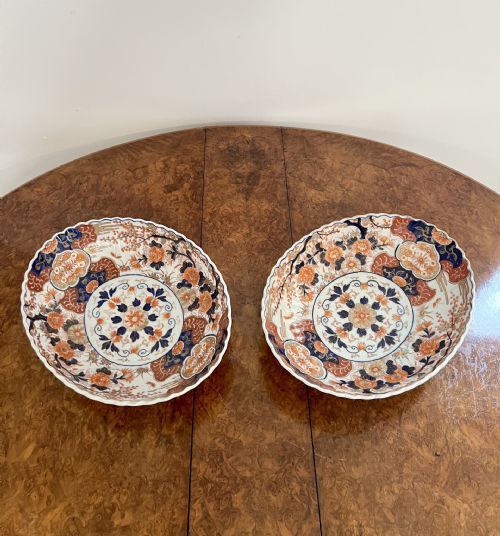

Scalloped Porcelain Display Dish
These scalloped porcelain display dish examples span the 18th century to the Edwardian era, predominantly showing Japanese Imari and traditional European forms.
Scalloped Porcelain Display Dish
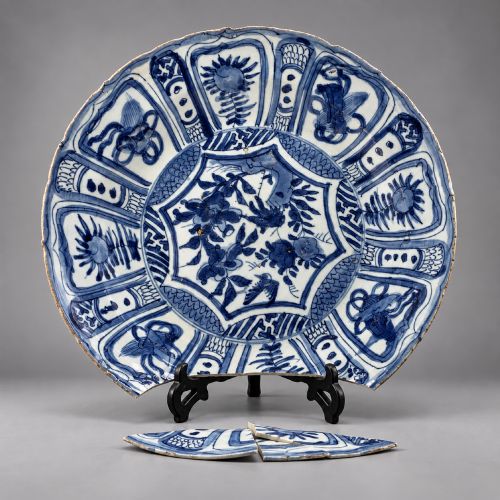
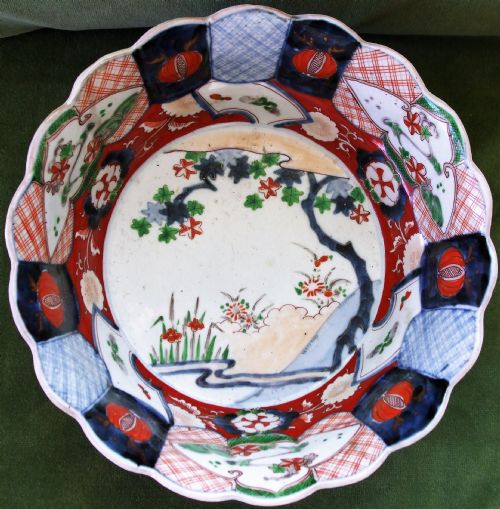
A scalloped porcelain display dish takes the form of chargers, bowls, and decorative plates designed primarily for visual appreciation rather than daily utility. The vast majority of examples encountered here originate from the Japanese Meiji period and the wider 19th century.
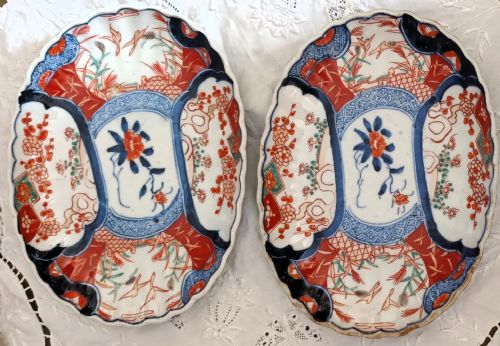
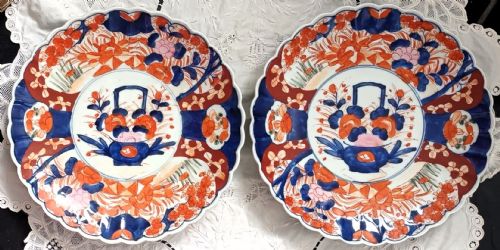
Makers shaped these surfaces with lobed or wavy edges, often pairing the porcelain body with floral, bird, or figural motifs. Collectors find both single decorative pieces and matched pairs spanning Victorian production and 18th-century European porcelain.
Materials and construction
Potters built these pieces from hard-paste or soft-paste porcelain, shaping the rims into distinct curved lobes before firing. Artisans applied cobalt underglaze pigments to the clay body to establish deep blue foundational tones.
Overglaze enamel colours, including iron red and gold leaf highlights, were added in subsequent firings to create rich surface detail. Gilding and meticulous hand painting complete the decoration on both chargers and smaller display plates.
Several plates depict the Seven Lucky Gods, proving that even divine figures occasionally require a large porcelain charger to sit upon.
Judges of quality
Quality rests in the precision of the hand painting and the crispness of the scalloped edge shaping. Superior pieces display finely detailed brushwork depicting complex subjects like exotic birds or the Seven Lucky Gods.
The clarity of the cobalt underglaze and the preservation of the overglaze enamel and gold leaf determine the standing of an individual charger or plate within its period.
The Scalloped Porcelain Display Dish Glossary
- Imari
- A style of Japanese porcelain featuring a distinct palette of cobalt blue, iron red, and gold, named after the port of export. These wares gained immense popularity across Europe during the 18th and 19th centuries.
- Charger
- A large decorative plate utilised primarily for display on a sideboard or wall rather than for serving food. Chargers often measure twelve inches or more across.
- Overglaze enamel
- Pigments applied over the fired and glazed porcelain surface before undergoing a lower temperature kiln firing. This technique allows for a broad spectrum of bright decorative colours.
- Cobalt underglaze
- Blue pigment applied directly to the raw porcelain body prior to glazing and high-temperature firing. The resulting colour sits beneath a protective glass layer, ensuring longevity.
- Scallop edge
- A decorative rim contour formed of curved indentations resembling a scallop shell. This shaping requires skilled hand manipulation of the soft clay before drying.
Scalloped Porcelain Display Dish: Frequently Asked Questions
How should I display a scalloped porcelain display dish?
These decorative plates and chargers suit wall mounting using specialised wire hangers or placement on sturdy plate stands. Ensure the display location avoids direct, harsh sunlight to protect the overglaze enamels and gilding.
Larger chargers look particularly striking as focal points on sideboards, while smaller dishes can be grouped in collections to showcase varying Imari patterns and Meiji period designs.
How do I identify a Meiji period piece?
Meiji period porcelain often exhibits the characteristic Imari palette with dense floral, bird, or figural compositions. The period spans from 1868 to 1912, aligning with the late 19th-century dates common on these chargers and bowls.
Examine the weight, the execution of the cobalt underglaze, and the hand-painted overglaze details to differentiate these Japanese exports from later reproductions or European copies.
What does Imari mean on a porcelain dish?
Imari refers to the Japanese port from which these distinct blue, red, and gold porcelain items were shipped to Europe. The style combines underglaze cobalt blue with vibrant overglaze enamel and gilding.
Potters across Japan produced these decorative dishes for both domestic and international markets, creating a visual tradition that endured for centuries.