




Hand Painted Imari Vessel
These hand painted imari vessel examples bring striking iron-red and cobalt blue palettes to any room, offering rich historical ceramic artistry.
Hand Painted Imari Vessel
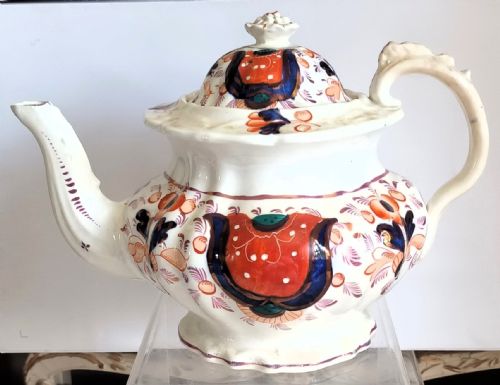
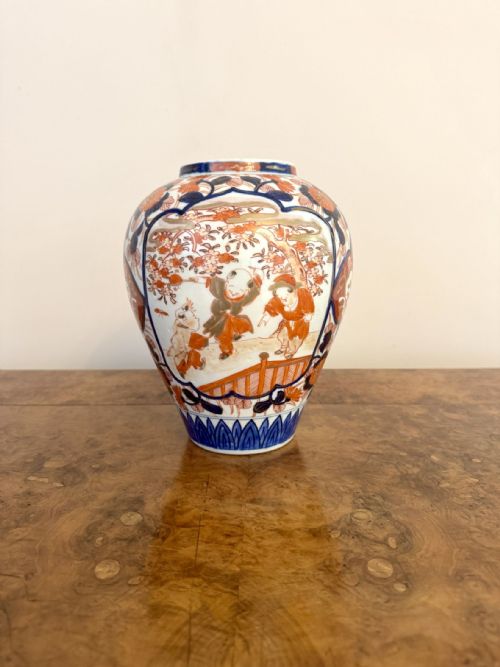
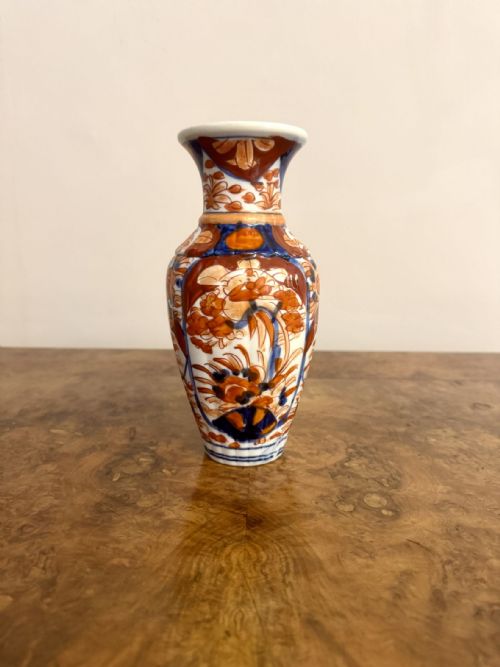
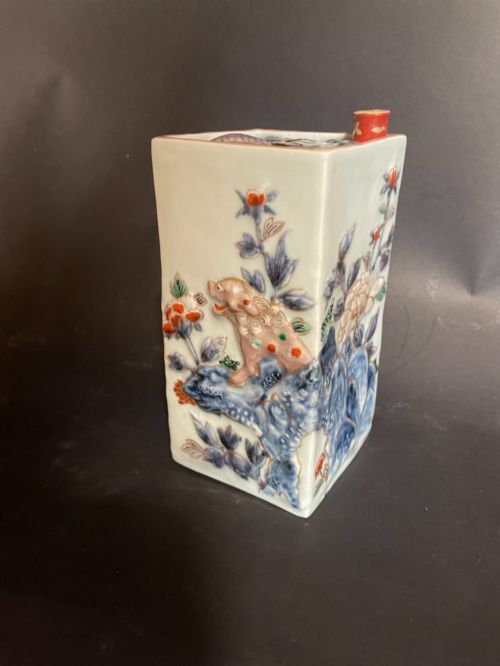
A hand painted imari vessel brings together distinct decorative styles from Japanese and British ceramic traditions. When searching for a hand painted imari vessel, collectors encounter forms ranging from large garden planters and ginger jars to delicate teapots and bottle vases.
The selection here draws primarily from nineteenth-century Japanese Meiji production, alongside eighteenth-century Arita pieces and twentieth-century Showa examples. British interpretations such as Georgian Gaudy Welsh teapots also appear among these listings.
Vessels span varied functional shapes, including lidded koros, shaped bowls with scalloped edges, and tall decorative vases. Each object displays the characteristic palette associated with this enduring aesthetic.
Materials and construction
Potters shaped these objects using porcelain, bone china, and earthenware bodies before applying underglaze cobalt blue and overglaze iron-red pigments. Artisans then added details using gold leaf and gilt highlights to enrich the decorated surfaces.
Firing techniques required multiple stages to fix the dense enamel colours and glaze layers onto the ceramic base. Craftsmen executed these intricate floral and geometric motifs entirely by hand.
Some nineteenth-century makers packed their delicate porcelain jars so securely for export that fragments of original straw bedding occasionally emerge in old crevices.
Evaluating quality and execution
Quality rests upon the precision of the hand painting and the crispness of the porcelain or earthenware form. Finer examples display tightly controlled enamel work and well-preserved gilding that remains intact across the decorated surface.
The sophistication of the vessel shape, such as complex hexagonal sections or well-balanced lidded forms, distinguishes superior pieces from standard production. Age and origin further influence the character of each ceramic.
Royal Crown Derby·Fukagawa
The Hand Painted Imari Vessel Glossary
- Imari
- A style of Japanese porcelain decorated in underglaze blue, iron-red, and gilt. It originated in the town of Arita and was exported extensively through the port of Imari.
- Meiji Period
- A period of Japanese history dating from eighteen sixty-eight to nineteen twelve. Ceramics from this era often feature highly intricate hand-painted enamel decoration.
- Tokuri
- A traditional Japanese sake flask characterised by a narrow neck and bulbous body. These ceramic vessels were designed for serving rice wine.
Hand Painted Imari Vessel: Frequently Asked Questions
What is an imari vessel?
An imari vessel is a ceramic piece decorated in a distinctive palette of cobalt blue, iron-red, and gold. These items originate from traditional Japanese kilns as well as later European interpretations.
Potters applied these rich colours by hand to create intricate floral and panel designs on porcelain or earthenware bodies.
How do I date an imari piece?
Dating relies on examining the ceramic body, the pigments used, and the style of the hand-painted motifs. Pieces from the eighteenth century often display heavier potting and deeper cobalt tones.
Later Meiji and Showa examples introduce sharper enamel colours and different glaze formulations. Comparing the form against known historical periods helps narrow down the era.
Where were these vessels made?
Many of these pieces were produced in Japan, specifically around Arita, before being shipped through the port of Imari. Other examples originate from British potteries influenced by Eastern design.
Both regional traditions utilised similar colour schemes while maintaining distinct potting techniques and clay compositions.
How should I display these ceramics?
These decorative objects suit placement on sturdy sideboards, mantels, or within cabinets where their colourful glazes catch the light. Their bold patterns work well as standalone focal points.
Keeping them away from direct sunlight preserves the vibrancy of the overglaze enamels and gilt highlights over time.