



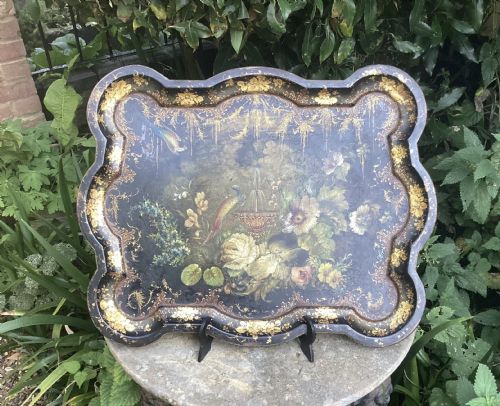
Scalloped Lacquered Tray
A scalloped lacquered tray brings a rich, dark surface and gilt detail to a room, offering both decorative presence and practical utility.
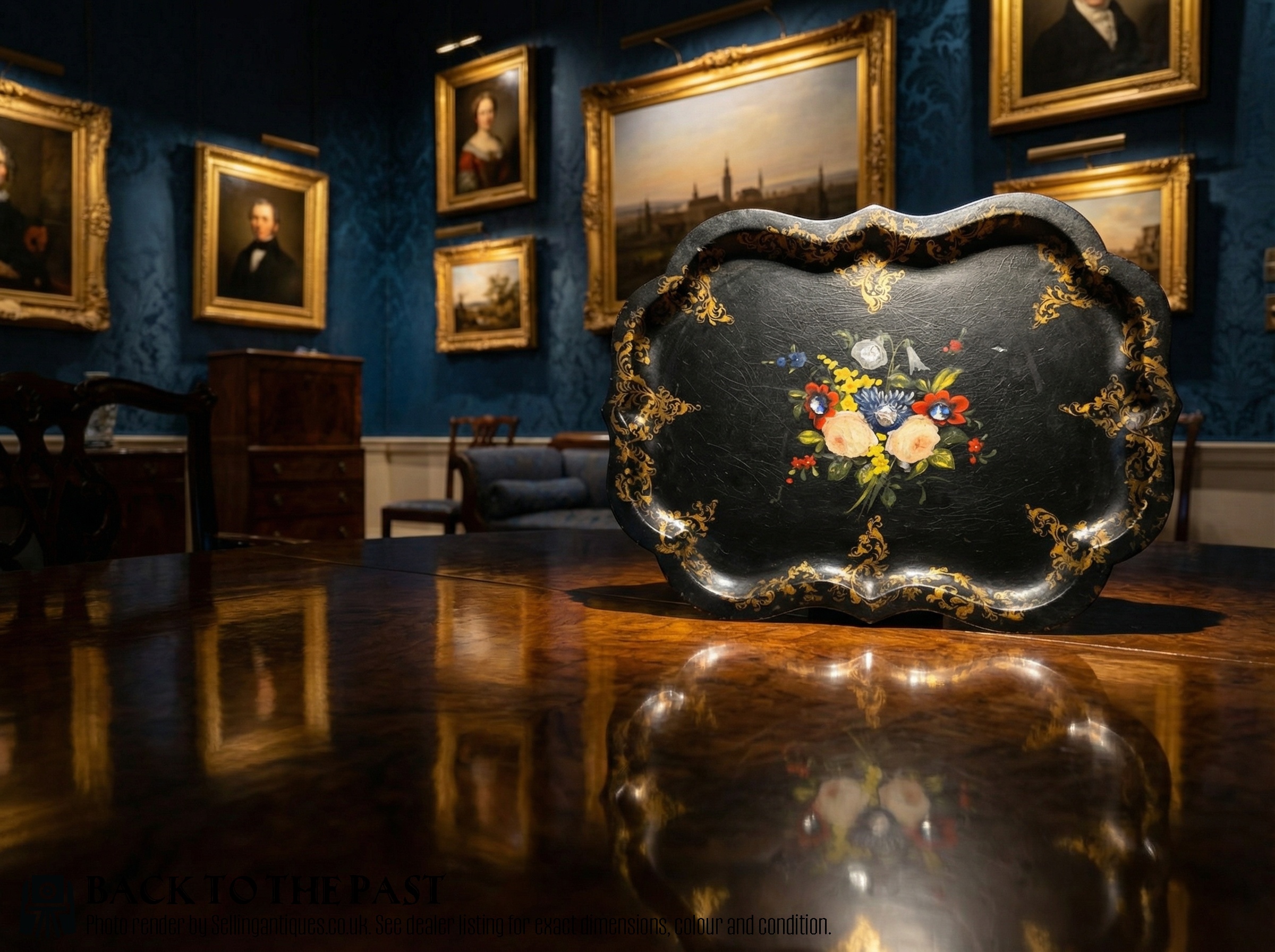
Scalloped Lacquered Tray
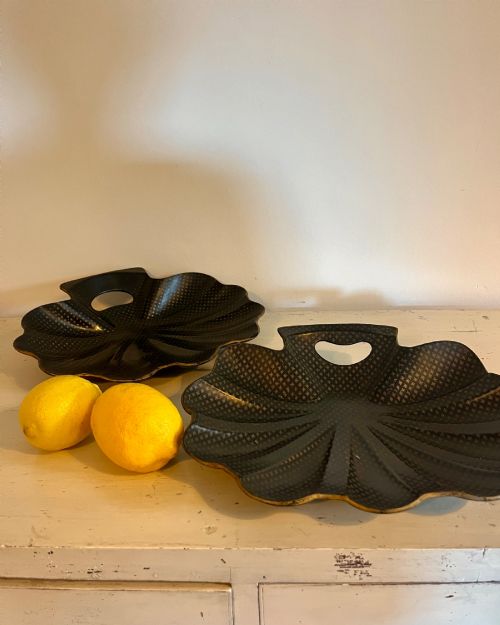
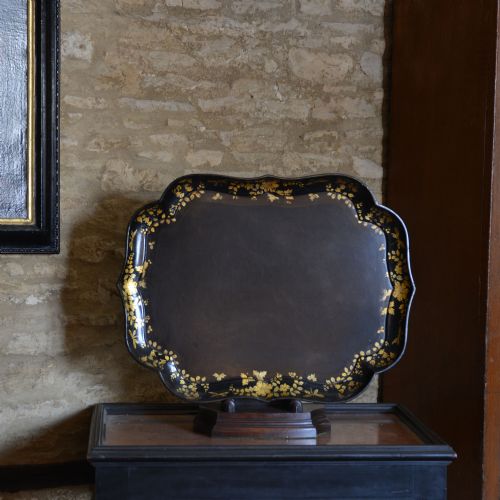
A scalloped lacquered tray is a decorative and serving object shaped with undulating edges, typically finished in glossy dark coatings. These pieces emerge across the nineteenth century, encompassing Regency, Victorian, and French Napoleon III periods.
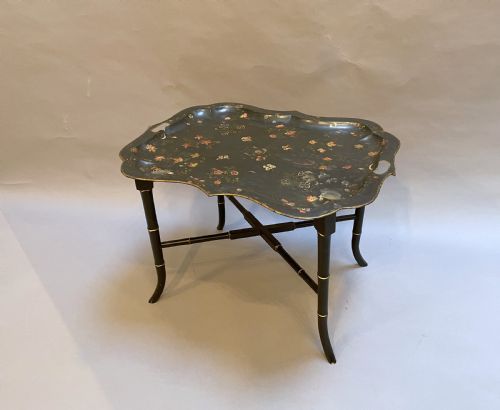
The form appears as standalone serving trays, as well as resting upon later stands or iron frames to function as occasional tables and side tables. Surfaces often display intricate painted decoration or Chinoiserie designs alongside gilt embellishments.
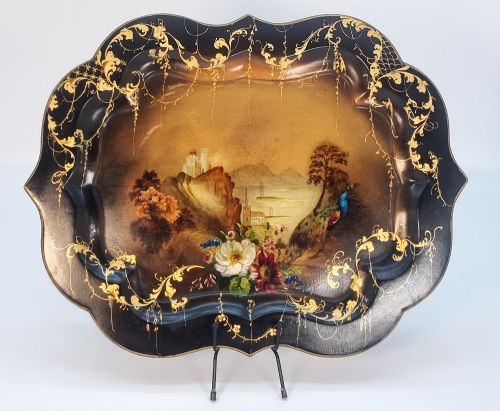
Buyers will encounter rectangular formats with shaped galleries, traditional papier-mâché constructions, and toleware variations. Depictions range from geometric flourishes to detailed hunting scenes painted across the central field.
How they were made
Construction relies heavily on papier-mâché and tinned iron toleware, shaped into rigid trays before receiving multiple coats of dark lacquer. Artisans built up smooth, durable surfaces capable of holding painted scenes and metallic detailing.
Gold leaf and gilding were applied by hand to accentuate the scalloped borders and create contrast against the dark background. Paint and gold leaf formulations varied across English and French workshops, producing deep lustres that endure on surviving pieces.
Scalloped Lacquered Tray Retail Price Guide 2026
Typical asking prices for scalloped lacquered tray among the pieces listed under this phrase on Sellingantiques today, from the lower quarter to the upper quarter. They describe what is for sale here now, not the wider market.
Some trays trade quiet elegance for action, preserving nineteenth-century hunting scenes frozen in mid-gallop beneath the lacquer.
What varies in quality
Quality rests in the depth of the lacquer finish and the crispness of the hand-painted details. Superior examples display refined brushwork within figurative scenes and precise application of gold leaf along the shaped edges.
The integrity of the underlying papier-mâché or metal form dictates the structural merit of each piece. Maker attribution, such as work by Jennens and Bettridge, elevates the standing of a tray through documented craftsmanship.
Jennens and Bettridge
The Scalloped Lacquered Tray Glossary
- Papier-mâché
- A composite material made from paper pulp or layers of paper glued, pressed, and dried into a rigid form. It provides a lightweight yet durable base for lacquering and painting.
- Toleware
- Enamelled and japanned metalware, usually iron, finished with painted decoration. This technique produced robust serving pieces and decorative trays throughout the nineteenth century.
- Chinoiserie
- European artistic interpretation of Chinese and East Asian decorative motifs. It appears frequently in the painted scenes and gilt borders of nineteenth-century lacquered wares.
- Gilding
- The application of gold leaf or powder to a surface for decoration. It frames the scalloped edges and highlights focal points on the tray.
- Gallery
- A raised border surrounding the edge of a tray to secure contents. Some examples feature pierced or shaped silver plate galleries.
Scalloped Lacquered Tray: Frequently Asked Questions
How were these trays used originally?
These trays served primarily for carrying tea, beverages, or food in formal drawing rooms. Their decorative surfaces also allowed them to be displayed on stands when not in active use.
Over time, many examples were permanently mounted onto wooden or iron bases to convert them into occasional tables and side tables.
Are these trays suitable for everyday use?
While structurally robust, nineteenth-century lacquered and papier-mâché surfaces require gentle care to preserve their original finishes. Moisture and heat can damage the historic lacquer and delicate painted scenes.
Using them for display or light serving preserves their condition, while standalone tables function well as stable display surfaces in a living space.
How do I identify a Regency piece?
Regency trays often display classical motifs, bold gilt embellishments, and specific toleware construction typical of the early nineteenth century. Their forms reflect the neoclassical design influences popular before the Victorian era.
Comparing the decorative style and materials against documented pieces helps confirm this earlier period of origin.
What is a tray table conversion?
A tray table conversion involves placing an antique serving tray onto a separate stand, often added later in the piece's history. These stands can be fashioned from wood or iron to support the tray securely at table height.
This practice repurposes portable serving trays into functional side tables and occasional tables suitable for modern rooms.