



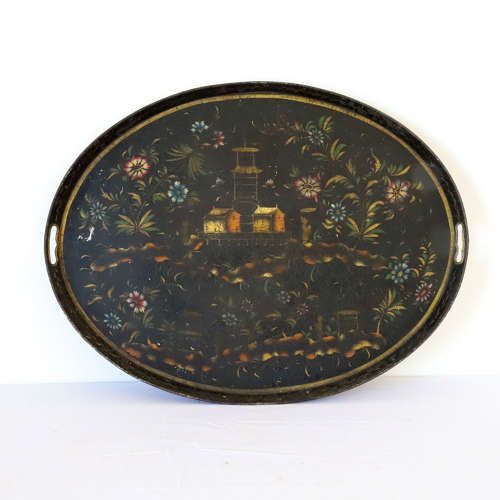


Painted Black Tea Tray
A painted black tea tray brings dark lacquer, gilt decoration and useful surface space into a room.
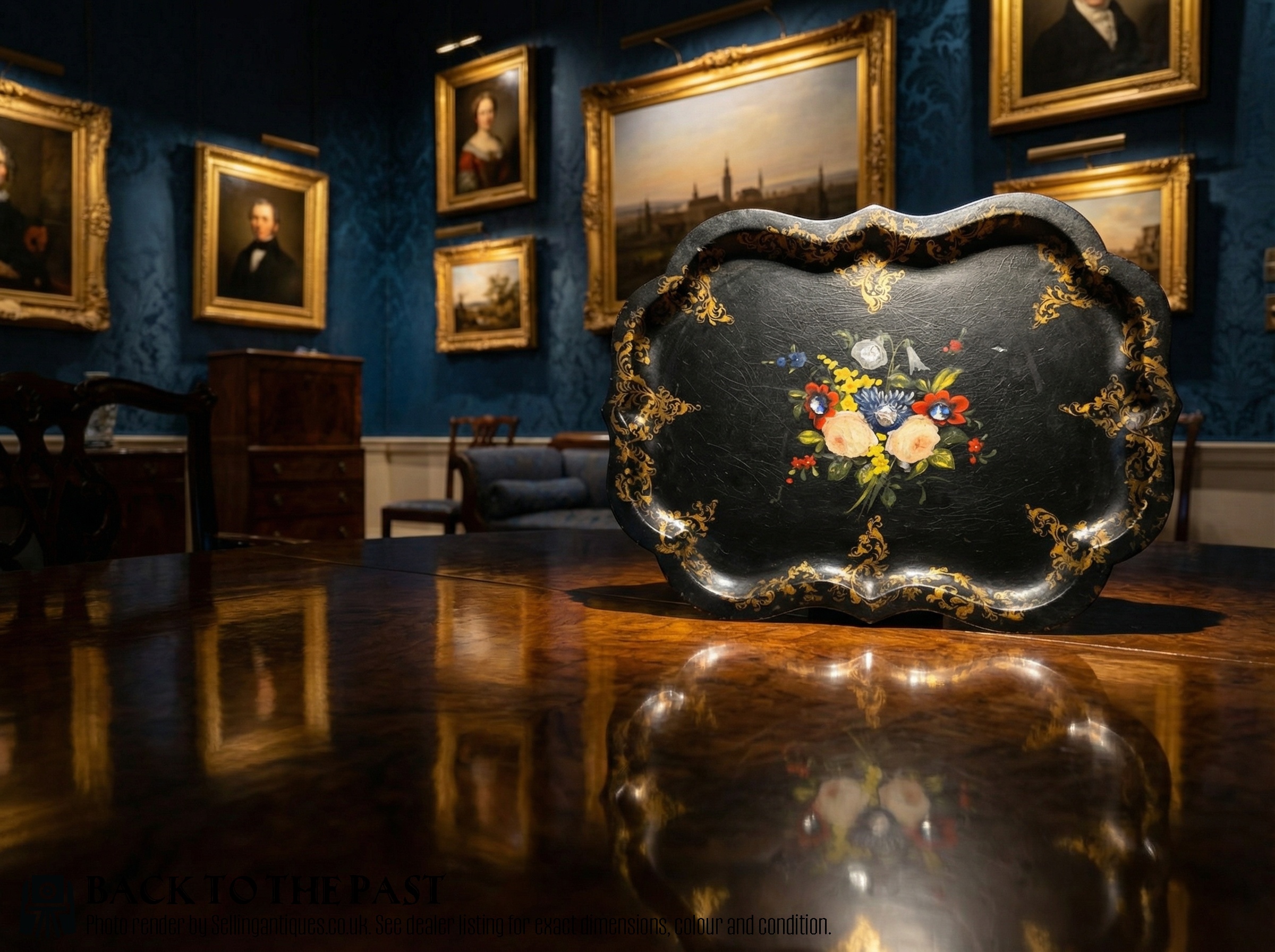
Painted Black Tea Tray
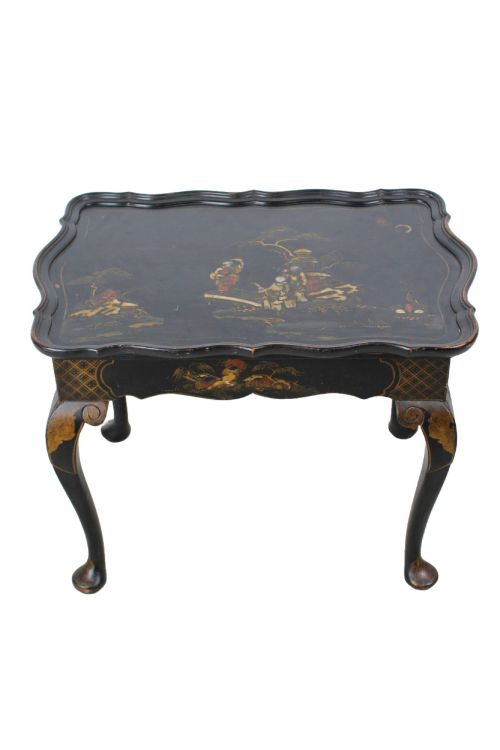
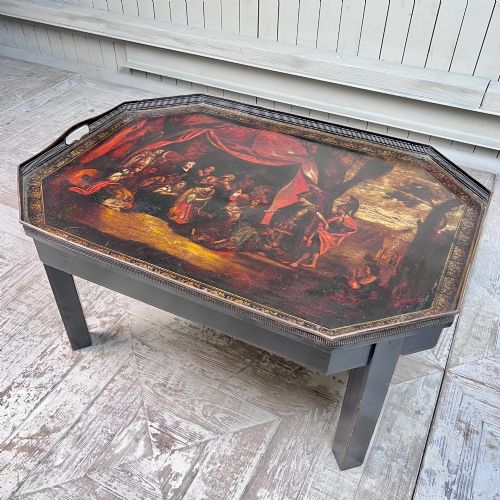
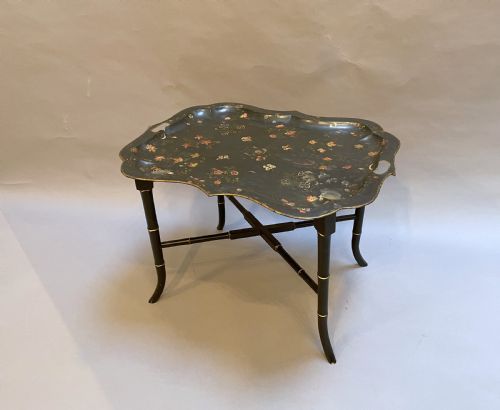
A painted black tea tray is a dark-ground serving or display piece, most frequently encountered here in papier-mâché, toleware or lacquered wood. The selection spans the eighteenth century through the Edwardian period, taking forms from simple flat serving vessels to grand trays mounted upon later or contemporary stands to function as coffee tables.
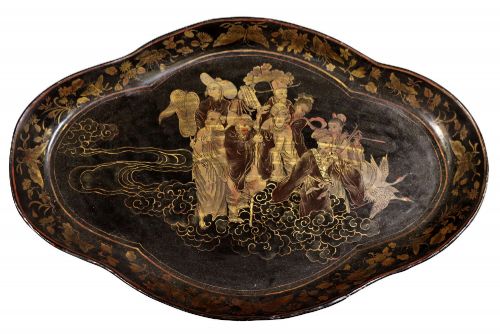
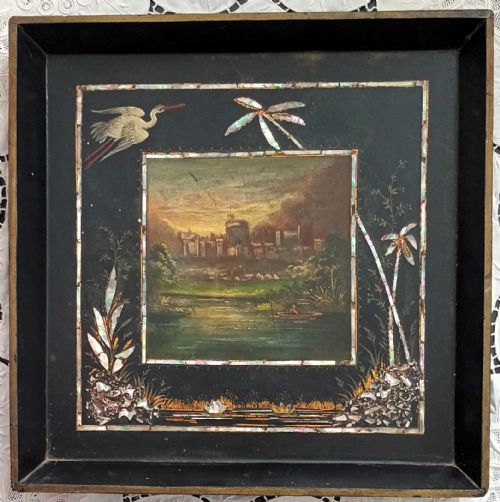
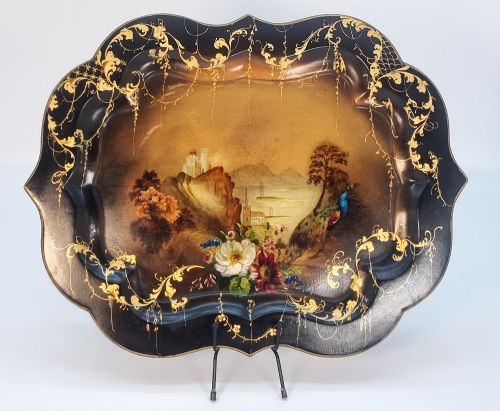
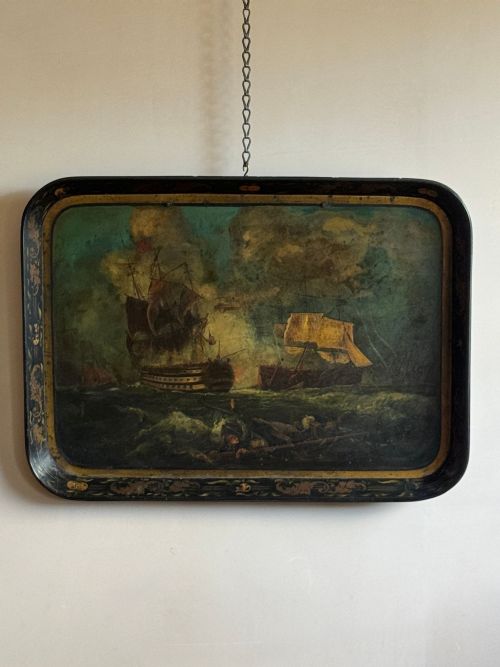
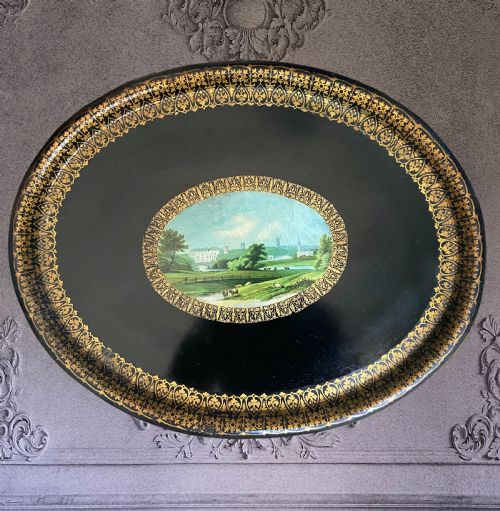
Buyers seeking this phrase encounter a heavy concentration of nineteenth-century pieces, particularly Regency and Victorian examples adorned with Chinoiserie landscapes, floral motifs or historical scenes. Many survive as serving waiters or butler's trays, while others arrived in domestic interiors via French Second Empire or Pontypool workshops.
The practical iteration of the painted black tea tray often involves a sturdy papier-mâché or metal base fitted with raised edges to contain tea services or glassware. Whether resting on a folding iron base or placed directly upon a low timber frame as an occasional table, these objects merge utility with decorative hand-painted surface work.
How they were made
The construction of papier-mâché trays relied on layers of paper pulp or sheets compressed with glue and heavy pressure, then baked and treated to create a rigid, durable board. Artisans applied successive coats of dark lacquer or black paint, smoothing the surface thoroughly before adding fine details in gold leaf, gilt and hand-mixed pigments.
Toleware pieces utilised sheet metal, typically iron or steel, shaped into trays with curved or scalloped rims and coated with dark paint or varnish through specialised japanning techniques. Pontypool workshops mastered this metal finishing, creating robust surfaces capable of withstanding moisture and heat from daily tea service.
Surface ornamentation involved skilled brushwork, incorporating Chinoiserie motifs, architectural views or figurative hunting scenes directly onto the dark ground. Artisans sealed these delicate pictorial layers with clear varnishes to protect the painted details from wear during normal domestic use.
Painted Black Tea Tray Retail Price Guide 2026
Typical asking prices for painted black tea tray among the pieces listed under this phrase on Sellingantiques today, from the lower quarter to the upper quarter. They describe what is for sale here now, not the wider market.
An eighteenth-century papier-mâché tray survives dedicated entirely to the specific hobby of fishing.
What varies in quality
The distinction between standard production and superior examples rests primarily in the execution and preservation of the hand-painted surface work. Finer pieces display crisp, detailed brushwork in gold leaf and polychrome pigments, whereas simpler items feature repetitive stenciling or naive pictorial elements.
Subtleties in the preparation of the papier-mâché or metal substrate dictate the longevity and structural integrity of the tray. Superior manufacture results in a smooth, stable foundation that resists warping, while lower quality items often show surface cracking or delamination of the compressed layers over time.
The pedigree of the maker significantly elevates the standing of a painted black tea tray, particularly when bearing the stamp or distinct hand of noted nineteenth-century manufacturers. Additionally, the presence of an original matching stand rather than a replacement base alters the overall historical integrity.
Jennens & Bettridge
The Painted Black Tea Tray Glossary
- Papier-mâché
- A composite material made from paper pulp or reinforced paper sheets mixed with binding agents, pressed into moulds, and dried to form a rigid structure. It provided a lightweight yet remarkably strong base for nineteenth-century serving trays.
- Toleware
- Painted or lacquered sheet metal utensils and decorative objects, developed extensively in Britain during the eighteenth and nineteenth centuries. Pontypool and Birmingham were major centres for this durable metalwork.
- Japanning
- A European technique of finishing wood or metal with hard, dark varnishes intended to imitate Asian lacquerware. The process involved multiple layers of heat-cured varnish applied over a prepared dark ground.
- Chinoiserie
- European artistic style and decorative motifs reflecting Chinese and East Asian aesthetic traditions. It appears frequently on nineteenth-century trays depicting imaginary landscapes, pavilions and figures.
- Waiter
- A traditional term for a small serving tray or platter used by domestic staff to carry cups, glasses or letters. These items typically feature raised rims to secure vessels during transport.
Painted Black Tea Tray: Frequently Asked Questions
Can I use these trays for serving tea?
Most antique painted black tea trays were originally built for domestic service, utilising durable papier-mâché or metal construction that handles daily use well. However, valuable antique surfaces benefit from careful handling and protection against direct moisture or extreme heat.
Using a protective glass insert or limiting use to display helps preserve delicate nineteenth-century gilding and hand-painted Chinoiserie scenes. Many collectors choose to mount these pieces on stands as coffee tables rather than risking wear during active serving duties.
How do I tell papier-mâché from metal trays?
Papier-mâché trays feel lighter than metal toleware and exhibit a warm, slightly fibrous texture underneath if unpainted. Toleware items are formed from sheet iron and feel cold and rigid to the touch.
Magnetism provides a quick test for metal substrates, while papier-mâché will not react. Both materials were finished with similar dark japanning techniques, so a close visual inspection of the rim or underside is often necessary to confirm the core material.
Were these trays originally made with stands?
Many painted black tea trays were manufactured solely as portable serving vessels intended to rest on tables or be carried by staff. Supporting stands were frequently added later in the nineteenth or twentieth centuries to convert them into occasional tables.
Finding a tray on an original matching base is less common than finding pieces paired with later custom or period-style frames. The method of attachment and the age of the stand relative to the tray help determine whether the combination is original.
What period do most of these trays come from?
The vast majority of painted black tea trays date from the nineteenth century, spanning the Regency, Victorian, and Edwardian eras. Earlier Georgian examples and late eighteenth-century naive pieces also appear, though with less frequency.
Stylistic markers such as floral borders, specific Chinoiserie motifs, and maker stamps help narrow down the production date within this nineteenth-century window. Edwardian revivals later in the period replicated these earlier dark-ground styles for twentieth-century homes.