




Floral Papier Mache Tray
These floral papier mache tray examples are pressed paper and lacquer serving pieces painted with botanical motifs, prized for their durable lightweight utility and glossy visual depth.
Floral Papier Mache Tray
A floral papier mache tray brings together sturdy pulp construction and hand-painted botanical imagery, usually taking the form of large oval or octagonal serving surfaces. Most specimens encountered here date from the Georgian, Regency, and Victorian eras, reflecting a long British and European tradition of domestic entertaining and display.
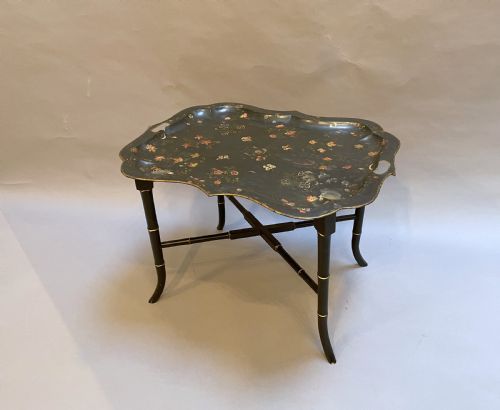
Beyond standalone serving dishes, the selection frequently incorporates pieces mounted onto later wooden or iron stands to function as side tables or butlers trays. Buyers also encounter related desk sets, inkstands, and lidded boxes sharing the same distinctive lacquered composition.
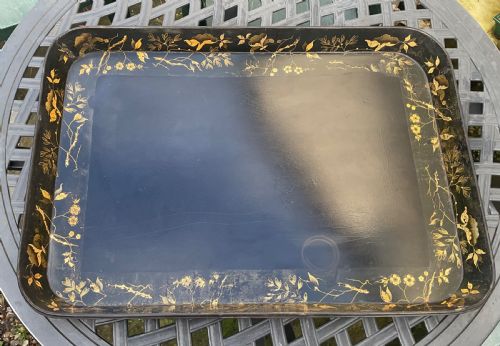
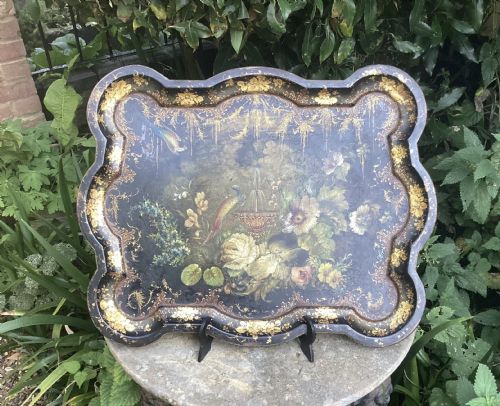
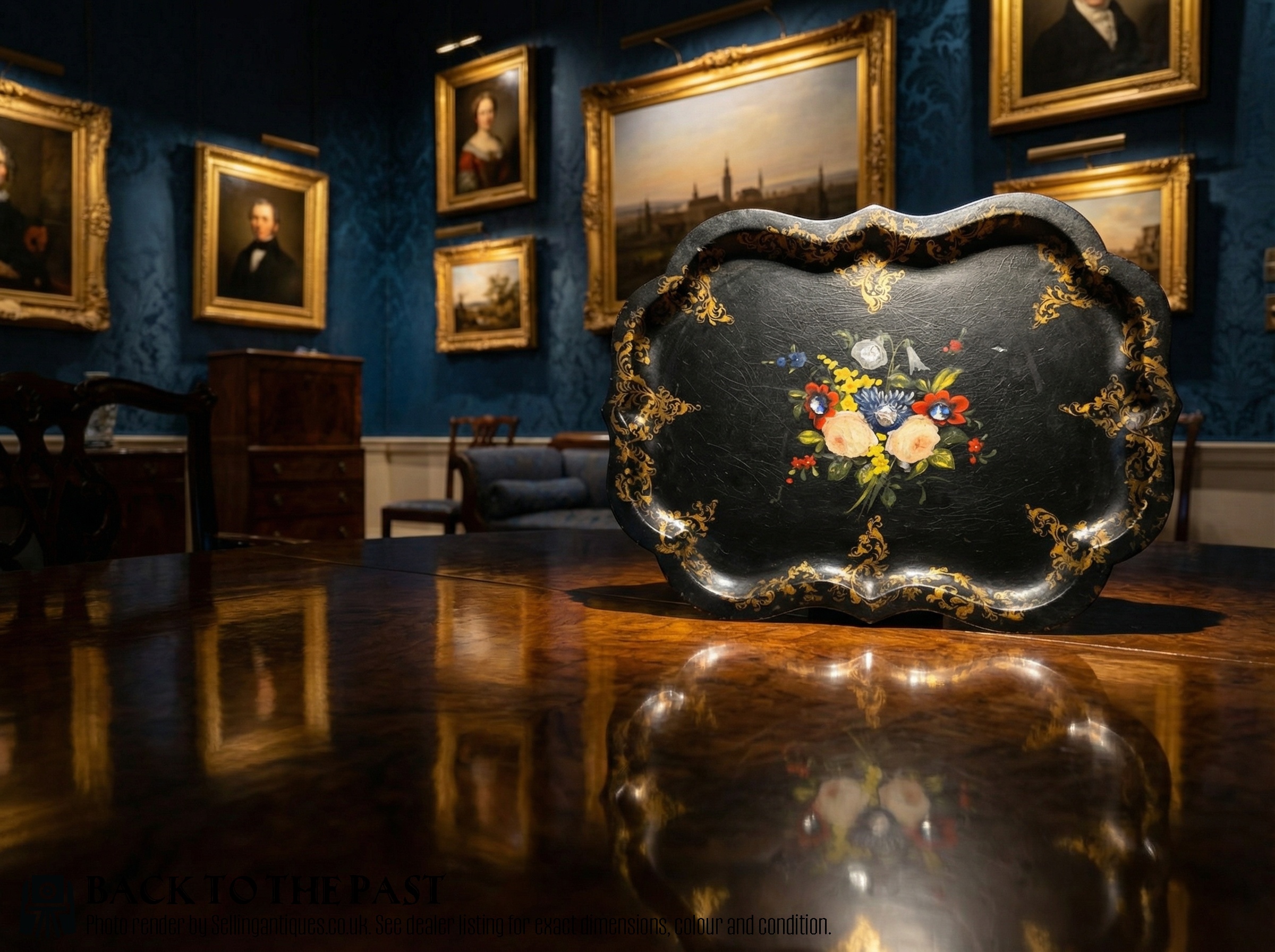
The decorative schemes heavily favour floral subjects rendered in paint and gold leaf, occasionally enhanced with mother-of-pearl inlay. These items survive in various scales, from compact dishes to large serving trays intended for formal drawing rooms.
Materials and construction methods
The foundation of a floral papier mache tray relies on layers of paper pulp or dampened sheets bound with glue and compressed under heavy pressure before baking and smoothing. This creates a remarkably tough, lightweight board capable of holding heavy porcelain and silver without warping.
Once formed, the surface receives multiple coats of dark lacquer or ebonised finish, providing a glossy base for the painted flowers and gold leaf highlights. Skilled artisans built up the floral details by hand, sealing the completed artwork beneath protective transparent varnish.
Floral Papier Mache Tray Retail Price Guide 2026
Typical asking prices for floral papier mache tray among the pieces listed under this phrase on Sellingantiques today, from the lower quarter to the upper quarter. They describe what is for sale here now, not the wider market.
Some trays arrived on iron stands so late in life they barely remember serving tea.
Distinguishing quality across the range
The artistic competence of the hand-painted floral motifs largely determines the standing of a floral papier mache tray, as finer examples display delicate shading and botanical precision rather than stiff, formulaic brushwork. The integration of supplementary materials such as genuine mother-of-pearl inlay and rich gold leaf embellishment also elevates a piece.
Structural integrity of the pressed paper core and the preservation of the original lacquer finish dictate the overall desirability. Pieces retaining their structural rigidity and depth of gloss without extensive surface flaking represent the finest manufacturing standards of the period.
The Floral Papier Mache Tray Glossary
- Papier-mâché
- A composite material made from paper pulp or reinforced paper sheets mixed with glue, then moulded and dried to form a rigid object. It offers exceptional strength and a smooth surface ideal for lacquering.
- Lacquer
- A durable resin-based coating applied in multiple layers to seal and protect the papier-mâché base. It creates a deep, glossy finish characteristic of these decorative items.
- Chinoiserie
- European artistic style reflecting Chinese decorative motifs and scenery. It appears frequently on Victorian pieces paired with floral elements.
- Toleware
- Metalware painted and lacquered in imitation of papier-mâché or Asian lacquer goods. It shares similar decorative painting techniques.
- Mother-of-Pearl
- The iridescent inner layer of certain mollusc shells, inlaid into the lacquered surface to catch the light. It adds shimmering texture to floral designs.
Floral Papier Mache Tray: Frequently Asked Questions
What is a floral papier mache tray?
A floral papier mache tray is a serving or display surface made from compressed paper pulp finished with dark lacquer and hand-painted botanical designs. These items date primarily from the Georgian, Regency, and Victorian periods.
They combine lightweight structural strength with ornamental surface art, making them practical for entertaining as well as visual display in period interiors.
How do I care for my tray?
Keep these items away from direct sunlight, excessive heat, and moisture to protect the delicate lacquer and painted floral surface. Dust gently with a dry, soft cloth rather than using liquid cleaning products.
Because the foundation is compressed paper, standing liquids or damp glasses can damage the finish over time if left unattended.
Can these trays be used as tables?
Many surviving pieces are found mounted on custom wooden or iron stands, converting the original serving surface into a functional side table or occasional table. These stands are frequently later additions to the antique tray.
Such configurations allow the decorative top to be safely displayed at a convenient height within a modern living space.
How do I date these pieces?
Dating relies on stylistic clues, the shape of the moulding, and the specific palette of the painted floral decoration. Georgian and Regency examples often feature distinct geometric profiles and restrained gilding, whereas Victorian pieces frequently embrace ebonised finishes and mother-of-pearl inlay.
Examining the underside and the wear patterns on the base also provides context regarding the manufacturing era.