






Scalloped Japanese Porcelain
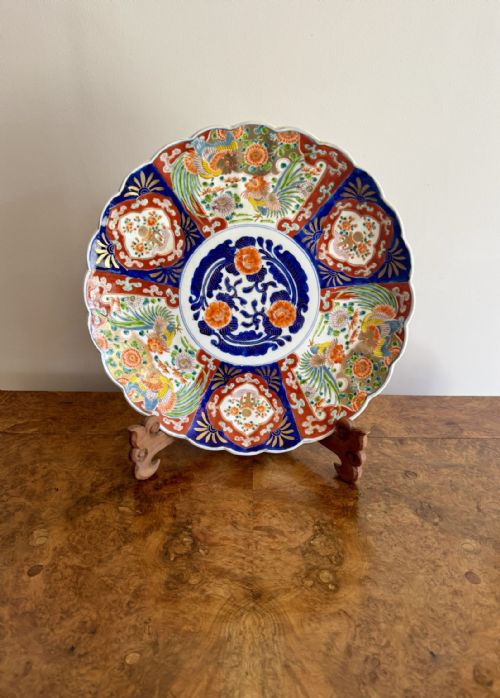
These scalloped Japanese porcelain pieces bring intricate hand-painted floral and bird designs into domestic spaces.
Scalloped Japanese Porcelain
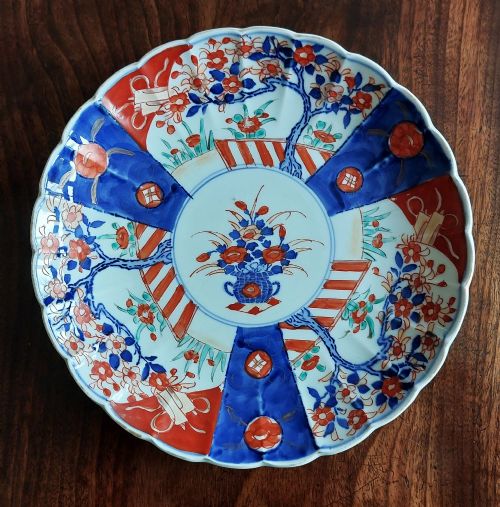
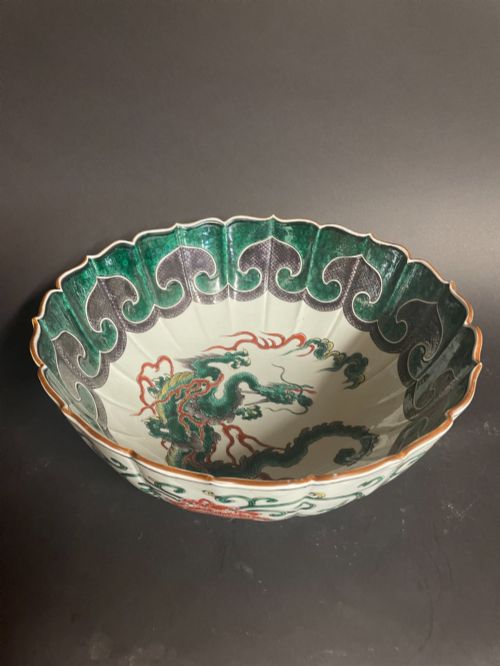
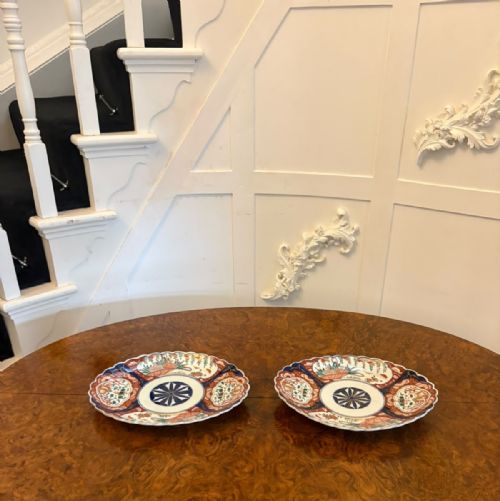
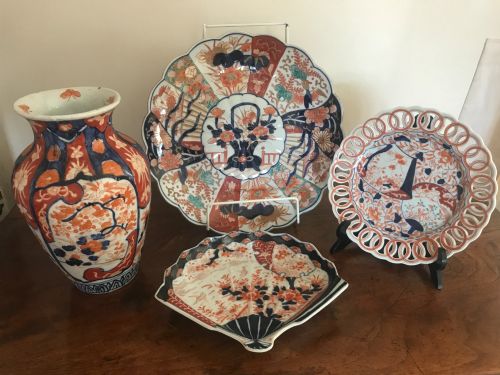
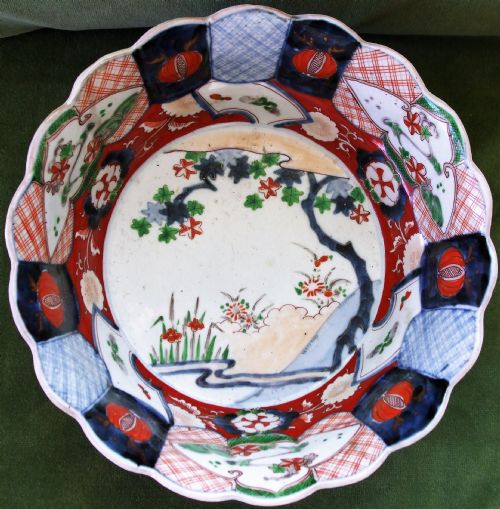
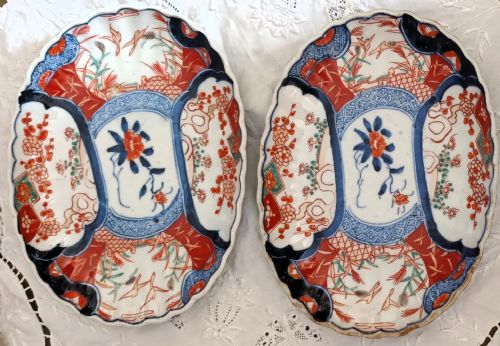
When you examine scalloped Japanese porcelain on this page, you encounter items shaped with curved, indented edges that mimic natural forms like flower petals. The selection centres primarily on decorative plates, bowls, chargers, and dishes originating from the Meiji period and the nineteenth century.
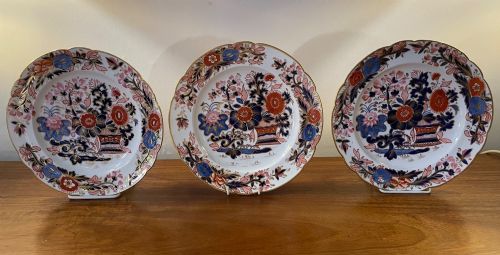
Most examples belong to the Imari style, characterised by vibrant cobalt underglaze blue combined with iron red, enamel highlights, and occasional gold leaf. Alongside these pieces, you will find broader Japanese porcelain bowls and ceramic dishes featuring exotic birds and floral motifs.
How they were made
The creation of these ceramics relies on high-fired porcelain shaped into distinct scalloped edges before receiving detailed hand-painted decoration. Artisans applied cobalt underglaze beneath the transparent glaze, then layered enamel and gilding atop the fired surface.
Makers utilised traditional kilns located in regions such as Arita, where potters mastered the characteristic Imari palette. The integration of glaze, gold leaf, and cobalt underglaze required multiple firings to achieve the durable, glossy finish seen across these plates and chargers.
Several plates depict the Seven Lucky Gods sharing space with exotic birds, proving that ancient deities enjoyed feathered company just as much as mortals do.
What varies in quality
The distinction between standard output and the finest items rests on the precision of the hand-painted brushwork and the complexity of the design. Superior examples display crisp cobalt underglaze lines and carefully applied enamel details depicting subjects like exotic birds or the Seven Lucky Gods.
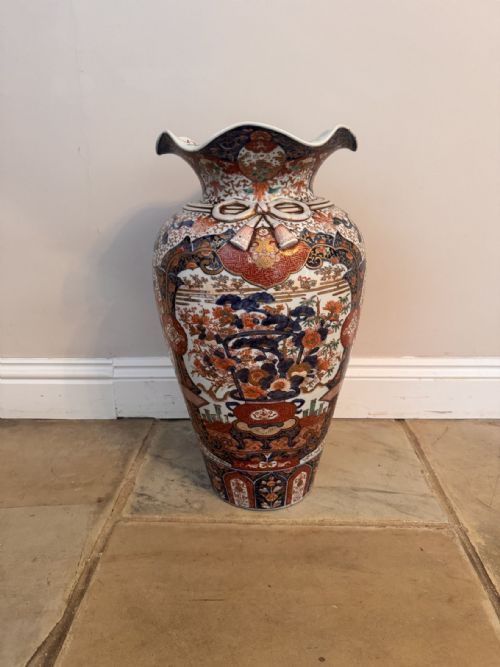
Heavier porcelain bodies, such as large floor-standing vases and substantial chargers, demonstrate advanced moulding and firing capabilities. The richness of the gilding and the balance of the Imari palette further separate exceptional decorative pieces from simpler production items.
The Scalloped Japanese Porcelain Glossary
- Imari
- A style of Japanese porcelain named after the port from which it was shipped, traditionally decorated in cobalt blue, iron red, and gold. This aesthetic heavily influences nineteenth-century Japanese ceramics.
- Charger
- A large decorative plate or dish intended for display rather than dining use. These substantial pieces often showcase complex hand-painted motifs.
- Meiji Period
- The era in Japanese history spanning from eighteen sixty-eight to nineteen twelve, associated with significant porcelain production and export. Many listed items originate from this time.
- Cobalt Underglaze
- A blue pigment applied to the raw clay body before glazing and firing, ensuring the colour remains permanent and protected beneath the glass layer. It forms the foundation of traditional Imari designs.
- Scallop Edge
- A decorative rim shaped into a series of continuous curves resembling a scallop shell or flower petals. This form is common on antique Japanese plates and bowls.
Scalloped Japanese Porcelain: Frequently Asked Questions
How were scalloped porcelain chargers used?
These large decorative items served primarily for display on walls, sideboards, or tables within homes. Their substantial size made them focal points in domestic interior arrangements.
Unlike everyday tableware, chargers were designed to showcase elaborate hand-painted narratives and rich colour palettes without the wear of daily dining service.
What defines the Imari palette?
The palette relies on a combination of deep cobalt underglaze blue and iron red, frequently accented with gold leaf and enamel details. This distinct colour scheme originated in Japanese kilns during the Edo period.
Artisans layered these colours to create high-contrast floral, bird, and figural compositions that remain visually striking across centuries.
How do I identify Meiji period porcelain?
Meiji period items correspond to the late nineteenth and early twentieth centuries, a time when Japanese ceramic exports flourished. These pieces often feature dynamic hand-painted motifs including exotic birds and mythological figures.
The porcelain body combined with traditional Imari decoration provides strong visual markers for dating within this specific era.
Are these plates meant for food use?
Antique decorative plates and chargers function primarily as display art rather than practical tableware. The delicate enamel work and gold leaf applied over the glaze can degrade with regular washing and dining use.
Collectors generally exhibit these ceramics on stands or wall mounts to preserve their historical surfaces.
Why do edges have a scalloped shape?
Potters shaped rims into curved indentations to mimic natural elements like flower petals or marine shells. This technique added textural interest and elegance to standard circular plates and bowls.
Forming a clean scallop required skilled hand-shaping of the raw clay before the initial firing.