


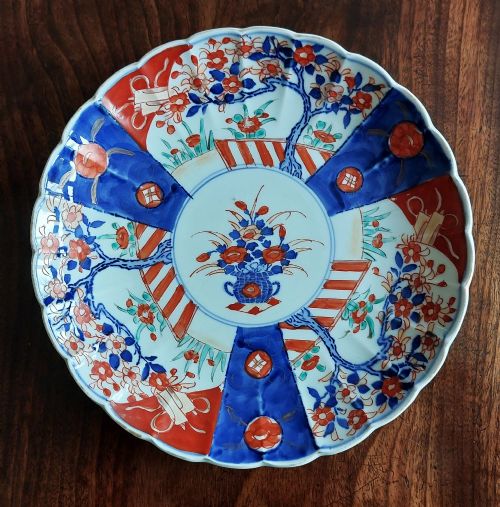

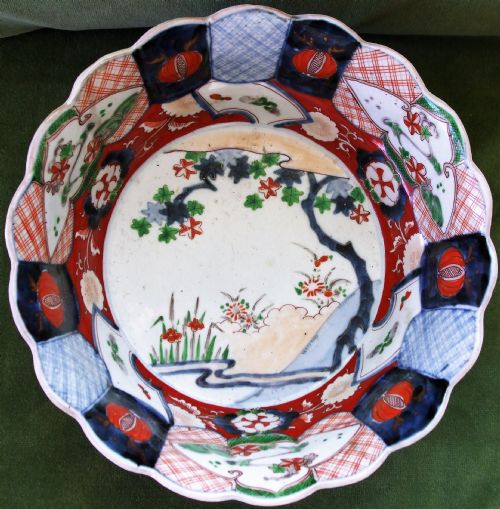
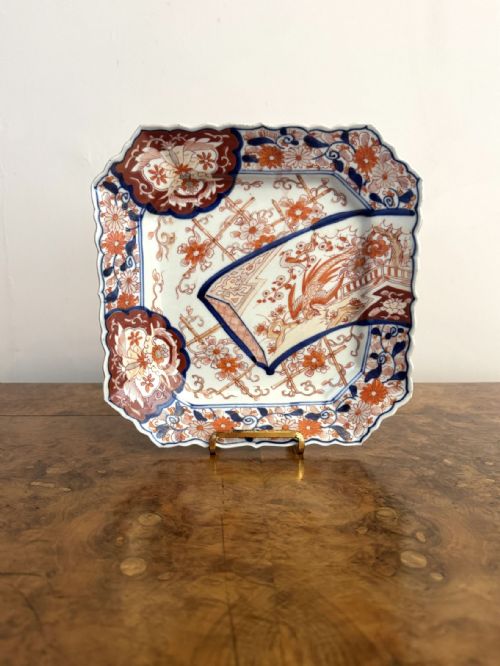
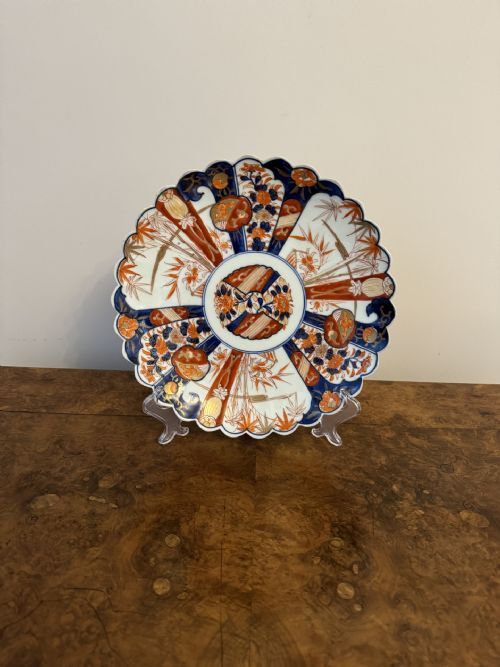

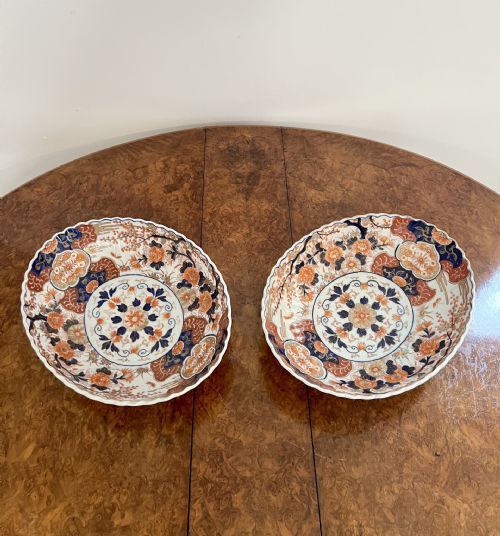


Scalloped Edge Imari Dish
When you handle a scalloped edge imari dish, you hold a piece of Japanese ceramic history shaped by centuries of tradition.
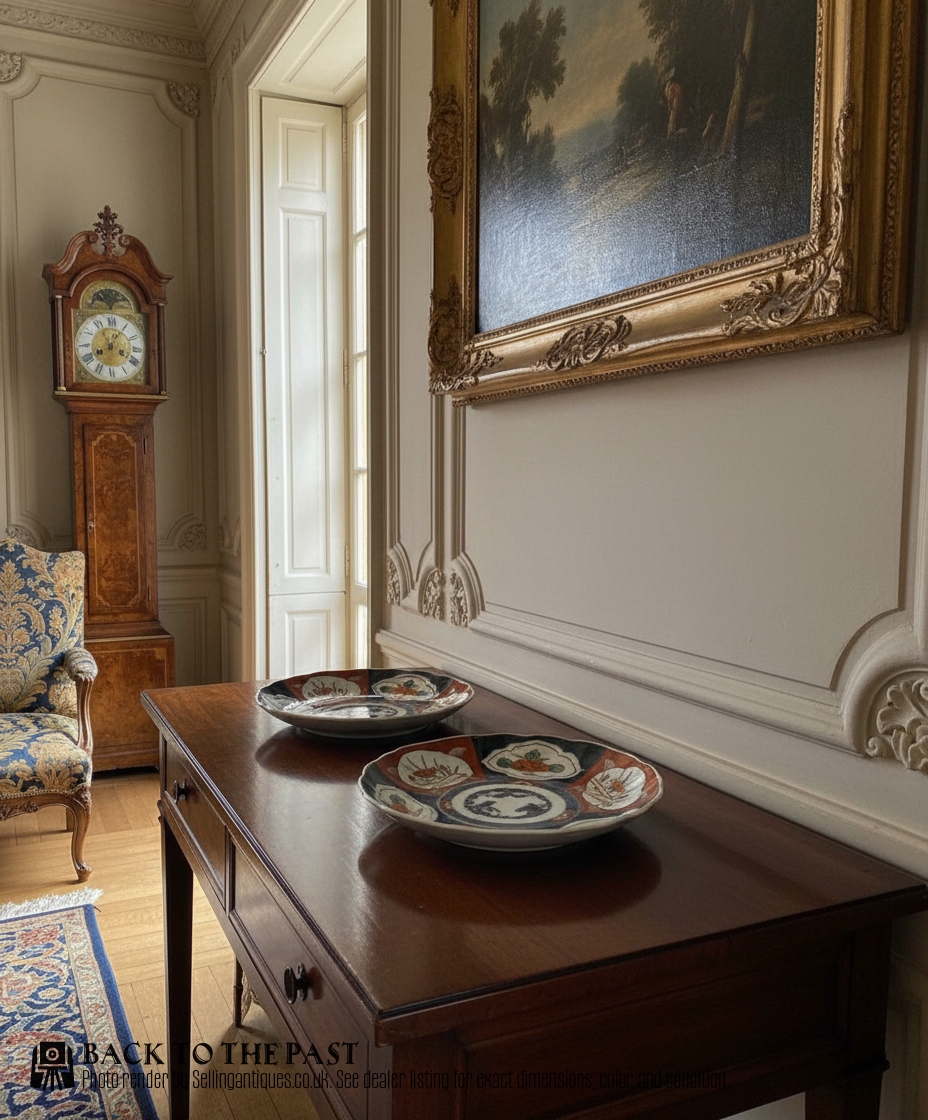
Scalloped Edge Imari Dish
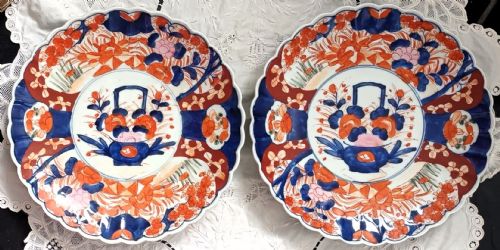
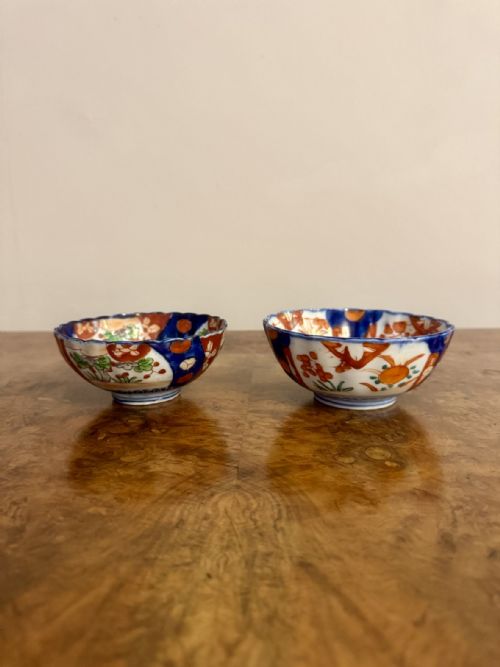
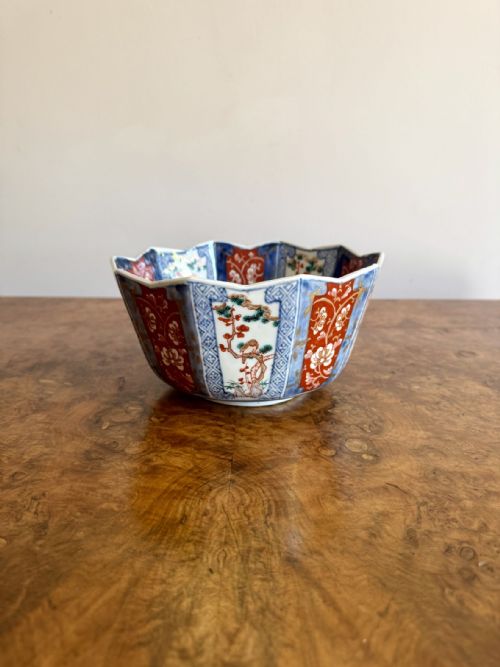
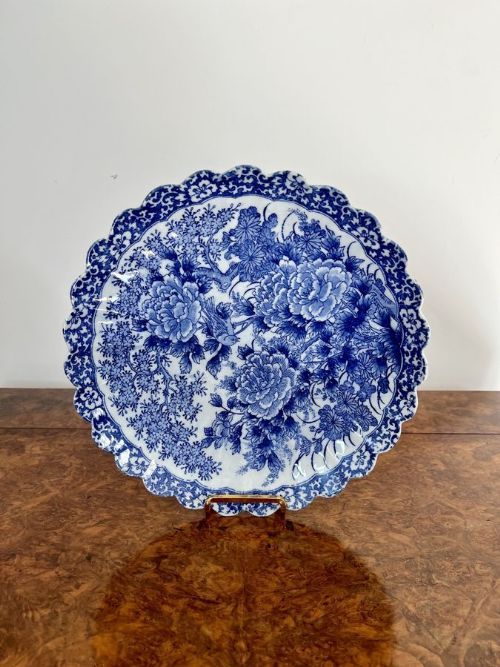
A scalloped edge imari dish is a decorative ceramic object originating from Japan, commonly appearing in plates, bowls, chargers, and dishes. These pieces display distinct indented rims that create a flower-like or lobed perimeter, adding physical dimension to the surface.
The selections available run from the eighteenth century through the Victorian and Edwardian eras, with a strong representation from the Meiji period and nineteen hundred. Collectors encounter single items alongside matched pairs and larger collections designed for display or serving.
How they were made
Potters shaped porcelain and ceramic bodies by hand or wheel before applying cobalt underglaze pigments for the foundational blue details. Enamel colours and gold leaf or gilding were then added in subsequent firings to build up the characteristic rich palette.
The glazing technique seals the ceramic body beneath a protective glassy layer, preserving the intricate hand-painted motifs of exotic birds, flora, and traditional figures across centuries.
Scalloped Edge Imari Dish Retail Price Guide 2026
Typical asking prices for scalloped edge imari dish among the pieces listed under this phrase on Sellingantiques today, from the lower quarter to the upper quarter. They describe what is for sale here now, not the wider market.
The listings span the eighteenth century, nineteenth century, Victorian era, Edwardian era, and the Meiji period, executed in porcelain and ceramic.
What varies in quality
The distinction between standard items and superior examples lies in the precision of the hand-painted brushwork and the vibrancy of the cobalt underglaze and enamel pigments. Finer pieces demonstrate greater control in the moulding of the scalloped edge and a more harmonious integration of gilding.
Larger formats, such as chargers and deep bowls, demand greater technical skill from the potter to maintain structural integrity during high-temperature firing, placing them in a separate tier from smaller standard plates.
The Scalloped Edge Imari Dish Glossary
- Imari
- A style of Japanese porcelain named after the port from which wares were shipped to Europe. It typically employs a palette of cobalt blue, iron red, and gold.
- Charger
- A large decorative plate used historically for formal dining presentation or wall display. These substantial pieces provide a wider canvas for complex pictorial scenes.
- Meiji Period
- The era in Japanese history spanning from eighteen sixty-eight to nineteen twelve, known for high levels of artistic production destined for international export.
- Cobalt Underglaze
- A blue pigment applied directly to the raw ceramic body before glazing and firing. This method ensures the colour remains permanent and protected beneath the glassy finish.
- Gilding
- The application of gold leaf or gold paint to ceramic surfaces to highlight specific design elements. It adds a reflective quality that catches ambient light.
Scalloped Edge Imari Dish: Frequently Asked Questions
How do I display an imari dish safely?
Plates and chargers require sturdy wall hangers specifically sized for the rim depth, or dedicated display stands with secure footing.
Keep pieces away from direct sunlight to protect the enamel colours and gold leaf over long periods.
Were these dishes used for daily dining?
Most surviving decorated chargers and scalloped plates served primarily decorative functions in European and Japanese interiors.
Smaller bowls and plates saw occasional use for serving food, though their survival in fine condition suggests careful handling.
What defines the Meiji period style?
Meiji pieces often incorporate detailed depictions of exotic birds, flora, and narrative scenes involving figures like the Seven Lucky Gods.
The brushwork on these items tends to be exceptionally fine, reflecting the high technical standards of late nineteenth-century workshops.
How do I distinguish eighteenth-century pieces?
Earlier eighteenth-century wares generally feature heavier, slightly irregular porcelain bodies with distinct textural qualities from primitive kiln methods.
The blue underglaze tones on these older items can also appear softer and more integrated into the glaze.