



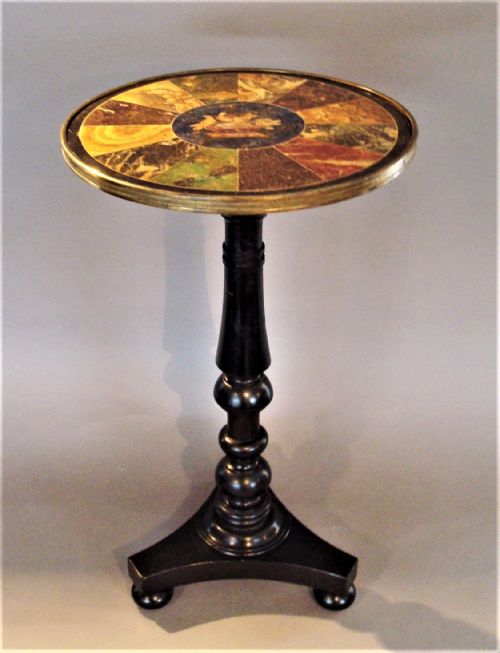


Scagliola Marble Pedestal
A scagliola marble pedestal brings the gravity of classical architecture indoors through tinted plaster work that mimics natural stone.
Scagliola Marble Pedestal
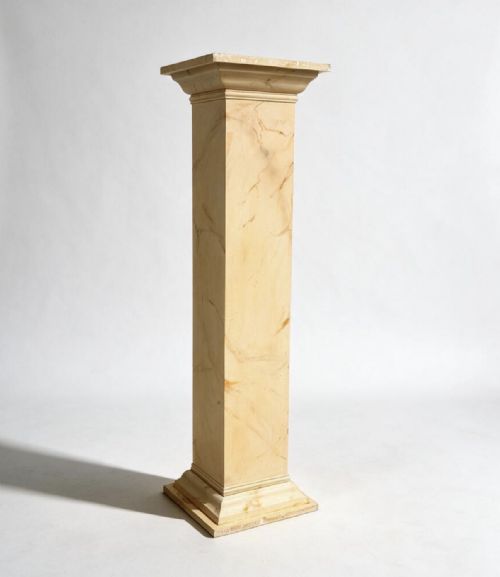
A scagliola marble pedestal provides a sturdy display surface for sculpture and decorative objects while presenting the rich visual depth of natural mineral deposits. When looking for a scagliola marble pedestal, buyers encounter columnar supports fashioned with simulated stone surfaces rather than solid blocks of quarry-cut material.
The selections span nineteenth century Victorian interpretations and later twentieth century iterations up to nineteen thirty. Neoclassical, Regency, and Italian design influences dominate the forms, yielding columns and plinths designed to command attention in a room.
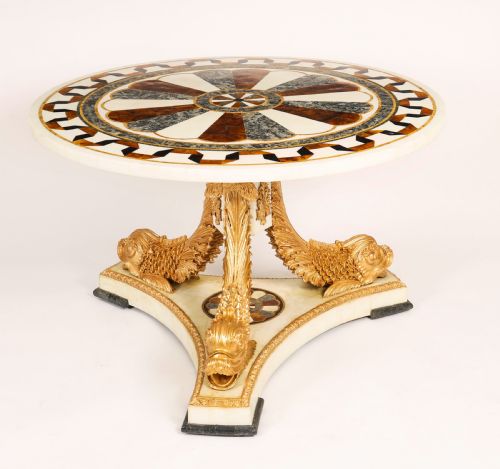
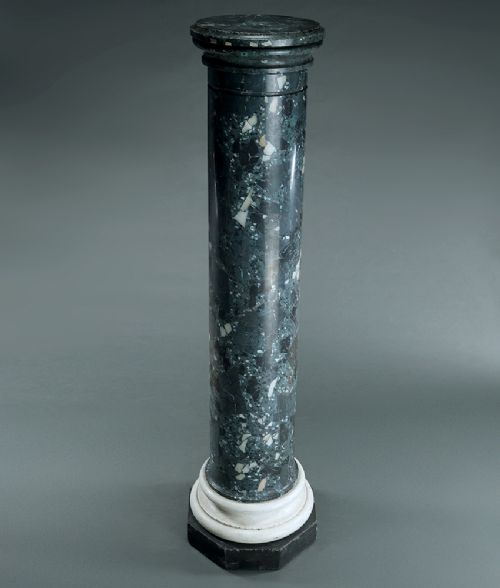
Beyond standard upright columns, the inventory includes variations featuring black marble plinths, white socle bases, and paired display pieces. These vertical supports share floor space with related centre tables bearing specimen stone tops.
How they were made
Makers produced scagliola by binding pigmented plaster, glue, and natural pigments with metallic oxides to replicate the veining of precious stones like verde antico. Artisans then trowelled, polished, and waxed this composite material onto a core of plaster, wood, or slate to achieve a cold, smooth stone-like finish.
Some examples utilise painted wood or plaster foundations finished by hand to simulate marble graining without the traditional compound. Ormolu collars and mahogany elements occasionally appear alongside the main stone and scagliola structures.
Scagliola Marble Pedestal Retail Price Guide 2026
Typical asking prices for scagliola marble pedestal among the pieces listed under this phrase on Sellingantiques today, from the lower quarter to the upper quarter. They describe what is for sale here now, not the wider market.
Listings feature materials spanning scagliola, marble, plaster, paint, painted wood, mahogany, and slate across nineteenth and twentieth century periods.
What varies in quality
The conviction of the simulated veining marks the difference between a convincing simulation and a flat surface. Superior examples display depth, subtle colour shifts, and intricate detailing that mirrors genuine mineral strata.
Structural integrity of the underlying core and the crispness of mouldings on bases and capitals define the execution. Higher grade pieces maintain smooth, highly polished surfaces that retain their lustre across decades.
Woodley family
The Scagliola Marble Pedestal Glossary
- Scagliola
- A composite technique using pigmented plaster, glue, and marble dust to imitate true stone. Artisans apply this mixture to form durable decorative surfaces.
- Verde antico
- An ancient dark green brecciated marble often simulated in scagliola work. This specific visual pattern mimics jagged green and white mineral inclusions.
- Socle
- A short plain plinth or pedestal supporting a column or statue. It provides a stable foundation for the vertical shaft above.
- Ormolu
- Gilded bronze mounts applied to furniture and decorative objects. This material adds metallic contrast to stone and wooden surfaces.
- Plinth
- The heavy base slab beneath a column, pedestal, or statue. It grounds the vertical element visually and physically.
Scagliola Marble Pedestal: Frequently Asked Questions
Are these pedestals solid marble?
Most pieces combine a core of plaster, wood, or slate with an exterior layer of scagliola or painted decoration. This construction keeps the weight manageable while maintaining a convincing stone appearance.
Some examples incorporate actual marble tops or bases paired with simulated shafts.
How do I place a pedestal in a room?
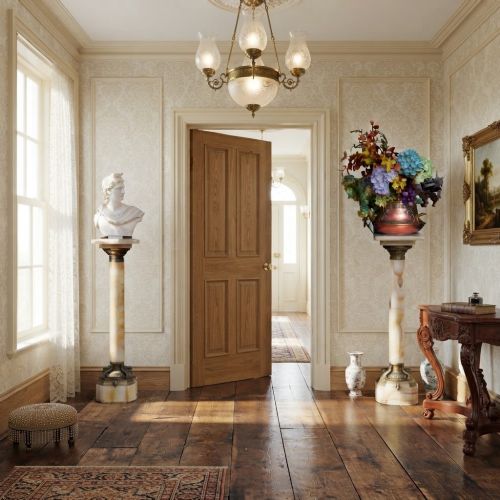
These columns function well as standalone display points for urns, sculptures, or decorative objects. Their vertical presence draws the eye upward and breaks up horizontal furniture lines.
Placing them in corners or flanking doorways allows the neoclassical forms to anchor the surrounding space.
How do I clean scagliola?
Dust surfaces gently with a soft, dry cloth to prevent accumulation. Avoid harsh chemical cleaners or excessive moisture that can damage the plaster and paint layers.
Occasional light waxing helps maintain the polished sheen on traditional compound surfaces.