
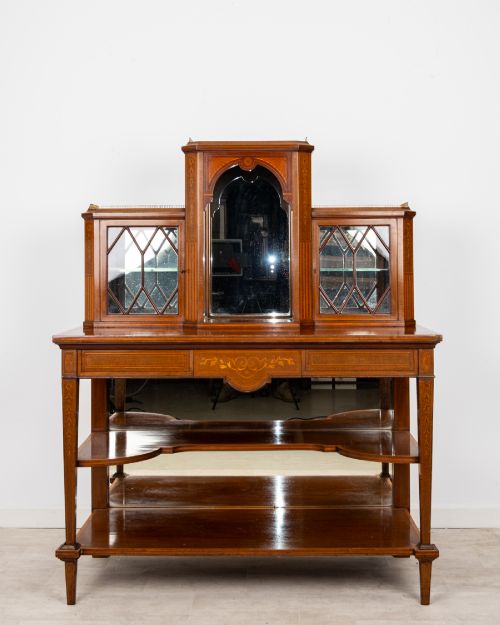
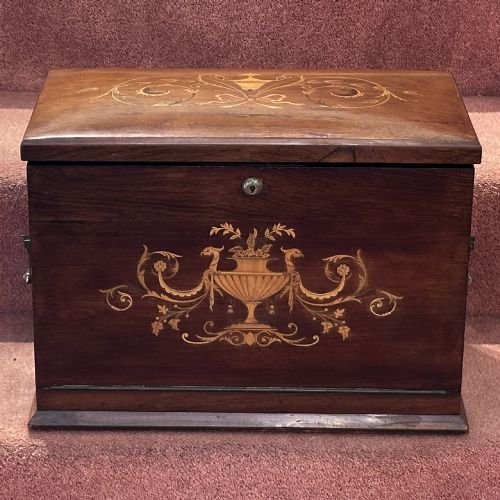


Satinwood Inlaid Desk Cabinet
A satinwood inlaid desk cabinet brings golden timbers and fine craftsmanship into a room, offering both a compact workspace and refined storage.
Satinwood Inlaid Desk Cabinet
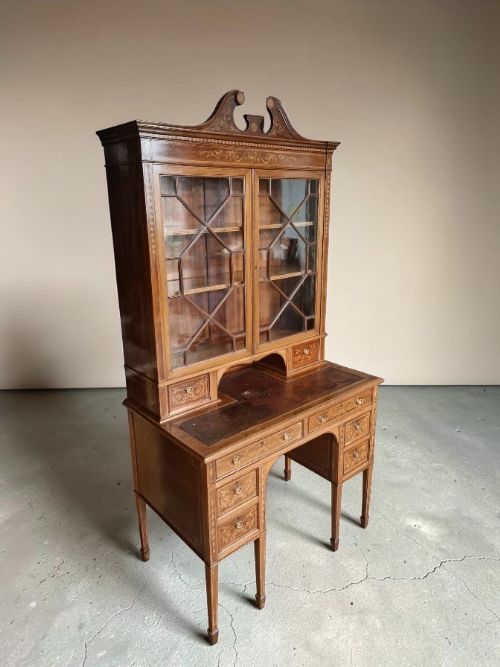
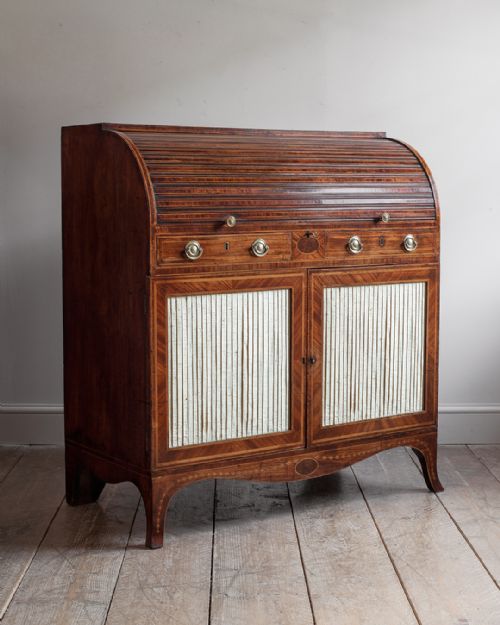
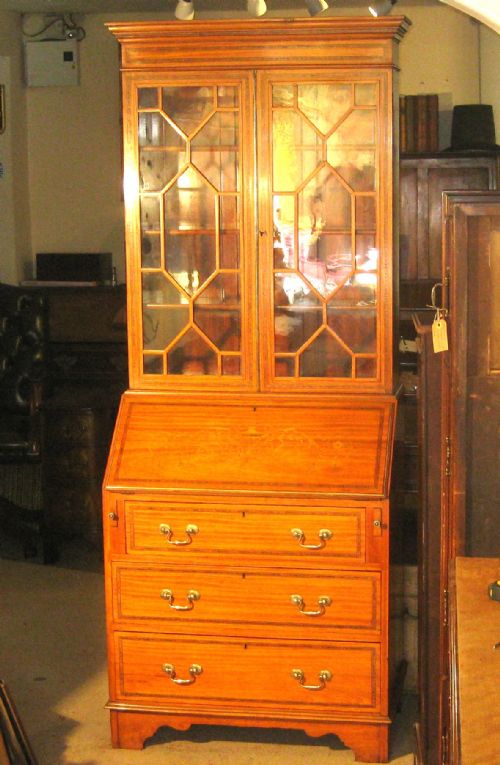
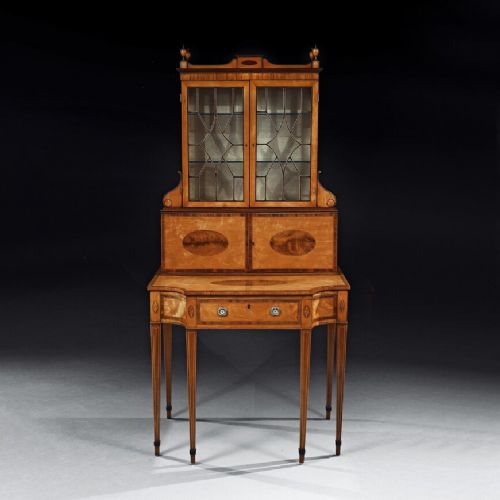
A satinwood inlaid desk cabinet combines a writing surface with enclosed shelving or drawers, appearing in forms such as bureau bookcases, secretaire cabinets, and bonheur du jour tables. These pieces emerge chiefly from the eighteenth century, the Georgian era, and the Edwardian period.
The selection ranges from large architectural bureau bookcases down to diminutive ladies writing desks designed for intimate drawing rooms. Many pieces incorporate cylinder fronts, tambour doors, or fold-down writing flaps that conceal fitted pigeonholes and small drawers.
Makers often paired golden satinwood with contrasting timbers like mahogany or rosewood, applying delicate marquetry and stringing. Buyers encounter both substantial George III library furniture and lighter Edwardian Sheraton Revival creations.
How they were made
Cabinetmakers utilised dense native and exotic hardwoods, building carcases in mahogany, walnut, or sabicu before applying finely figured satinwood veneers. Surfaces received decorative marquetry and contrasting inlay lines to create geometric panels and floral motifs.
Fitted interiors required precise joinery for tiny drawers, sliding writing slides, and pigeonholes, often operated by mechanical cylinder lids or tambour shutters. Brass handles, escutcheons, and glass panel doors completed the construction of these writing cabinets.
Primary materials recorded include satinwood, mahogany, rosewood, sabicu, glass, leather, and brass.
What varies in quality
Quality rests primarily in the choice and figure of the satinwood veneer and the crispness of the inlaid marquetry. Finer examples display symmetrical timber selection across large drawer fronts and cylinder panels, whereas lesser pieces rely on simpler banded borders.
The complexity of the interior mechanism, such as smooth-gliding cylinder actions and secret compartments, distinguishes master workshops from standard production. Superior execution shows in the precision of the dovetail joints on internal drawers and the weight of the cast brass hardware.
Edwards & Roberts·Shoolbred of London·Druce and Co London
The Satinwood Inlaid Desk Cabinet Glossary
- Satinwood
- A lustrous, yellow-gold hardwood native to tropical regions, prized for its natural sheen and used extensively for cabinet veneers. It takes a high polish and contrasts sharply with darker woods.
- Marquetry
- The art of forming decorative patterns using thin veneers of different coloured woods, shells, or ivory. Craftsmen arrange these elements to create pictorial scenes or symmetrical geometric borders on desk surfaces.
- Bonheur du jour
- A light ladies writing desk featuring a small cabinet or set of drawers on top of the writing surface. This form gained popularity during the eighteenth century and saw a revival in Edwardian parlours.
- Cylinder desk
- A writing desk with a quarter-cylinder shaped wooden shutter that rolls back to reveal the writing surface and interior pigeonholes. When closed, it conceals all correspondence and stationery.
- Secretaire
- A piece of furniture containing a built-in writing drawer or drop-front flap that pulls down to form a desk surface. These units often sit beneath bookcase shelving or within tall cabinet carcases.
Satinwood Inlaid Desk Cabinet: Frequently Asked Questions
What is a satinwood inlaid desk cabinet?
A satinwood inlaid desk cabinet is a piece of antique furniture that combines a dedicated writing surface with enclosed storage such as drawers, shelves, or a bookcase. These items range from large bureau bookcases to small ladies desks.
They utilise golden satinwood veneers combined with contrasting timbers like mahogany, decorated with delicate inlay and marquetry work.
Where were these cabinets used?
These cabinets served primarily in private studies, libraries, drawing rooms, and ladies boudoirs. They provided a secure, private space for correspondence and the management of household accounts.
Larger bureau bookcases belonged in grand Georgian libraries, while smaller bonheur du jour desks sat in refined Victorian and Edwardian reception rooms.
How do I date a satinwood cabinet?
Dating relies on examining the structural proportions, secondary woods, and the specific style of the inlay work. Eighteenth-century and George III pieces generally feature hand-cut dovetails and solid timber carcases beneath the veneer.
Edwardian Sheraton Revival pieces from around nineteen hundred often display lighter construction, machine-sawn elements, and brighter, more uniform satinwood figure.