

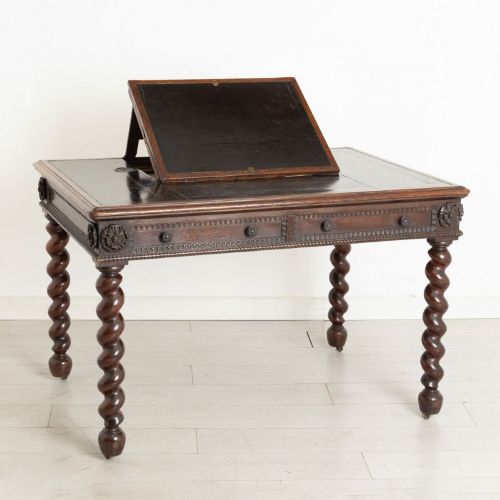


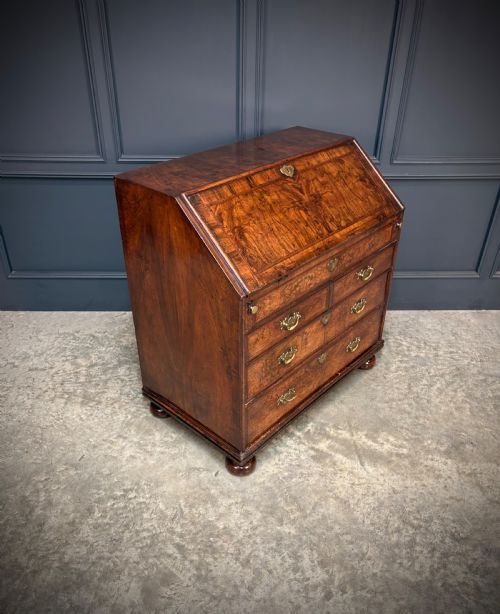


Slanted Top Study Desk
A slanted top study desk brings practical writing space and storage together, offering classic forms designed for daily study and correspondence.
Slanted Top Study Desk
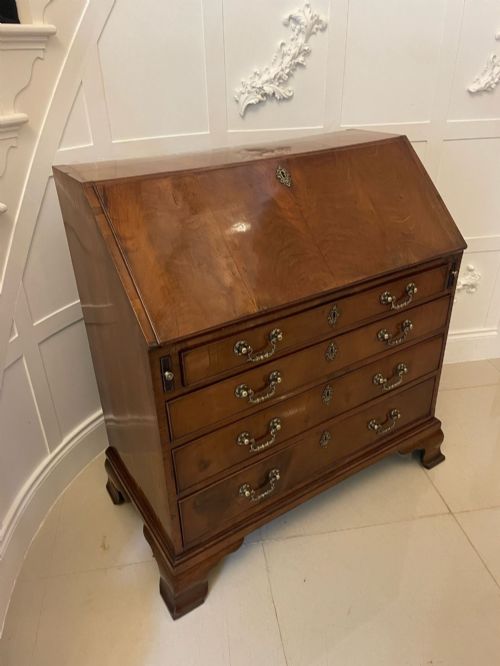
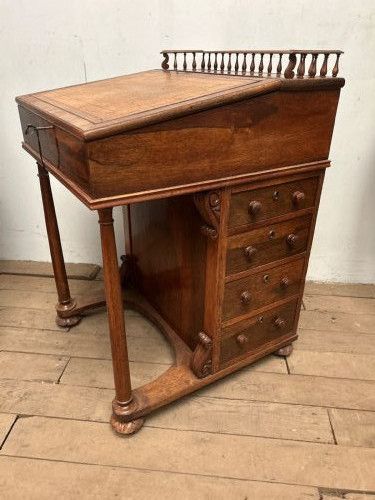
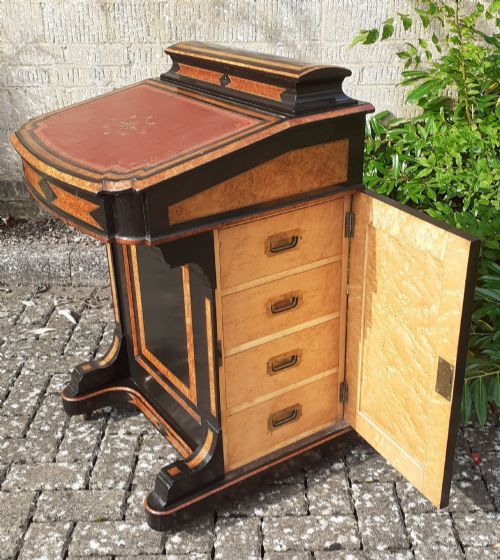
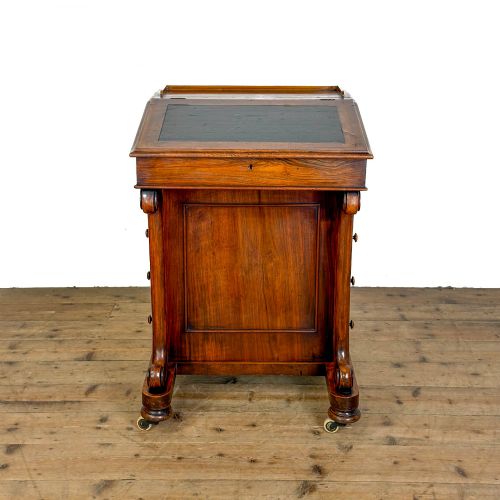
Slanted top study desks encompass varied writing forms from the Georgian, Victorian, and Regency periods, utilising compact Davenport designs and larger bureau formats.
The version most commonly met on this page is the Victorian or Georgian slanted desk, often fashioned from mahogany or oak with fitted internal compartments.
Makers and workshops of the eighteenth and nineteenth centuries produced these writing pieces to combine a sloping surface for paperwork with concealed drawers.
Materials and construction
Cabinet makers utilised dense hardwoods like mahogany, walnut, oak, and rosewood, frequently incorporating burr walnut, satinwood, and yew wood veneers for decorative contrast.
Writing surfaces frequently integrate inset leather panels, while structural details include brass galleries, fine marquetry inlay, and carved oak or mahogany frames.
Several desks come equipped with their original keys, proving that eighteenth-century keys actually stay lost less often than modern ones.
Evaluating quality
Quality rests upon the selection of timbers, evident in the choice of figured walnut, pollard oak, or solid mahogany, and the precision of the cabinet work.
Attribution to known makers such as Gillows, Edwards & Roberts, or Maple & Co elevates a piece, as does the preservation of original fitted interiors and keys.
Gillows·Edwards & Roberts·Maple & Co·James Winter & Son·Howard & Sons
The Slanted Top Study Desk Glossary
- Davenport desk
- A compact Victorian or Regency writing desk featuring a sloping top above a pedestal of drawers. These pieces typically incorporate side drawers and stationery compartments.
- Bureau
- A desk with a slanted flap that opens to reveal a fitted interior of small drawers and pigeonholes. Georgian and Victorian examples frequently stand on bracket feet or a distinct frame.
- Dickens desk
- A large pedestal desk featuring twin pedestals and a raised superstructure of small drawers above the writing surface. These are seen in Victorian oak and walnut.
- Marquetry
- Decorative veneer work forming pictorial or geometric patterns using various coloured woods. This technique appears on Victorian walnut and Dutch bureau pieces.
- Tambour
- A sliding door made of narrow vertical strips of wood glued to canvas or leather backing. This mechanism encloses compartments on Edwardian bureau cabinet pieces.
Slanted Top Study Desk: Frequently Asked Questions
What is a Davenport desk?
A Davenport desk is a compact form featuring a sloping writing surface above a pedestal of drawers. It gained popularity during the Regency and Victorian eras for small study spaces.
These pieces often include side compartments for stationery and swivel tops, combining storage with a slanted writing area.
How do I use a bureau daily?
Lower the slanted front flap to create a stable writing surface supported by wooden pull-out arms. The interior pigeonholes and small drawers organise letters and papers.
Closing the flap conceals the working area, restoring a neat appearance to the study room when writing is finished.
How do I date an oak or mahogany bureau?
Examine the construction methods, timber choice, and hardware styles to determine the period. Georgian pieces often feature bracket feet and cockbeaded drawer linings.
Victorian and Edwardian versions display heavier carving, darker walnut veneers, or marquetry inlay consistent with nineteenth-century manufacturing.
Where should I place a slanted desk?
Position the desk near a natural light source to illuminate the sloping writing surface. Ensure adequate clearance for the chair and any side-opening drawers.
Keep wooden surfaces away from direct heat sources to prevent timber shrinkage and protect leather writing inserts.