

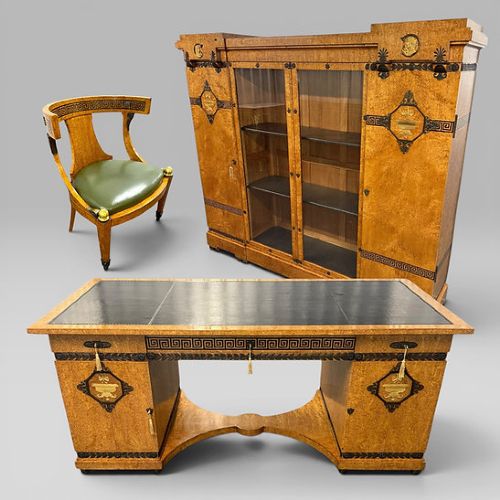
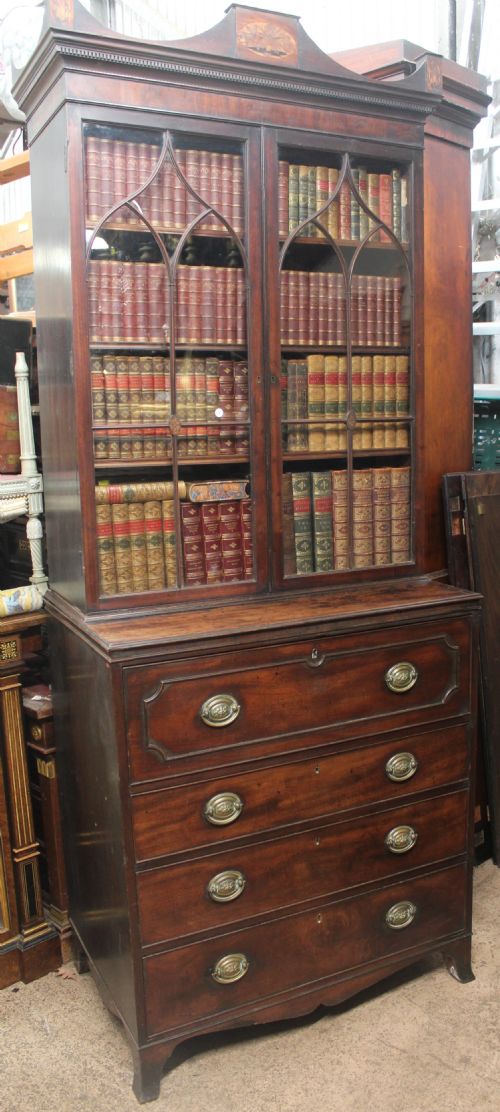
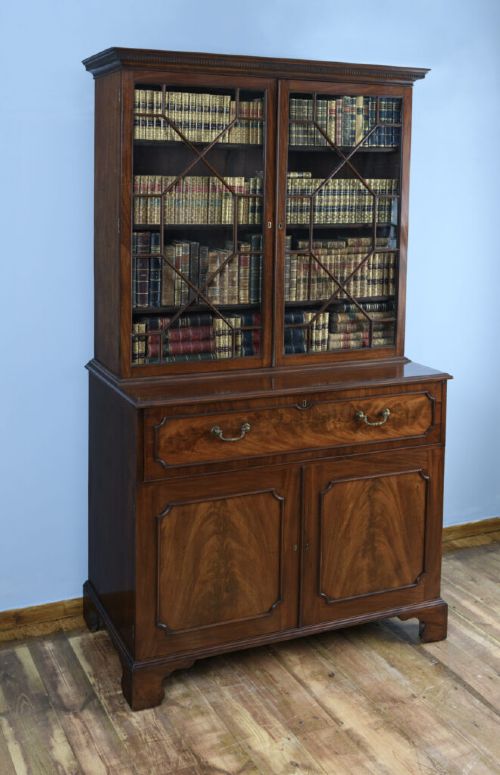
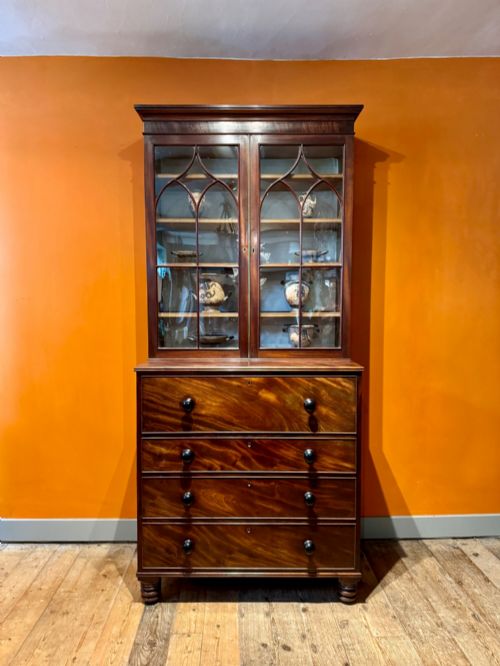
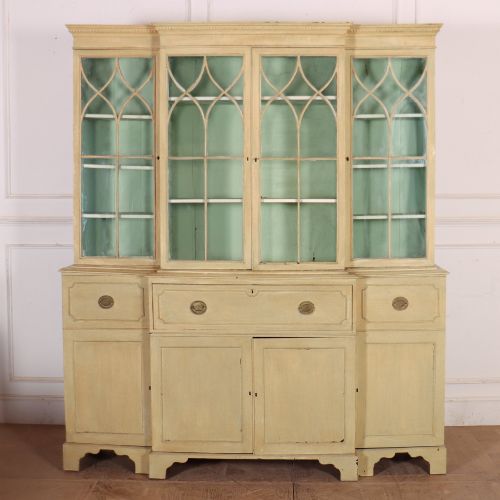


Glazed Display Cabinet Desk
These glazed display cabinet desk pieces combine a writing surface with upper shelving behind glass doors, offering both workspace and storage.
Glazed Display Cabinet Desk
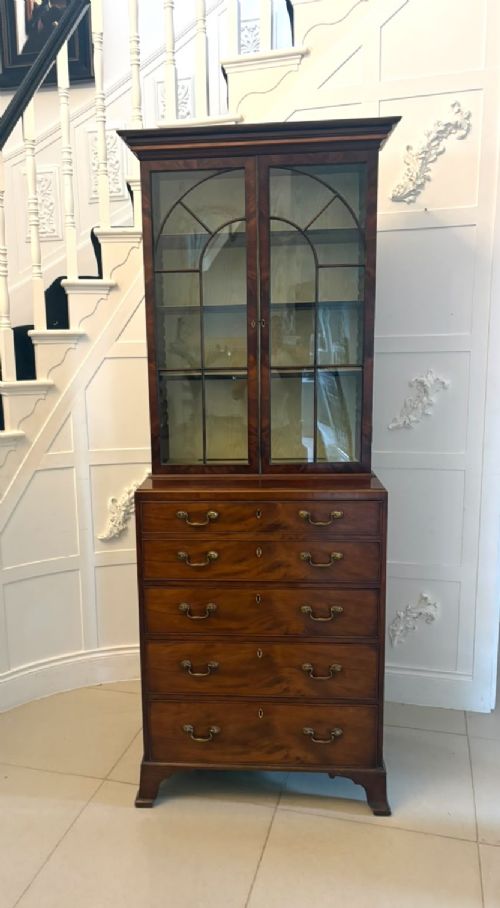
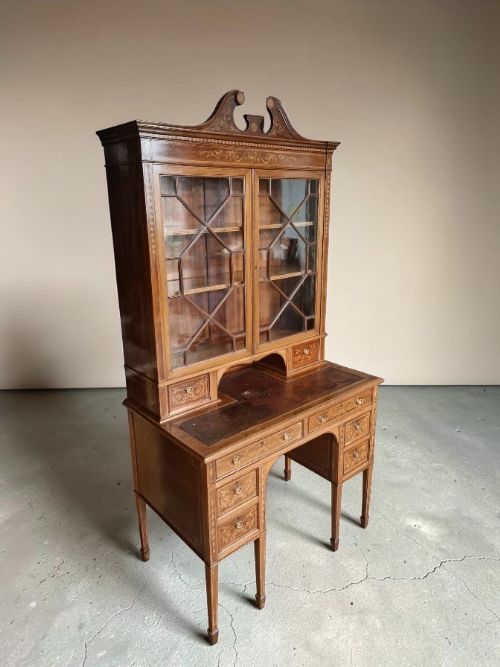
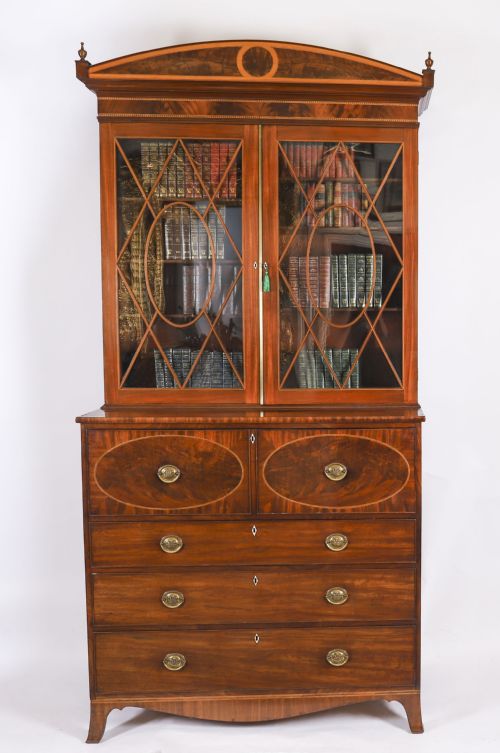
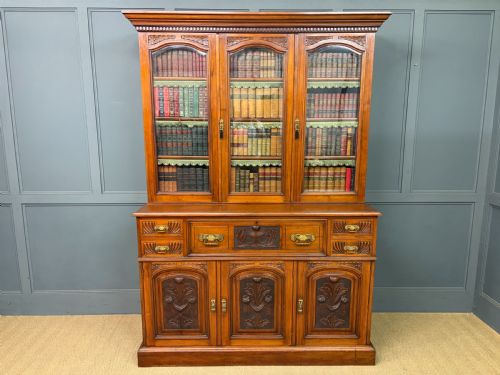
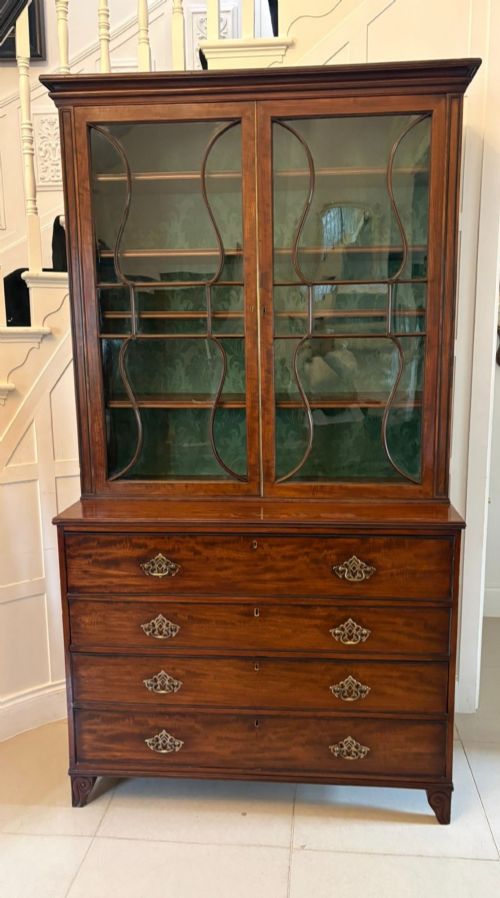
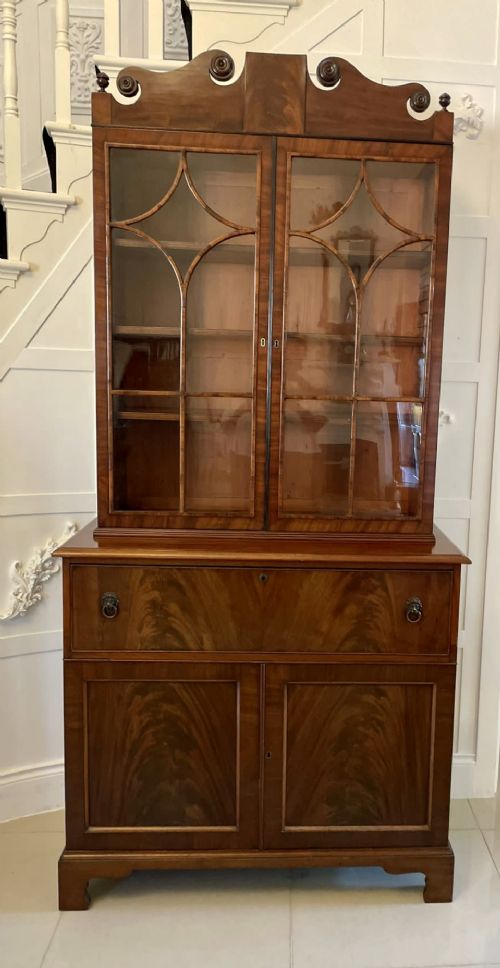
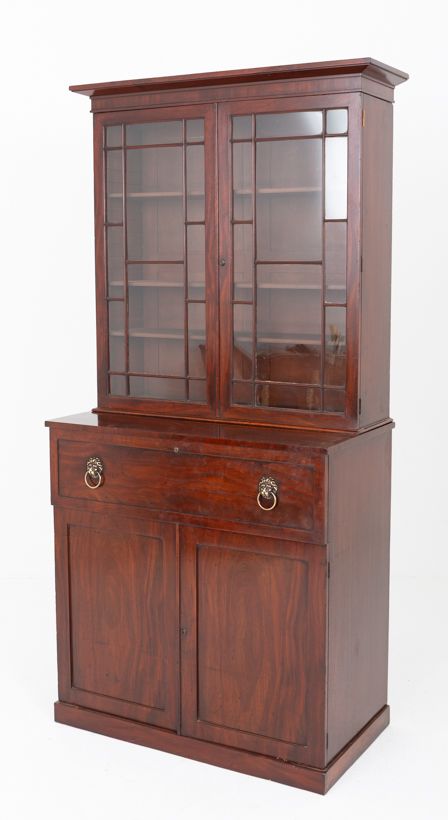
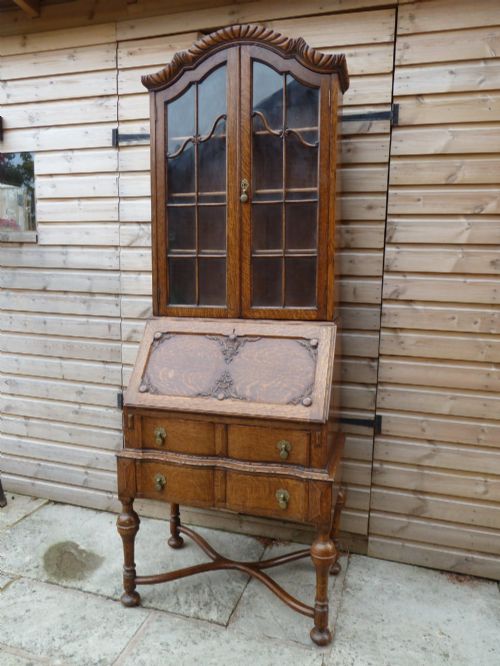
When searching for a glazed display cabinet desk, you encounter large dual-purpose furniture pieces that combine an enclosed writing drawer with upper shelving. The common versions on this page are secretaire bookcases and bureau bookcases originating from the eighteenth and nineteenth centuries.
Makers constructed these hybrid pieces using distinct periods including Georgian, Regency, Victorian, and Edwardian styles. They serve dual functions by providing a concealed drop-front writing desk alongside upper display cabinets with glass doors.
Materials and construction
Cabinet makers utilised dense hardwoods such as mahogany, flame mahogany, satinwood, walnut, and oak to build the primary carcass and shelving units. Many examples incorporate intricate wood veneers and decorative boxwood or ebony stringing.
The upper display sections feature fitted glass panels, often held in place by wooden glazing bars in geometric or astragal patterns. Lower writing sections commonly contain a drop-down flap lined with leather, revealing internal small drawers and pigeonholes.
The listings here feature oak, walnut, and mahogany timbers across Georgian, Victorian, and Edwardian periods.
Assessing craftsmanship and execution
The standard of timber selection heavily dictates the overall quality of these items, with figured grains and book-matched flame veneers marking superior examples. Cabinet makers achieved finer results through precise dovetail joints on internal drawers and careful matching of grain patterns across the fall-front desk.
Hardware execution and glazing clarity also separate standard production items from exceptional workshop outputs. Hand-blown glass panes containing natural ripples and original brasses indicate higher period authenticity and careful original manufacture.
Mercier Frères·Gillows·Maple and Co·Morris and Co
The Glazed Display Cabinet Desk Glossary
- Secretaire bookcase
- A tall furniture piece incorporating a fitted writing drawer with a drop-front panel beneath glazed upper bookcase doors.
- Astragal glazing
- Wooden bars that divide a glass window or door into smaller panes, commonly shaped with a moulded profile.
- Flame mahogany
- A distinct timber veneer cut from the fork of a mahogany tree to produce a flame-like or feather pattern.
- Satinwood
- A durable, light yellow-brown timber utilised extensively during the eighteenth and nineteenth centuries for fine cabinetwork.
- Bureau bookcase
- A writing cabinet featuring a sloping fall-front desk combined with an upper shelving unit.
Glazed Display Cabinet Desk: Frequently Asked Questions
What is a glazed display cabinet desk?
It is a combined furniture item featuring an upper glass-fronted cabinet for books or displays paired with a lower section containing a pull-down writing desk.
These pieces typically date from the Georgian through to the Edwardian eras and provide both display space and practical workspace.
How do I use a secretaire desk?
The front panel hinges downward to create a flat writing surface, supported by internal desk arms or the drawer front itself.
Inside, you will find small pigeonholes and letter drawers designed for household administration and correspondence.
How do I date an antique cabinet desk?
Dating relies on observing timber choices, construction techniques such as hand-cut dovetails, and stylistic markers from periods like Regency or Victorian.
Secondary woods inside drawers and the profile of the glass glazing bars also offer reliable clues to the decade of manufacture.
Where should I place a large bookcase desk?
These tall items require stable wall placement in rooms with adequate ceiling height and steady indoor climate conditions away from direct sunlight.
Ensure the room has sufficient floor depth to allow the drop-front desk flap to open fully without blocking walkways.