
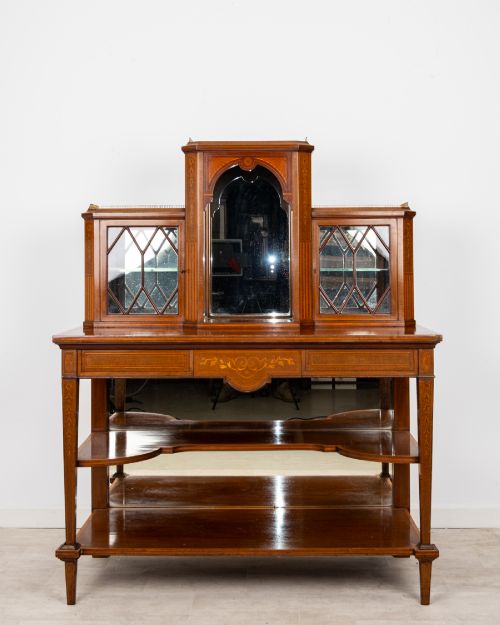


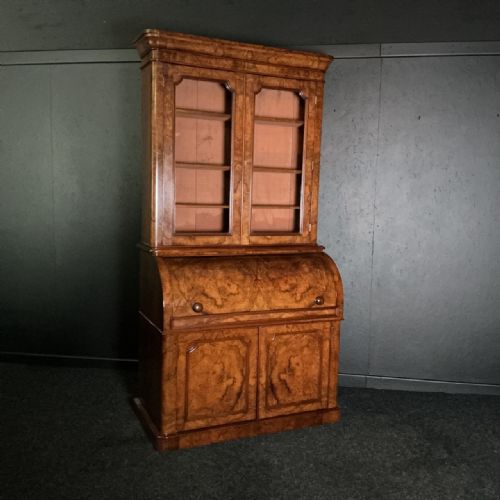

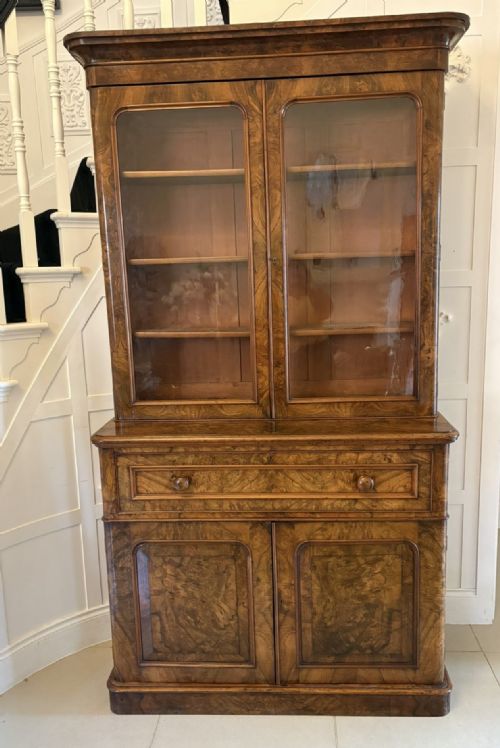


Edwardian Display Cabinet Desk
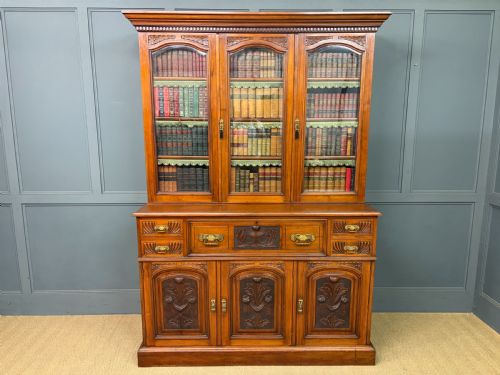
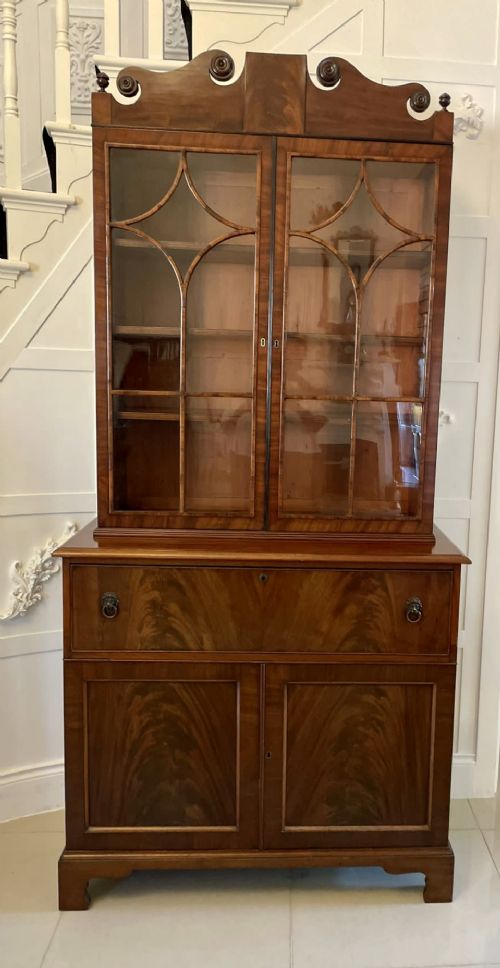
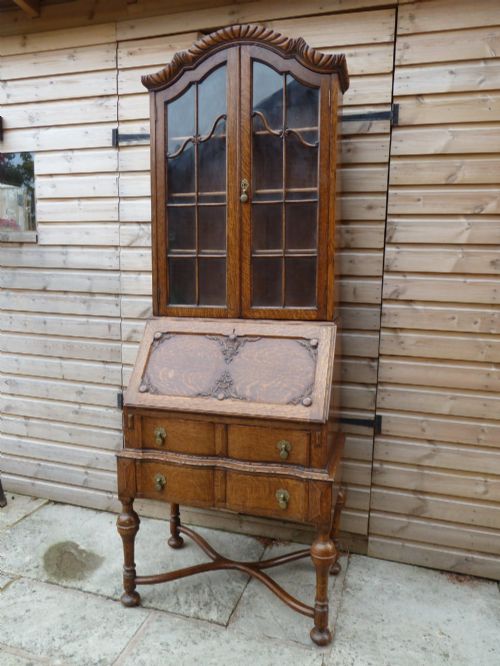
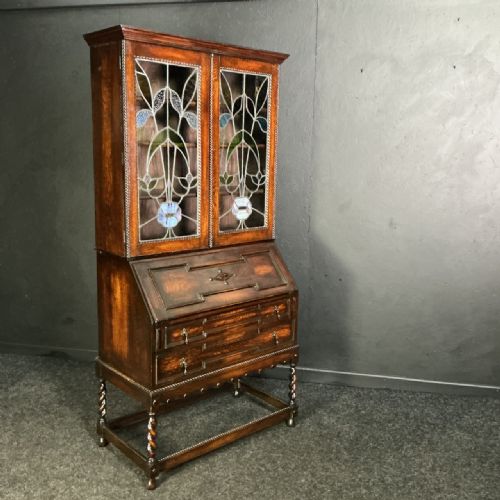
An edwardian display cabinet desk combines writing space, bookshelf and display frontage in one timber-framed piece.
Edwardian Display Cabinet Desk
The edwardian display cabinet desk sits at the intersection of several functional forms, appearing as bureau bookcases, secretaire bookcases, and writing desks with glazed upper sections.
Most examples date from the Edwardian period or around nineteen hundred, though the listings also encompass Victorian, Georgian, and eighteenth-century antecedents built in revival styles.
Makers of this era frequently drew upon Sheraton Revival, Arts and Crafts, and Chinoise aesthetics, producing multifunctional furniture designed to display books and porcelain while providing a concealed writing surface.
Materials and construction
Cabinetmakers constructed these pieces primarily using solid timbers and veneers of mahogany, satinwood, oak, walnut, and burr walnut.
Glass panels fitted into wooden frames protect the upper display areas, whilst brass hardware secures doors, drawers, and drop-down writing desks.
Marquetry inlay and delicate stringing decorate the exterior surfaces, reflecting the skilled craftsmanship of late nineteenth and early twentieth-century workshops.
Mahogany, oak, and satinwood dominate the timber selections across these edwardian display cabinet desk listings.
Evaluating quality
Quality rests upon the selection of timber figures, such as burr walnut or figured mahogany, and the precision of the marquetry inlay across the facade.
The sophistication of the internal fittings within the bureau section distinguishes standard utilitarian pieces from exhibition-quality cabinetwork.
Integrity of construction, including the clarity of the glazed panels and the original condition of the brass mounts, elevates a piece.
Maple and Co·Gillows·Edwards and Roberts·Shoolbred of London
The Edwardian Display Cabinet Desk Glossary
- Secretaire bookcase
- A tall piece of furniture featuring a lower section with a pull-out writing drawer containing small pigeonholes and drawers, paired with upper shelving.
- Marquetry
- Decorative veneer work formed by fitting pieces of various coloured woods into a design on a solid ground.
- Bonheur du jour
- A light lady's writing desk with a small cabinet or set of drawers on top, popular during the Edwardian era.
- Astral glazing
- Cabinet doors divided into small geometric glass panes by wooden framing bars.
Edwardian Display Cabinet Desk: Frequently Asked Questions
How do I use a bureau desk daily?
Lower the fitted writing flap to reveal interior pigeonholes and small drawers intended for correspondence and paperwork.
Close the flap securely when finished to conceal your workspace and maintain a neat appearance in the room.
Where should I place a display cabinet?
Position the piece against a sturdy interior wall away from direct sunlight to protect antique timber veneers and glass contents.
Ensure adequate floor space allows the drop-down desk flap and lower cabinet doors to open fully without obstruction.
How do I date an edwardian desk?
Examine the secondary woods inside the drawers and inspect the construction methods used for the dovetails and backboards.
Stylistic markers such as Sheraton Revival inlay and specific brass hardware designs help confirm an Edwardian origin.