
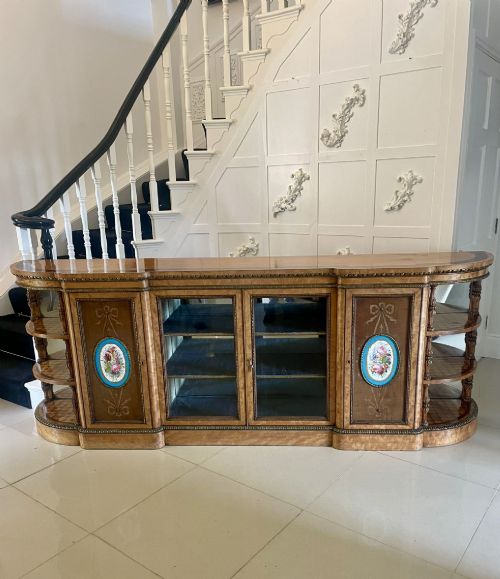
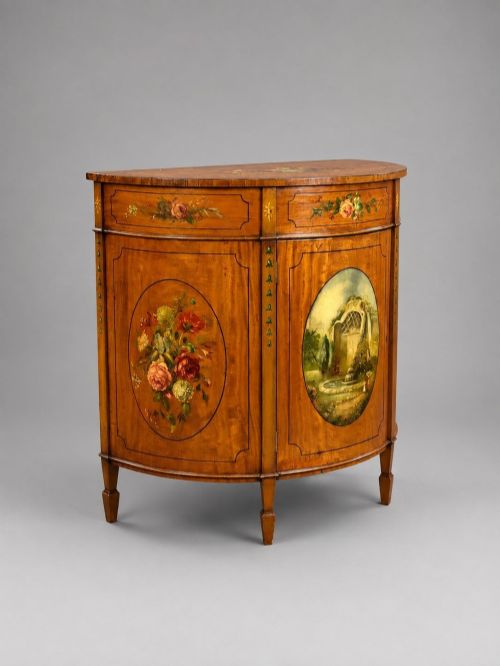
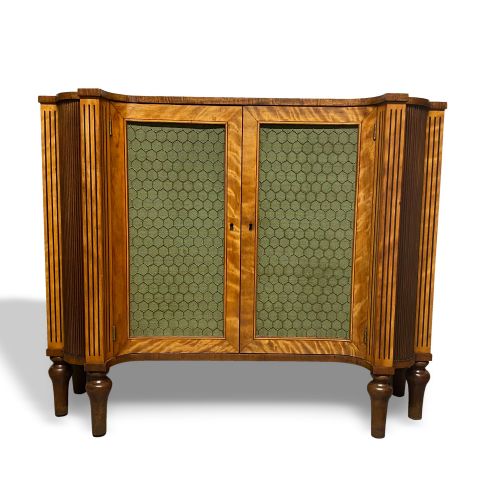
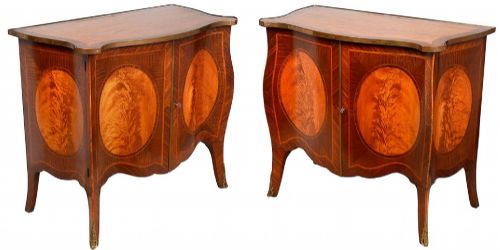


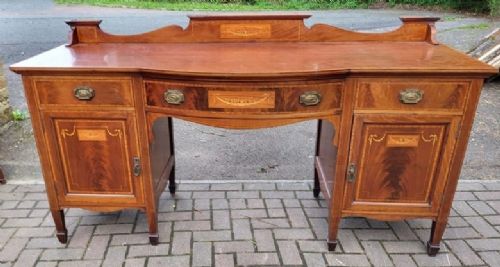
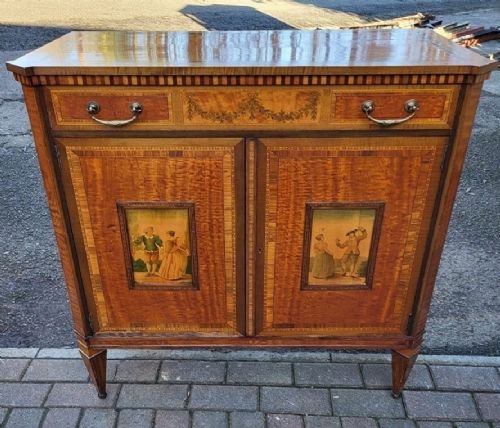
Satinwood Credenza Cabinet
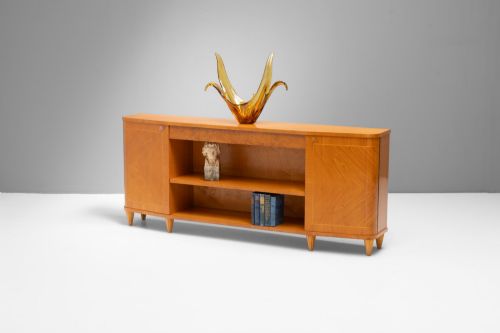
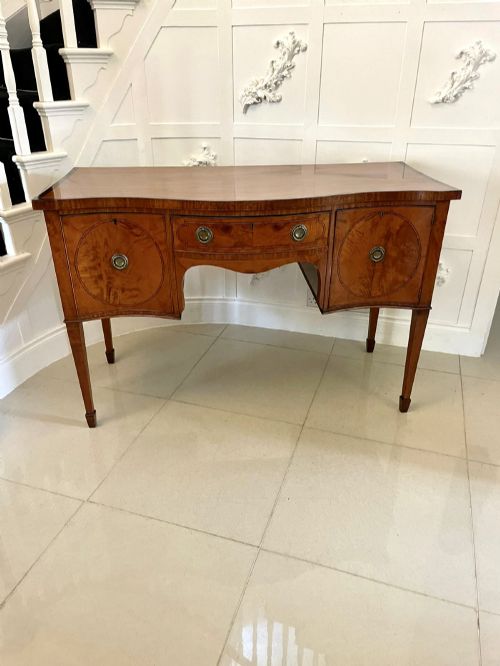
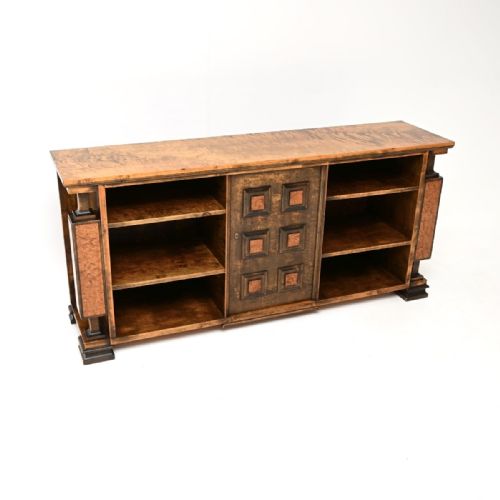
A satinwood credenza cabinet brings figured timber and refined neoclassical revival detailing into a room, offering both surface display and concealed storage.
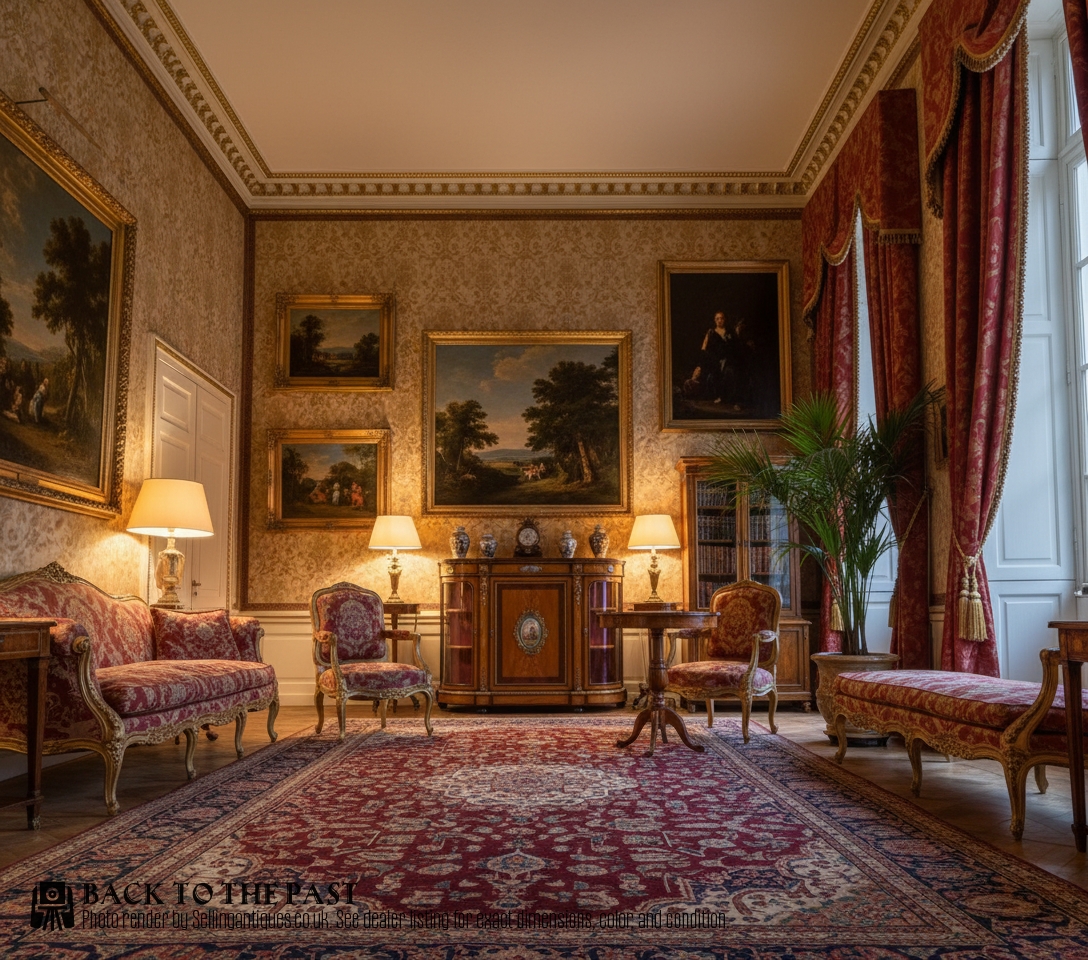
Satinwood Credenza Cabinet
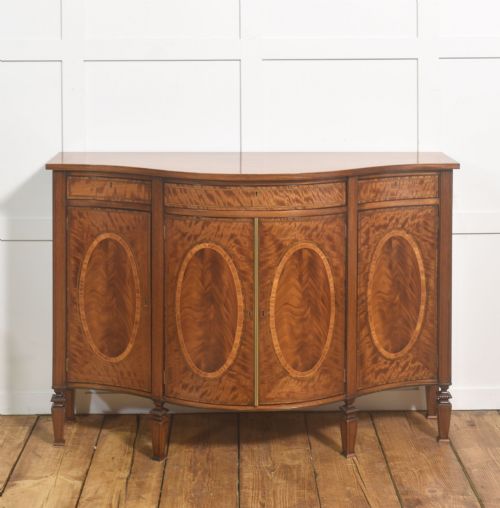
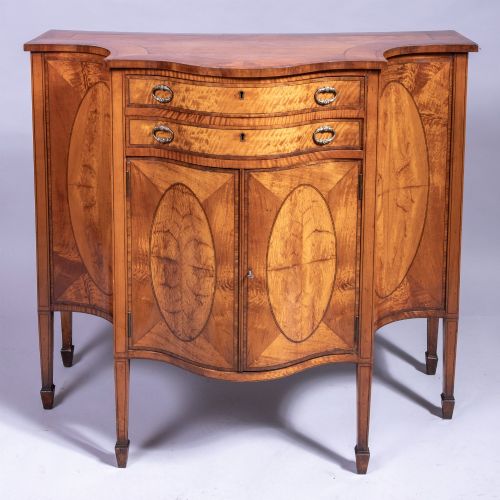
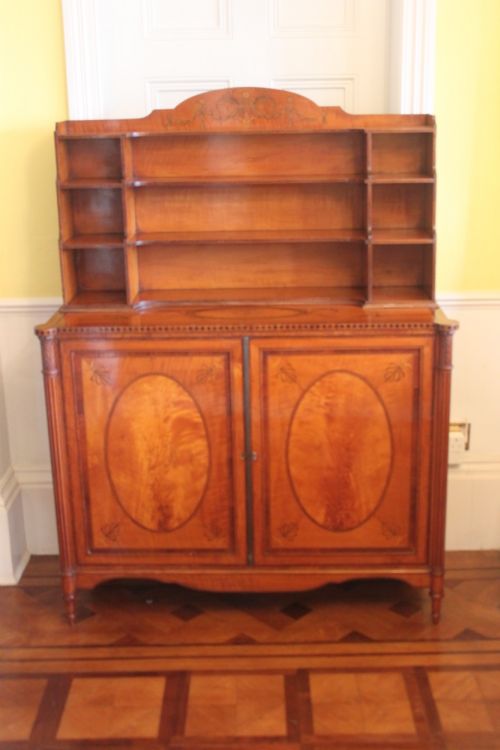
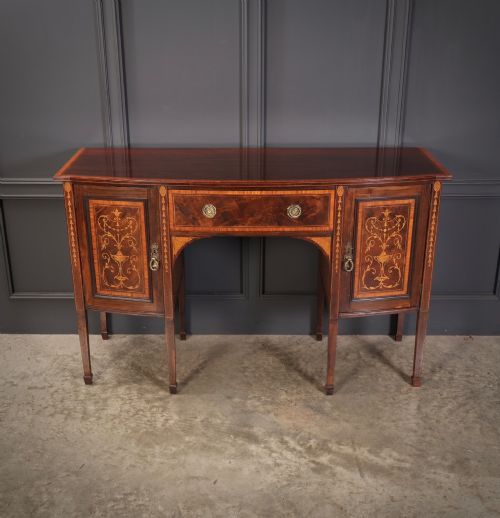
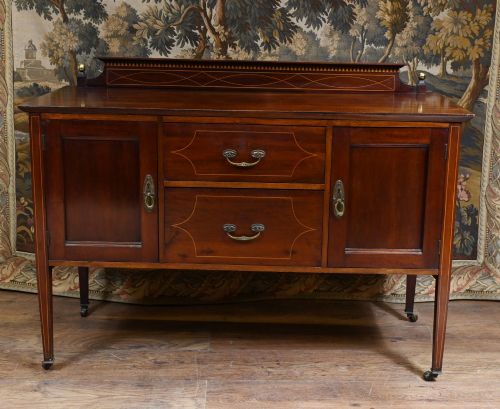
When searching for a satinwood credenza cabinet, you encounter low-slung credenzas, serpentine commodes, and bow-front side cabinets from the nineteenth and early twentieth centuries. These forms serve as central display and storage pieces in formal reception rooms and dining spaces.
The pieces appearing most frequently span the Victorian era, the Edwardian period, and the subsequent Sheraton revival. They combine substantial timber carcases with lighter decorative veneers and classical painted panels.
Originating largely from British workshops and heritage makers, these cabinets showcase the enduring appeal of light-toned tropical hardwoods shaped into demi-lune, curved, and breakfront profiles.
How they were made
Craftsmen built these cabinets using solid secondary timbers faced with fine satinwood veneers, often supplemented by contrasting boxwood, mahogany, and rosewood crossbanding. Marquetry inlay forms floral and classical motifs across the curved door panels and tops.
Metal enrichment comes from cast ormolu, gilt bronze mounts, and brass detailing that frames the doors and highlights the angles. Painted panels featuring neoclassical scenes and classical figures appear on many Edwardian and revival examples.
Several demi-lune commodes come with painted classical panels, ensuring your living room retains a permanent theatrical audience of silent nymphs.
What varies in quality
The distinction between standard production and exceptional quality lies in the tightness of the timber figure and the precision of the marquetry cutting. Crisp hand-chiselled ormolu mounts and finely rendered hand-painted classical panels elevate a piece well above simpler veneered carcases.
Structural integrity of the curved or serpentine front and the matching grain orientation across multiple doors demonstrate the maker's skill. Pieces bearing recorded signatures or stamps from established cabinet makers reflect superior workshop standards.
James Hicks·Maple and Co·Collinson and Lock London·Gillows·Edwards and Roberts·Ince and Mayhew
The Satinwood Credenza Cabinet Glossary
- Satinwood
- A lustrous, hard tropical timber with a golden sheen used extensively for fine cabinet veneers throughout the eighteenth and nineteenth centuries.
- Credenza
- A low cabinet, originally designed for dining rooms, featuring central cupboards often flanked by curved glass display sections.
- Marquetry
- The art of applying small pieces of veneer to a structure to form decorative patterns and pictorial designs.
- Ormolu
- Gilt-bronze mounts applied to furniture edges and mounts for decorative effect during the eighteenth and nineteenth centuries.
- Demi-lune
- A half-moon shape characteristic of commodes and side cabinets designed to sit flat against a wall.
- Crossbanding
- A narrow strip of veneer laid around the border of a panel with the grain running perpendicular to the centre.
Satinwood Credenza Cabinet: Frequently Asked Questions
What is a satinwood credenza cabinet?
A satinwood credenza cabinet is a low storage or display piece veneered in light golden satinwood, often decorated with marquetry inlay and ormolu mounts. These items originated primarily in the nineteenth and early twentieth centuries during revival periods.
They combine cupboards and sometimes glass-fronted sides, making them suited for displaying decorative objects while concealing tableware or books within a formal room.
How do I date a satinwood cabinet?
Dating relies on examining the secondary timbers used inside the carcase, the style of the brass hardware, and the specific revival movement represented. Pieces from the Georgian era display different construction methods compared to late Victorian or Edwardian Sheraton revival items.
Maker stamps, handwritten workshop labels, and the complexity of the marquetry or painted panels provide additional clues regarding the decade of manufacture.
Where should I place a credenza cabinet?
These cabinets work effectively along long walls in dining rooms, entrance halls, or drawing rooms where their decorative grain and painted panels can be appreciated. Their shallow depth relative to traditional sideboards makes them practical for circulation areas.
Keep them away from direct sunlight and extreme temperature fluctuations to protect the delicate satinwood veneers and hand-painted surfaces from fading or cracking.
How do I care for satinwood furniture?
Maintenance involves dusting regularly with a soft, dry cloth and avoiding silicone-based polishes that can damage the historical polish finish. Waxing occasionally preserves the lustre of the wood without building up heavy residue.
Maintain stable indoor humidity levels to prevent the timber beneath the veneers from expanding and causing the inlay to lift over time.