


Louis XVI Revival Credenza
A louis xvi revival credenza is an imposing nineteenth-century cabinet that brings French neoclassical symmetry and rich mounts to a room.
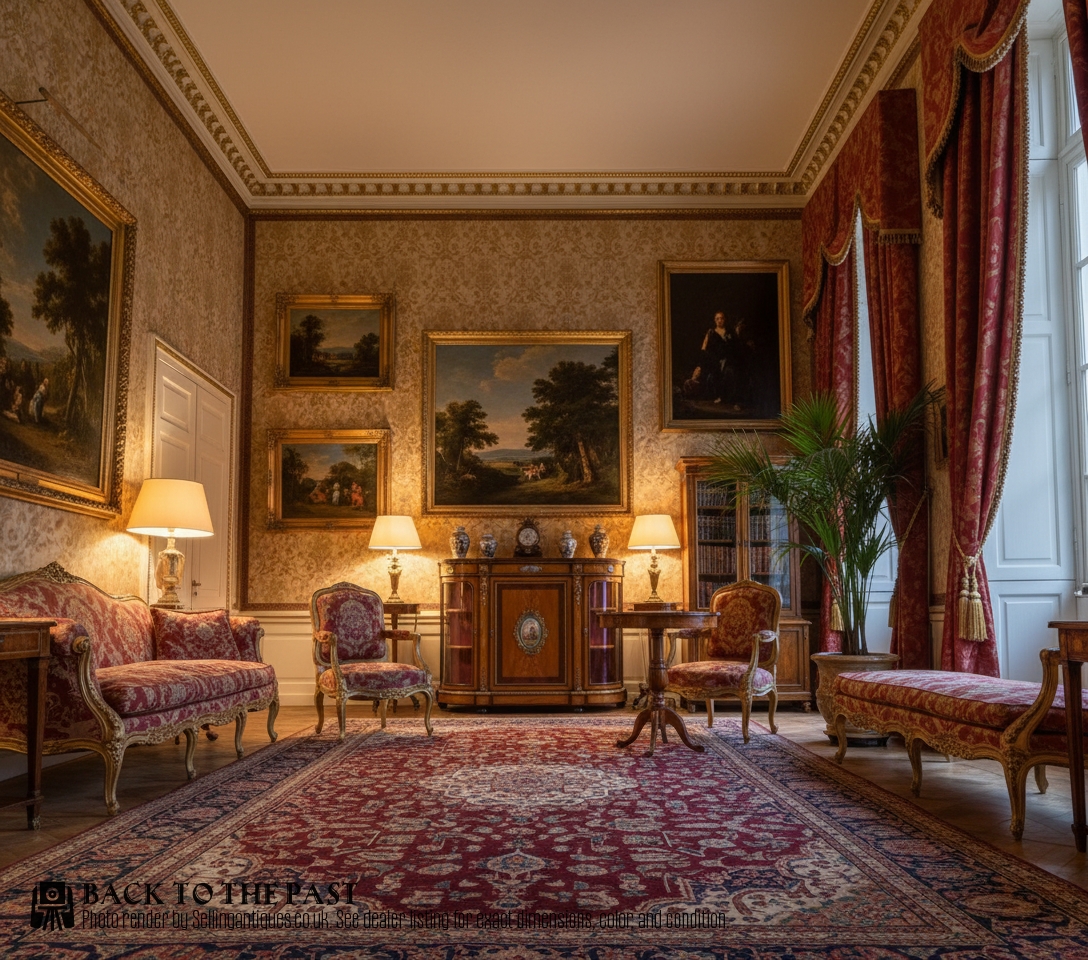
Louis XVI Revival Credenza
A louis xvi revival credenza is a substantial storage piece rooted in nineteenth-century French and Victorian tastes, often taking the form of a credenza, side cabinet, or commode. These pieces borrow heavily from the neoclassical restraint of the French eighteenth century, offering rectilinear forms and balanced proportions.
The aesthetic relies on architectural lines rather than the exuberant curves of earlier rococo styles. Most examples integrate glazed doors, marble tops, or open central shelving framed by flanking cupboards.
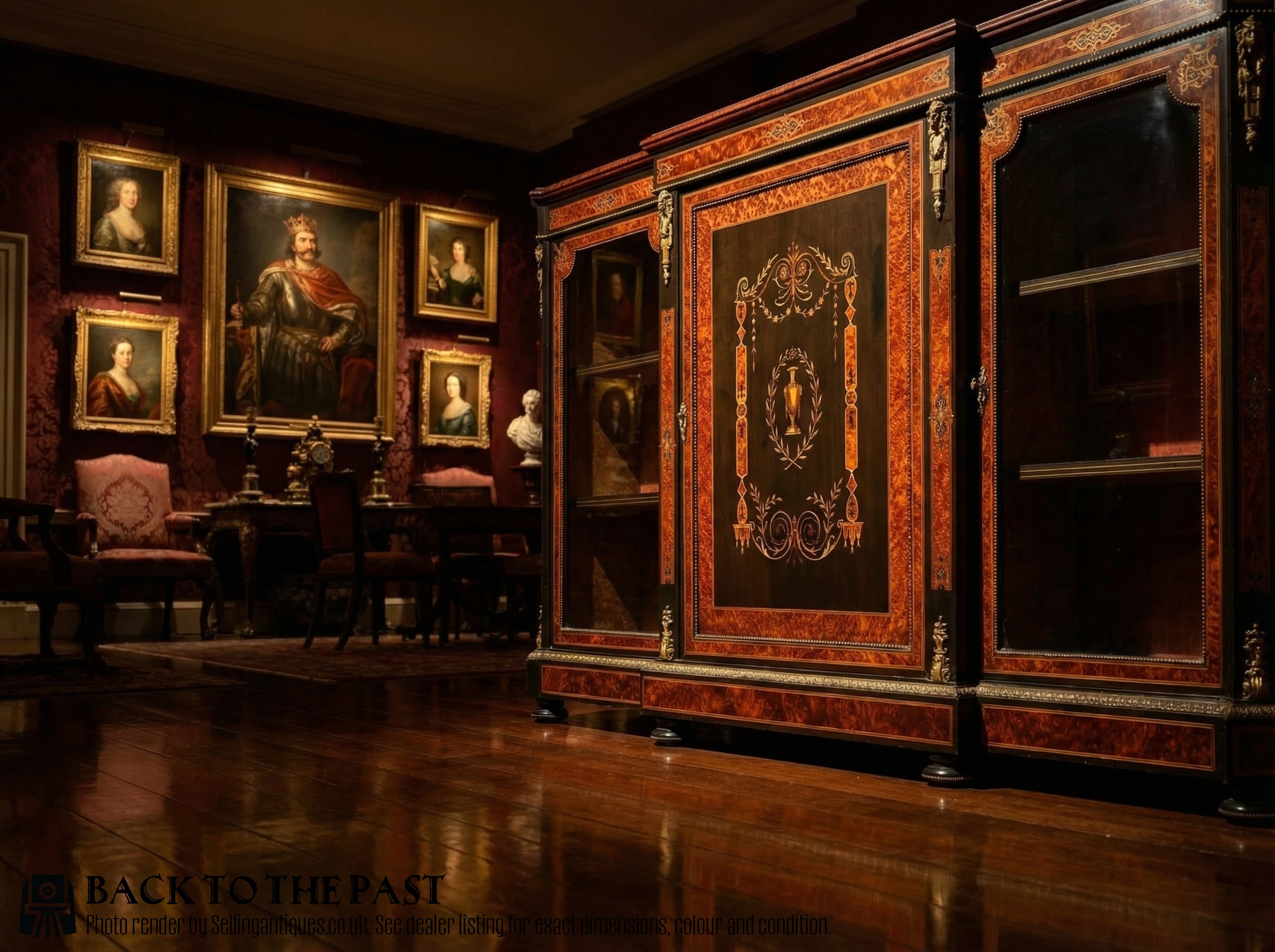
How they were made
Cabinetmakers built these pieces using foundational timbers like burr walnut, kingwood, satinwood, and ebonised wood, frequently decorated with intricate marquetry and boxwood stringing. Selected veneers were laid over sturdy carcases to create rich grain patterns across the front and sides.
Gilded bronze or ormolu mounts were cast and chased to highlight corners, friezes, and panel borders, providing a sharp metallic contrast to the timber. Many pieces incorporate inset Sevres style porcelain plaques or pietra dura panels into the cabinetry.
Stone tops, particularly white or variegated marble, were cut and polished to fit precisely over the wooden framework. Glazed doors utilised bevelled glass held within timber framing, secured with brass locks and hinges.
Some nineteenth-century makers hid keys inside intricate ormolu lock escutcheons shaped to mimic foliage.
What varies in quality
The distinction between standard production and exhibition quality lies in the depth of the craftsmanship and the selection of materials. Finer pieces demonstrate superior control in the cutting of marquetry veneers and the crispness of the chased ormolu mounts.
The integration of decorative elements dictates the visual success of the cabinet. Hand-painted porcelain plaques and finely fitted pietra dura panels elevate a piece above simpler timber-and-glass constructions, showing greater ambition in workshop output.
Paul Sormani
The Louis XVI Revival Credenza Glossary
- Ormolu
- Gilded bronze used for decorative mounts and accents on furniture. The technique involves applying a fine layer of gold amalgam to cast brass or bronze.
- Marquetry
- The art of applying small pieces of veneer to a structure to form decorative patterns and pictures. Makers used contrasting woods like kingwood and boxwood to achieve tonal depth.
- Credenza
- A sideboard or cabinet used for display and storage, typically featuring a central cupboard flanked by side compartments. In nineteenth-century revivals, these often incorporate glass doors and ornate mounts.
- Pietra dura
- The inlay technique of using cut and fitted polished coloured stones to create geometric or pictorial designs. This painstaking method appears on high-status cabinet doors and tops.
Louis XVI Revival Credenza: Frequently Asked Questions
Where were these cabinets placed?
These cabinets were designed for principal reception rooms, drawing rooms, and dining spaces. Their finished backs and ornate fronts allowed them to stand against prominent walls.
The inclusion of marble tops and glass doors made them suitable for displaying porcelain, silver, and decorative objects while keeping contents protected.
How do I care for wood and ormolu?
Maintenance involves dusting timber surfaces with a soft, dry cloth and avoiding direct sunlight or fluctuating humidity. Wax can be used sparingly to nourish wood veneers.
Ormolu mounts require gentle cleaning without abrasive polishes that might strip the gilding. Stone tops should be kept clean with mild, non-acidic solutions.
How do I tell periods apart?
Differentiating periods relies on examining timber choices, construction techniques, and stylistic markers. Mid-nineteenth-century examples often display exuberant ormolu and exotic veneers.
Later Victorian and early twentieth-century pieces can show slightly more restrained interpretations or mechanical improvements in locks and hinges.