



Antique Amboyna Sideboard
An antique amboyna sideboard offers rich figured timber and striking ebonised contrast for a refined dining room or salon.
Antique Amboyna Sideboard
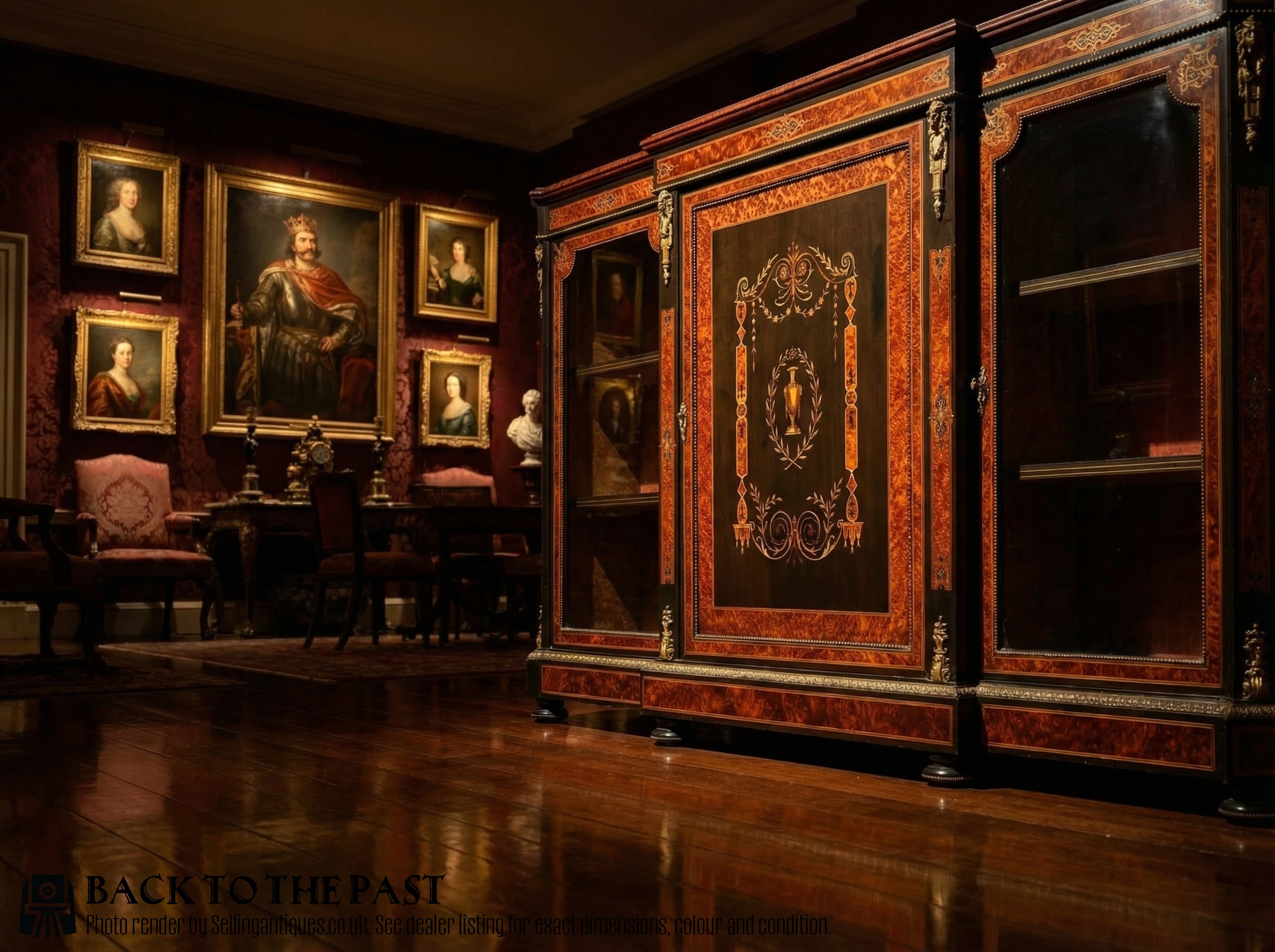
An antique amboyna sideboard combines the dense, spotted grain of exotic timber with sturdy cabinet construction, taking forms such as credenzas, side cabinets, and breakfront buffets. These pieces emerge predominantly from the nineteenth century, spanning Regency, Early Victorian, and Napoleon III periods.
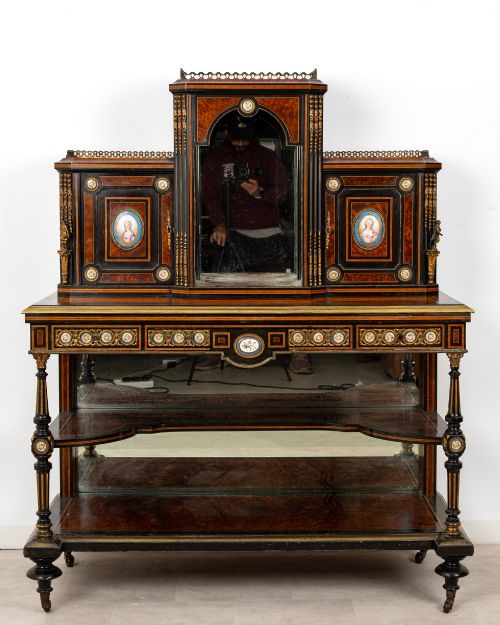
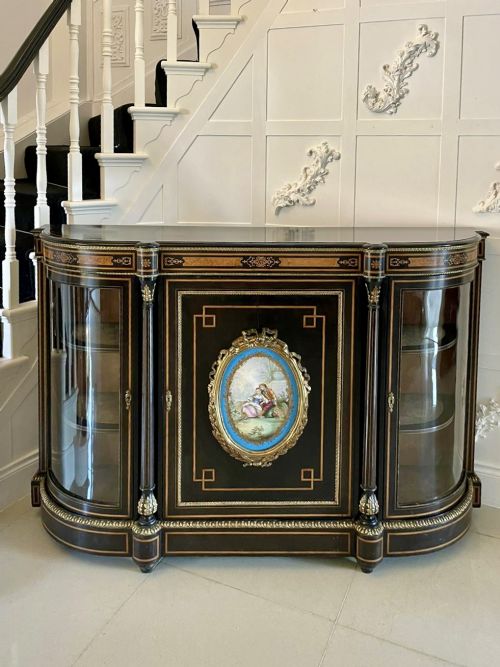
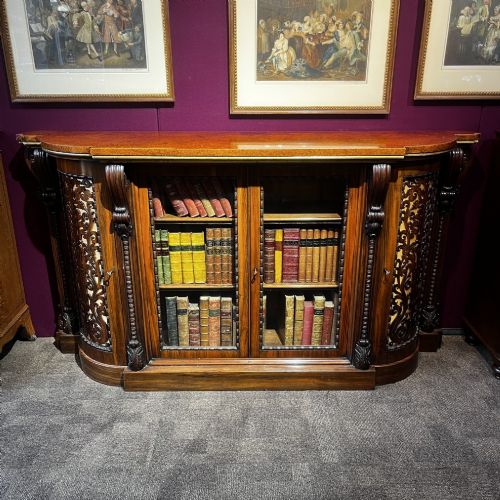
The version most commonly met on this page is the Victorian credenza or side cabinet, frequently paired with ebonised wood and brass mounts. French examples often incorporate porcelain plaques into their design, while English workshops lean towards substantial breakfront proportions.
How they were made
Metalwork details such as ormolu mounts, brass banding, and glass door panels are integrated to elevate the visual weight of the furniture. Porcelain plaques appear inset into the woodwork on French pieces, secured with delicate brass beadings.
Listings feature nineteenth-century periods including Regency, Victorian, and Napoleon III alongside materials like amboyna, ebonised wood, ormolu, and porcelain.
What varies in quality
The selection and book-matching of the amboyna veneer dictate the visual impact of the piece, with tightly packed burr eyes commanding greater attention than plain grain. Finer examples display seamless timber alignment across curved doors and drawer fronts.
The integration of secondary materials such as porcelain plaques, ebonised contrasts, and cast ormolu mounts marks the division between standard production and master cabinet work. Rigorous attention to interior secondary woods and original glass panels further separates the tiers of craftsmanship.
Lamb of Manchester·Epstein
The Antique Amboyna Sideboard Glossary
- Credenza
- A low dining room or salon cabinet, often featuring glazed central doors flanked by curved side cupboards. This form is common among nineteenth-century listings.
- Ebonised
- Timber treated with a dark finish to imitate ebony. This technique provides a sharp visual contrast against lighter veneers like amboyna.
- Ormolu
- Gilt bronze mounted onto furniture as decorative enrichment. It is cast and chased to add metallic brilliance to the cabinet design.
- Breakfront
- A cabinet design where the central section projects forward from the flanking wings. This architectural arrangement creates depth and shadow on large sideboards.
Antique Amboyna Sideboard: Frequently Asked Questions
How do I care for amboyna veneer?
Amboyna furniture requires gentle dusting with a soft, dry cloth to protect the polished surface. Keep pieces away from direct sunlight and steady heat sources to prevent the veneer from drying out.
Applying a specialist wax occasionally helps maintain the lustre of the timber without building up heavy residue.
Where were these sideboards made?
These cabinets originate primarily from English and French workshops during the nineteenth century. English makers often utilised robust proportions and burr walnut pairings alongside amboyna.
French makers frequently incorporated ebonised framing, porcelain plaques, and gilt bronze mounts into credenzas.
What periods do these pieces span?
The listings span the nineteenth century, taking in Regency, Early Victorian, and Napoleon III eras. Mid-century examples from around eighteen-fifty to eighteen-eighty appear regularly.
Later twentieth-century interpretations also surface, reflecting the enduring appeal of figured exotic woods in modern interior design.