


Ebonised and Gilt Credenza
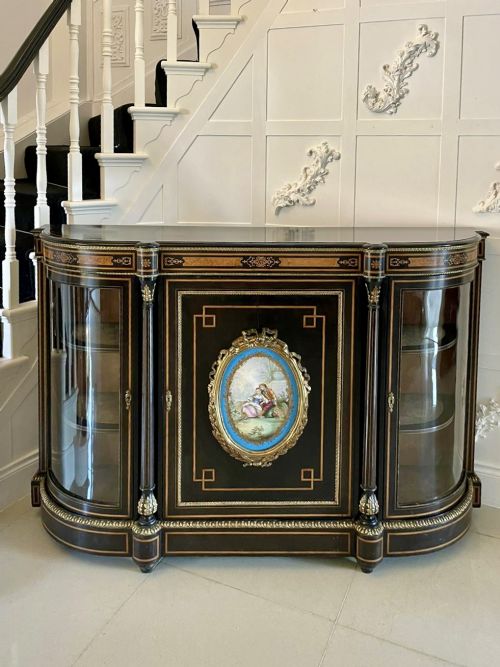
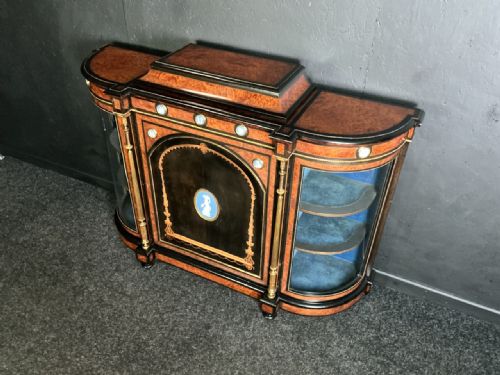
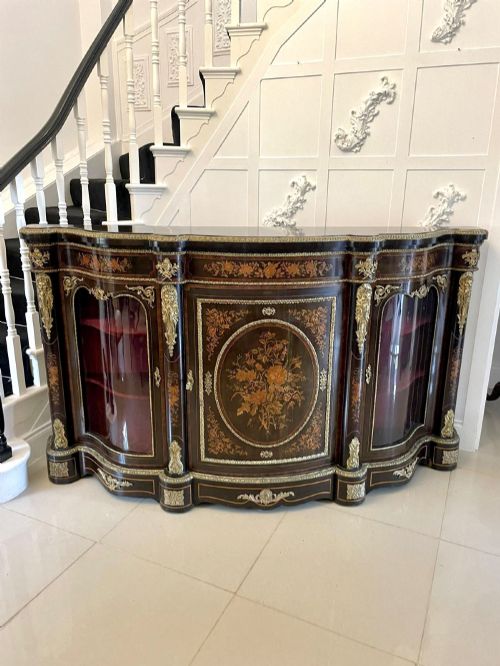
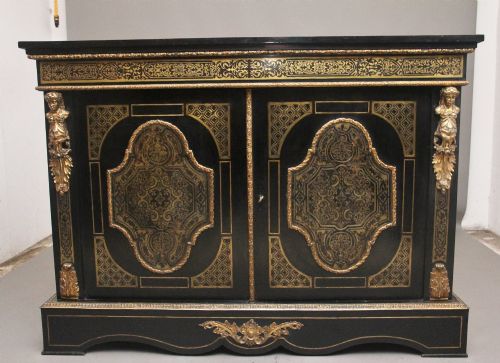
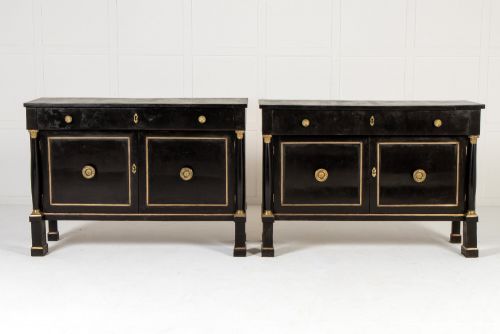
An ebonised and gilt credenza brings deep dark wood and bright metallic contrast to a room, offering grand display space for fine porcelain and collectables.
Ebonised and Gilt Credenza
When you search for an ebonised and gilt credenza, you encounter impressive nineteenth-century cabinet work designed for formal reception rooms. These substantial pieces serve as side cabinets, display units, or low sideboards built to anchor a drawing room wall.
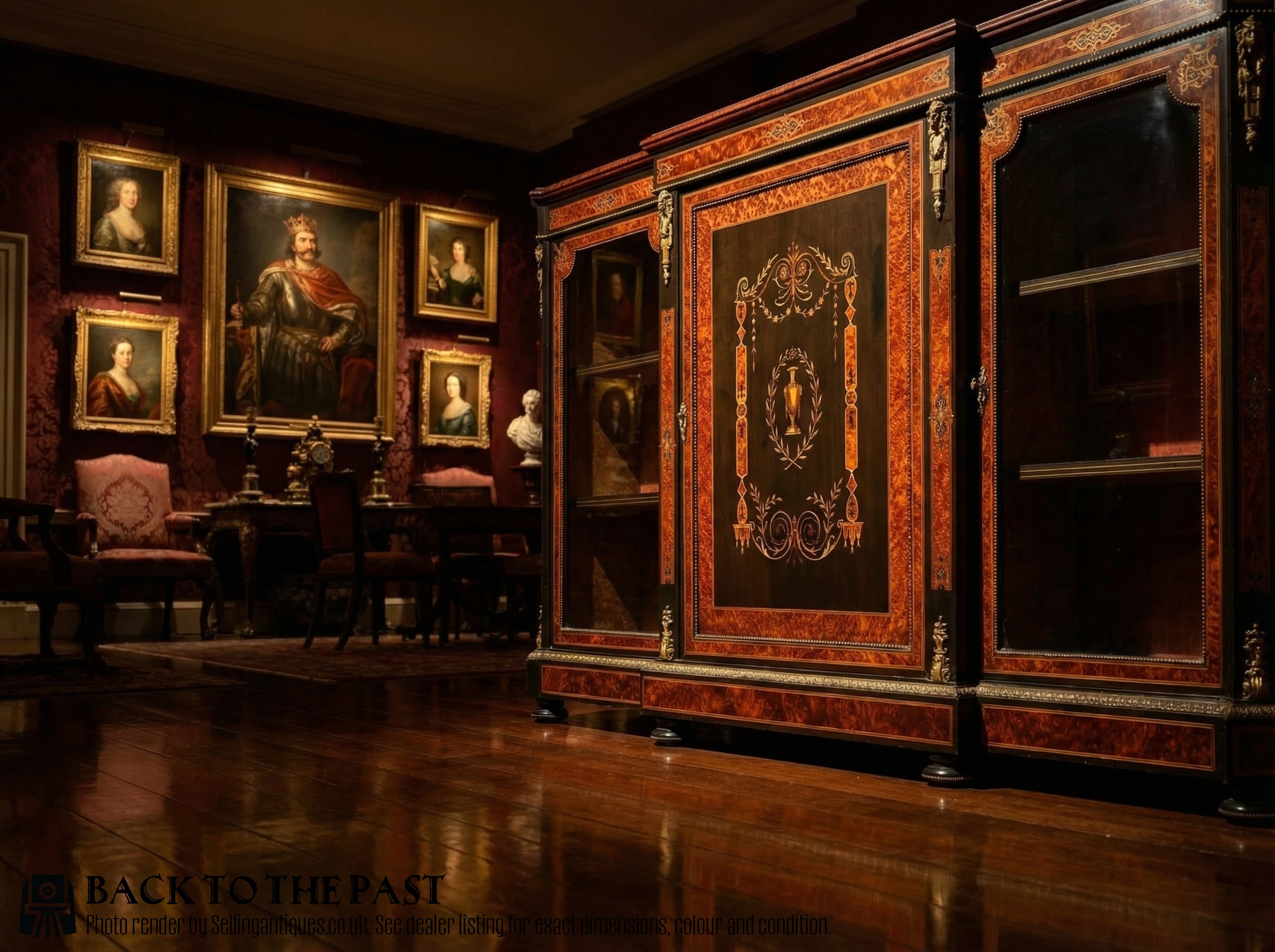
The versions most commonly met on this page date from the Victorian and Napoleon III periods, often taking breakfront or serpentine shapes. Makers constructed them to display ceramics behind glazed doors while providing central cupboard storage.
Origins span English Victorian workshops and French ateliers, bringing together diverse aesthetic movements and classical influences. They combine dark timber surfaces with gleaming metal mounts to create a striking architectural presence.
Materials and Construction Methods
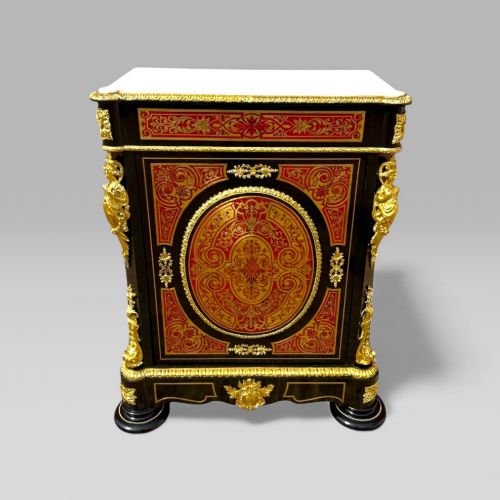
The dark finish relies on ebonised wood, sometimes combined with exotic timbers like amboyna, coromandel, or tortoiseshell inlay. Craftsmen achieved the intense black surface through staining and polishing to emulate costly ebony.
Gilt bronze, brass, and ormolu mounts provide structural enrichment along edges, cornices, and door panels. These metallic elements highlight the linear geometry and curves of the cabinetry.
Glazed central and side compartments frequently incorporate ceramic plaques, marble tops, or pietra dura panels. These decorative insertions demonstrate the collaborative skill of metalworkers, ceramicists, and cabinet makers.
Some nineteenth-century cabinet makers secretly used pearwood beneath the dark stain, letting ordinary orchard timber punch above its weight.
Distinctions in Quality and Craftsmanship
Quality rests upon the crispness of the cast ormolu mounts and the intricacy of any marquetry or boullework. Finer examples display meticulous hand-chasing on the metal fittings and seamless integration of porcelain plaques.
The choice of secondary timbers and the stability of the ebonised finish dictate the longevity of the cabinet. Superior pieces retain tight joinery across serpentine or breakfront carcasses without warping.
Lamb of Manchester
The Ebonised and Gilt Credenza Glossary
- Ebonised
- Wood treated with stain, dye, or polish to imitate genuine ebony. This dark finish gained immense popularity during the Victorian and Aesthetic periods.
- Ormolu
- Gilded bronze used for decorative mounts and furniture trim. The technique involves applying a gold amalgam to bronze before firing.
- Boullework
- Inlay technique utilising tortoise shell and brass, named after the French cabinet maker André-Charles Boulle. It creates elaborate patterned surfaces on cabinet doors.
- Pietra dura
- Inlay work using polished coloured stones to form pictorial designs. Artisans set these hardstones into marble panels on high-status cabinets.
- Pier cabinet
- A narrow display cabinet designed to sit against the wall space between windows. These pieces often feature glass doors and velvet-lined interiors.
Ebonised and Gilt Credenza: Frequently Asked Questions
Where were credenzas placed in period homes?
Nineteenth-century households positioned these large cabinets against principal drawing room walls, often between windows or as the focal point of a dining space. Their low profile kept sightlines open across the room.
They functioned primarily as display furniture for prized ceramics, glass, and decorative objects while concealing household linens or silverware within their cupboards.
How do I care for ebonised wood?
Protect the dark finish by keeping the cabinet away from direct sunlight and heat sources, which can fade or dry the polished timber over time. Dust gently with a dry, soft cloth.
Avoid liquid polishes or abrasive cleaners that might damage the delicate gilt metal mounts and the dark surface treatment.
How do I distinguish French and English pieces?
French Napoleon III examples frequently incorporate elaborate tortoiseshell boullework, pietra dura panels, and highly chased gilt bronze mounts. They lean towards ornate, curvilinear statement pieces.
English Victorian versions often favour Aesthetic Movement lines, geometric inlaid banding, and restrained ormolu or brass detailing.