



Ebonised Breakfront Credenza
An ebonised breakfront credenza is a dark, commanding nineteenth-century display piece designed to anchor a formal reception room.
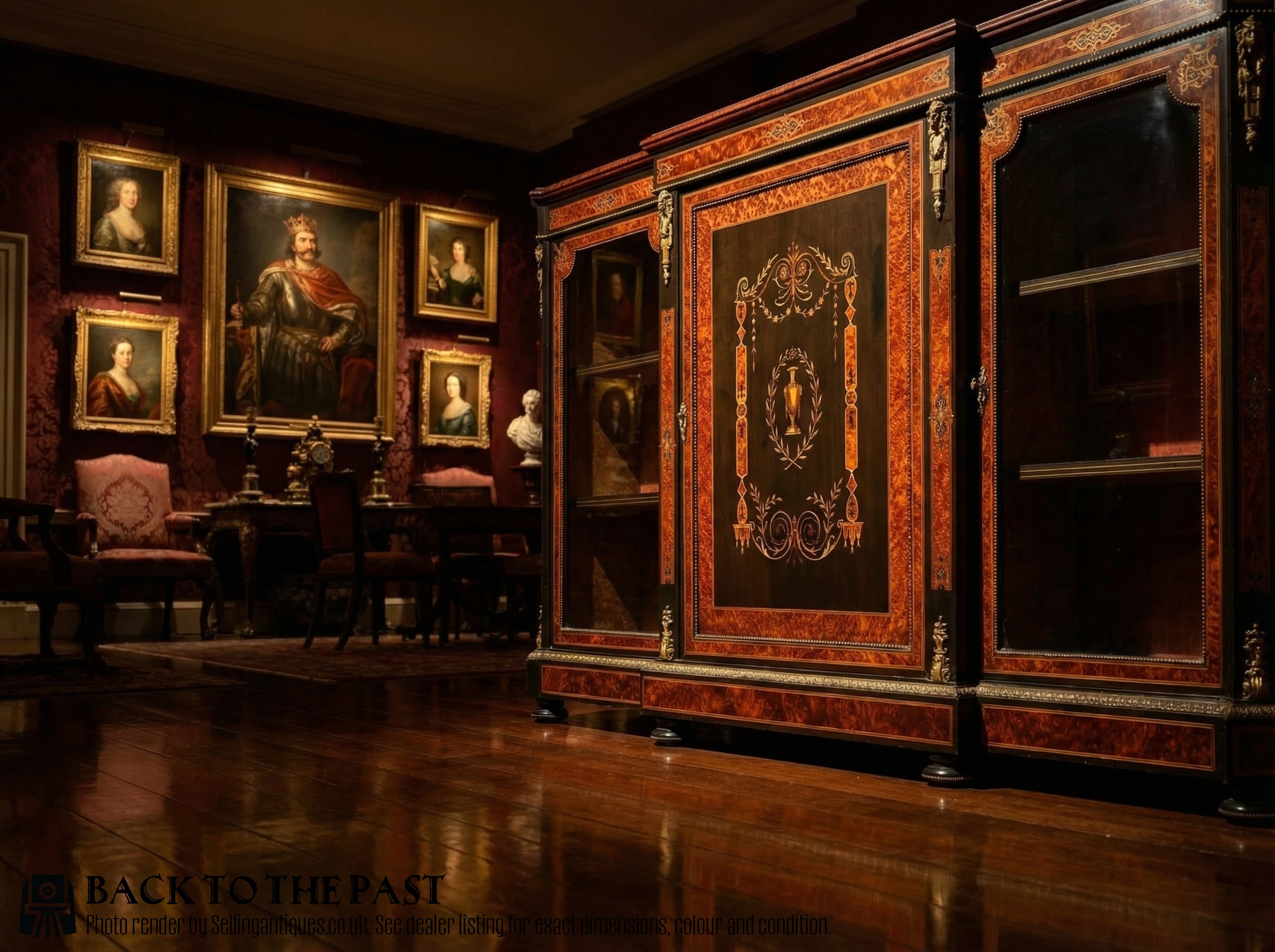
Ebonised Breakfront Credenza
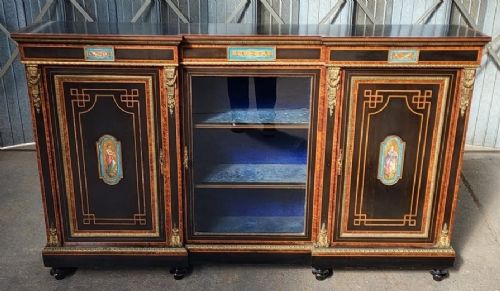
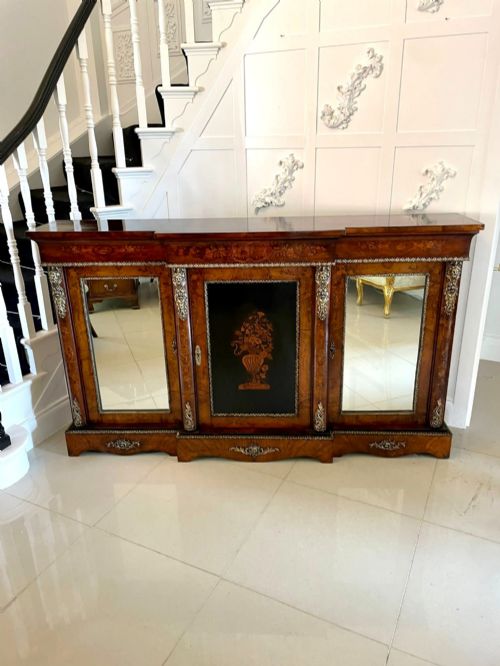
An ebonised breakfront credenza is a substantial nineteenth-century cabinet distinguished by its projecting central section and dark finish. These pieces serve as both storage units and formal display surfaces, often featuring glazed doors to showcase fine porcelain or glassware.
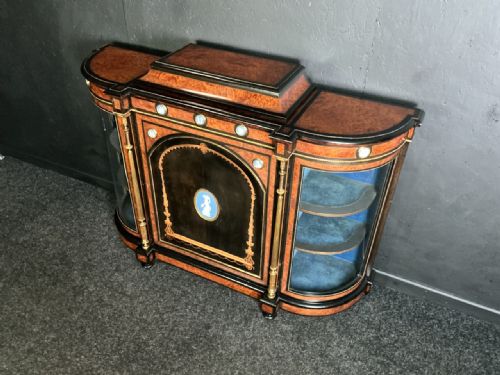
Most examples found in this selection date from the Victorian period, frequently incorporating French Revival or Aesthetic Movement styling. Makers utilised contrasting timbers and metallic mounts to break up the dense black surfaces of the primary structure.
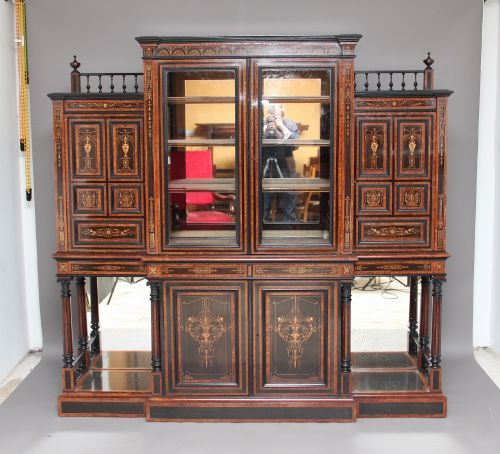
The form typically combines a central cupboard flanked by side cabinets or open shelving, creating a balanced facade. While many follow traditional Victorian proportions, some pieces manifest as bookcases or side cabinets rather than standard credenzas.
How They Were Made
The characteristic black finish is achieved by ebonising timber, a process that stains woods such as fruitwood or walnut to imitate ebony. Cabinetmakers then applied intricate marquetry, brass inlay, or boullework across the flat surfaces to create visual depth.
Ormolu and gilt metal mounts were cast and chased to embellish corners, pilasters, and panel borders. Secondary timbers like burr walnut, amboyna, and coromandel frequently appear on door panels or interior friezes to contrast with the dark exterior.
Some credenzas hide internal partitions so cleverly that opening the side doors feels like operating a Victorian stage set.
What Varies in Quality
Quality rests upon the precision of the cabinetwork and the calibre of the secondary materials used in the veneers and mounts. Superior pieces display crisp, finely chased ormolu and tightly fitted marquetry that integrates seamlessly into the ebonised carcass.
The architectural handling of the breakfront profile defines the ambition of the piece, separating standard workshop output from exceptional commissions. Heavier structural timber and original glass panels also indicate a higher grade of manufacture.
Lamb of Manchester·Gillow
The Ebonised Breakfront Credenza Glossary
- Ebonised
- Wood treated with stain or paint to resemble solid ebony. This dark finish gained immense popularity during the Victorian period.
- Breakfront
- A cabinet facade where the central section projects forward from the flanking wings. This architectural arrangement creates dynamic shadow lines.
- Ormolu
- Gilt bronze mounts applied to furniture for decorative effect. The technique involves coating metal in a gold amalgam.
- Marquetry
- Inlaid patterns of wood veneer forming decorative pictures or geometric designs. Craftsmen cut contrasting timbers to fit precisely within a background sheet.
- Boullework
- Marquetry made from tortoiseshell and brass inlay, named after a master cabinetmaker to the French court. It adds shimmering metallic contrast to dark furniture.
Ebonised Breakfront Credenza: Frequently Asked Questions
What is an ebonised breakfront credenza?
An ebonised breakfront credenza is a large nineteenth-century display cabinet featuring a darkened wood finish and a projecting central section. These pieces were built to serve as focal points in formal rooms.
They combine enclosed storage cupboards with glass-fronted display areas, often ornamented with gilt metal mounts and fine timber inlays.
How do I date these cabinets?
Dating relies on examining construction methods, timber choices, and stylistic markers associated with the nineteenth century. Victorian examples frequently incorporate Revival styles or Aesthetic Movement motifs.
Changes in hardware, backing boards, and glass production also help narrow down the period of manufacture.
Where were credenzas placed in period homes?
These cabinets typically stood against the main walls of Victorian drawing rooms or dining rooms. Their low profile allowed the top surface to hold decorative objects without obscuring wall art.
Because the front projects centrally, they required a prominent position where the architectural silhouette could be fully appreciated.
How should I care for ebonised wood?
Ebonised surfaces benefit from minimal moisture and protection from direct sunlight to prevent fading or timber movement. Gentle dusting with a dry, soft cloth maintains the finish.
Harsh chemical polishes should be avoided, as they can degrade the dark stain and any delicate surface lacquers.