

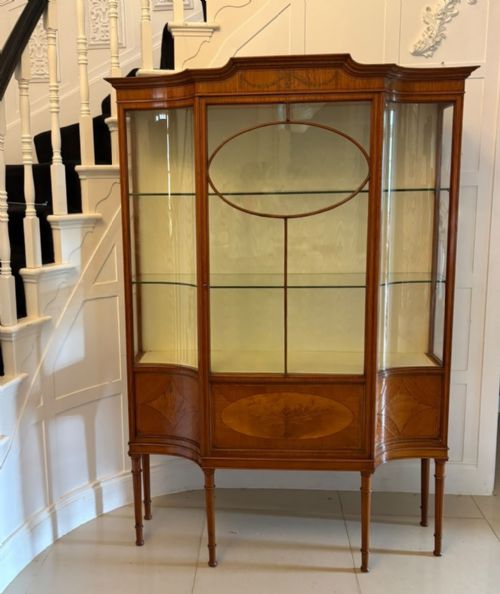
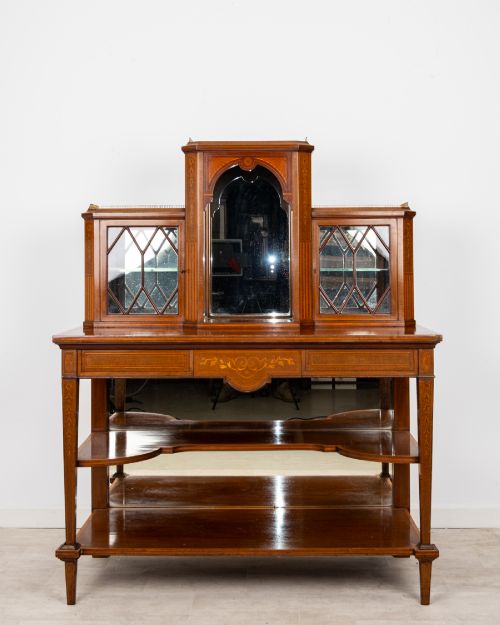
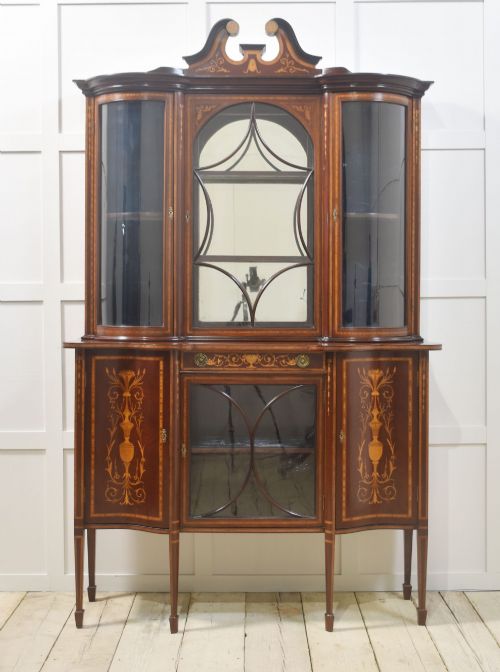
Satinwood Glass Display Cabinet
These satinwood glass display cabinets bring together polished timber and glass to hold precious objects, shaped by decades of revivalist cabinet-making.
Satinwood Glass Display Cabinet
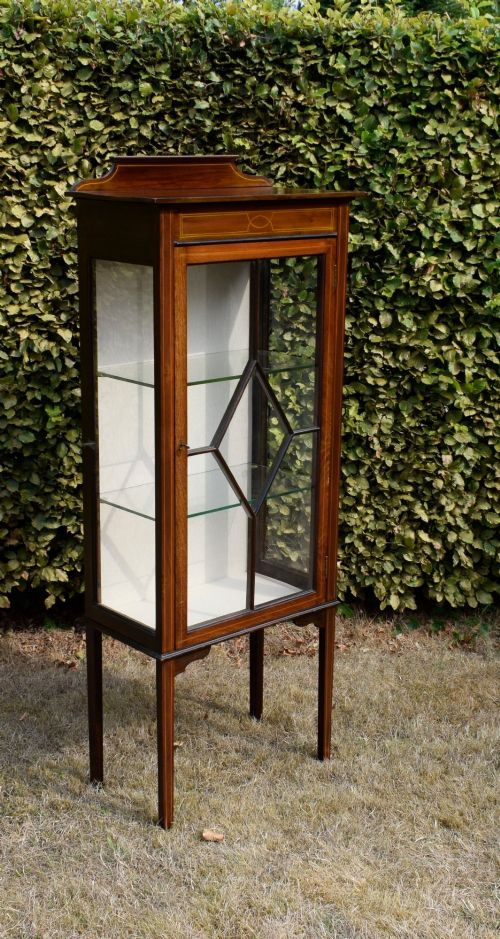
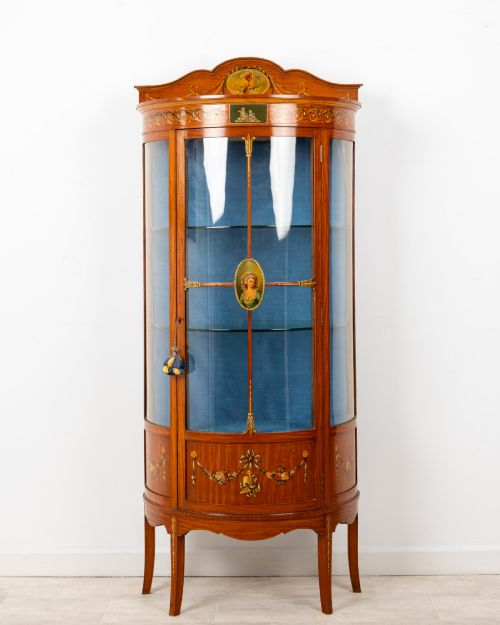
A satinwood glass display cabinet combines the pale, reflective sheen of exotic timber with glazed doors or panels designed to showcase curated collections. These pieces emerge predominantly from the Victorian and Edwardian eras, spanning revivalist movements such as Sheraton, Adam, and Louis XVI.
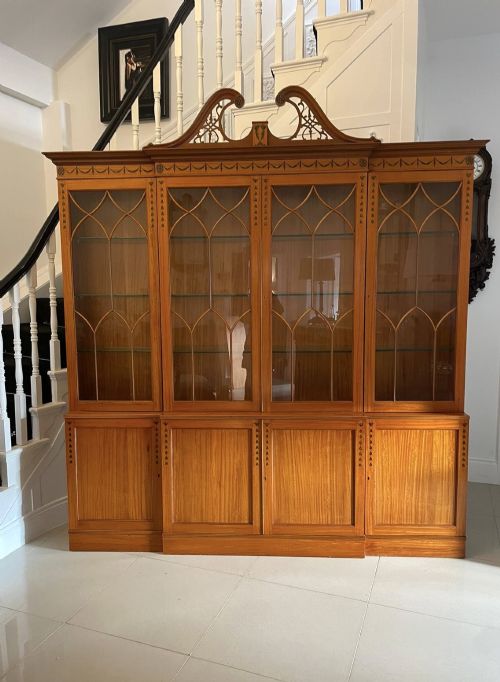
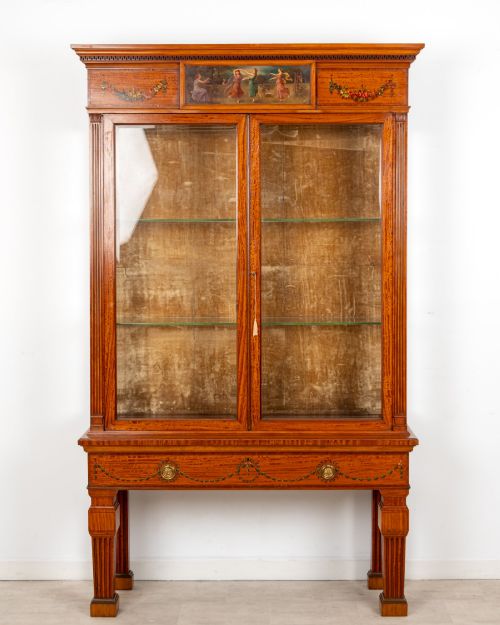
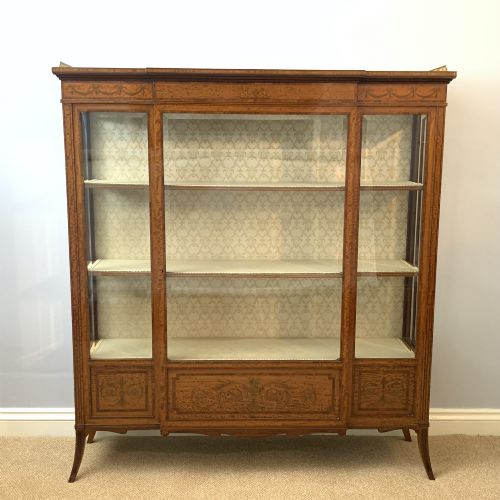
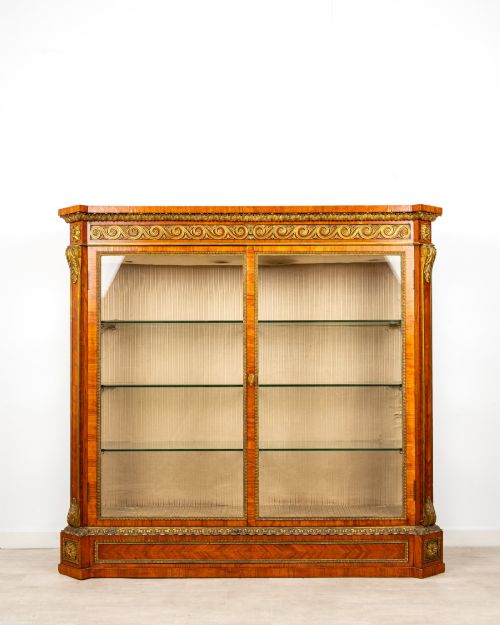
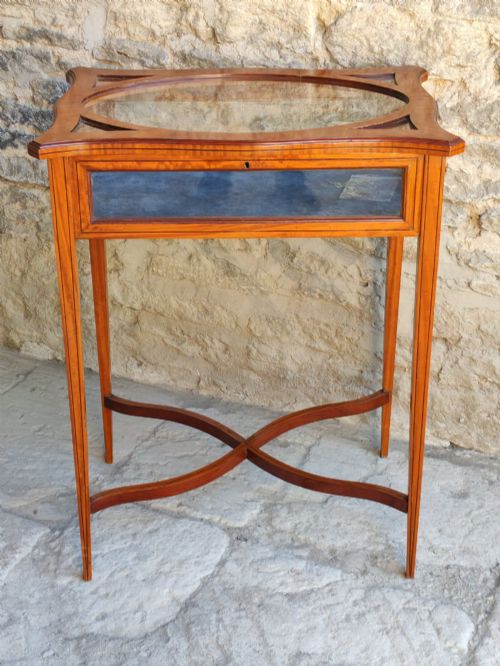
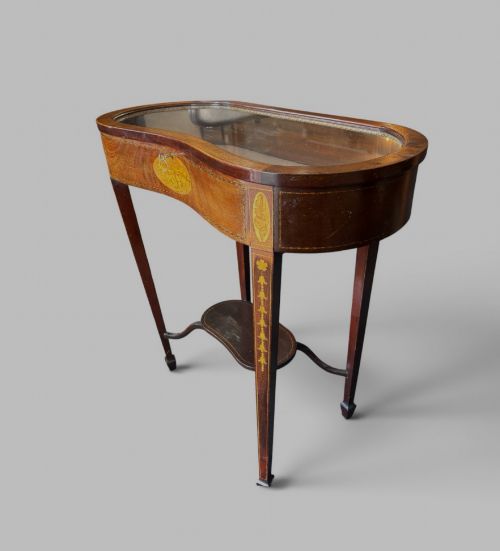
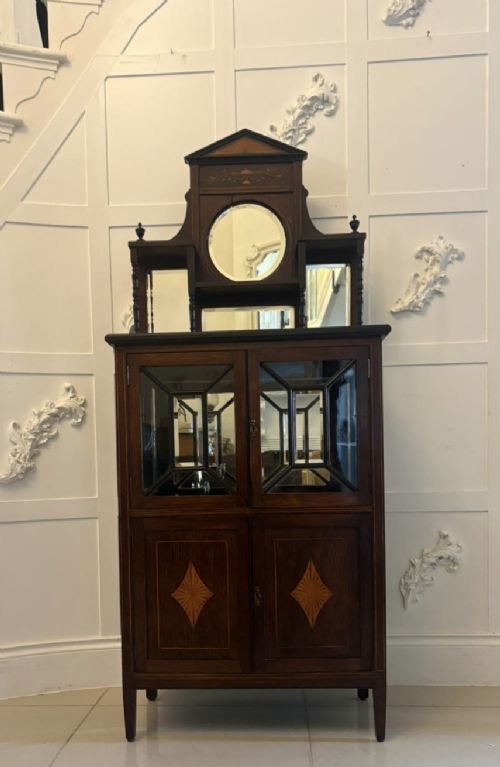
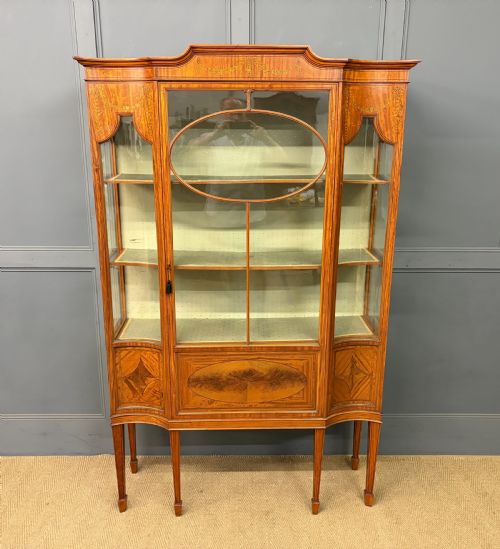
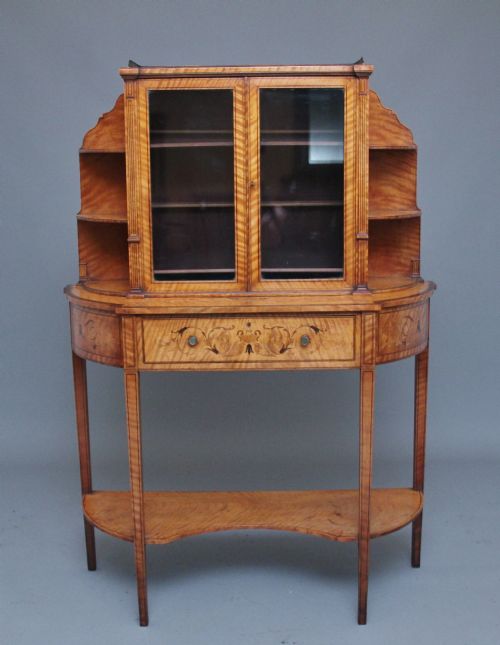
The objects on this page include upright display cabinets, corner cabinets, vitrines, and bijouterie tables with glass tops. They incorporate mahogany carcasses banded in satinwood, alongside painted decoration and intricate marquetry.
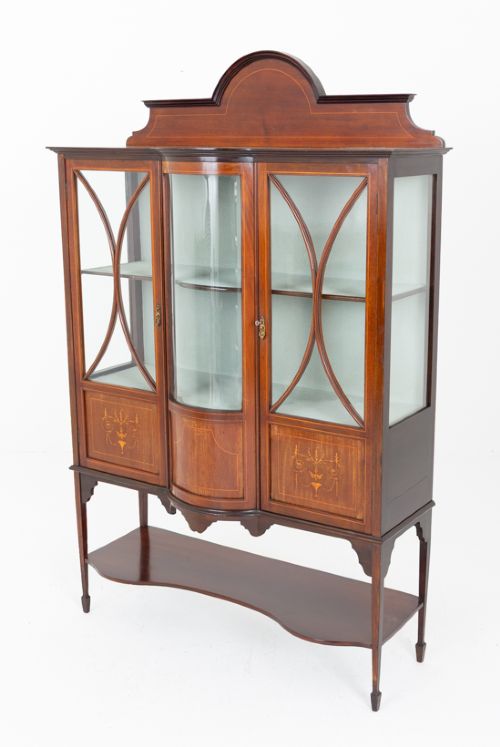
Makers of the period utilised these forms to demonstrate fine cabinet-making skills, employing bow fronts, serpentine shapes, and breakfront layouts. The surviving pieces range from simple single-door cupboards to large breakfront bookcases fitted with astral glazing.
Materials and Construction
The primary visual impact relies on veneers of satinwood laid over robust structural timbers like mahogany, often accented with contrasting fruitwood inlay, brass mounts, and ormolu. Glass panels are held within slim timber frames or glazed bars known as astrals.
Cabinet-makers constructed these items using traditional dovetail joints for drawers and mortise and tenon joints for the frames. Surfaces were finished with polished French polish to protect the delicate timber and highlight the natural chatoyancy of the grain.
The archive records kidney-shaped, bow-front, and serpentine display furniture utilising mahogany frames overlaid with satinwood veneers.
Judging the Workmanship
Quality rests in the precision of the marquetry and the crispness of the painted decoration applied directly to the satinwood panels. Finer examples display meticulous hand-cut stringing and balanced grain matching across the doors and frontage.
The structural integrity of the glazing bars and the weight of the brass or ormolu fittings separate standard production from exceptional cabinet-making. Original glass, hand-forged hardware, and intact internal fabric linings indicate superior original manufacture.
Hampton & Sons·Edwards & Roberts·H. J. Hatfield & Sons·James Hicks·Maple & Co.·Jewell of Holborn·Waring & Gillow·D. Hill Carter & Co.
The Satinwood Glass Display Cabinet Glossary
- Satinwood
- A dense, lustrous hardwood with a yellowish sheen used extensively for veneers and decorative stringing in late nineteenth and early twentieth-century furniture.
- Astral Glazing
- Wooden bars dividing glass panes into geometric patterns within the doors of cabinets and bookcases.
- Bijouterie Table
- A display table featuring a glazed top and shallow compartment designed for holding small decorative items or jewellery.
- Marquetry
- The art of applying pieces of veneer to a structure to form decorative patterns and pictorial designs.
- Sheraton Revival
- A late nineteenth-century design movement inspired by the neoclassical furniture of George Sheraton, characterised by light timbers and painted motifs.
Satinwood Glass Display Cabinet: Frequently Asked Questions
What is a satinwood glass display cabinet?
It is an antique cabinet constructed using pale satinwood veneer, featuring glass doors or panels intended for exhibiting collections of porcelain, silver, or curiosities.
These pieces typically date from the Victorian and Edwardian periods, reflecting neoclassical revival styles through painted details and fine inlay work.
How do I date my cabinet?
Dating relies on examining construction methods, timber choices, and stylistic revival cues such as Sheraton or Edwardian motifs. Hardware, mirror backs, and interior fabrics also offer clues to the manufacturing decade.
Makers' stamps or brass tags found on drawers or edges provide definitive attribution to firms operating around eighteen hundred and ninety to nineteen hundred and ten.
Where were these cabinets placed?
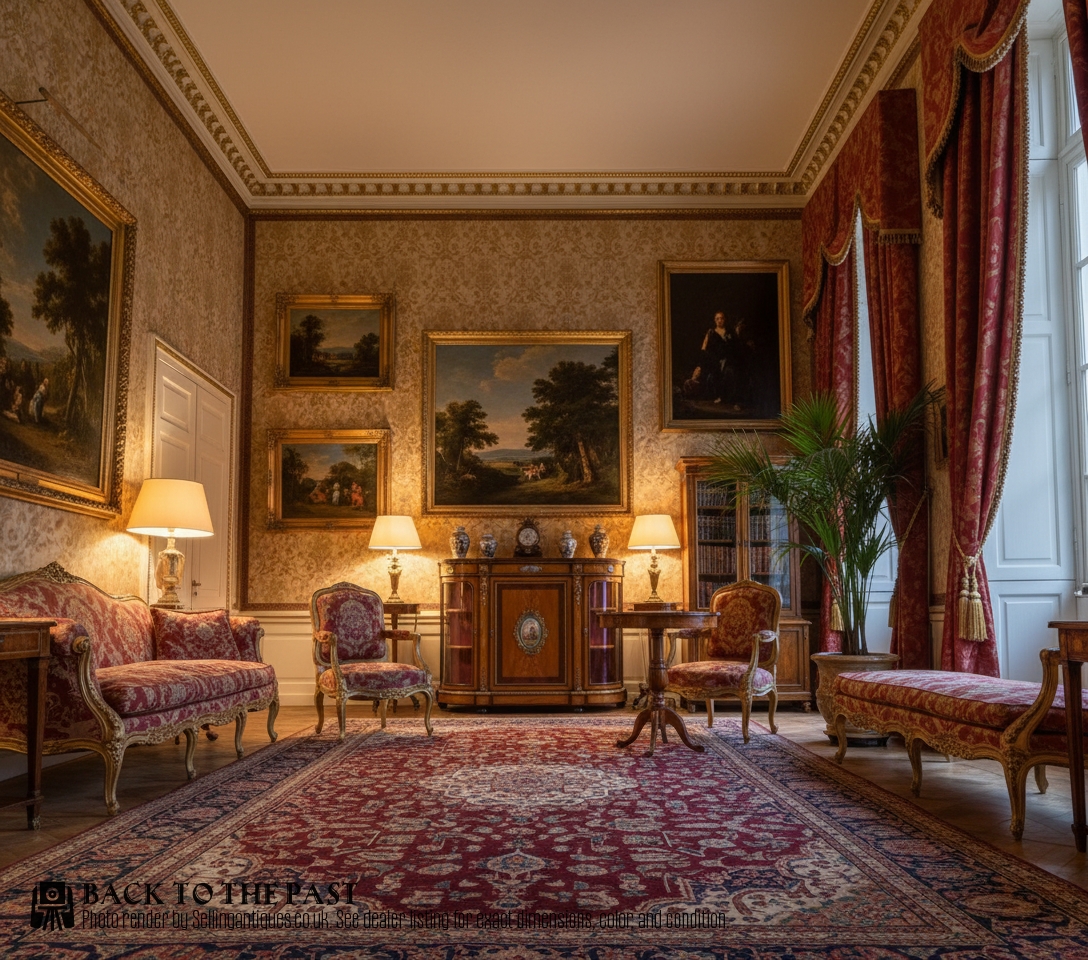
Original domestic settings included formal drawing rooms, reception spaces, and large hallways where guests could admire the displayed objects. Corner cabinets and slim vitrines were chosen to maximise light and floor space.
Interior linings of velvet or mirror glass were utilised to reflect ambient light through the display items.
How do I care for satinwood?
Satinwood requires stable indoor humidity away from direct sunlight to prevent the timber from fading or the veneer from lifting. Gentle dusting with a dry lint-free cloth preserves the polished finish.
Avoid liquid cleaners and harsh polishes, relying instead on professional wax maintenance suited to antique furniture.