
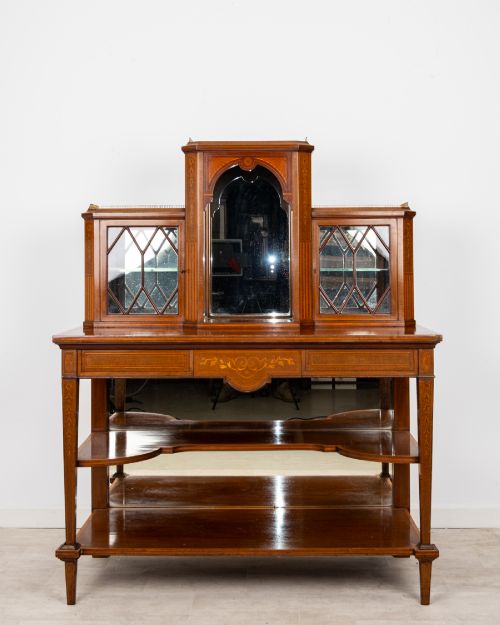
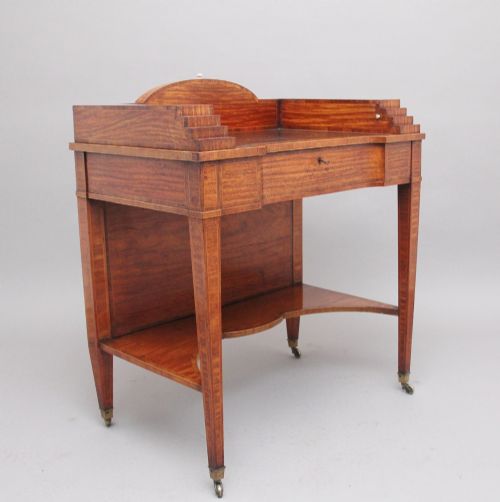


Satinwood Bonheur Du Jour
A satinwood bonheur du jour offers a compact writing space topped with small drawers and shelves, prized for its refined proportions and light timber.
Satinwood Bonheur Du Jour
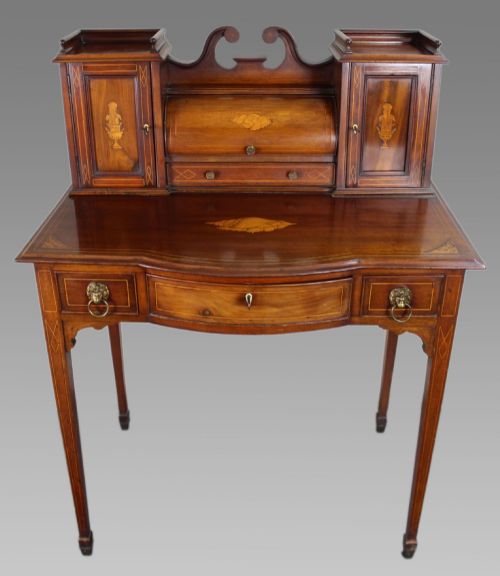
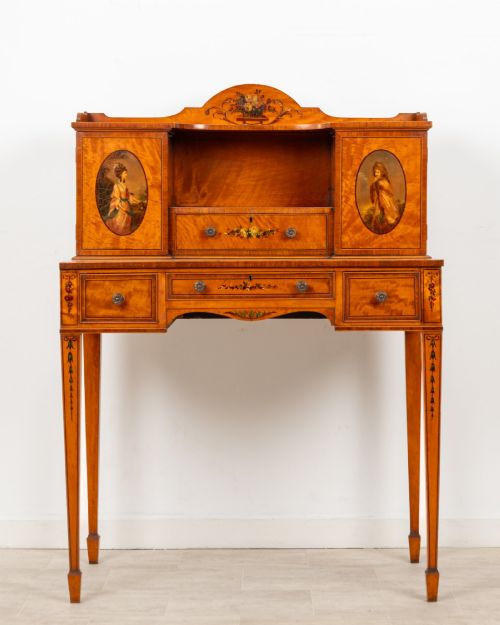
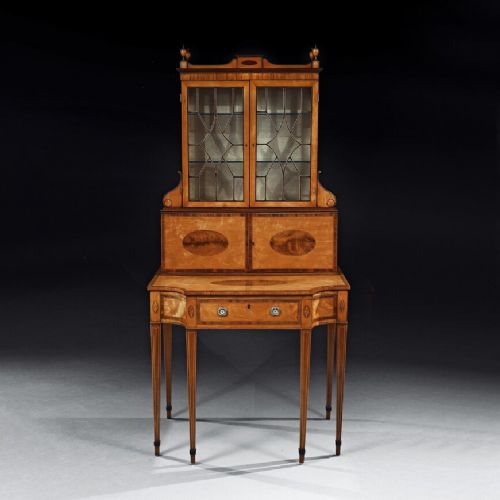
A satinwood bonheur du jour is a ladies writing desk designed with a small superstructure of shelves and drawers above the writing surface. These pieces range from eighteenth-century George III examples to Edwardian and Victorian revivals.
Most items met on this page belong to the Edwardian period or the late nineteenth century, often displaying Sheraton Revival influences with delicate inlaid details. Earlier eighteenth-century variants showcase restrained classical lines and rich timber figuring.
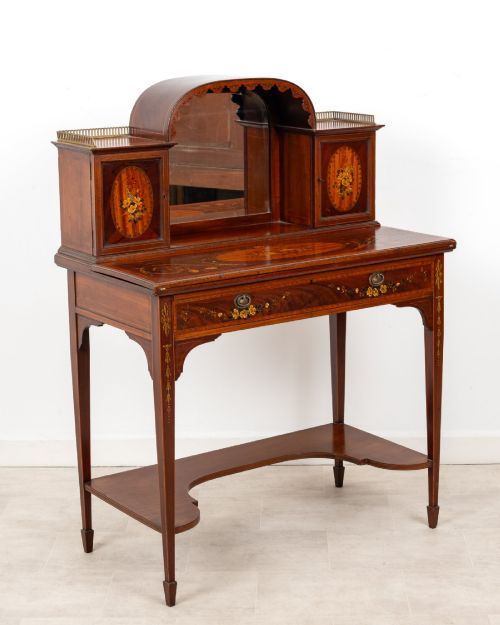
The form functions primarily as a light writing table or dressing table, incorporating cabinets, mirrored superstructures, or porcelain plaques depending on the date and stylistic inspiration.
How they were made
Cabinet makers utilised satinwood veneers applied over structural timbers like mahogany, combining these surfaces with contrasting wood inlay and marquetry. Brass mounts, ormolu, and glass frequently complete the decorative scheme.
Hand-painted floral motifs and decorative panels distinguish the Edwardian examples, while nineteenth-century pieces often integrate rosewood, maple, or porcelain plaques into the cabinet structure.
Listings span the eighteenth, nineteenth, and early twentieth centuries, encompassing George III, Victorian, and Edwardian periods.
What varies in quality
The refinement of the timber figure and the precision of the marquetry inlay dictate the standing of an individual writing desk. Fine specimens exhibit crisp hand-painted details and well-figured grain without timber distortion.
Constructive integrity, original brass hardware, and the quality of internal drawer joinery separate standard workshop output from pieces bearing maker attribution or superior cabinet work.
Edwards and Roberts·Gillows of Lancaster·Shoolbred of London·Maple and Co·Druce and Co
The Satinwood Bonheur Du Jour Glossary
- Bonheur du jour
- A small ladies writing desk originating in France during the eighteenth century, featuring a superstructure above the main writing surface. The term translates directly to day's delight.
- Marquetry
- Decorative patterns formed by fitting together thin veneers of various wood types, deployed across desk surfaces and cabinet doors. Craftsmen use contrasting timbers to build up floral or geometric scenes.
- Ormolu
- Gilded bronze mounts applied to furniture edges and feet during the nineteenth-century revival periods. This decorative metalwork enhances the formal appearance of French-influenced pieces.
- Superstructure
- The tiered arrangement of small drawers, pigeonholes, shelves, or a cabinet mounted on the rear of the writing surface. It provides compartments for correspondence and stationery.
- Sheraton Revival
- A late nineteenth and early twentieth-century design movement copying the light neoclassical furniture styles associated with George Sheraton. Pieces often combine satinwood with painted decoration and delicate tapering legs.
Satinwood Bonheur Du Jour: Frequently Asked Questions
How were these desks used?
These pieces served ladies for morning correspondence, reading, and light administrative duties within private drawing rooms or boudoirs.
The upper shelves and drawers provided designated storage for stationery, letters, and small personal items.
How do I date a bonheur du jour?
Dating relies on identifying structural characteristics, timber usage, and decorative styles associated with specific periods like the eighteenth century or the Edwardian era.
Revival pieces from the late nineteenth century frequently combine earlier Sheraton motifs with Victorian construction methods.
Where should I place one at home?
The compact proportions allow these desks to sit comfortably in sitting rooms, bedrooms, or studies as focal writing surfaces.
Placing them away from direct sunlight protects the delicate satinwood veneer and hand-painted details from fading.
What is the difference between a desk and a bonheur du jour?
A standard writing desk offers a flat or sloping work surface without tiered cabinetry attached to the rear.
A bonheur du jour specifically incorporates the integrated superstructure of small drawers and compartments above the main table top.