






Georgian Ladies Writing Desk
A georgian ladies writing desk offers compact elegance, housing drawers and fitted compartments designed for personal correspondence and small-scale daily tasks.
Georgian Ladies Writing Desk
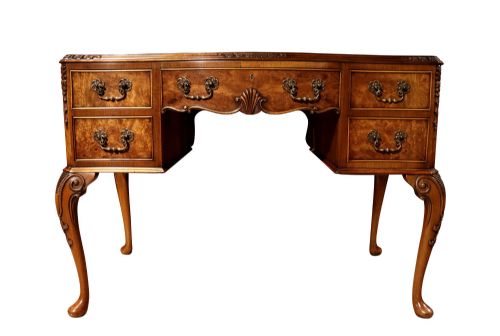
A georgian ladies writing desk encompasses varied compact writing furniture built for private correspondence and personal paperwork. The selections here range from eighteenth-century George III pieces to later Edwardian revivals and nineteenth-century interpretations.
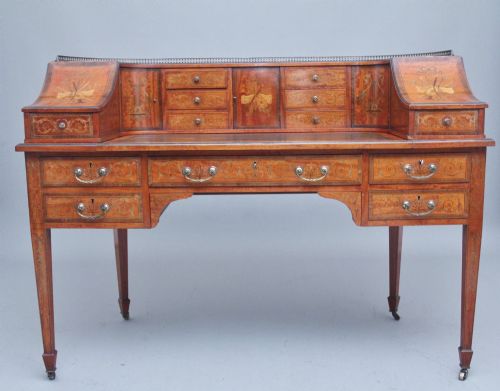
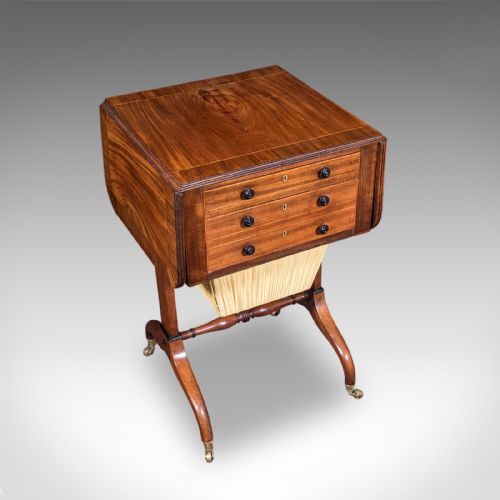
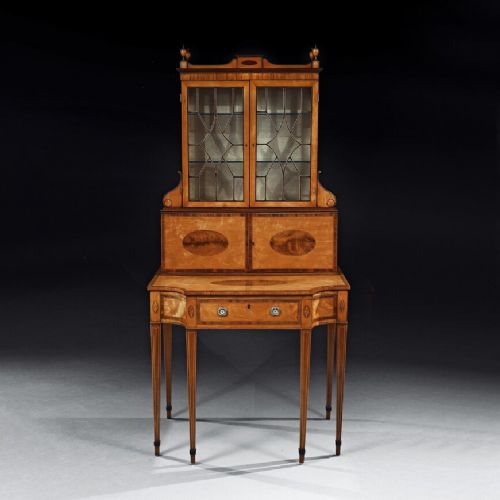
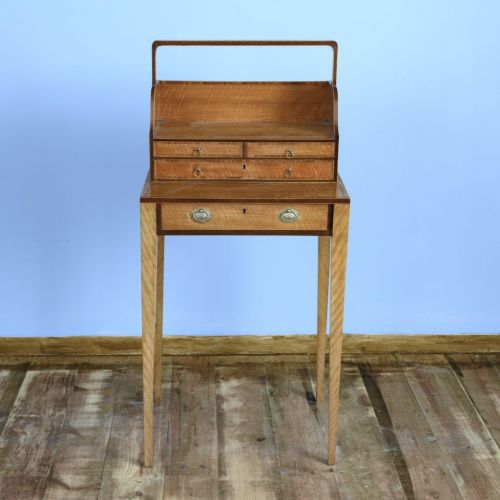
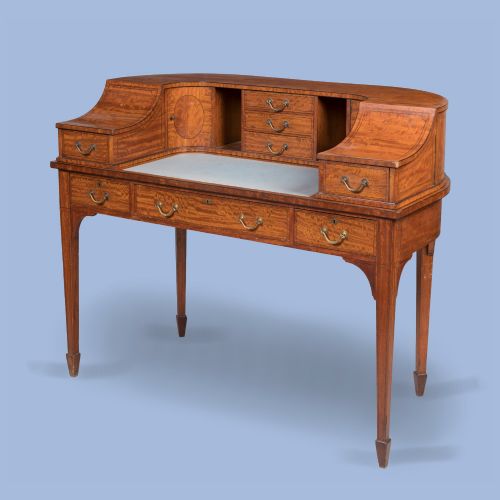
Buyers frequently encounter specialised forms such as the bonheur du jour, the Carlton House desk, and the cheveret. These pieces often feature tiered upper superstructures, drop leaves, or tambour enclosures sitting atop slender legs.
Origins span formal eighteenth-century workshops, Regency interpretations, and late Victorian or Edwardian revival cabinet making. Each iteration adapts the fundamental writing function to smaller scales suitable for intimate boudoirs or private reception rooms.
Materials and Construction
Construction relies heavily on primary timbers such as mahogany, satinwood, rosewood, and burr walnut, frequently accented with contrasting inlay and banding. Cabinet makers utilised these dense woods to provide stable surfaces for detailed marquetry and fine joinery.
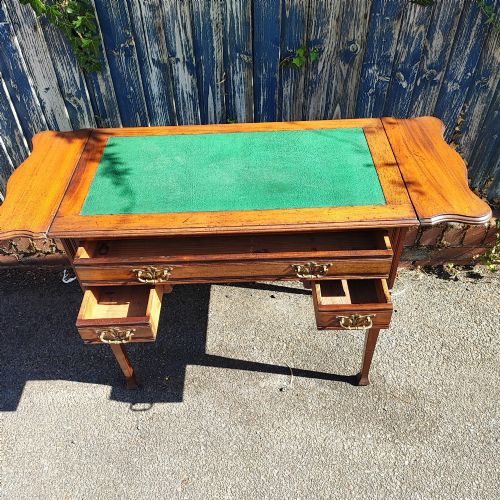
Writing surfaces frequently incorporate inset panels of leather to provide a smooth, durable plane for ink and quill work. Secondary additions like brass hardware, glass doors, and fitted internal compartments complete the assembly of these intricate pieces.
Several examples hide multiple secret rising compartments, proving that Georgian letter writing required a healthy dose of espionage.
Markers of Quality
Quality rests upon the crispness of the cabinet work, the precision of the timber matching in veneers, and the integrity of internal mechanisms. Superior examples exhibit seamless movement in tambour shutters, secret compartments, and rising writing slides.
The sophistication of surface enrichment distinguishes finer pieces from simpler counterparts. Masterful satinwood banding, delicate marquetry, and well-preserved original hardware elevate a standard desk into an exceptional work of period joinery.
Shoolbred of London·John McLean
The Georgian Ladies Writing Desk Glossary
- Bonheur du jour
- A light daytime writing desk featuring a small set of drawers, shelves, or a cabinet on top of the main writing surface. This French form became particularly popular in England during the late eighteenth century.
- Cheveret
- A small movable writing table featuring a tiered superstructure with open shelves or small drawers above a writing surface. It often includes a removable writing slide or small drawer compartment.
- Tambour
- A sliding door or shutter constructed from narrow strips of wood glued to a canvas backing. It runs in concealed grooves to cover pigeonholes or small compartments.
- Satinwood
- A lustrous, yellow-brown timber prized for its fine grain and reflective quality. It served as a primary veneer and inlay material in fine eighteenth and nineteenth-century cabinet work.
Georgian Ladies Writing Desk: Frequently Asked Questions
What is a bonheur du jour?
A bonheur du jour is a small, light writing desk featuring an elevated arrangement of drawers, pigeonholes, or a small cabinet on the upper surface. These pieces were designed specifically for ladies to handle correspondence and private paperwork in their chambers.
First appearing in France, the form was swiftly adopted by English cabinet makers during the Georgian period. They remain prized for their delicate proportions and clever utilisation of small spaces.
How do I use a Carlton House desk?
A Carlton House desk provides a wrap-around upper tier of small drawers and compartments designed to keep stationery, inkwells, and writing implements organised. The central writing plane pulls out or offers a flat leather surface for daily letters.
The enclosed superstructure keeps private documents secure while maintaining a decorative silhouette suitable for placement in the centre of a room rather than against a wall.
Where were these desks placed?
These compact writing desks typically resided in private boudoirs, drawing rooms, or intimate libraries rather than grand studies. Their smaller scale allowed them to sit comfortably against walls or near windows where natural light aided writing.
Unlike heavy partner desks, these pieces were easily repositioned within domestic interiors to suit the changing activities of the household.
How do I distinguish Regency from Georgian pieces?
Georgian pieces, particularly those from the George III era, often display classical restraint with balanced proportions, straight tapered legs, and fine satinwood inlay. The influence leans towards architectural symmetry and refined neoclassical details.
Regency examples frequently incorporate bolder grain patterns like fiddle back mahogany, heavier rosewood veneers, or brass mounts influenced by French Empire and classical Roman motifs.