

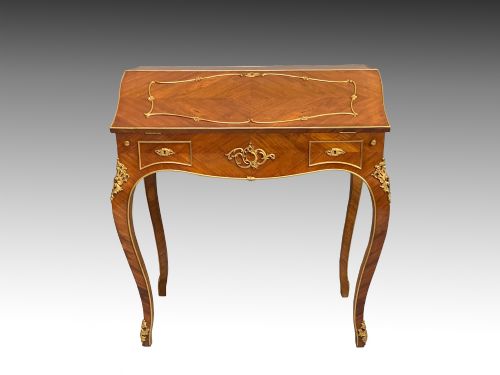


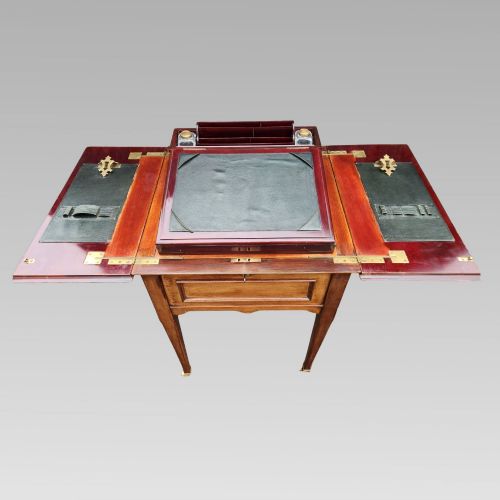


Antique Ladies Secretary
These antique ladies secretary desks are compact writing cabinets designed for personal correspondence, offering refined compartments and neat proportions.
Antique Ladies Secretary
When searching for an antique ladies secretary, buyers encounter compact writing furniture designed for private correspondence and small documents. The selections span the nineteenth century, including Edwardian and Victorian examples alongside French revival forms.
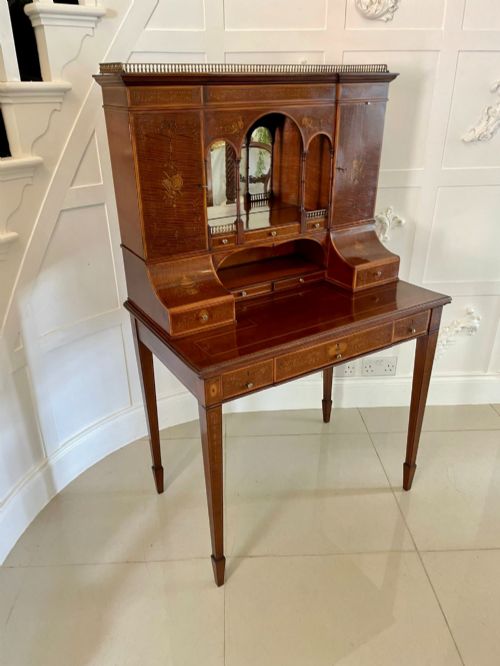
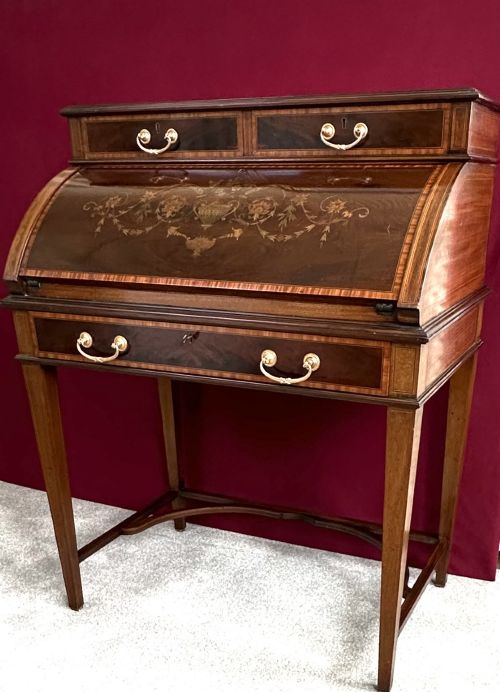
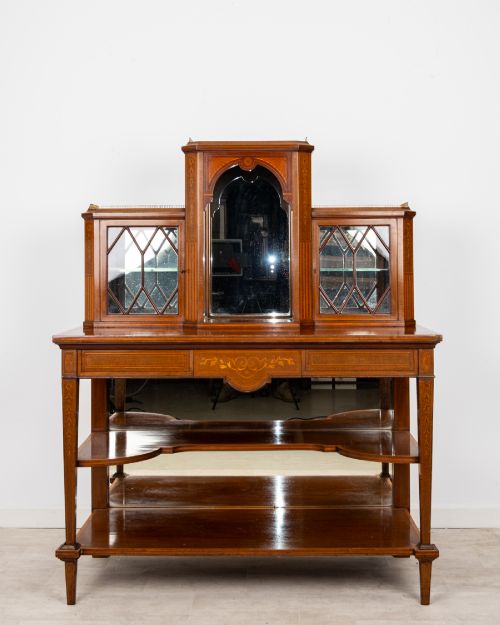
The primary forms appearing here include the bonheur-du-jour, the davenport, and smaller bureau desks. These pieces often feature tiered superstructures, fall fronts, or cylinder lids hiding fitted interior compartments.
Origin points range from English workshops to French ateliers, utilising traditional timber carcases suited to domestic parlours and boudoirs. Buyers will find both freestanding items and pieces intended to sit against panelled walls.
How they were made
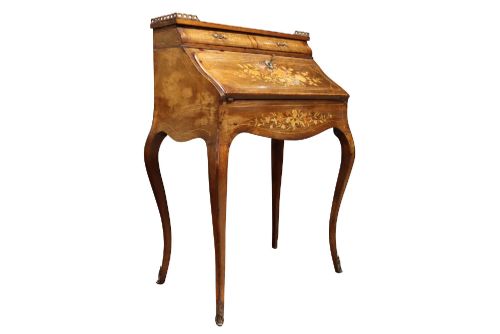
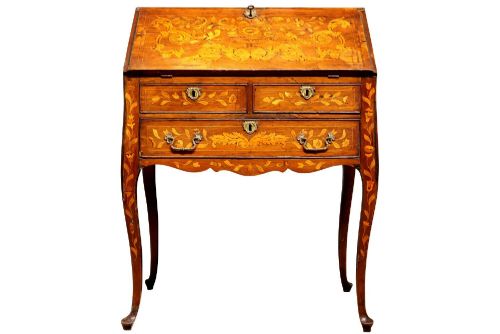
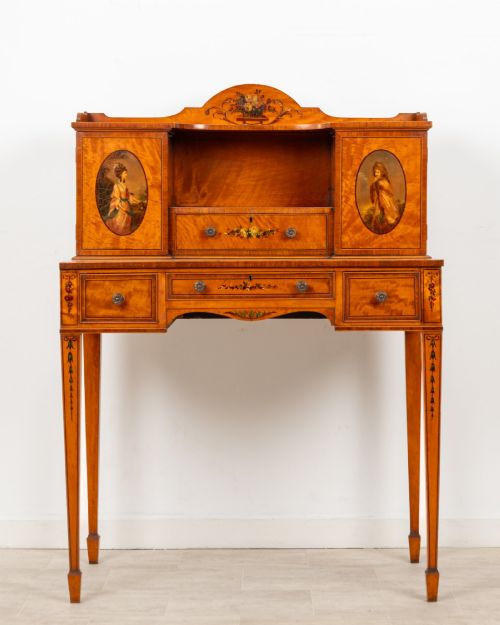
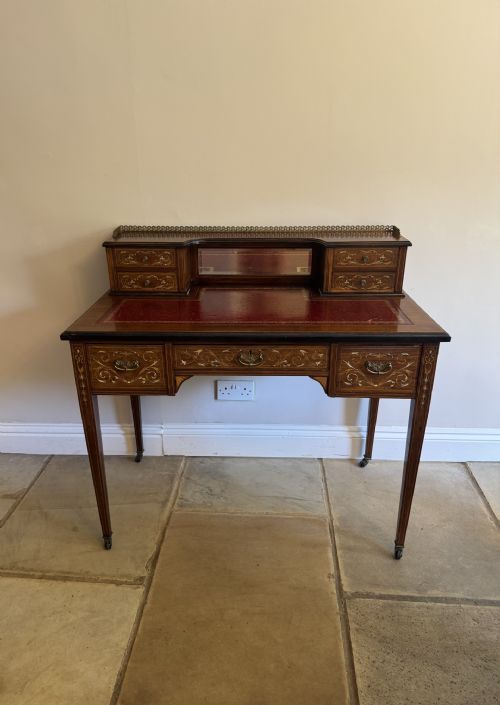
Cabinet makers utilised dense hardwoods such as mahogany, walnut, rosewood, and satinwood for the primary carcases, often applying kingwood or tulipwood crossbanding. Decorative surfaces relied on intricate floral marquetry and parquetry patterns set into the timber.
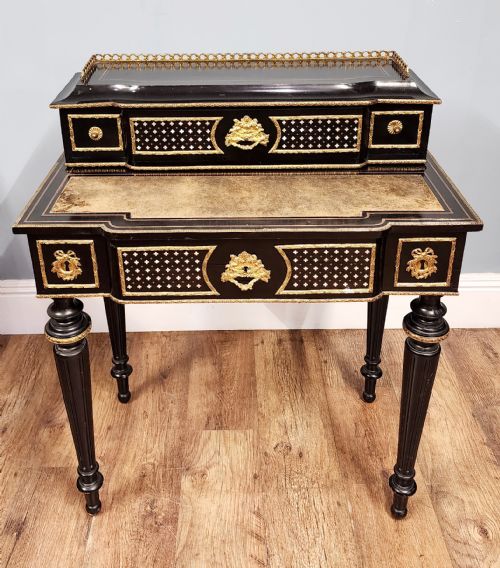
Metalwork played a structural and decorative role, with cast or chased ormolu mounts, brass galleries, and original hardware framing drawers and doors. Selected French cabinets incorporated painted porcelain plaques inset into the timber facade.
Materials span exotic kingwood and tulipwood alongside domestic mahogany and burr walnut.
What varies in quality
Quality rests upon the crispness of the marquetry inlay and the selection of figured veneers such as burr walnut. Finer examples display meticulous hand-painted details, intact porcelain plaques, and substantial cast bronze mounts.
Internal construction dictates lasting worth, observable in secondary woods like oak-lined drawers and precise joinery on fall-front writing surfaces. Original hardware and matching keys elevate the standing of a piece.
Edwards and Roberts·Gamichon A Paris
The Antique Ladies Secretary Glossary
- Bonheur-du-jour
- A small light ladies writing desk featuring a tiered superstructure with shelves or small drawers above the main writing surface. This French form became popular during the eighteenth and nineteenth centuries.
- Davenport
- A compact pedestal desk featuring a sloped, hinged writing surface above a set of side drawers. The design originated in the early nineteenth century and suits smaller rooms.
- Marquetry
- Decorative veneer work formed by fitting together thin pieces of wood, ivory, or shell to create pictorial designs. Artisans cut these elements to form elaborate floral or geometric patterns.
- Ormolu
- Gilt bronze ornamentation applied to furniture mounts and decorative hardware. The technique involves treating bronze with an acid-gold mixture before fire gilding.
- Cylinder desk
- A writing cabinet enclosed by a rolling quarter-cylinder shutter that conceals fitted interior pigeonholes and a pull-out slide. This mechanism requires precise woodworking to operate smoothly.
Antique Ladies Secretary: Frequently Asked Questions
How do I identify a French bonheur-du-jour?
French bonheur-du-jour desks are identified by their light frames, slender cabriole or tapered legs, and tiered upper cabinets. They frequently display ormolu mounts and floral marquetry.
Many examples incorporate porcelain plaques or ebonised surfaces, distinguishing them from simpler English writing tables of the period.
Where were these desks placed in a home?
These desks typically stood in private parlours, bedrooms, or morning rooms where women attended to social correspondence and personal accounts. Their compact footprints allowed them to fit easily against walls or windows.
Freestanding versions with finished backs also sat in the centre of rooms, serving both decorative and practical functions.
How do I care for antique satinwood furniture?
Care for satinwood involves keeping pieces away from direct sunlight and maintaining stable room humidity to prevent veneer splitting. Gentle dusting with a dry cloth preserves the polished surface.
Avoid chemical polishes and utilise traditional beeswax sparingly to maintain the natural sheen of the timber.