
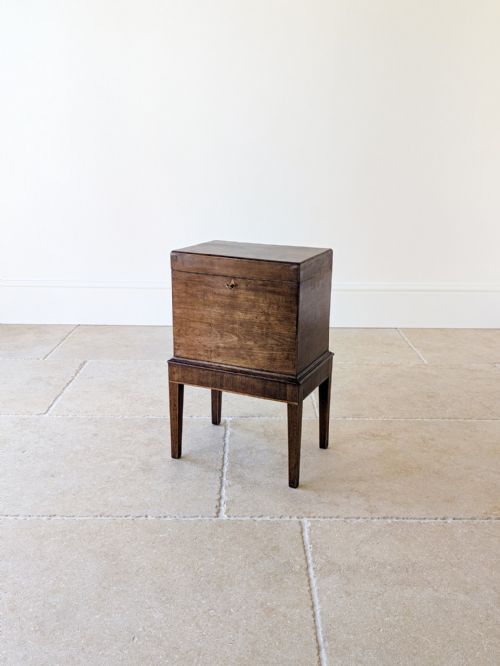
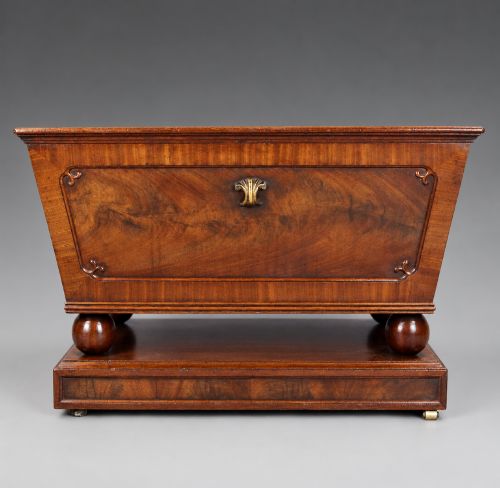
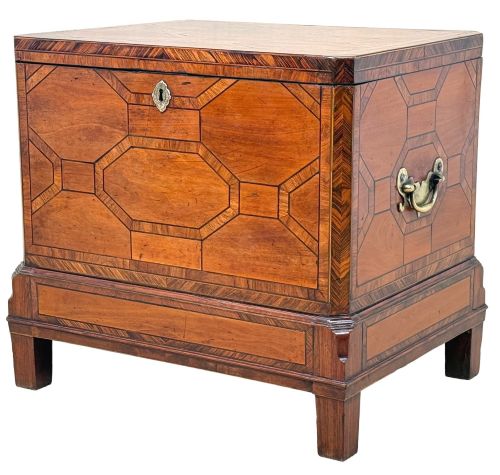
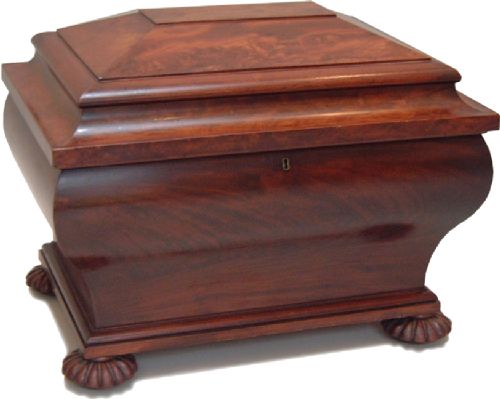

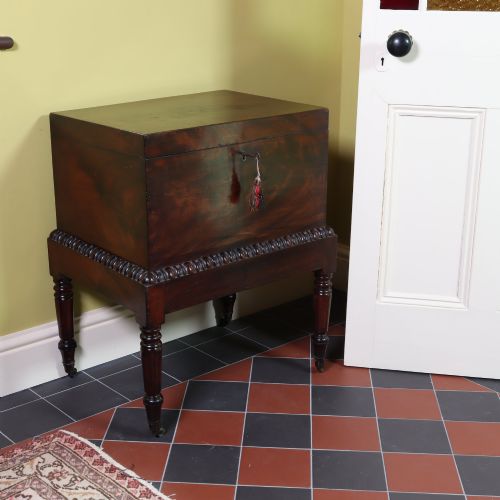


Sarcophagus Wine Cellarette
A sarcophagus wine cellarette is a capacious classical container designed to chill bottles at the dining table during the Georgian and Regency periods.
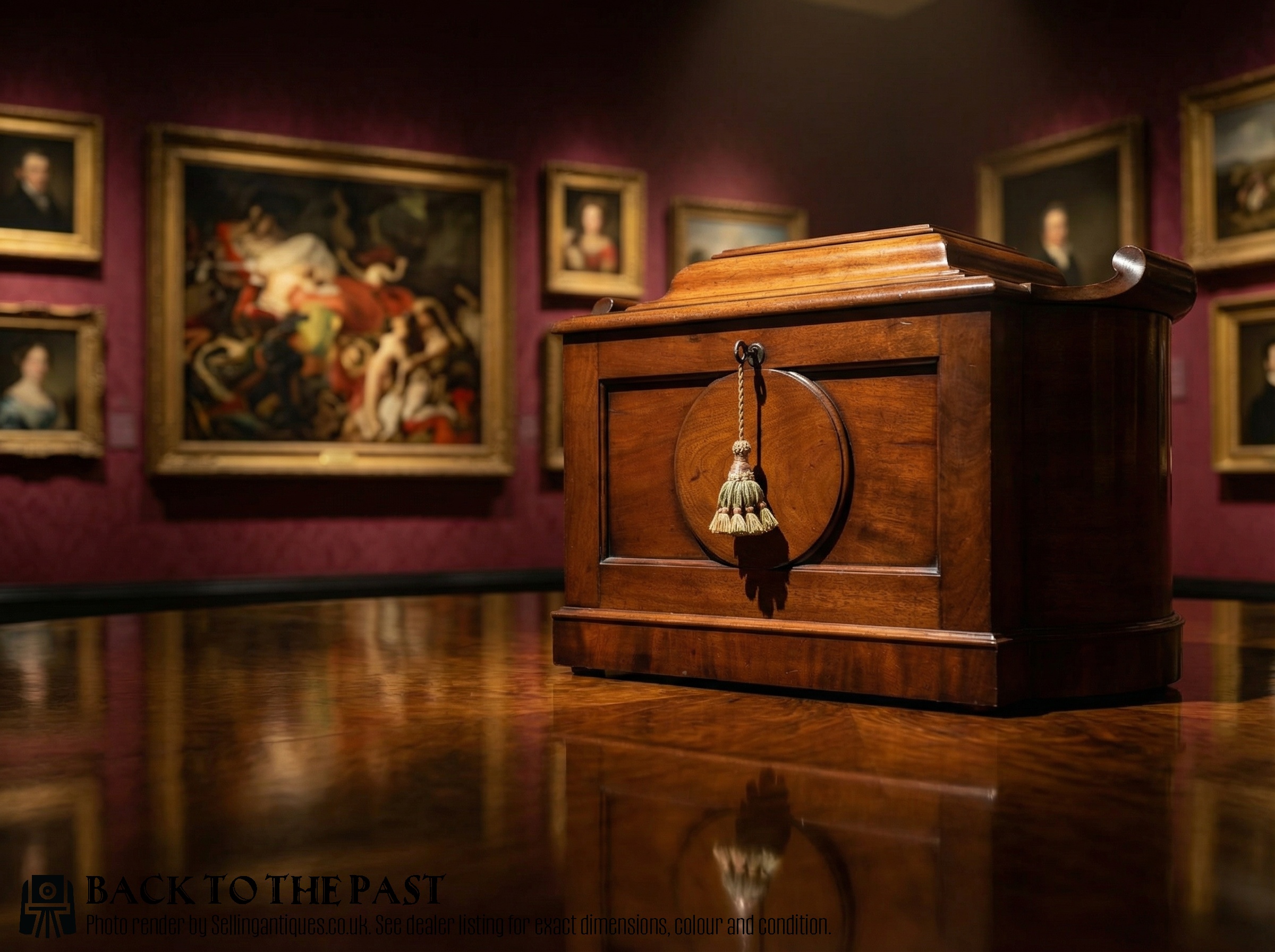
Sarcophagus Wine Cellarette
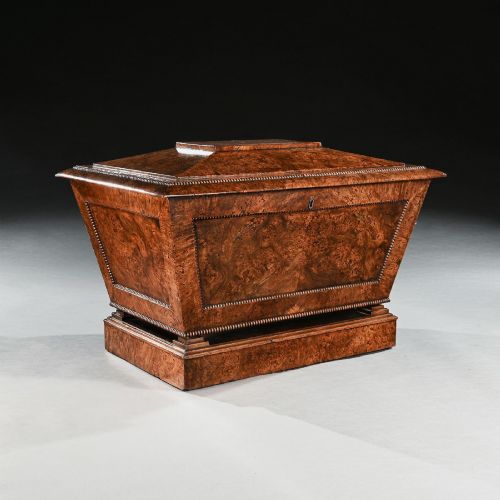
When searching for a sarcophagus wine cellarette, a buyer encounters large, heavily architectural receptacles built to hold wine bottles and ice during formal meals. The typical form encountered on this page follows the classical sarcophagus shape, featuring a hinged lid and a tapering body.
Most examples date from the Georgian, Regency, and Victorian periods, constructed primarily in mahogany with occasional use of pollard oak or satinwood. These vessels stood beneath the sideboard or beside the dining table, serving a functional role in elite nineteenth-century households.
Makers utilised dense timbers and fitted interiors, sometimes retaining original lead linings designed to hold melting ice. The scale remains substantial, reflecting the generous proportions of period dining rooms.
How They Were Made
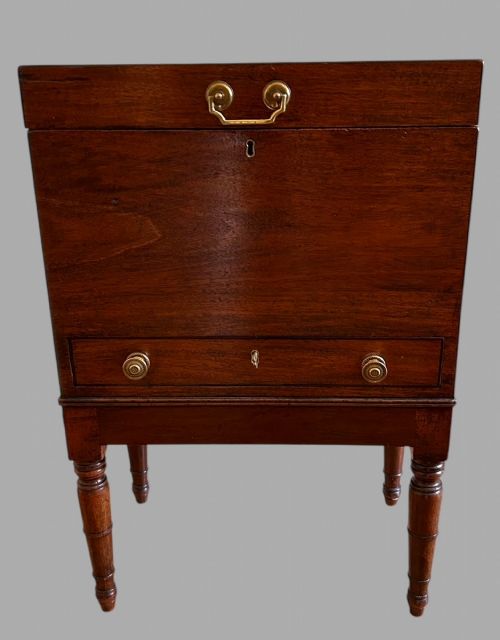
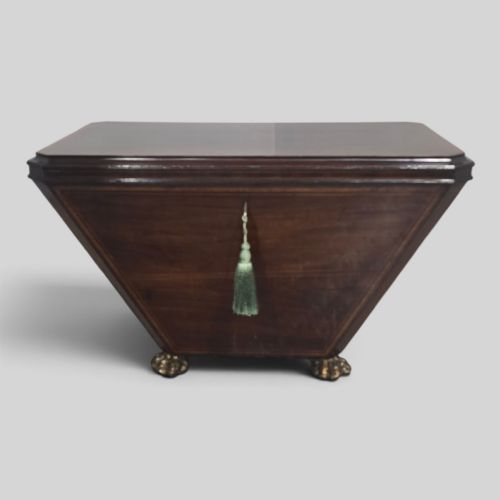
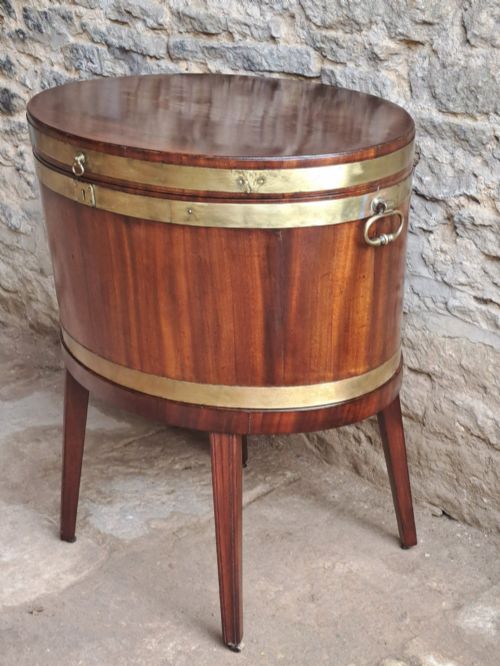
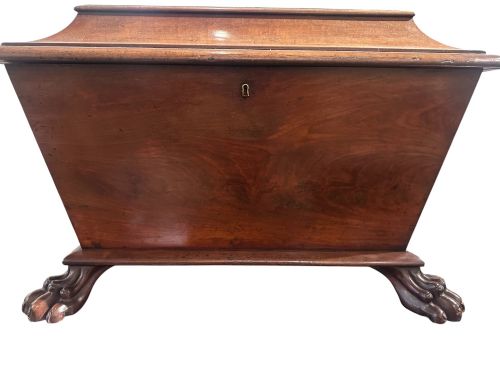
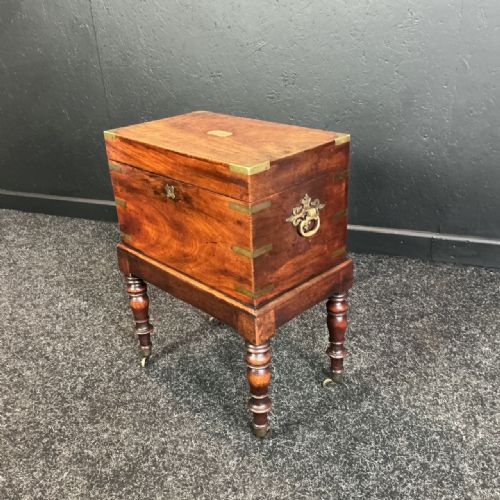
Cabinet makers constructed these pieces using solid mahogany and flame mahogany veneers over robust secondary timbers. Brass mounts, lion paw feet, and carrying handles appeared frequently, fixed securely to the heavy frames.
Interior architecture mattered as much as external finish, incorporating compartmentalised wooden dividers and lead linings to manage ice and wet bottles. Boxwood inlay, ormolu, and ebonised wood details enriched the surfaces on finer examples.
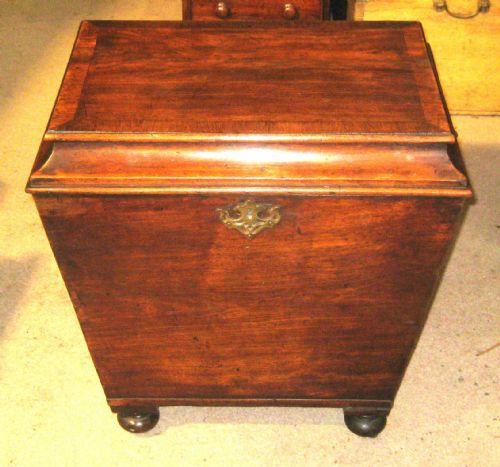
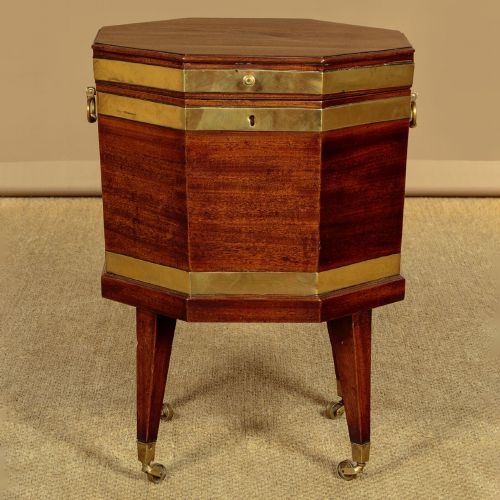
The archive includes robust brass-bound oval forms alongside classical architectural sarcophagus shapes dating from the Georgian and Regency periods.
What Varies in Quality
The degree of figuration in the mahogany veneer dictates much of the visual weight, with flame mahogany and pollard oak sitting at the upper end of visual desirability. Crispness in the carving of classical motifs, paw feet, and applied mouldings separates standard workshop output from exceptional cabinet work.
Survival of internal elements such as original lead linings and fitted bottle dividers preserves the integrity of the piece. Superior examples display tighter joinery, heavier gauge brasswork, and rich, undisturbed patina across the timber surfaces.
Edwards and Roberts·Gillows
The Sarcophagus Wine Cellarette Glossary
- Cellarette
- A lockable container used for storing wine bottles near the dining table. They evolved from simpler wooden buckets into monumental architectural forms during the Georgian era.
- Sarcophagus form
- A burial-chest shape popular in neoclassical design, characterised by a domed or stepped lid and an inverted trapezoidal body. Regency designers adopted this monumental silhouette for dining room storage.
- Flame mahogany
- Timber cut from the fork of the mahogany tree where the grain twists, creating a rippled, flame-like pattern. Cabinet makers reserved this highly decorative veneer for primary visible surfaces.
- Pollard oak
- Wood taken from trees that have been pollarded, producing a dense, knotty grain with mottled figuring. It appears on select Regency pieces.
- Ormolu
- Gilded bronze mounts applied to furniture for decorative contrast. It added a bright metallic accent to dark mahogany surfaces.
Sarcophagus Wine Cellarette: Frequently Asked Questions
How were sarcophagus wine cellarettes used?
These vessels stood in the dining room during formal meals, filled with ice and water to chill wine before it was poured. Servants accessed the bottles by lifting the heavy hinged lid.
Inside, lead linings protected the timber from moisture while wooden dividers kept the glass bottles separated and upright.
Are lead linings original?
Many surviving pieces retain their original lead linings, which were soldered into the interior to hold melting ice safely. The presence of an intact lining adds significantly to the historical completeness of the object.
Some examples show replacement linings or bare wood interiors where the metal was removed during later domestic use.
How do I date a cellarette?
Georgian examples often lean towards simpler rectilinear or oval shapes with brass banding, while Regency pieces embrace the full classical sarcophagus form with paw feet and bold mahogany grain. Victorian iterations repeat these earlier classical themes with heavier proportions.
Secondary woods, construction methods, and the style of brass handles help confirm the manufacturing period.
Where should I place one at home?
Their substantial scale makes them ideal as freestanding statement pieces in a dining room, hallway, or living space. Many buyers utilise the flat top surface to display lamps, books, or decorative objects.
The deep interior compartments remain useful for storing blankets, magazines, or modern wine collections.