


Early 19th Century Coffer
An early 19th century coffer provides heavy storage with centuries of utility behind it, offering solid timber construction and distinct regional character.
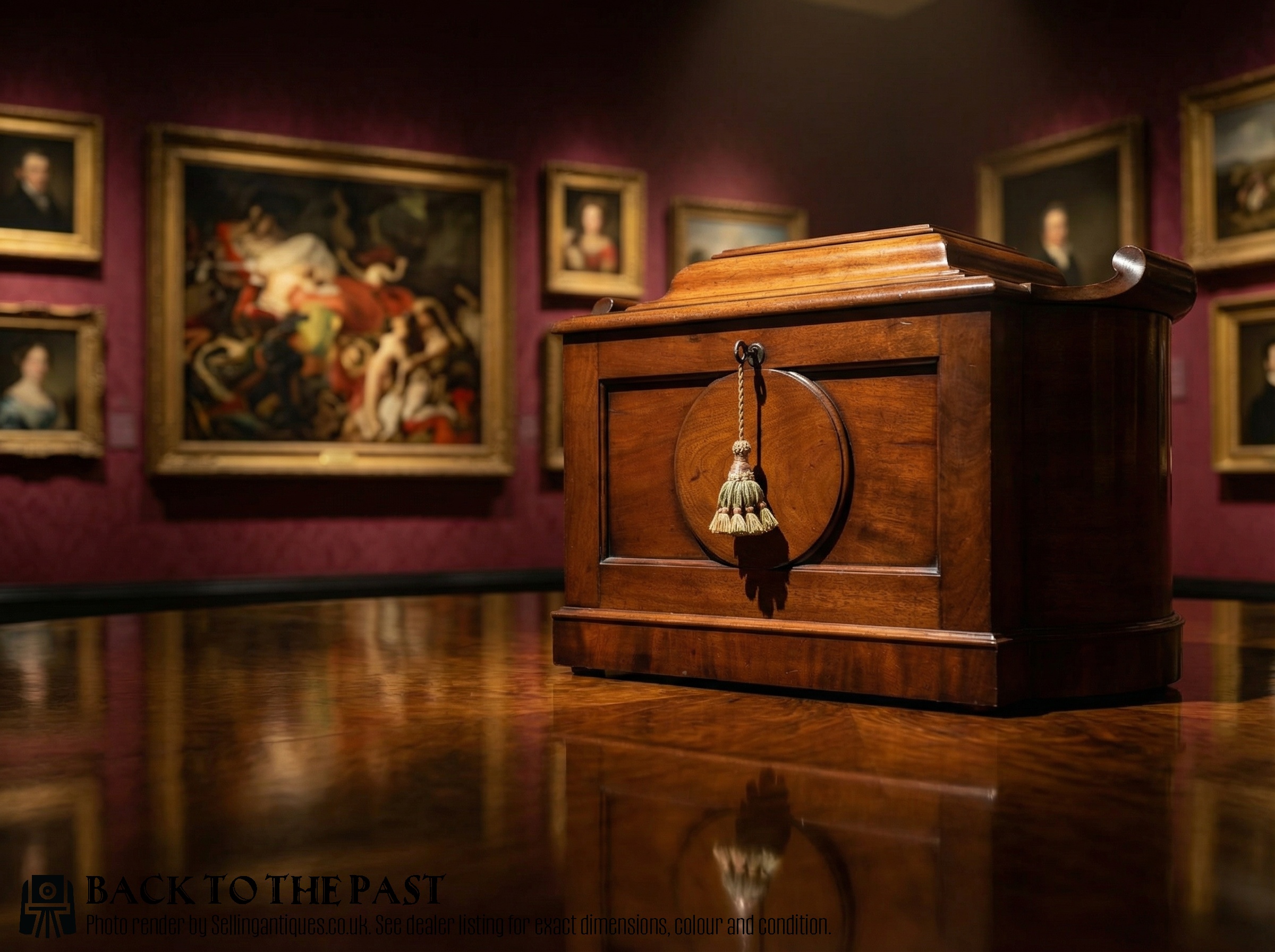
Early 19th Century Coffer
An early 19th century coffer represents a sturdy domestic storage piece built from durable timber like oak, pine, and elm. These items served functional storage needs in homes, cabins, and travel contexts before modern wardrobes took over.
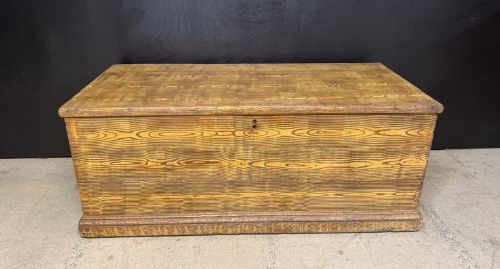
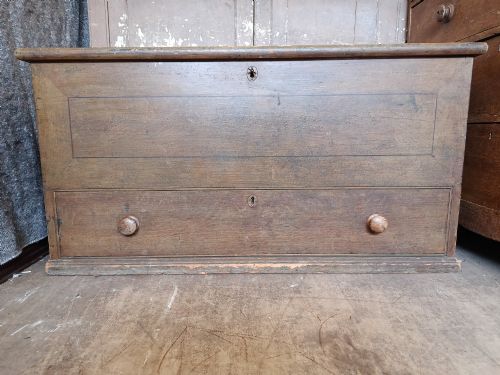
You will most commonly meet oak and pine versions on this page, often appearing as plain blanket boxes, panelled chests, or painted country pieces. Many examples show regional styles ranging from Welsh country to Scandinavian folk art and French designs.
Form follows function across these listings, spanning simple blanket boxes, dome top marriage chests, and fitted travelling trunks. Their presence in homes bridges the gap between utilitarian duty and decorative folk tradition.
How they were made
Carpenters built these pieces using solid timbers like oak, elm, pine, walnut, and teak, joined with traditional framing and panel methods. Iron and brass hardware such as hinges, handles, and lock plates reinforced the heavy lids and corners for regular transit or domestic use.
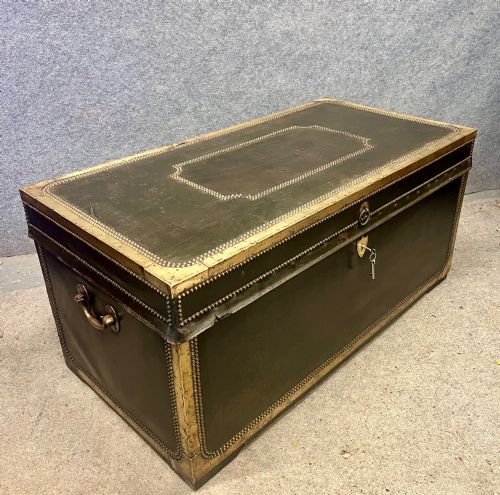
Surface finishes vary widely from plain polished wood to applied paint, leather cladding, and red lacquer. Folk traditions brought hand-painted motifs to pine and elm boxes, while campaign pieces utilised leather and brass for durability.
Regional styles on this page span Georgian country, Welsh country, Scandinavian folk art, China trade, and Arts and Crafts forms.
What varies in quality
The standard of timber selection and joinery distinguishes simpler utilitarian boxes from finer cabinet-made examples. Thick oak panels and tight dovetail or mortise-and-tenon joints indicate a higher grade of construction.
Originality of surface finish and hardware dictates much of the appeal in surviving pieces. Retained original paint, undisturbed brass work, and untouched interior compartments carry greater integrity than heavily restored surfaces.
The Early 19th Century Coffer Glossary
- Coffer
- A heavy timber chest traditionally used for storing valuables, linen, or documents. These pieces often feature hinged lids and robust panel construction.
- Campaign trunk
- A portable storage chest designed for military or travel use, typically fitted with brass corners, flush handles, and durable leather or wood bodies.
- Mule chest
- A storage chest featuring one or more drawers beneath the main lift-up compartment. This form combines the utility of a chest with that of a low chest of drawers.
- Dome top
- A rounded lid construction designed to shed water during travel and provide extra internal headroom. This profile appears frequently on marriage and journey chests.
Early 19th Century Coffer: Frequently Asked Questions
What were early 19th century coffers used for?
These boxes stored household textiles, blankets, clothing, and personal valuables before fitted wardrobes became standard.
Travellers and military officers also utilised specialised versions like campaign trunks and coaching chests to transport belongings.
How do I identify a regional style?
Regional identity often shows through timber choice and surface decoration, such as Scandinavian folk art painted pine or Welsh country oak.
Construction methods and local aesthetic traditions help separate French, Dutch, and British examples.
Where should I place a coffer at home?
A coffer works well at the foot of a bed for spare bedding or acts as a coffee table in a living room.
Entryways also suit these pieces well, providing hidden storage for shoes and bags while offering a sturdy surface.
What is the difference between a coffer and a trunk?
Coffers generally denote heavier, stationary timber furniture built with frames and panels for domestic storage.
Trunks and coaching chests typically point towards portable items designed for travel, often featuring leather, iron, or brass reinforcement.