


19th Century Mule Chest
A 19th century mule chest combines top-opening blanket storage with one or more lower drawers, offering practical utility and rustic character.
19th Century Mule Chest
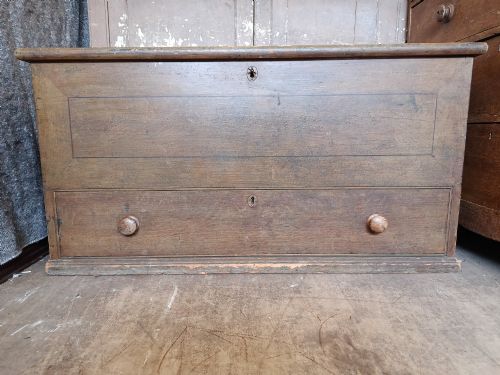
A 19th century mule chest bridges the functional gap between a simple blanket chest and a chest of drawers, housing a deep upper compartment beneath a lifting lid alongside lower drawer storage. These practical pieces served domestic households across regions such as Wales and Lancashire for storing linens, bedding, and garments.
The versions most commonly met on this page span the Victorian era and earlier decades, appearing in sturdy regional timbers or softwoods. Formats range from modest coffer bach examples to larger Lancashire mule chest of drawers configurations raised on bracket feet.
Regional styles dominate the selection, heavily leaning towards country workshops rather than urban cabinet makers. Buyers encounter items designated variously as bedding chests, trunks, or hall chests, reflecting the broad utility these hybrid storage pieces provided.
How they were made
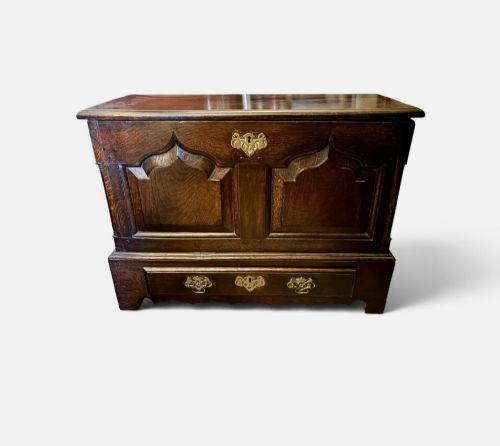
Carpenters constructed these storage items primarily from solid regional timbers, selecting durable oak and mahogany for formal country furniture alongside deal and pine for more utilitarian domestic use. Iron and brass hardware, including hinges and drawer pulls, secured the heavy lifting lids and drawer fronts.
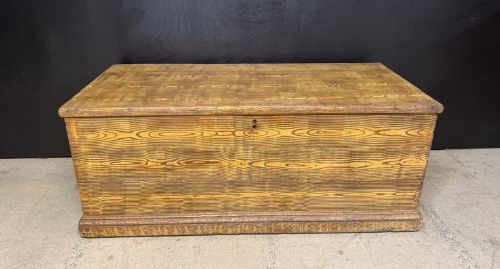
Surface treatments varied from plain waxed timber finishes to decorative applications like paint and faux bois grain effects. Some examples featured carved ornamentation on the oak facades, while others relied on the natural grain of the pine or deal wood.
What varies in quality
Construction heft and timber selection separate robust regional examples from simpler utility boxes, with dense hardwoods like oak and mahogany demonstrating superior longevity compared to softer deal. The integration of the lower drawer mechanism within the overall frame also dictates the structural integrity of the piece.
Surface preservation remains crucial, distinguishing items retaining original paint, grain finishes, or untouched patinated wood from those stripped or heavily altered over time. The survival of original brass or iron hardware adds significantly to the integrity of the piece.
The 19th Century Mule Chest Glossary
- Coffer bach
- A small Welsh chest, often featuring a single drawer below the main compartment. These miniature versions were traditionally utilised for storing valuables or linens.
- Faux bois
- A decorative paint technique mimicking wood grain. Artisans applied this finish to pine and deal surfaces to imitate more costly timbers like oak or mahogany.
- Mule chest
- A storage chest fitted with one or more drawers beneath the main lifting compartment. This hybrid form evolved during the seventeenth century and remained popular through the nineteenth.
- Lancashire mule chest
- A large regional variant typically characterised by multiple lower drawers beneath a deep chest cavity. These substantial pieces originated in the northwest of England.
- Bracket feet
- Architectural support feet shaped like an L-bracket, elevating the base of the chest off the floor. They appear frequently on Victorian country furniture.
19th Century Mule Chest: Frequently Asked Questions
How do I live with a mule chest?
These chests function exceptionally well as living room coffee tables, hallway storage benches, or bedroom blanket boxes. Their deep internal capacity conceals bulky items while providing a sturdy flat surface on top.
Positioning them away from direct heat sources protects the timber and historic finishes from drying out or splitting over time.
Pine or oak which is better?
Oak examples offer greater structural rigidity and a traditional hardwood finish suited to formal rustic interiors. They frequently feature carved details and heavier proportions.
Pine and deal versions, conversely, provide a lighter aesthetic and often showcase painted surfaces or faux bois finishes that highlight folk art characteristics.
How do I spot a Welsh mule chest?
Welsh examples often appear in local hardwoods like oak or regional pine, sometimes built in smaller proportions such as the coffer bach format. They reflect vernacular building traditions unique to the Principality.
Look for sturdy joinery and regional characteristics that distinguish them from Lancashire or general English country pieces.