



Nineteenth Century Wine Chest
A nineteenth century wine chest is a robust timber vessel designed to store and cool vintage bottles, combining architectural presence with practical utility.
Nineteenth Century Wine Chest
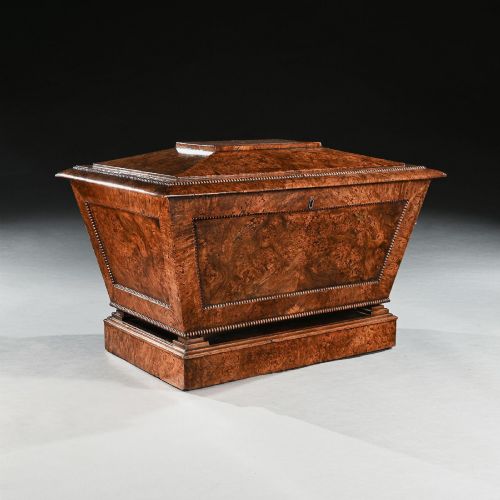
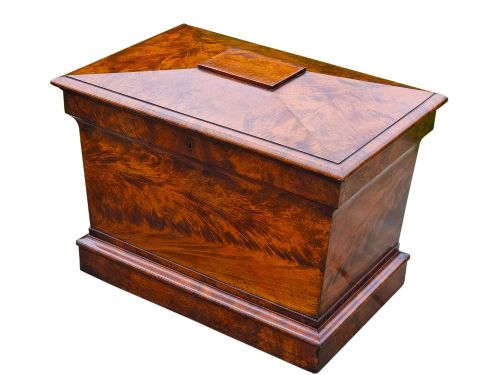
A nineteenth century wine chest encompasses architectural cellarettes and sarcophagus shaped coolers engineered to hold vintage bottles at table height. These substantial pieces emerge predominantly from the Regency and Victorian eras, designed to sit quietly beneath sideboards or beside dining tables.
Teapoys also appear within this grouping, sharing similar cabinetmaking roots and timber choices with standard cellarettes. While distinct in internal layout, these lidded boxes maintain the heavy proportions and fine veneers characteristic of the broader nineteenth century wine chest category.
Materials and construction methods
Cabinetmakers constructed these vessels using solid mahogany or framed carcasses finished with figured mahogany veneer and pollard oak. These dense hardwoods provided the structural integrity required to contain heavy glass bottles and lead lined cooling compartments.
Heavy brass mounts, bands and lion mask ring handles punctuate the dark timber surfaces across many examples. Joinery relied on traditional techniques to manage the weight of the timber and the internal metal linings necessary for holding ice.
Nineteenth Century Wine Chest Retail Price Guide 2026
Typical asking prices for nineteenth century wine chest among the pieces listed under this phrase on Sellingantiques today, from the lower quarter to the upper quarter. They describe what is for sale here now, not the wider market.
Several examples feature fierce lion mask handles, glaring outward to guard the precious vintages locked away inside.
Distinguishing quality across examples
Quality rests in the selection of timber veneers, where highly figured flame mahogany or polished pollard oak elevates a piece far beyond plain stock. The depth of the natural patina and the crispness of carved mouldings determine the visual success of the cabinetwork.
Hardware integration further separates standard production from superior work. Heavy cast brass handles, well fitted internal lead liners and robust plinth bases indicate a higher tier of original workshop commission.
The Nineteenth Century Wine Chest Glossary
- Cellarette
- A lockable container used for storing wine and spirits in the dining room. These vessels often featured internal divisions and metal linings to hold ice.
- Sarcophagus
- A monumental funerary chest shape adopted by Regency cabinetmakers for large wine coolers. The domed lid and tapered body give these pieces architectural weight.
- Pollard oak
- Timber taken from trees that have been pollarded, producing a highly figured, mottled grain. This decorative wood was favoured for high status nineteenth century case furniture.
- Teapoy
- A small lidded chest on a central pillar or legs, designed to hold loose tea leaves. They share construction methods and aesthetic vocabulary with wine coolers.
- Patina
- The surface sheen and mellow tone developed by wood over decades of handling and polishing. Good patina indicates age and careful maintenance.
Nineteenth Century Wine Chest: Frequently Asked Questions
What is a nineteenth century wine chest?
A nineteenth century wine chest is a heavy wooden receptacle built to store, cool and present wine bottles in the dining room.
These pieces range from sarcophagus shaped mahogany coolers to brass bound oak buckets designed for domestic entertaining.
How were these wine chests used?
Servants filled the lead lined interiors with ice and water to chill wine before it was served at the dining table.
The lockable lids secured expensive vintages from household staff, combining functional storage with social display.
How do I date a wine chest?
Dating relies on examining the timber species, construction techniques, hardware style and overall silhouette.
Regency pieces often display classical architectural details and figured veneers, while later Victorian examples show heavier proportions.
Where should I place one at home?
These chests work well as standalone accent pieces in a dining room, hallway or living space.
Their robust timber surfaces and brass mounts provide a natural focal point while offering generous internal storage.