


Regency Sarcophagus Coffer
These pieces of regency sarcophagus coffer furniture are classical storage forms designed to keep wine cool at the dining table, prized for their architectural presence.
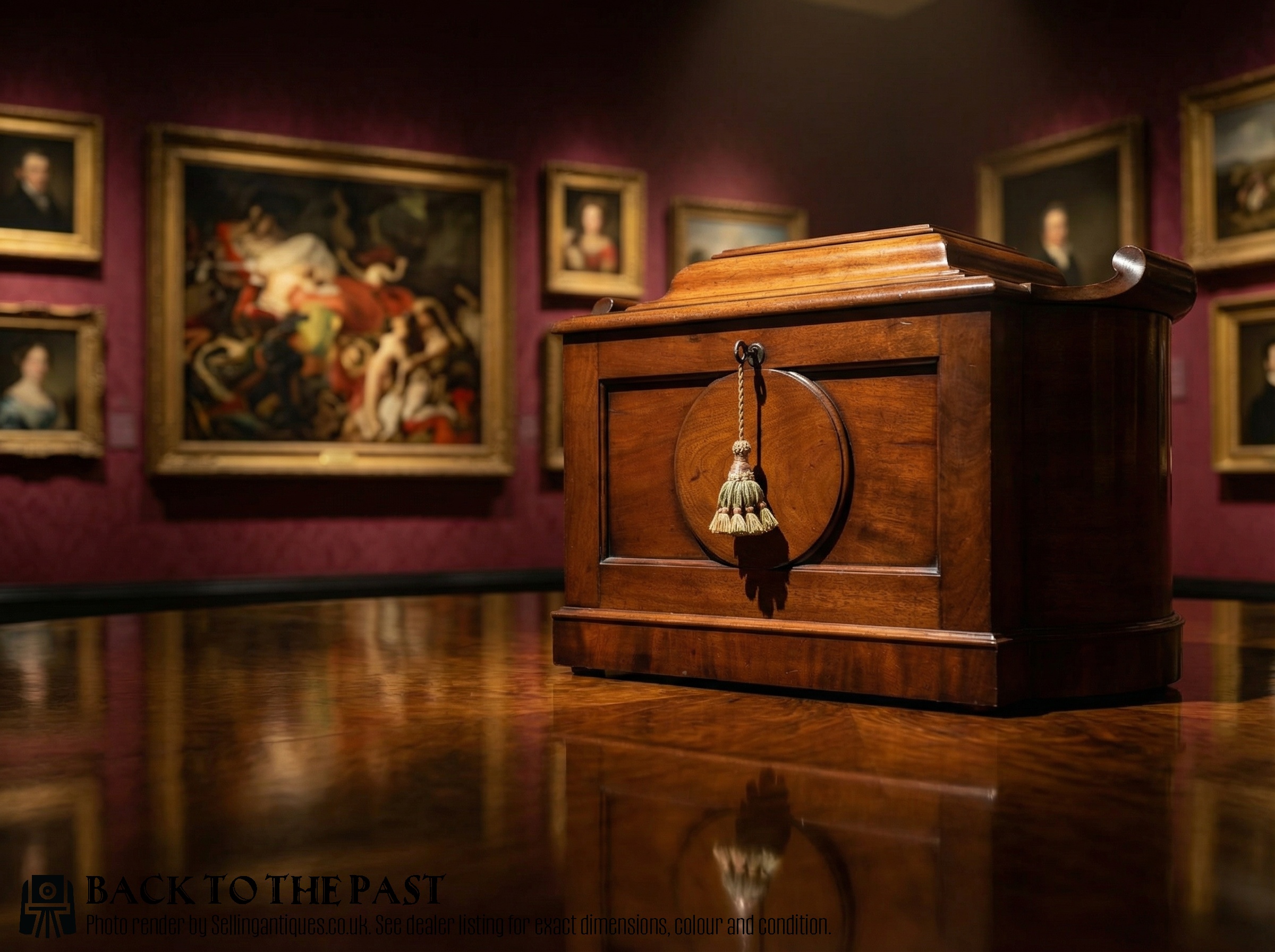
Regency Sarcophagus Coffer
A regency sarcophagus coffer typically takes the form of a heavily figured timber box designed for cooling wine during the dining hours of the nineteenth century. These vessels draw heavily on classical architectural motifs, adopting the tapered tomb-like proportions that define the Regency and William IV periods.
How they were made
Cabinet makers built these pieces using solid timbers and carefully selected veneers over secondary woods like oak, providing stability for the heavy forms. Flame mahogany and burr elm supplied striking surface grain, while ebonised wood and brass details provided sharp neoclassical contrast.
Joinery techniques focused on housing massive timber sections that could withstand the damp weight of ice and bottles inside. Carved mouldings and applied mounts were meticulously fixed by hand to frame the characteristic sarcophagus silhouette.
The listings on this page span the 19th Century, Regency, and Georgian eras, executed principally in mahogany, burr elm, and oak.
What varies in quality
The choice of timber grain fundamentally dictates the visual success of the piece, with book-matched flame mahogany or burr elm standing apart from plain stock. Superior examples display crisp, deeply undercut carving on the paw feet or classical mounts rather than soft, mechanical definition.
Proportion and scale separate ordinary workshop production from ambitious cabinet work, particularly in how the lid sits upon the heavy moulded base. The handling of interior linings and the precision of the mitred joints reveal the true competence of the maker.
Charles Heathcote Tatham
The Regency Sarcophagus Coffer Glossary
- Sarcophagus
- A monumental tomb-shaped container form that inspired the heavy, tapered box design used for classical wine coolers.
- Cellarette
- A lockable container designed specifically to hold bottles of wine beneath the dining table or sideboard during a meal.
- Flame mahogany
- A highly figured tropical hardwood veneer prized for its dramatic, flickering flame-like grain patterns across large surfaces.
- Burr elm
- A knotty, highly decorative timber growth offering complex swirls and patterns utilised for high-status cabinet fronts.
- Ebonised wood
- Timber treated with a dark stain or finish to imitate expensive ebony, frequently used for contrasting mouldings and feet.
Regency Sarcophagus Coffer: Frequently Asked Questions
What is a regency sarcophagus coffer used for?
These large timber boxes functioned primarily as wine coolers and cellarettes in grand dining rooms during the early nineteenth century. Lined to hold ice and bottles, they kept wine chilled near the table before being poured.
Today, collectors use them as striking standalone statement pieces, coffee tables, or deep storage chests within a traditional or contemporary interior.
How do I date a sarcophagus cellarette?
Dating relies heavily on observing the timber choices, secondary woods like oak, and the specific evolution of neoclassical design elements. Pieces transition from crisp Regency proportions into the heavier, bolder forms associated with the William IV period.
Examining the construction methods inside the coffer helps separate genuine early nineteenth-century cabinet work from later revivals.
Where should I place a wine cooler at home?
Their sculptural proportions make them ideal as freestanding focal points in a dining room, hallway, or spacious living area. Placing them away from direct heat sources protects the fragile mahogany and burr elm veneers from drying out.
Because they sit low to the floor, they work well positioned beneath large paintings or beside heavy seating arrangements.
What woods were used for these coffers?
Mahogany served as the primary structural and visual timber, frequently enhanced with dramatic flame mahogany veneer across the main panels. Cabinet makers also utilised exotic burr elm for its swirling grain, alongside ebonised wood details and oak carcases.
Brass mounts and handles frequently provided durable hardware accents that contrasted with the dark polished timber.