
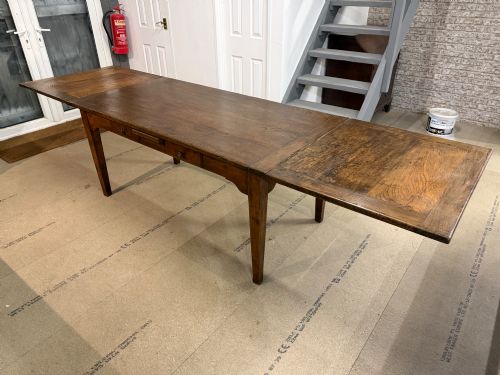
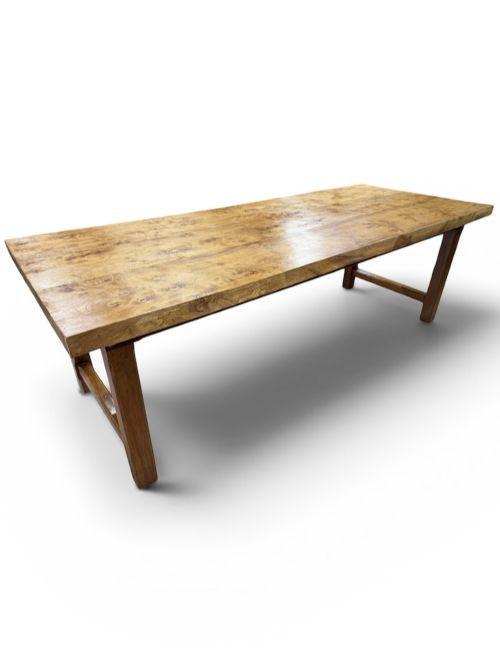
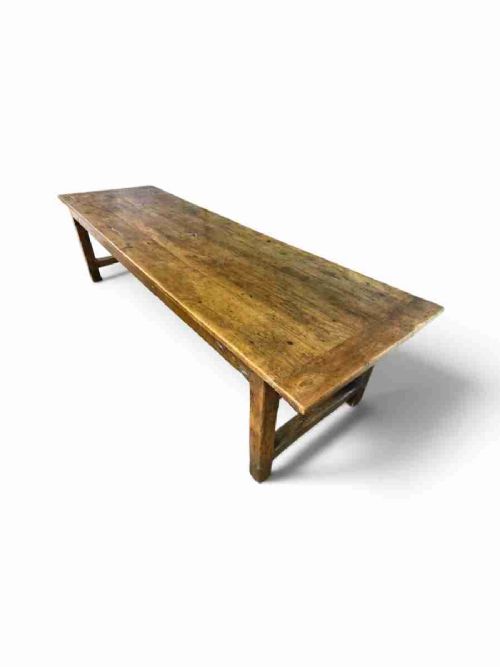
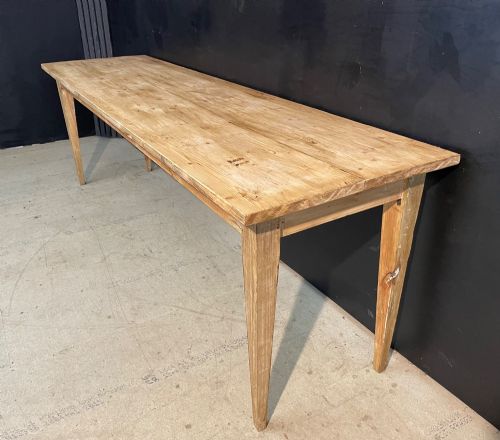
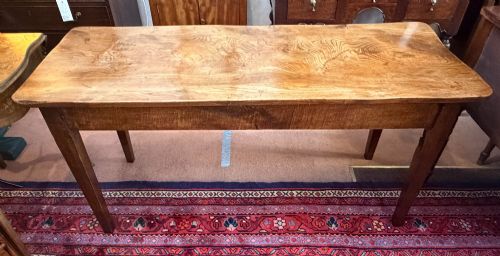
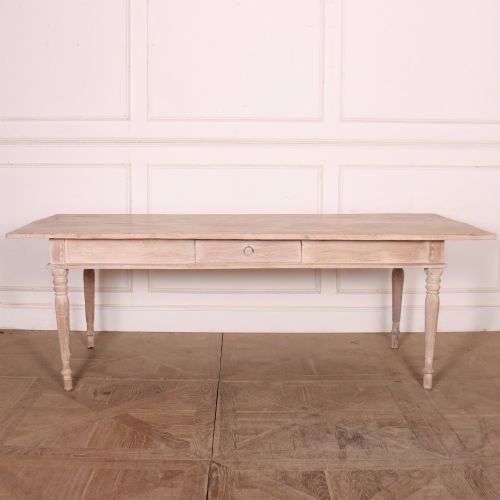
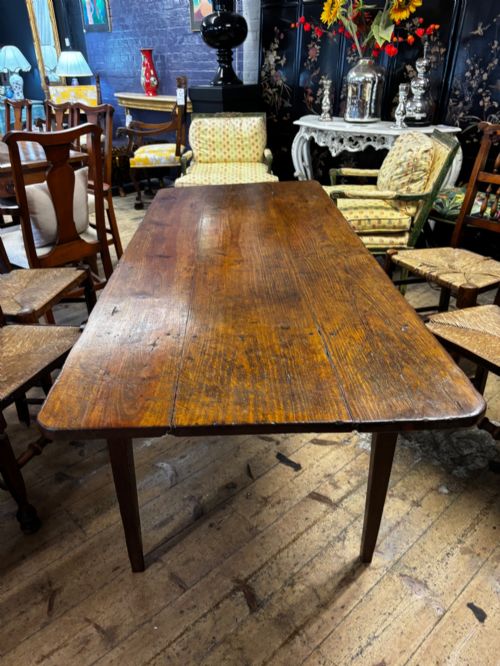
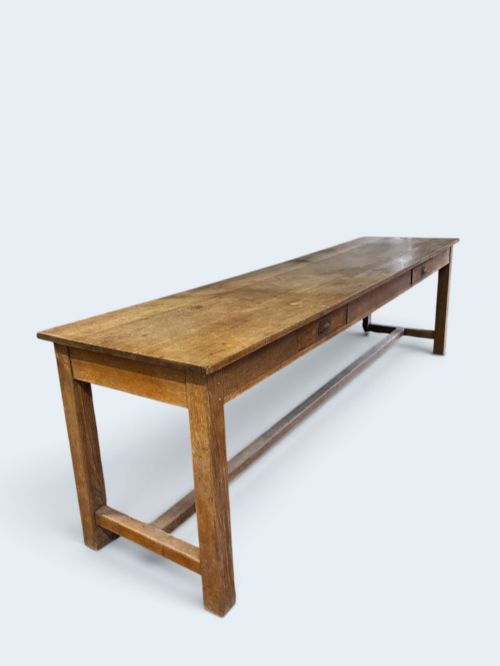
Rustic Wooden Refectory Table
A rustic wooden refectory table brings immediate warmth and honest utility to a dining space, built from timber designed for daily service.
Rustic Wooden Refectory Table
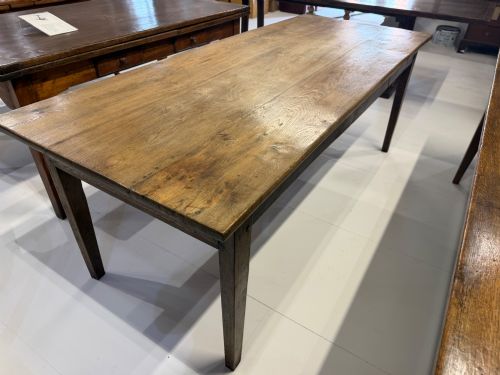
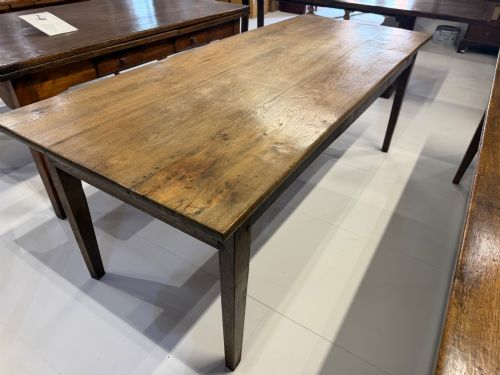
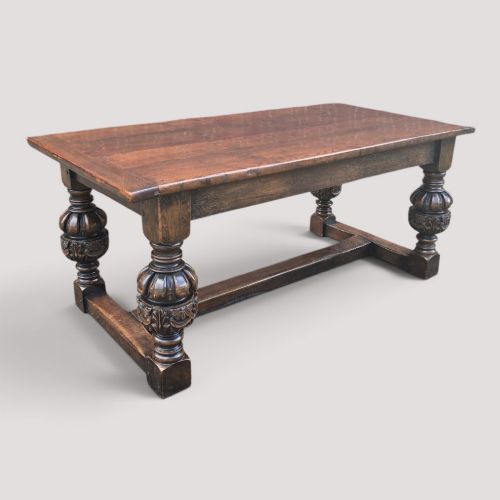
A rustic wooden refectory table is a long, substantial board supported by sturdy legs or trestle ends, originating from communal dining halls and large country kitchens. The selections gathered here span periods from the eighteenth century through the Edwardian era, showing influences from English country houses to French provincial farmsteads.
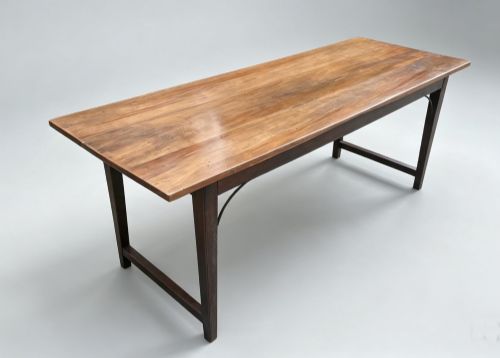
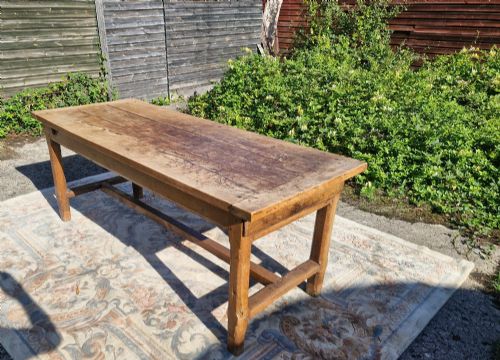
Buyers encountering these listings will find forms primarily rendered in solid oak, pine, elm, and fruitwood, often featuring extended lengths suited for seating large numbers of guests. Tables emerge in distinct regional styles, including French country, Arts and Crafts, and Victorian farmhouse designs, each carrying the marks of prolonged domestic use.
How They Were Made
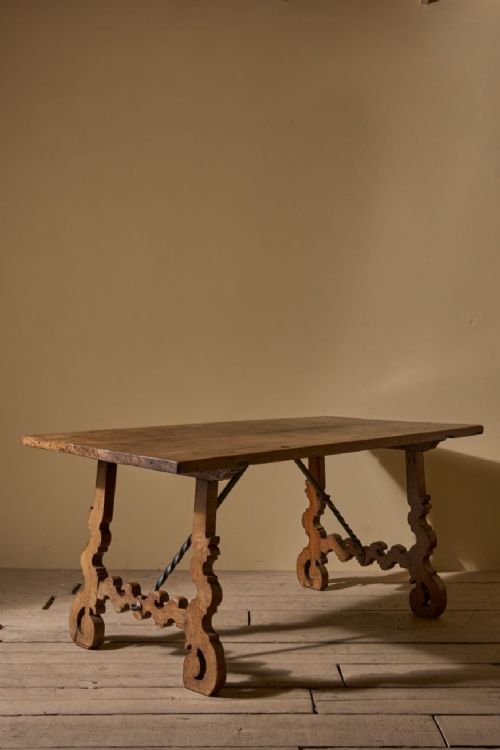
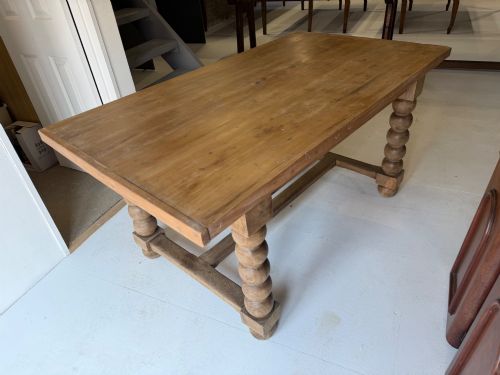
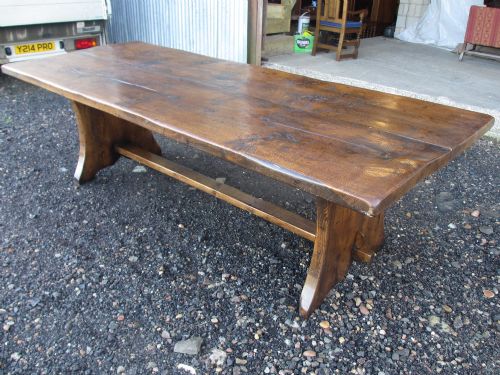
Joinery relies on heavy timbers of solid oak, pine, fruitwood, and elm, secured through traditional methods designed to withstand heavy loads and constant movement. Supporting structures include tapered legs, bobbin turnings, and shaped trestle ends that anchor the long top boards firmly to the floor.
Surfaces receive simple finishes of wax or natural polish that allow the grain of the wood to remain visible while offering protection against daily wear. Iron bracing or hardware occasionally appears on specific pieces to reinforce joints and support extending mechanisms.
Design influences recorded in the inventory include French provincial, Arts and Crafts, Edwardian, and English country traditions.
What Varies in Quality
The integrity of the original timber and the structural soundness of the frame dictate the standing of each piece, distinguishing utilitarian items from finer architectural examples. Untouched patination on older oak and fruitwood surfaces commands attention, reflecting decades of honest exposure and care.
Proportion and balance between the top boards and the underframe determine visual harmony, with superior pieces showing thoughtful integration of legs, trestles, and stretcher rails. The selection of dense native hardwoods over softer utility woods similarly elevates the character and longevity of the table.
The Rustic Wooden Refectory Table Glossary
- Refectory table
- A long, narrow dining table traditionally used in monastic dining halls and large domestic kitchens. These forms provide substantial surface area supported by heavy legs or trestles.
- Trestle ends
- Upright supports placed at either end of a table, often shaped or panelled, connected by a central stretcher rail to provide stability.
- Fruitwood
- Timber sourced from fruit-bearing trees such as cherry, pear, or plum, prized for its fine grain and warm tone in country furniture.
- Bobbin legs
- Turned furniture legs shaped with a series of rounded, spool-like swellings and collars characteristic of seventeenth-century and later revival joinery.
- Patina
- The surface sheen and colour developed over years of handling, polishing, and natural ageing on wooden furniture.
Rustic Wooden Refectory Table: Frequently Asked Questions
How do I seat guests comfortably?
Long refectory tables naturally accommodate multiple chairs or matching benches along their flanks due to their generous length and absence of cumbersome corner legs.
Selecting pieces with appropriate clearance underneath ensures diners have ample legroom while seated along the full stretch of the board.
What woods were commonly used?
Construction relies heavily on native hardwoods and softwoods such as oak, pine, elm, fruitwood, and beech, chosen for local availability and structural strength.
Oak and elm provide heavy durability for main frames, while fruitwood and pine offer distinct grain patterns and lighter tones suited for provincial kitchens.
How do I date a farmhouse table?
Dating relies on observing construction techniques, tool marks, timber selection, and the style of the legs or trestles against known period characteristics.
Eighteenth and nineteenth-century examples often display hand-sawn board widths and pegged joinery, whereas later Edwardian and twentieth-century versions reflect machine production methods.
Are benches original to the tables?
Matching benches sometimes accompany refectory tables as integrated dining sets designed together, though many benches are gathered to complement the central board.
Examining the timber type, wear patterns, and finish helps determine whether seating originates from the same period and workshop as the table.