



Rustic Tribal Rug
When you search for a rustic tribal rug, you uncover floor coverings woven by village and nomadic communities across Anatolia, Persia, and the Caucasus.
Rustic Tribal Rug
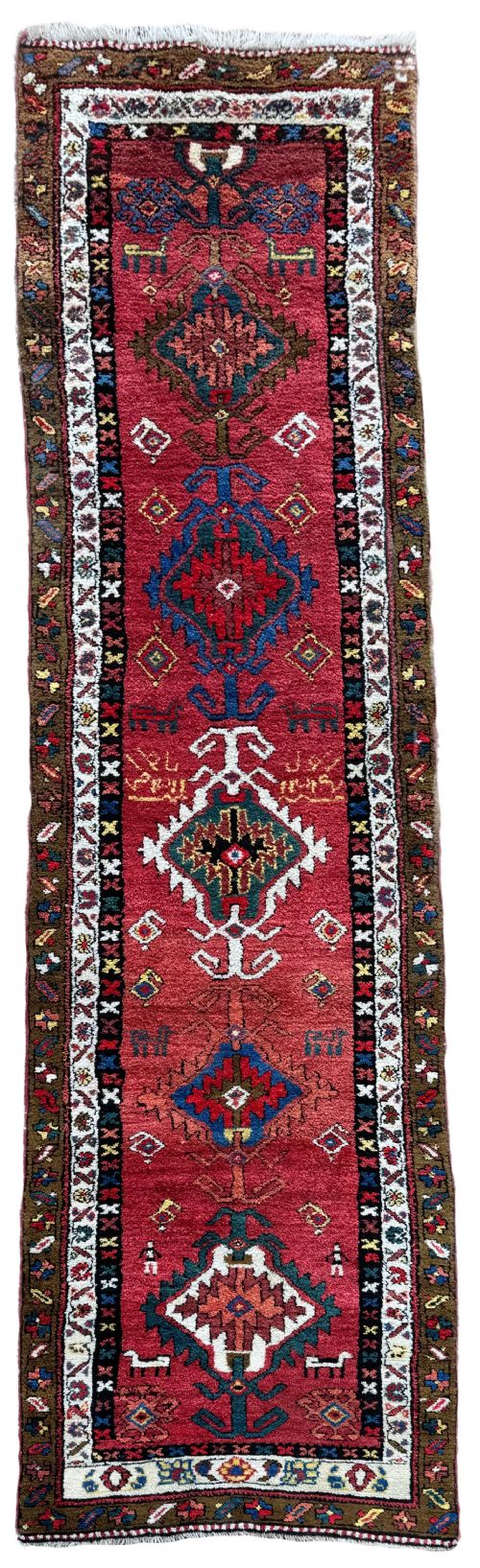
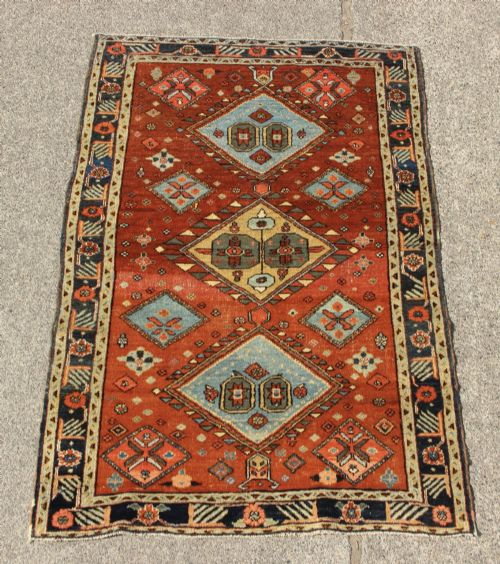
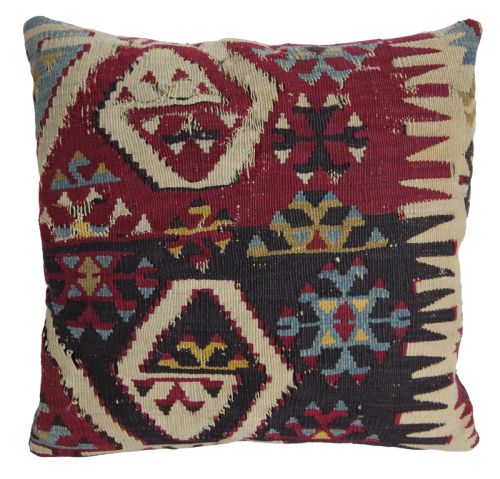
A rustic tribal rug brings together various regional traditions, including Heriz, Baluch, Shiraz, and Kazak styles, spanning the nineteenth and early twentieth centuries. These pieces appear as full room-sized carpets, runners, smaller area rugs, and even functional cushions adapted from woven bag faces. Buyers look for genuine nomadic or village provenance expressed through asymmetric designs and local dyeing traditions.
The selection ranges from geometric Anatolian village rugs to finely proportioned Persian Heriz carpets and Caucasian tribal pieces. Village weavers worked outside formal urban workshops, resulting in asymmetrical motifs, spontaneous colour changes, and direct interpretations of tribal heritage. Each format, whether a long runner or a square prayer rug, reflects the domestic or utilitarian needs of the weavers who made them.
How they were made
Weavers relied principally on sheep wool, alongside hand-spun wool, camel wool, and cotton used primarily for warps. Natural dyeing methods yielded rich tones of red, blue, and gold that patinate gracefully over decades of use. The handling of these materials dictates the dense, substantial handle characteristic of genuine nomadic floor coverings.
Construction methods involve hand-knotting or flat-weaving techniques such as kilim construction and embroidery. Village weavers tied symmetrical or asymmetrical knots onto warp and weft foundations without formal paper cartoons, working instead from memory and tribal tradition. This direct method allows minor irregularities in line and proportion to remain visible across the surface.
Listings feature village and nomadic textiles produced across periods from the mid-nineteenth century through the early twentieth century.
What varies in quality
Quality rests upon the integrity of the wool, the depth and saturation of the natural dyes, and the clarity of the tribal drawing. Pieces with high wool quality exhibit a lustrous handle and resilient pile that ages without brittle wear. The vitality of the palette directly influences the visual impact of the piece.
Structural tightness and the preservation of original outer borders and selvedges determine the grade of survival. Even when pieces show surface distress or low pile from genuine age, strong structural knotting and intact ends separate robust examples from compromised ones.
The Rustic Tribal Rug Glossary
- Warp
- The stationary vertical threads stretched onto a loom before weaving begins. These form the structural skeleton of the rug.
- Weft
- The horizontal threads passed alternately over and under the warp threads to secure the knots in place.
- Kilim
- A flat-woven textile produced without a pile, traditionally utilised for floor coverings, wall hangings, or storage covers.
- Medallion
- A central ornamental design motif placed in the middle of the field, typical of Persian and Anatolian weaving traditions.
- Prayer rug
- A small format textile featuring a mihrab or niche design, historically used for individual daily prayers.
Rustic Tribal Rug: Frequently Asked Questions
How do I clean an old tribal rug?
Maintenance requires gentle vacuuming without rotating brush heads to protect the fragile wool pile and ancient foundation threads.
Professional specialist cleaning remains essential for addressing deep-set dust or spills, avoiding home chemical treatments that strip natural dyes.
Can I place these rugs in high traffic areas?
Nomadic carpets were built for daily domestic utility on hard floors, meaning sturdy wool handles regular foot traffic well.
Placing a breathable underlay beneath the piece prevents slipping and reduces friction between the foundation and the floor.
How do I identify a Baluch rug?
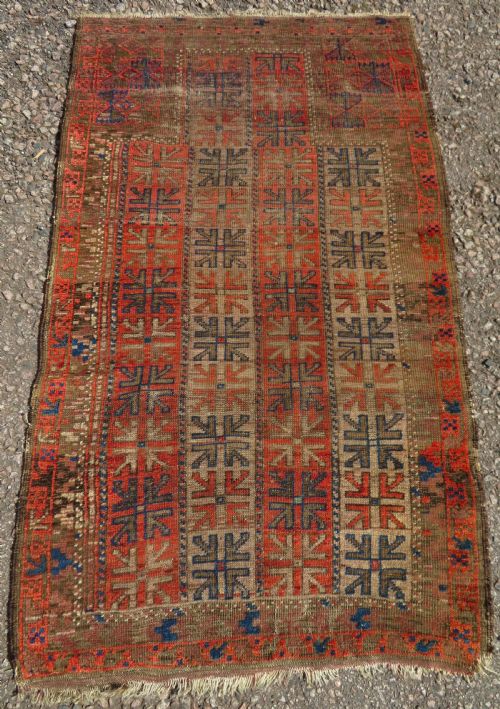
Baluch pieces typically feature darker palettes dominated by deep browns, indigos, and reds, often incorporating geometric tree-of-life or prayer niche motifs.
Many examples include camel wool in the pile, giving the dark brown areas a characteristic susceptibility to wear due to the properties of the fibre.
What does distressed condition mean for these rugs?
Distressed status indicates significant wear to the wool pile, exposing sections of the foundational warp and weft threads beneath.
This wear often results from a century or more of continuous domestic use, softening the colours and imparting a relaxed texture.