

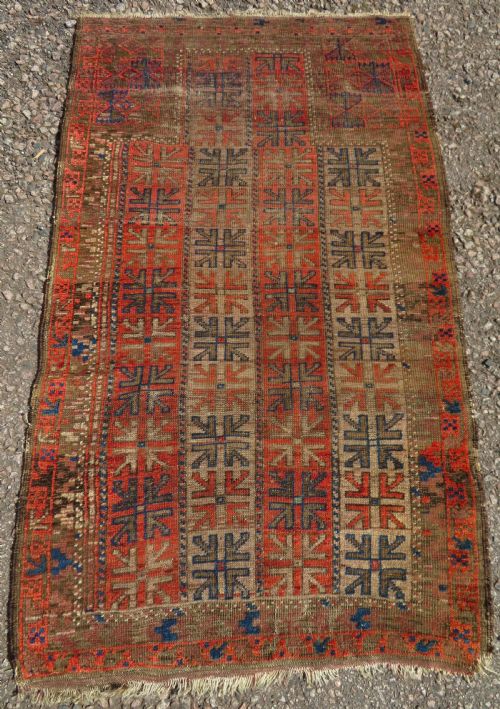


Rustic Tribal Area Rug
A rustic tribal area rug brings grounded warmth and centuries of weaving tradition straight to a wooden floor.
Rustic Tribal Area Rug
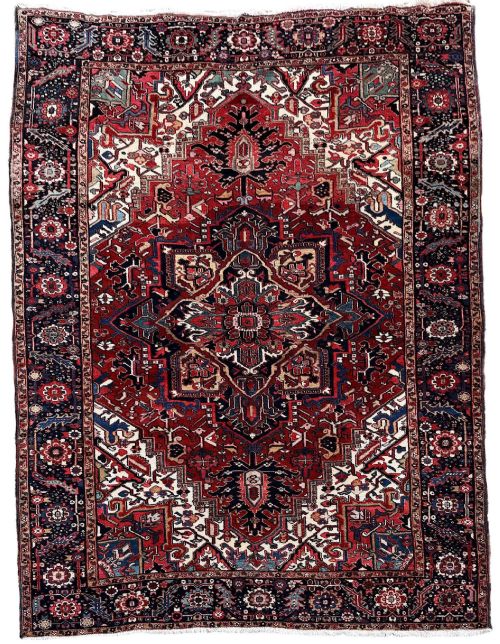
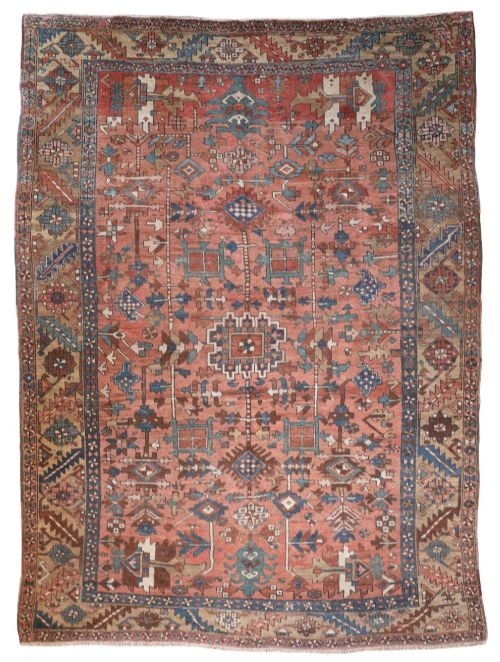
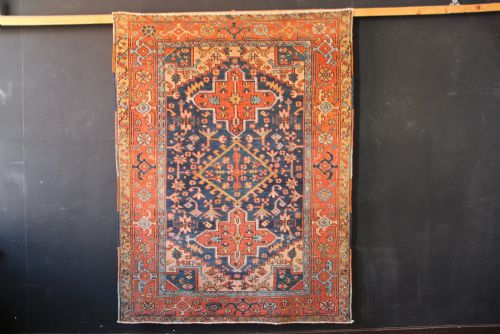
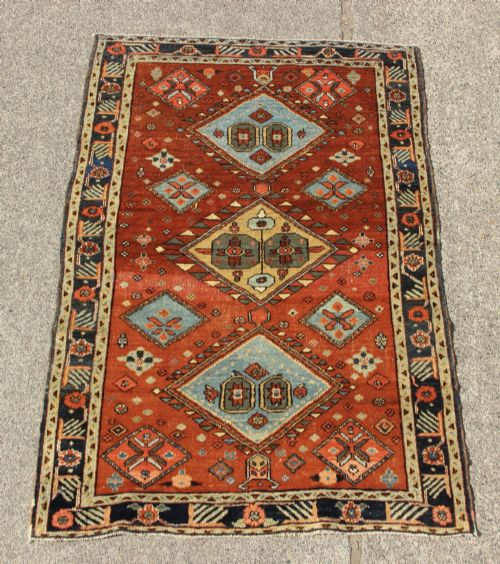
A rustic tribal area rug spans village and nomadic pieces woven across Persia, Anatolia, and the Caucasus from the mid nineteenth century into the twentieth century. These floor coverings emerge from distinct regional traditions, including Heriz, Baluch, Shiraz, and Kazak styles, reflecting the local motifs and palettes of their makers.
The most common examples encountered here are village and nomadic rugs displaying geometric medallions, hooked motifs, or repeating fields. They range from compact prayer formats to larger carpets, carrying the practical wear of domestic life and the character of hand-knotted village production.
Materials and construction
Weavers relied principally on sheep wool for the pile and foundation, occasionally incorporating hand-spun wool and camel wool for natural texture and depth. Cotton warp threads provided structural stability, particularly in Persian town and village workshops, while flatwoven kilims utilised slit-weave techniques without a pile.
Natural dye palettes dominated these older textiles, yielding rich tones that mellow gracefully over decades of use. The knotting and weaving methods varied by tribe and region, resulting in sturdy, practical floor coverings built to endure daily foot traffic.
Rustic Tribal Area Rug Retail Price Guide 2026
Typical asking prices for rustic tribal area rug among the pieces listed under this phrase on Sellingantiques today, from the lower quarter to the upper quarter. They describe what is for sale here now, not the wider market.
Current listings feature pieces spanning the mid nineteenth century through the 1930s, utilising wool, cotton, and camel wool across Persian, Anatolian, and Caucasian styles.
Distinguishing quality across the range
Quality in these textiles rests upon the integrity of the wool, the clarity of the design execution, and the depth of the palette. Tighter knot density and resilient materials separate robust village carpets from lighter or more fragile nomadic examples.
The sophistication of the tribal design and the harmonious balance of natural colours dictate the visual impact of each piece. Surviving structural integrity, despite age and purposeful wear, marks a superior example of traditional weaving.
The Rustic Tribal Area Rug Glossary
- Warp
- The vertical foundation threads stretched tightly on the loom before knotting begins. These lengthwise threads support the entire structure of the rug.
- Kilim
- A flatwoven textile produced without a pile by interlocking coloured woof threads through the warp. These lighter pieces served functional purposes in nomadic tents and village homes.
- Prayer rug
- A small format textile featuring a mihrab or arch design indicating the direction of prayer. Weavers often used these for personal devotion in village settings.
- Medallion
- A central ornamental design motif placed in the field of a rug. Heriz and Caucasian pieces frequently anchor their geometric compositions around this focal point.
Rustic Tribal Area Rug: Frequently Asked Questions
How do I clean an old wool rug?
Gentle surface vacuuming without a beater bar removes loose dirt from the wool pile. Professional specialist cleaning remains essential for addressing deep dust or historical fibres safely.
Water saturation and harsh detergents can damage natural dyes and cotton foundations. Regular rotation ensures even exposure to light and wear across the room.
Where were these village rugs made?
Weavers produced these textiles across traditional regions of Persia, Anatolia, and the Caucasus. Specific groups such as the Quchan Kurds, Baluch nomads, and Anatolian villagers contributed distinct regional patterns.
Local sheep breeds and indigenous dye plants shaped the unique appearance of rugs from each specific district.
Are these rugs durable for daily foot traffic?
Sturdy wool piles and strong cotton or wool foundations made these floor coverings for practical domestic use. Many have endured a century or more of household life while retaining their structural integrity.
Using an appropriate underlay helps protect the historic foundation from unnecessary friction against hard floors.
How can I tell a Heriz from a Baluch?
Heriz carpets generally present larger geometric medallions with bold, substantial framing and sturdy cotton foundations. They reflect the established village workshops of northwestern Persia.
Baluch rugs tend to be smaller prayer or utility formats featuring darker indigo and camel wool palettes associated with nomadic and semi nomadic makers.