


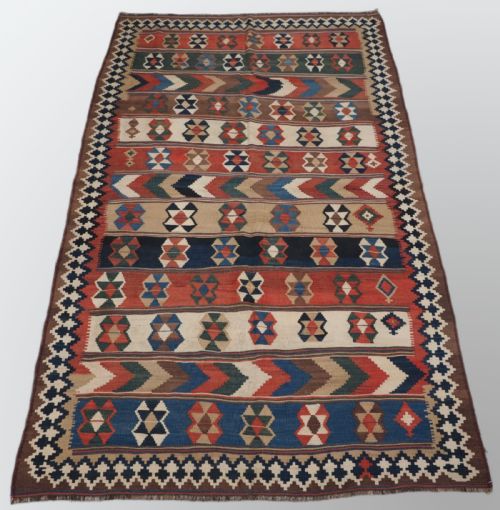


Multicoloured Flatweave Carpet
A multicoloured flatweave carpet brings warmth and striking geometric pattern into a room through traditional nomadic and tribal weaving.
Multicoloured Flatweave Carpet
When you search for a multicoloured flatweave carpet, you encounter flat textiles originating from various tribal and regional traditions. These pieces include Anatolian kilims, Persian tribal works, and Moroccan Berber runners.
The selections available here range from compact floor coverings to large room-sized carpets and elongated runners. Most examples stem from the late nineteenth century up through the nineteen-thirties, showcasing regional designs executed without a traditional pile.
Materials and construction methods
These carpets rely primarily on wool, cotton, and hand-spun wool for their foundational structure and surface texture. Weavers interlace warp and weft threads tightly to create the characteristic flat surface without knotted piles.
Certain larger regional examples, such as specific Anatolian kilims, are woven in two separate parts and skillfully joined together. The use of hand-spun wool imparts natural variation and depth to the textile yarns.
Multicoloured Flatweave Carpet Retail Price Guide 2026
Typical asking prices for multicoloured flatweave carpet among the pieces listed under this phrase on Sellingantiques today, from the lower quarter to the upper quarter. They describe what is for sale here now, not the wider market.
The listings span five distinct decades from eighteen-eighty to nineteen-thirty, focusing primarily on wool and hand-spun wool materials.
Assessing quality in flatweaves
Quality rests heavily on the fineness of the weave, the tightness of the tension, and the integrity of the structural joins. Superior examples display precise geometric alignment and secure selvedges.
The vibrancy and retention of dye colours also distinguish finer items. Strong pigment distribution across hand-spun wool elevates the visual impact of tribal designs.
The Multicoloured Flatweave Carpet Glossary
- Kilim
- A flat tapestry-woven carpet or rug produced in countries of the former Ottoman Empire, Persia, and Central Asia. These textiles lack a pile and rely on visible weft threads.
- Runner
- A long, narrow carpet designed specifically for hallways, corridors, or staircases. Moroccan Berber examples frequently appear in this elongated format.
- Warp
- The vertical threads held stationary on a loom before the weaving begins. Weft threads are passed over and under these foundational lines.
- Weft
- The horizontal threads that are passed back and forth through the warp to create the pattern and fabric. In flatweaves, the weft completely obscures the warp.
- Prayer rug
- A small carpet featuring a mihrab or niche design used historically for daily prayers. Konya region examples often follow this specific format.
Multicoloured Flatweave Carpet: Frequently Asked Questions
How do I clean a flatweave carpet?
Gentle surface vacuuming without a rotating brush helps remove everyday dust and debris from the flat structure.
Professional specialist cleaning is recommended for heavier soiling to protect the delicate hand-spun wool fibres.
Where should I place a runner rug?
Narrow formats fit well in hallways, entryways, and passages where floor space is limited.
They also work effectively alongside kitchen islands or in narrow landing areas.
How do I date an antique kilim?
Examining the specific wool types, dye shades, and regional weaving structures helps establish a plausible time frame.
Stylistic motifs and construction characteristics often point towards late nineteenth or early twentieth-century origins.
Are these carpets suitable for heavy foot traffic?
Flatweaves withstand moderate everyday walking quite well due to their tight tapestry construction.
Using a quality underlay beneath the textile prevents slipping and cushions the weave against hard floors.