




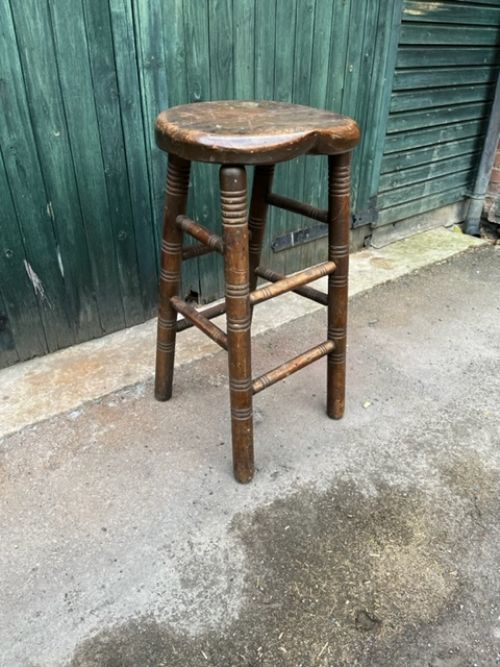
Rustic Timber Kitchen Chairs
These rustic timber kitchen chairs bring solid vernacular character to the heart of the home, crafted from honest native woods to last generations.
Rustic Timber Kitchen Chairs
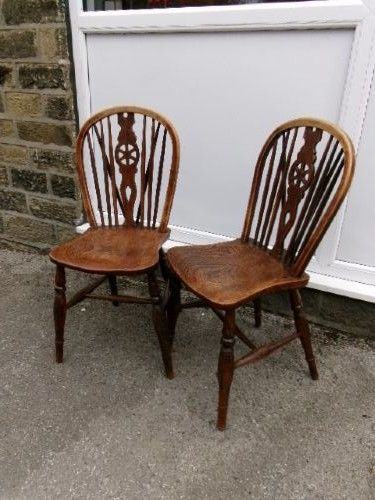
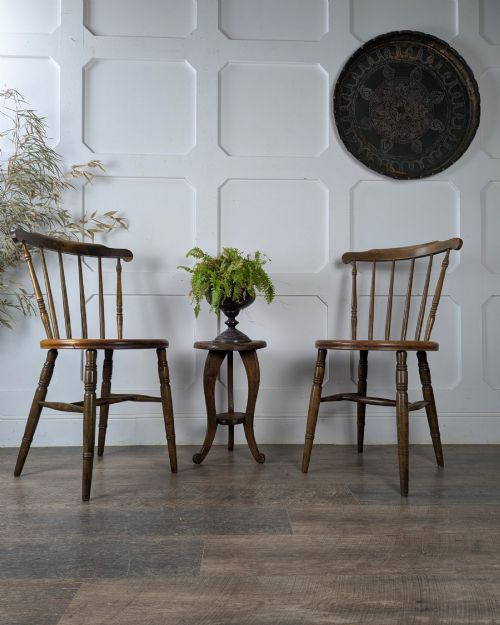
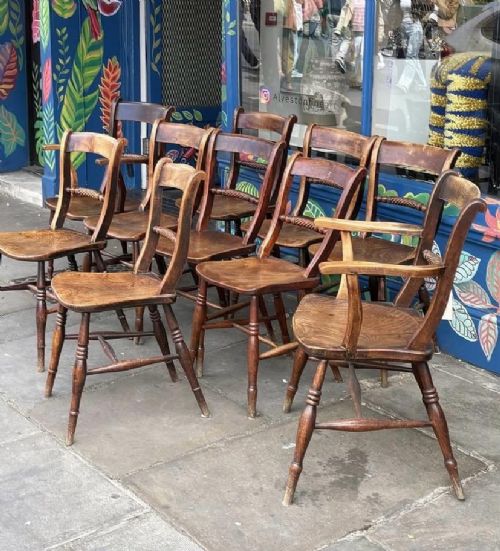
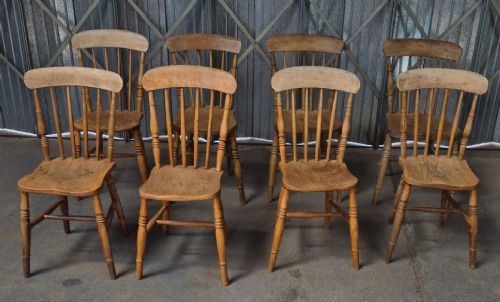
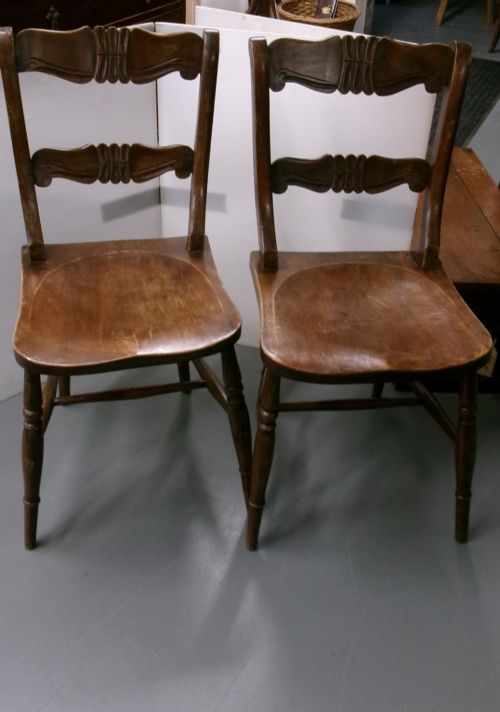
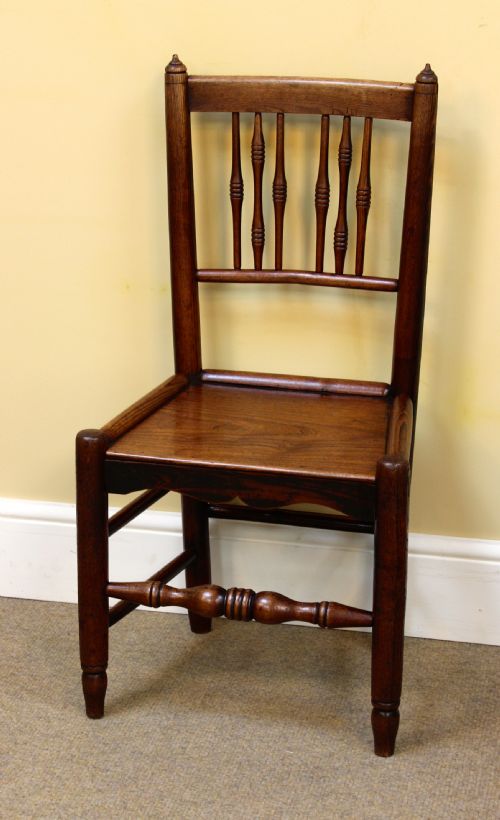
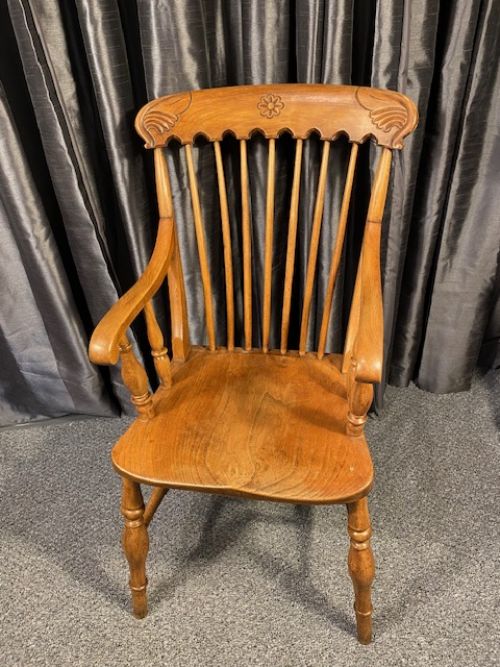
Rustic timber kitchen chairs encompass sturdy seating designed for everyday domestic use, drawing on traditions of vernacular carpentry across the nineteenth and early twentieth centuries. When searching for rustic timber kitchen chairs, buyers encounter varied vernacular forms ranging from Windsor wheelbacks and stick backs to slat backs and simple stools.
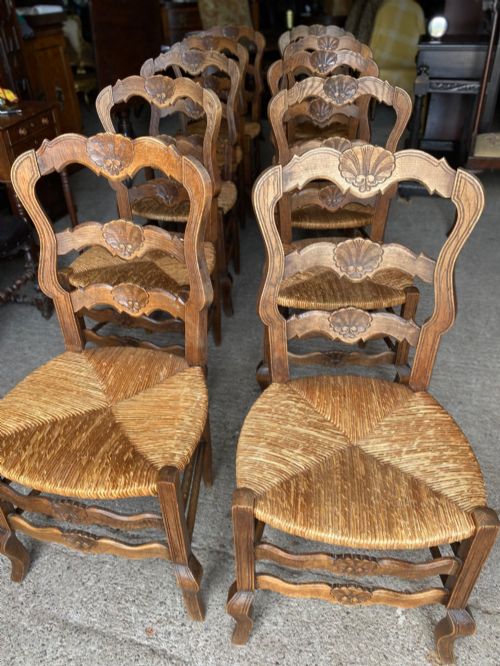
The pieces listed on this page originate predominantly from the Victorian period through to the nineteen-thirties, reflecting both English country traditions and American styles. Single examples sit alongside pairs, near sets and larger dining sets numbering up to ten pieces, suiting diverse table configurations.
Makers utilised local timbers to build functional furniture that prioritised durability over formal ornamentation. The resulting forms display regional traits, from Thames Valley stick backs to Windsor wheelbacks with sculpted wooden seats.
How they were made
Makers combined different woods within a single piece to exploit the specific properties of each timber, pairing hardwearing elm for comfortable carved seats with resilient beech, ash, oak or pine for turned legs, spindles and bows. This functional division of materials ensured structural strength where the strain was greatest.
Joinery relied on traditional techniques such as wedged tenons, steam bending and spindle turning, allowing frames to withstand daily household wear without metal fixings. Surfaces were often left unfinished, stained or simply waxed, developing a rich patina through decades of use.
The listings on this page span the Victorian period through to nineteen-thirty, featuring pine, elm, beech, and ash.
What varies in quality
The quality of these chairs lies in the integrity of their construction and the depth of the timber's grain. Superior examples retain their original structural tightness, with joints that have not been heavily reworked or excessively shimmed.
Seat thickness and the degree of sculptural shaping also distinguish finer pieces from plain utility models. Well-carved saddles in elm and well-turned spindles show the hand of a confident regional carpenter.
Dinco Penny·Worksop Allsop
The Rustic Timber Kitchen Chairs Glossary
- Windsor
- A traditional chair construction method where legs and back spindles are wedged directly into a solid carved wooden seat. This design offers robust stability and remains a staple of country furniture.
- Stick back
- A chair type featuring slender turned spindles set into a bentwood or solid wooden crest rail. These chairs are characteristic of regional vernacular workshop production.
- Wheelback
- A specific variation of the Windsor chair featuring a pierced splat shaped like a cartwheel centred in the backrest. This decorative feature became popular in nineteenth-century country dining furniture.
- Vernacular
- Everyday furniture made by local craftsmen using regional materials and traditional designs rather than following academic metropolitan styles. These pieces tell the story of local woodworking traditions.
- Patina
- The deep, lustrous surface sheen developed on wood over decades through handling, polishing, and natural ageing. A good patina marks a piece's longevity and history.
Rustic Timber Kitchen Chairs: Frequently Asked Questions
How do I clean wooden kitchen chairs?
Wipe surfaces gently with a damp cloth and dry them immediately to protect the antique finish. Avoid harsh chemical cleaners that strip the natural oils from the timber.
Apply a coat of good quality beeswax periodically to nourish the wood and maintain its historic lustre. This preserves the surface without building up excessive sticky residue.
Are these chairs suitable for daily dining?
Most timber country chairs were built for heavy daily use and remain structurally robust enough for modern dining. Ensure joints remain tight before putting them into regular service around the table.
Pairing antique chairs with a sturdy table creates a practical dining space full of character. Their solid wood construction handles family life comfortably.
How do I date a kitchen chair?
Examine the timber species, tool marks, and construction methods to establish an approximate period. Nineteenth-century pieces often display hand-turned spindles and adzed seats distinct from later factory production.
Matched sets can sometimes be identified by subtle variations in turning and wood grain that point to workshop production batches. Wear patterns on the footrests and seats also indicate age.