

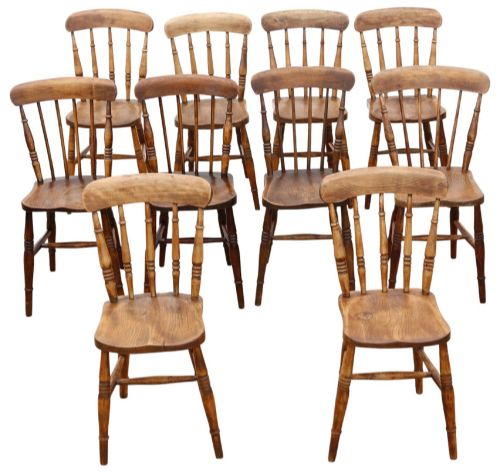

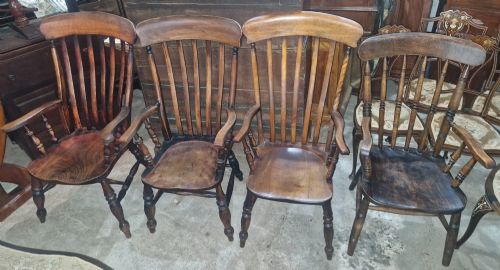
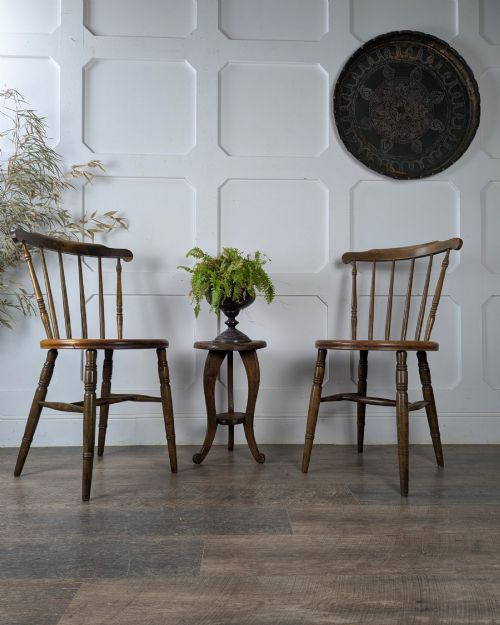
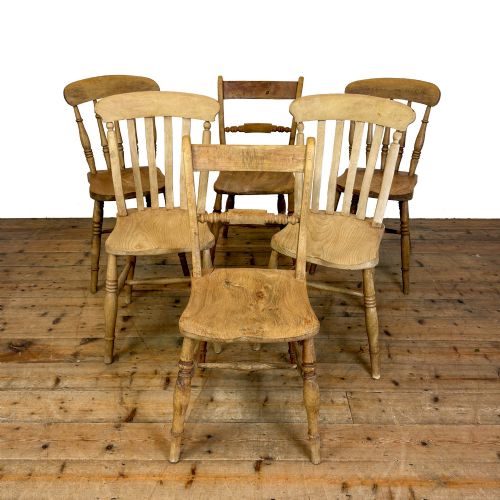
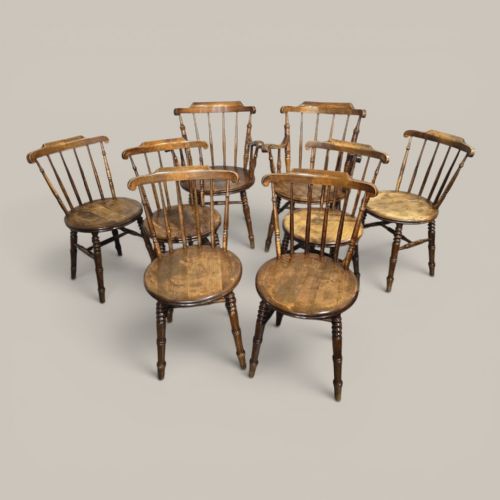
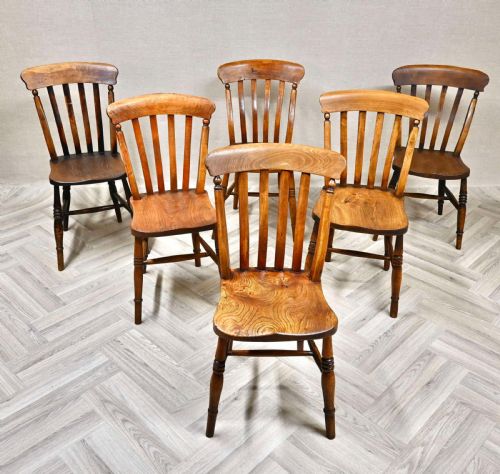
Wooden Spindled Dining Chairs
Wooden spindled dining chairs bring vernacular regional seating into the home, offering turned spindles and sturdy timber frames.
Wooden Spindled Dining Chairs
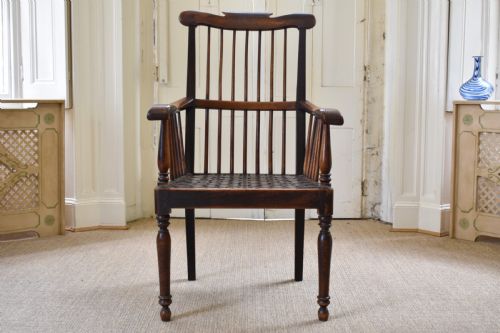
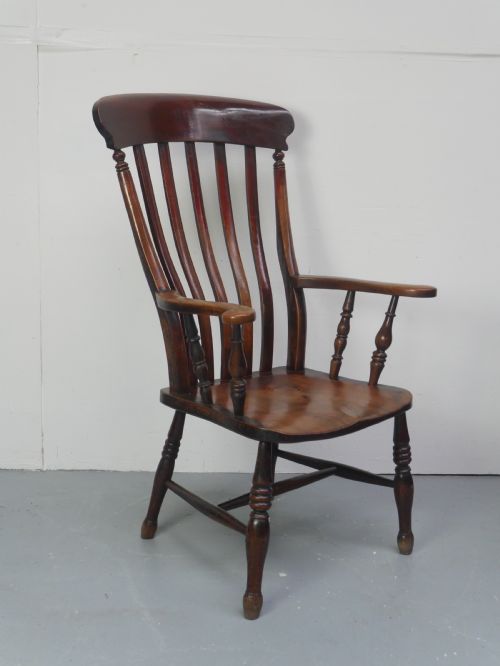
Wooden spindled dining chairs encompass traditional English country seating forms such as Windsors, stick backs, and wheelbacks designed for everyday domestic use. These pieces trace their origins to regional workshops spanning the Georgian, Victorian, and Edwardian eras, reflecting local woodworking traditions.
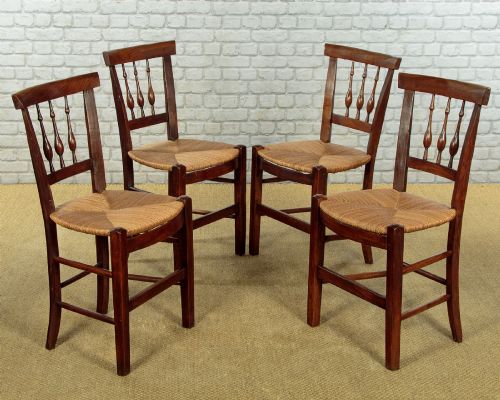
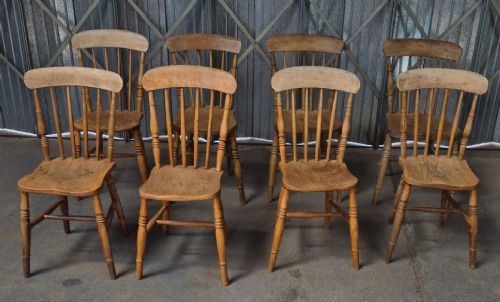
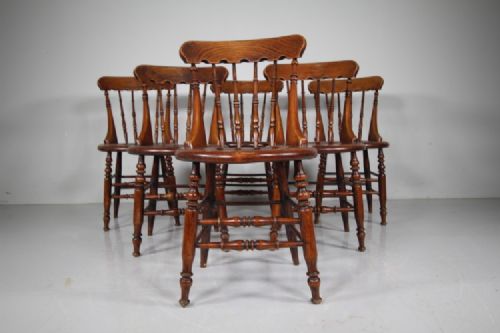
The most common iteration on this page is the kitchen or farmhouse chair, frequently found in matched sets or assembled harlequin groups. They combine turned vertical spindles with solid saddle seats and robust undercarriages to provide durable seating.
Materials and construction
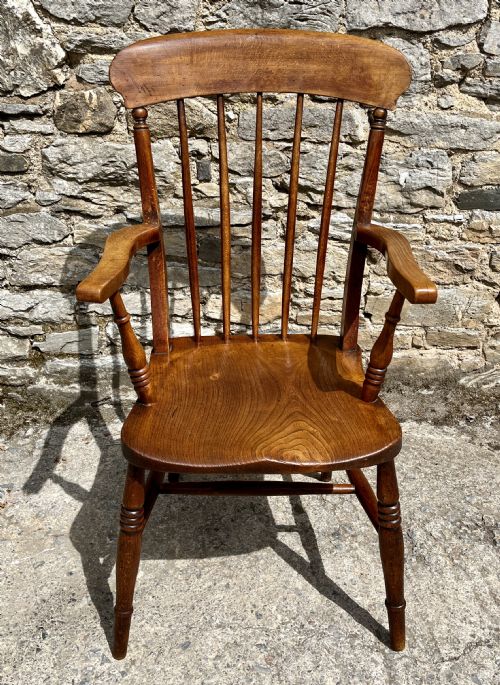
Maker construction relies on contrasting timber properties, pairing dense woods for seats with flexible timbers for bent components. Elm provides a split-resistant, heavily grained surface for carved saddle seats.
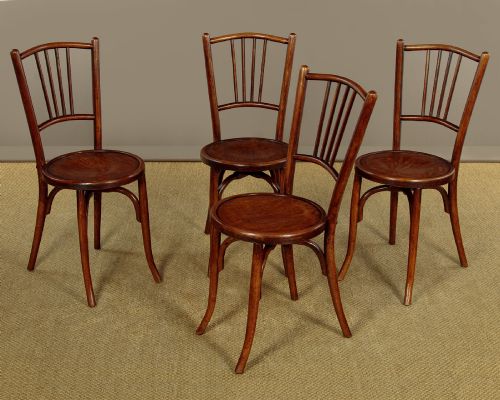
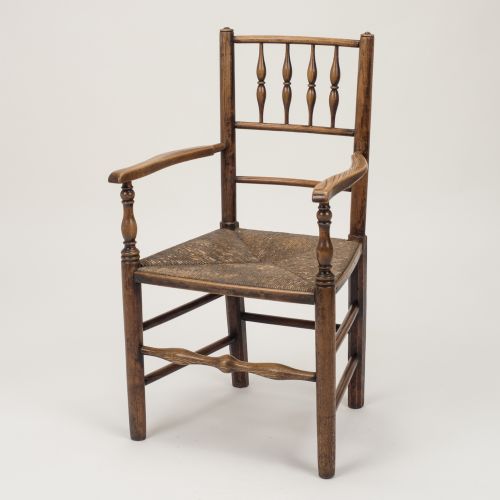
Ash, beech, and fruitwood supply the straight grain needed for steam-bent bows, backs, and turned spindle legs. Rush and timber form the primary seat options across regional styles.
Listings feature elm, ash, beech, and fruitwood spanning the Georgian, Victorian, and Edwardian periods.
Markers of quality
Quality depends upon the integrity of the timber selection and the precision of the joinery connecting the spindles to the seat. Superior examples maintain original component parts without excessive replacement legs or reconstructed crest rails.
Thickly carved, deeply dished elm seats and well-balanced turning on the stretchers and legs distinguish finer country workshops from mass-produced commercial outputs.
Codina·Worksop Allsop
The Wooden Spindled Dining Chairs Glossary
- Windsor
- A chair built with a thick solid wooden seat into which the legs and back spindles are separately bored. This construction method creates a sturdy, unified frame.
- Crinoline stretcher
- A curved hoop stretcher connecting the legs of a Windsor chair low to the ground for added stability. It prevents the legs from splaying outward under heavy weight.
- Harlequin set
- A collection of chairs assembled to match in general style and period while exhibiting subtle individual variations in turning and back design. These groups suit large farmhouse dining tables.
- Rush seat
- A seating surface woven from dried marsh grass twisted into cords. It offers a resilient texture characteristic of traditional regional chairmaking.
Wooden Spindled Dining Chairs: Frequently Asked Questions
How do I match a harlequin set?
Harlequin sets combine individual chairs sharing a common period, regional style, or timber palette. Small variations in spindle placement and turning patterns create an authentic historic dining arrangement.
Matching the seat height and overall scale ensures the chairs sit evenly around a dining table.
Are rush seats durable for daily use?
Rush seats made from twisted marsh grass offer surprising tensile strength and flexibility for regular dining use. They withstand everyday pressure when kept away from excessive moisture.
Applying occasional beeswax or maintaining stable indoor humidity helps preserve the natural fibres over decades.
How do I identify a 19th-century chair?
Nineteenth-century examples show tool marks from hand-turning lathes and adzes on the underside of the wooden seats. Variations in wood grain and minor asymmetry often point to regional country workshop production.
Fasteners and joint construction methods also help date the frame against known period styles.