
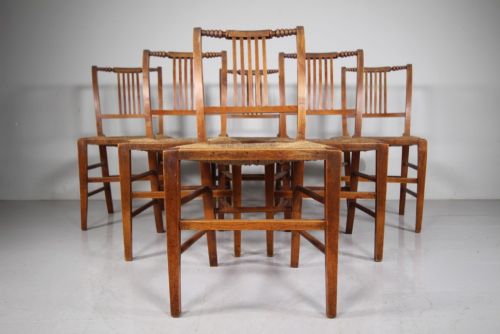
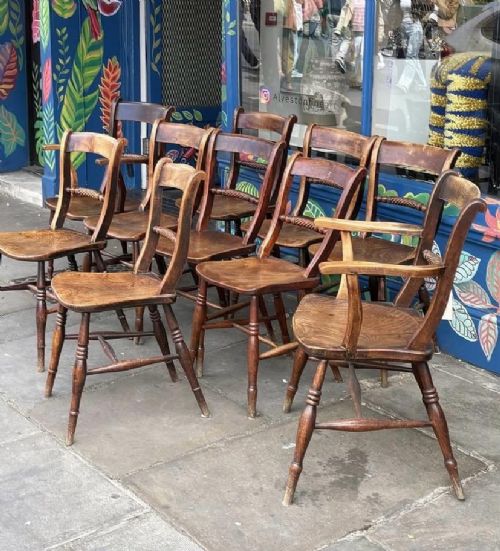
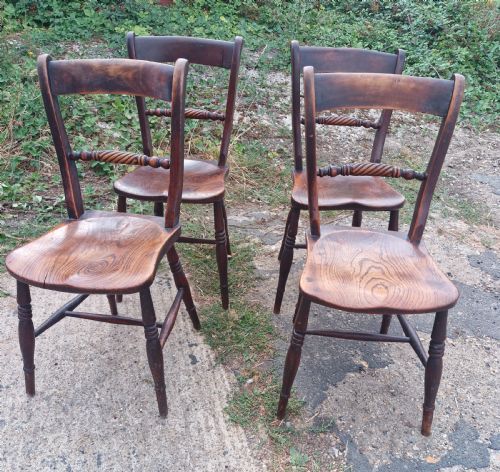
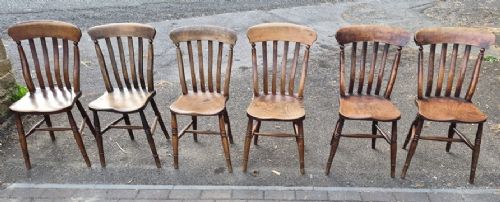
Elm Dining Chairs Set
When gathering people around a table, an elm dining chairs set brings a tactile warmth and sturdy vernacular character that modern seating simply cannot replicate.
Elm Dining Chairs Set
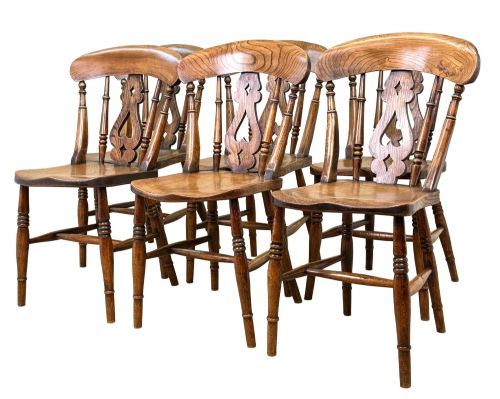
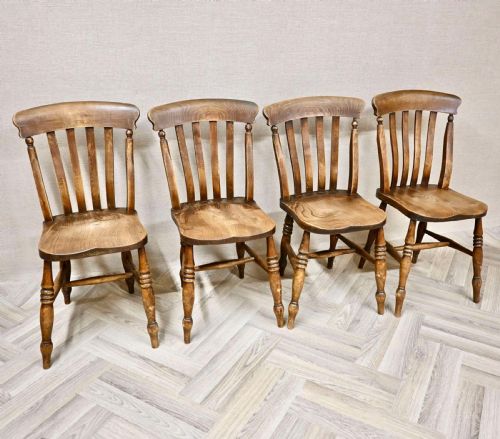
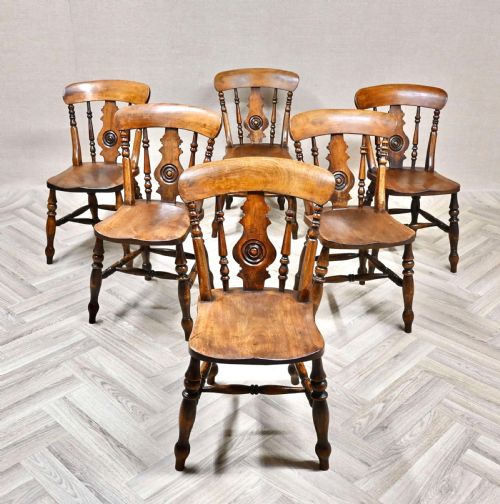
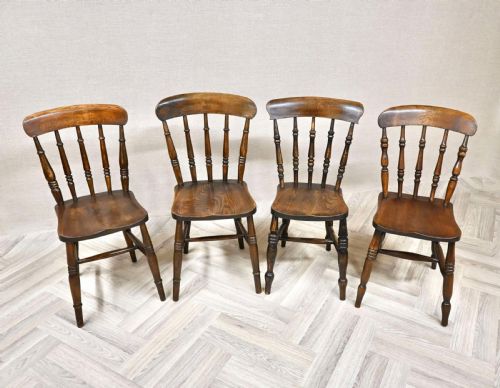
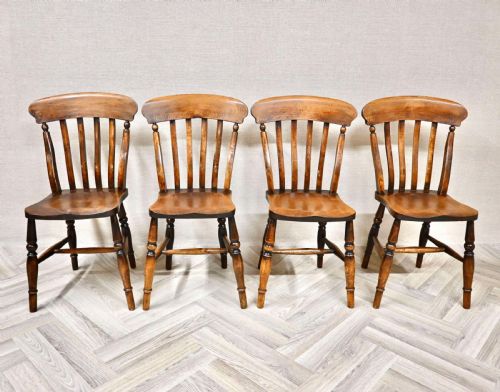
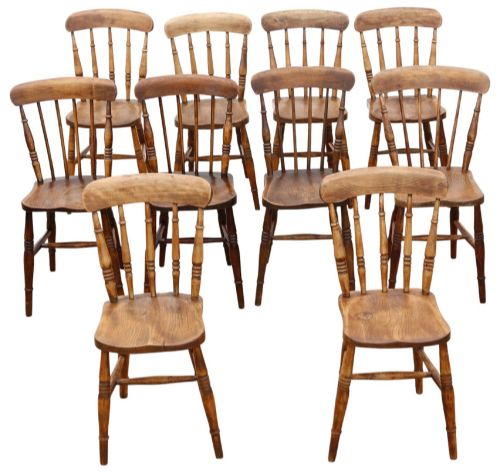
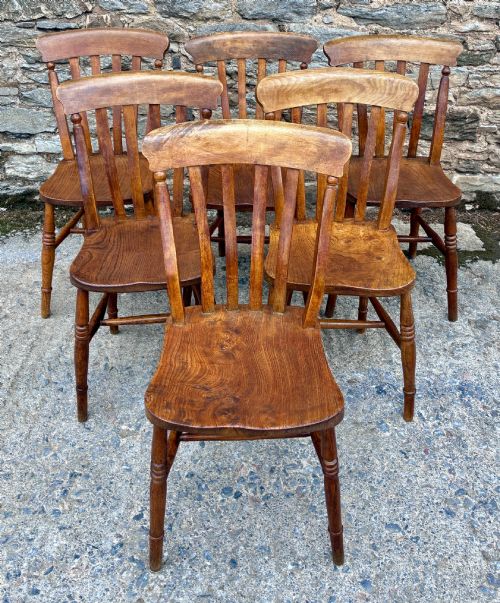
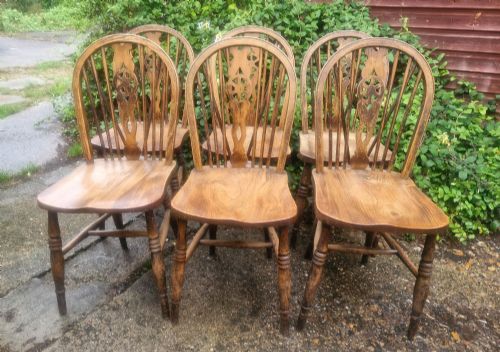
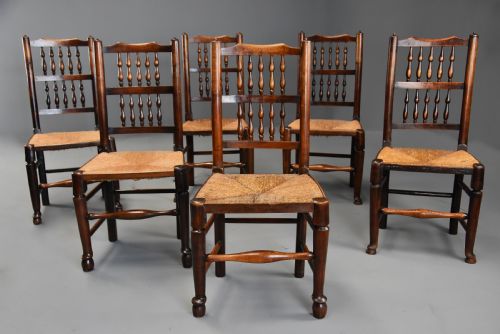
An elm dining chairs set gathers multiple country seats, most frequently found in nineteenth-century Windsor forms, wheel backs, lath backs, and ladder backs.
The materials typically combine solid elm seats with beech, ash, or oak frames, shaped for provincial dining and farmhouse kitchens.
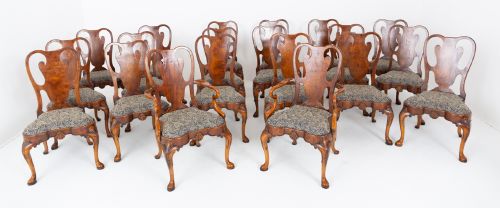
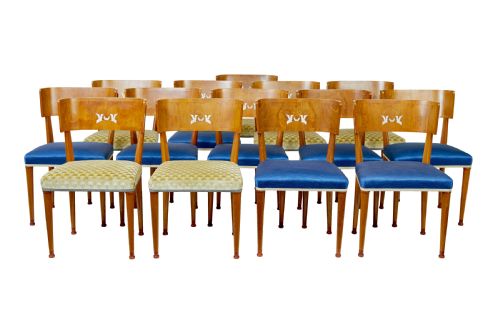
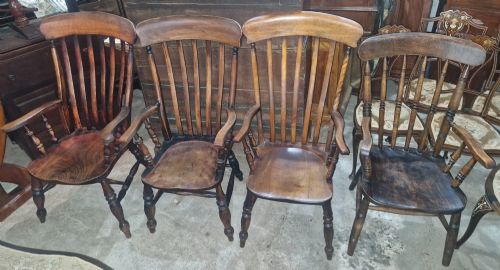
Sets range from matched groupings to larger harlequin collections assembled over time, spanning Victorian periods into the early twentieth century.
How they were made
Cabinetmakers utilised durable hardwoods, pairing dense elm for carved saddle seats with steam-bent ash or beech for hoops, spindles, and legs.
Traditional construction relies on mortise and tenon joinery, often reinforced with crinoline stretchers or double stretchers for stability.
Surfaces developed a natural tactile patina through decades of daily use, showing the distinct grain and figuring of native timber.
Some captains managed to command their dining rooms firmly from sturdy smokers bows with sweeping armbows.
What varies in quality
The harmony of a matched or harlequin grouping influences desirability, as true uniformity across larger sets of ten or twelve remains uncommon.
Thickly sculpted saddle seats and well-turned spindles reflect the hand of a skilled rural carpenter rather than mass production.
The depth of the preserved surface patina and the tightness of historical joints dictate the overall character and integrity of the set.
The Elm Dining Chairs Set Glossary
- Windsor
- A traditional wooden chair featuring a solid carved seat into which the legs and back bow are directly tenoned. These regional forms defined much of nineteenth-century English farmhouse seating.
- Harlequin set
- A collection of chairs sharing a similar period, material, and style but assembled from different sources. Such groupings often share common traits like spindle backs or elm seats while retaining slight individual variations.
- Crindoline stretcher
- A bentwood stretcher forming a loop beneath a Windsor chair that ties the legs together for extra rigidity. This feature appears on many provincial armchairs from the early nineteenth century.
- Wheel back
- A Windsor chair variation featuring a pierced splat shaped like a carriage wheel. This decorative motif became widely popular across Victorian kitchens.
- Lathback
- A chair back constructed with horizontal wooden slats rather than vertical spindles. These pieces offer clean lines typical of country vernacular furniture.
Elm Dining Chairs Set: Frequently Asked Questions
How do I care for antique elm chairs?
Keep wooden seating away from direct heat sources and sudden temperature shifts to prevent the timber from splitting. Feed the surface periodically with traditional wax to maintain the protective finish.
Avoid commercial liquid polishes that can build up a sticky film over the historic grain. Gentle dusting with a dry cloth keeps the patina intact.
Can I mix these chairs with a modern table?
Combining rustic country seating with a contemporary table creates a striking contrast that highlights the natural grain of the wood. The varied tones of elm, ash, and beech tie disparate interior styles together.
Ensure the seat heights match the apron of the modern table for comfortable dining. Armchairs may require more clearance beneath the table surface.
What is a harlequin set?
A harlequin set is a collection of chairs that share a common period, material, and regional style rather than originating from a single workshop. These groupings allow buyers to acquire larger seating quantities.
Matching silhouettes and wood tones unify the collection while celebrating the individual character of each piece. This practice mirrors historical country house usage.
How do I identify a Windsor chair?
A Windsor chair is distinguished by a heavy solid timber seat that receives all the structural components directly. The legs, back spindles, and armbows fit into bored holes in the elm seat.
Regional variations include hoop backs, stick backs, and wheel backs from Victorian and earlier provincial makers. The construction prioritises ergonomic shaping and robust daily utility.