


Rustic Pine Server Table
A rustic pine server table provides honest utility and character, bringing tactile warmth and history to any interior.
Rustic Pine Server Table
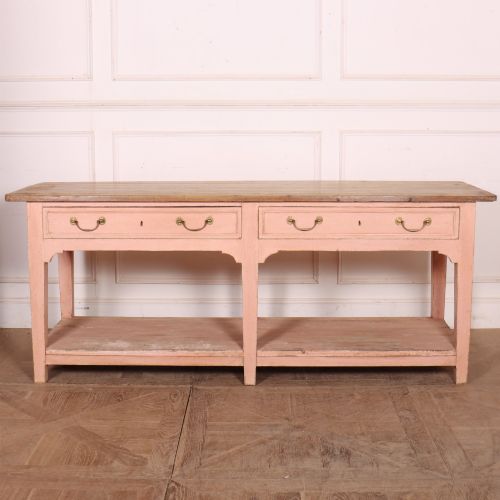
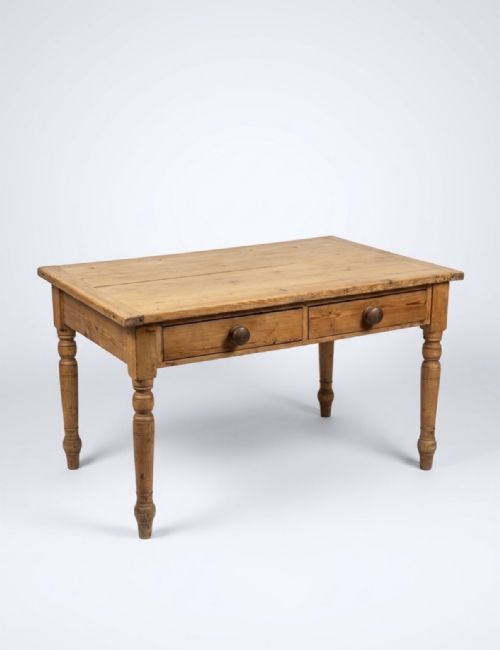
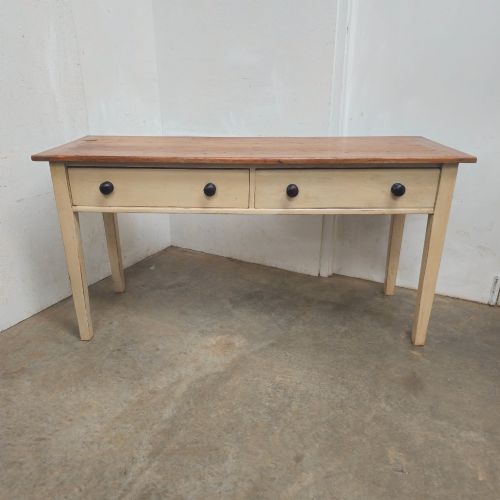
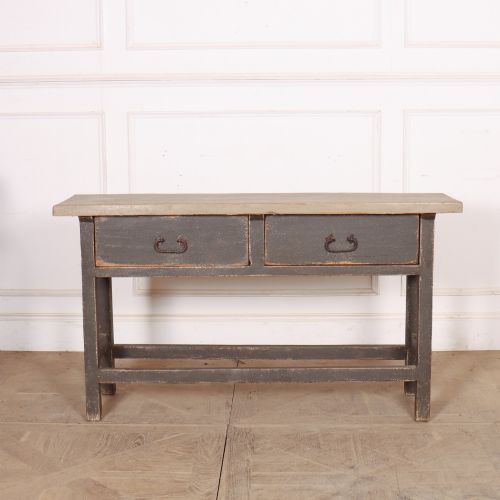
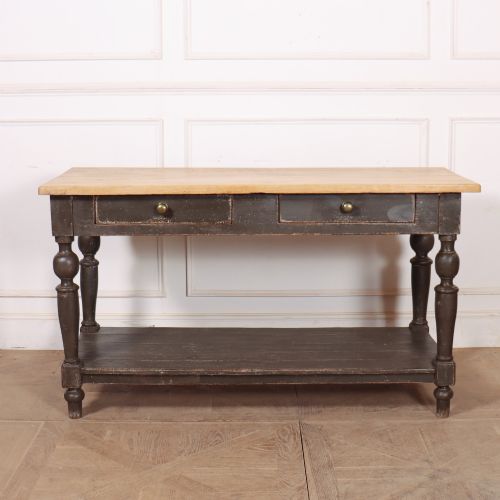
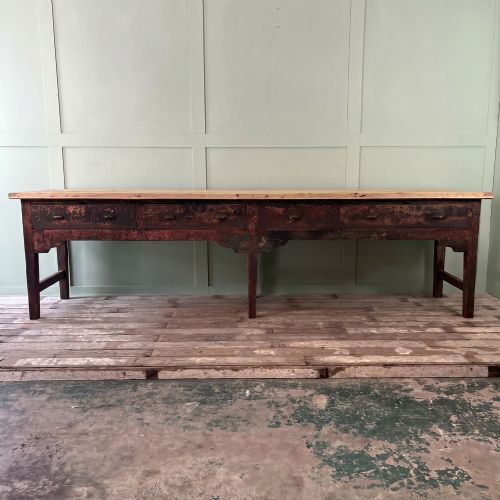
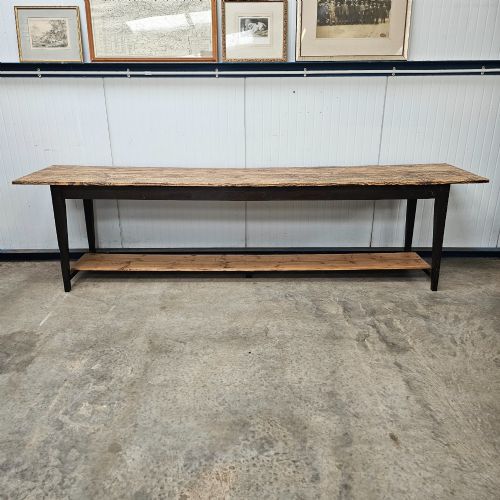
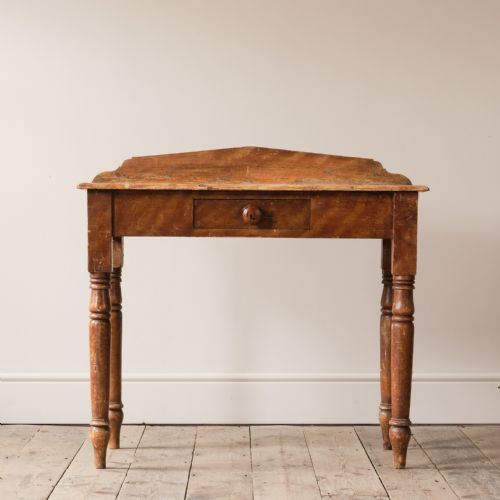
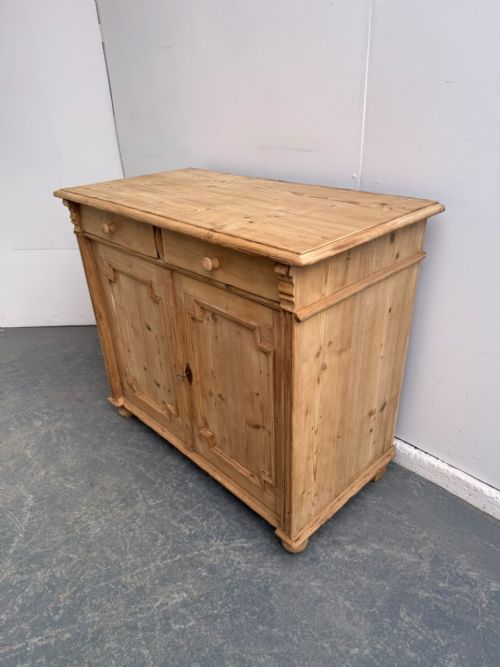
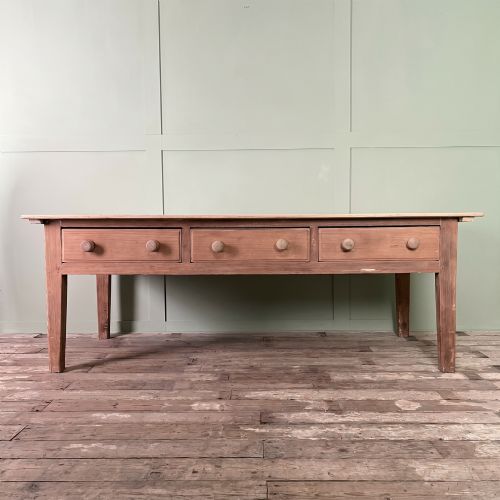
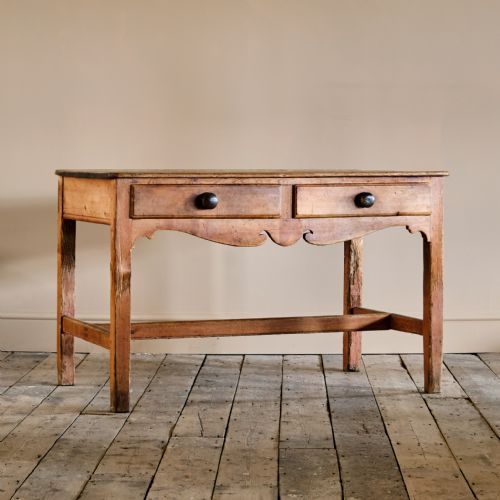
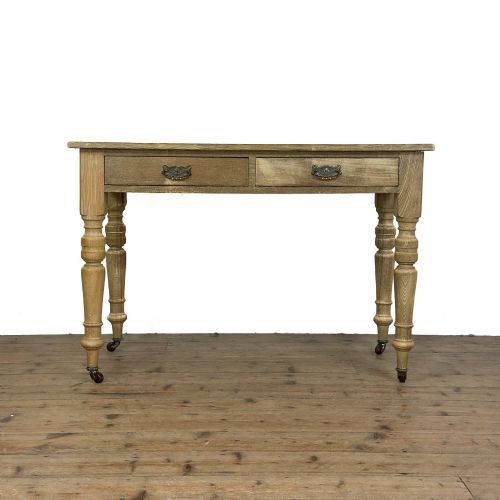
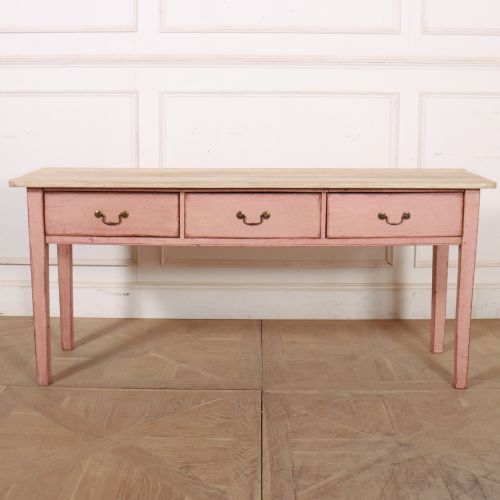
A rustic pine server table is a utilitarian surface built for domestic preparation and service, typically appearing as a dresser base, console, or long serving table. You will frequently encounter nineteenth-century English and French examples designed for hardworking country kitchens and dairies.
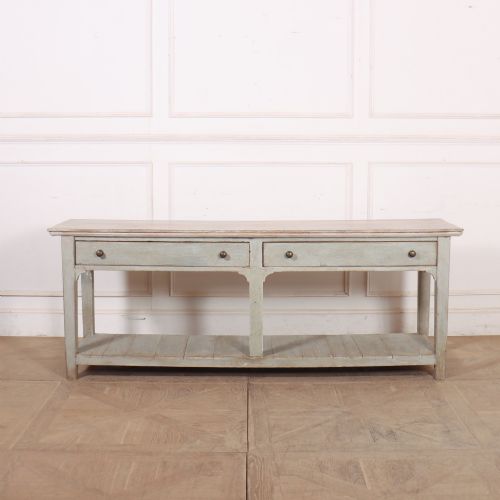
These pieces encompass potboard dresser bases with lower storage shelves, narrow console tables, and heavy-duty prep tables suited for daily use. Most bear the marks of intensive domestic labour through generations of household service.
Origins span English, Scottish, Welsh, French, and Swedish workshops, reflecting regional variations in storage configuration and frame construction. The predominant aesthetic aligns with Victorian country, rustic farmhouse, and Georgian country traditions.
Materials and Construction Methods
Construction relies heavily on solid pine and pitch pine, sometimes paired with secondary timbers like oak or sycamore for heavily worked prep surfaces. Timber was selected for durability and straight grain, often left unpainted in a waxed finish or coated in historic paint layers.
Joinery techniques focus on sturdy peg and mortise frames designed to withstand significant downward pressure during food preparation and service. Hardware typically comprises simple brass or iron pulls, alongside original surface treatments ranging from scraped paint to aged wax patination.
Some nineteenth-century dresser bases still hide flour dust stubbornly wedged in their drawer corners from decades of kitchen work.
Assessing Quality and Authenticity
Quality rests upon the integrity of the original timber and the survival of early or original painted finishes. Tables retaining their unblemished pot shelves, original drawer configurations, and untouched patination command greater interest.
Proportion and scale dictate the visual success of each piece, with longer harvest forms and narrow console variants offering particular versatility. The presence of secondary hardwoods like sycamore top boards or integrated bread slides indicates superior regional workshop output.
The Rustic Pine Server Table Glossary
- Potboard dresser base
- A low sideboard featuring an open lower shelf, known as a potboard, traditionally used for storing heavy pots and pans.
- Pitch pine
- A dense, resinous variety of pine timber prized for its durability and strong grain pattern.
- Bread slide
- A pull-out wooden shelf integrated into a dresser base or server, historically used for cooling bread or food preparation.
- Dairy table
- A specialised work table, often featuring scrubbed softwood or sycamore tops, built for cheese-making and dairy tasks.
Rustic Pine Server Table: Frequently Asked Questions
How do I date an old pine server?
Dating relies on examining construction marks, timber density, and the presence of original hardware or hand-planed surfaces.
Nineteenth-century examples often display specific regional quirks, tool marks, and wear patterns that distinguish them from later reproductions.
Can I use a pine server in a kitchen?
These tables were originally built for heavy kitchen work, making them ideal functional surfaces for modern culinary spaces.
Their robust pine construction handles daily food preparation and serving tasks with ease.
What is a potboard base?
A potboard base is a low table fitted with a bottom shelf positioned just above the floor.
This lower platform provided accessible storage for heavy cookware in busy country kitchens.
Are painted pine tables original?
Many tables retain early or original painted surfaces that have mellowed considerably over decades of domestic use.
Surviving paint finishes add significant character and historical depth to country furniture.