
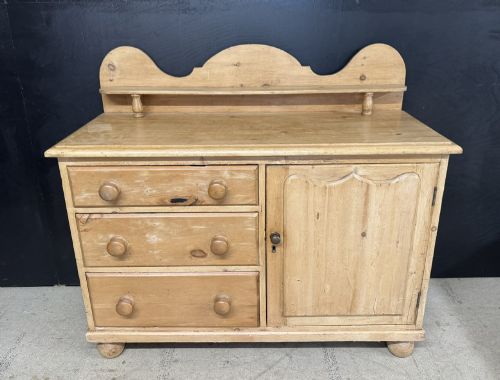
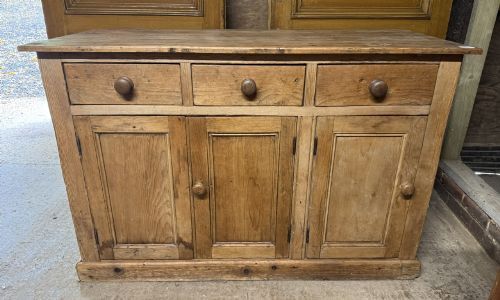
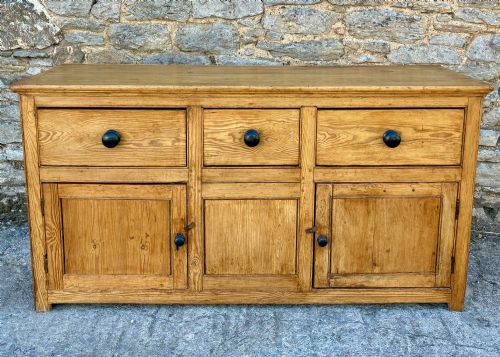
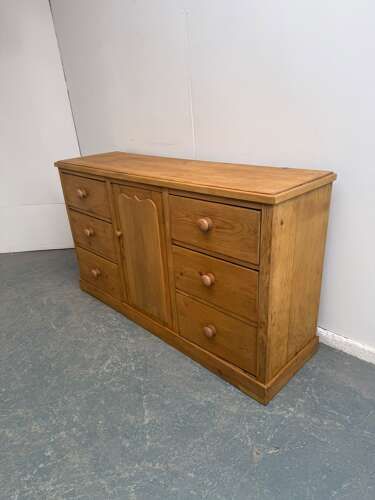
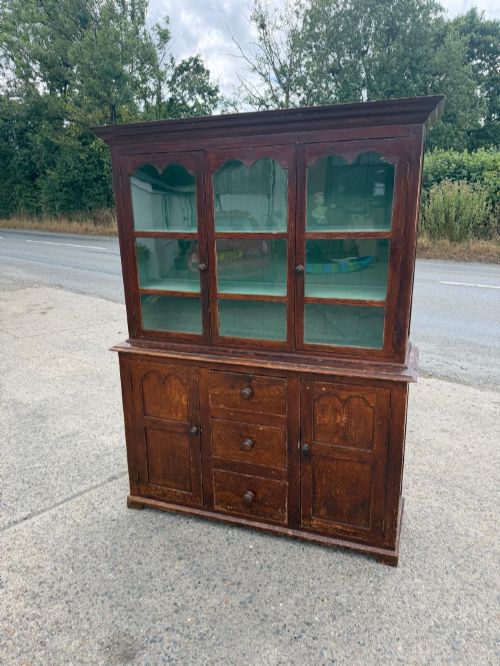
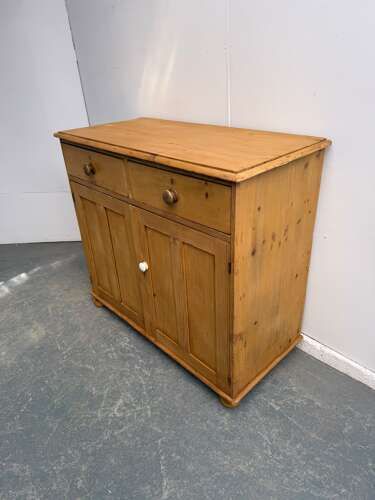
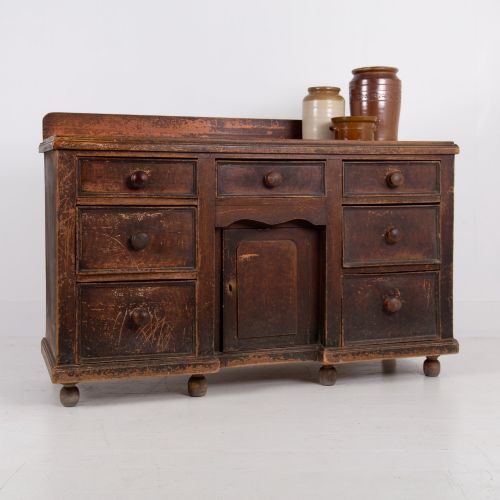

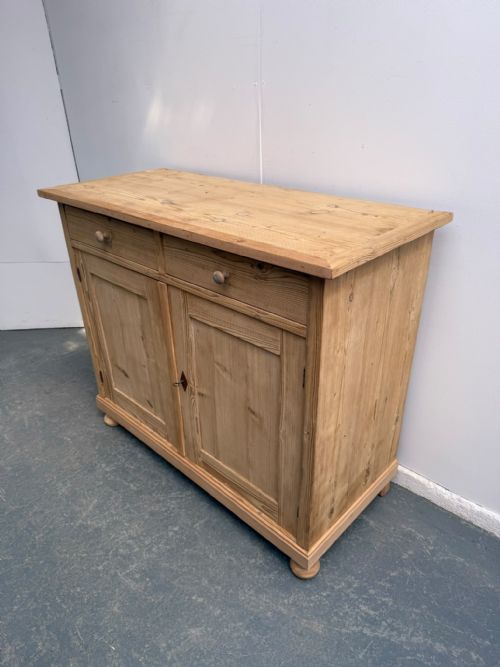
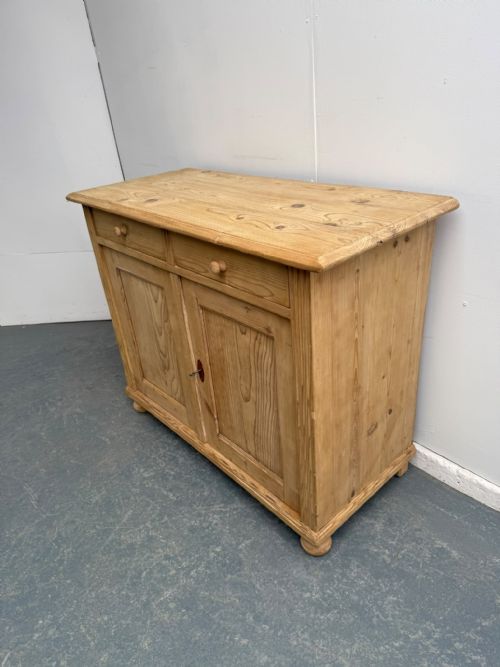
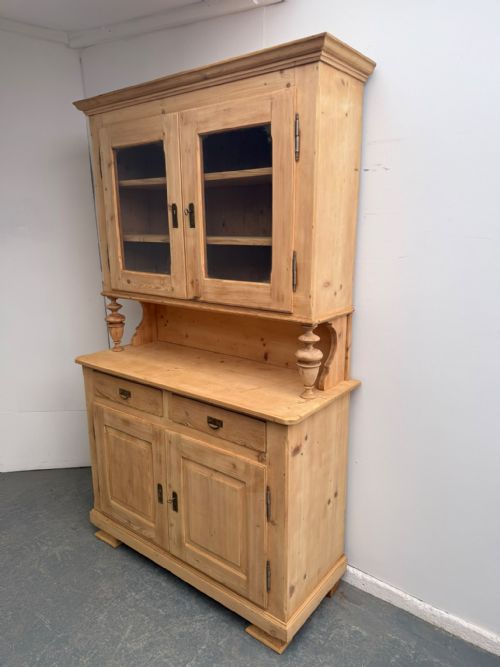
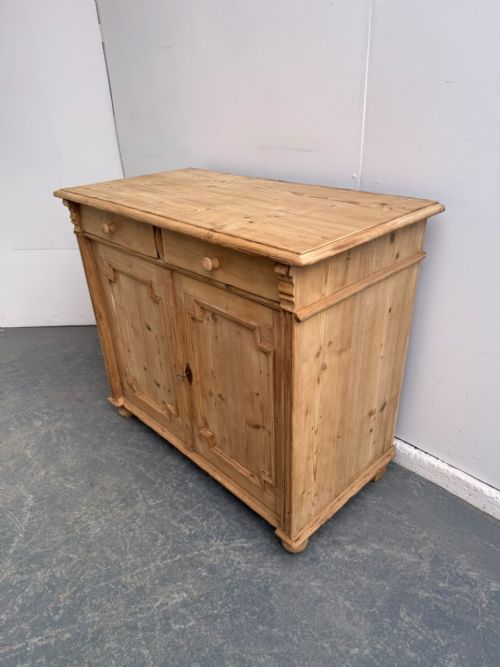
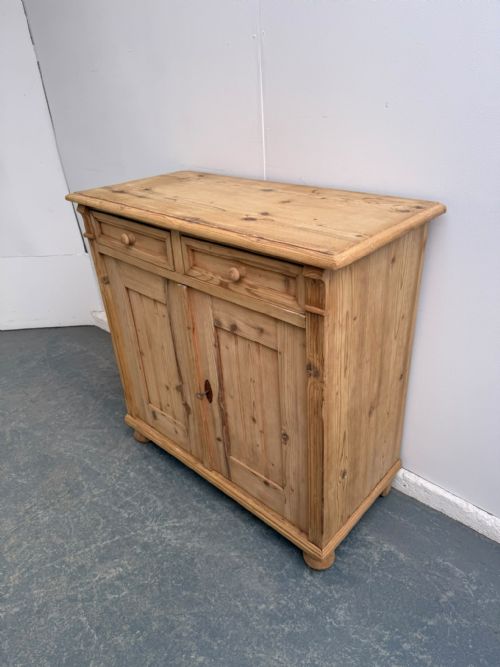
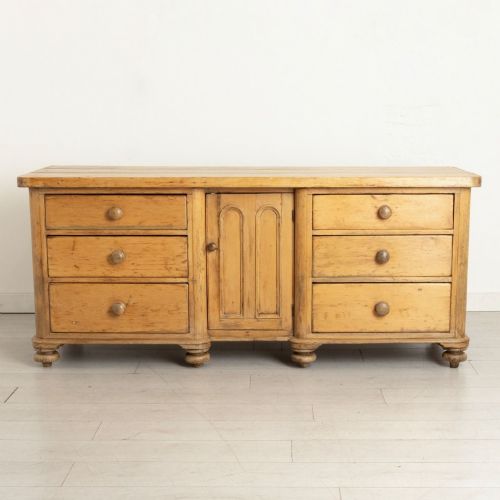
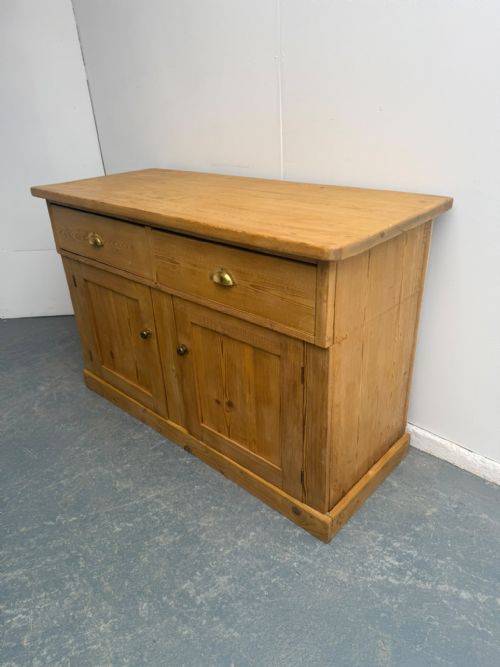
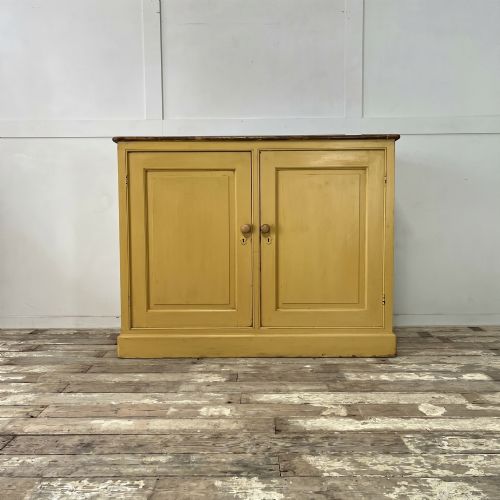
Country Pine Buffet Cabinet
A country pine buffet cabinet brings honest utility and warmth to a room, offering practical storage through solid timber construction and honest proportions.
Country Pine Buffet Cabinet
A country pine buffet cabinet encompasses practical kitchen storage pieces designed for domestic utility across rural households. These items typically manifest as dresser bases, sideboards, and cupboards that provide substantial surface area and enclosed shelving.
The selections encountered here most frequently date from the nineteenth century, spanning Victorian and Georgian periods. British, French, Scandinavian, and Hungarian origins appear regularly, reflecting diverse regional vernacular traditions.
Forms range from compact two-door units with drawer arrangements to massive multi-door configurations and glazed top displays. Buyers select these items to anchor kitchens, dining rooms, and hallways with functional historic character.
How they were made
Construction relies heavily on solid pine timbers, supplemented occasionally by oak, pitch pine, and hardware components fashioned from brass and iron. Wood surfaces are either left in original painted finishes, scraped to reveal earlier layers, or stripped and waxed to highlight the natural grain.
Joinery methods reflect traditional cabinet-making practices suited to utilitarian furniture intended for heavy daily use. Glass panels feature in upper display sections, while ceramic elements sometimes appear in specific decorative variations like tiled backs.
Origins represented among the cabinetry include English, Scottish, Welsh, French, Swedish, and Hungarian regional workshops.
What varies in quality
The distinction between standard utility items and superior examples often lies in the integrity of the original surface treatment. Pieces retaining untouched historic paint hold a different character compared to those stripped and waxed during later restorations.
Proportion and scale dictate the visual weight of the piece within a domestic interior, with well-balanced drawer and door alignments commanding greater presence. The retention of original hardware, such as brass pulls and iron hinges, elevates the overall architectural coherence.
The Country Pine Buffet Cabinet Glossary
- Dresser base
- A low sideboard or cabinet featuring drawers and cupboards beneath a flat top surface. This configuration provides a sturdy work surface alongside enclosed storage.
- Buffet deux corps
- A tall two-part storage cabinet originating in France, comprising a lower buffet section supporting an upper cupboard. It serves as a monumental piece for displaying and storing domestic wares.
- Bread slide
- A pull-out wooden shelf integrated into the cabinet framework, traditionally used for resting loaves during preparation. This feature indicates domestic utility in nineteenth-century kitchens.
- Chiffonier
- A compact sideboard or low cabinet equipped with drawers and doors, popular during the Regency and Victorian eras. It offers refined storage for smaller living spaces.
- Scraped paint
- A conservation technique where later overpaint is carefully removed to reveal authentic historic paint layers beneath. This process preserves the earliest visual finish of the wood.
Country Pine Buffet Cabinet: Frequently Asked Questions
What is a country pine buffet cabinet used for?
These cabinets serve as practical storage solutions for tableware, linens, and kitchen provisions while providing a durable surface for serving food.
In modern interiors, they function equally well as sideboards in dining areas or as storage credenzas in hallways and living rooms.
How do I care for a waxed pine finish?
Maintenance involves dusting with a soft cloth and applying a traditional beeswax polish periodically to nourish the timber. Avoid placing these cabinets near direct heat sources or in damp environments to prevent the wood from warping.
Regular polishing maintains the protective layer and deepens the natural lustre of the pine over time.
How do I identify a Victorian pine cabinet?
Victorian pieces often feature characteristic drawer proportions, traditional joinery techniques, and hardware consistent with nineteenth-century manufacturing. Regional variations, such as British vernacular designs or Scandinavian painted finishes, provide further clues to their origin.
Examining the backboards and interior construction helps distinguish authentic nineteenth-century examples from later reproductions.
Are these cabinets made from solid pine?
Construction primarily utilises solid pine timbers, occasionally incorporating pitch pine or secondary woods for internal structures. The heavy timber build ensures lasting stability and durability through generations of use.
Individual pieces vary in weight and density depending on the specific pine species and regional forestry practices of the period.
What is the difference between painted and waxed pine?
Waxed pine displays the natural grain and warm tones of the stripped timber, often achieving a mellow patina through years of conditioning. Painted pine retains either original historic pigment or later decorative coats that contribute distinct colour to an interior scheme.
Choosing between the two depends entirely on whether the interior calls for the tactile grain of exposed wood or the solid pigment of regional folk paint.