

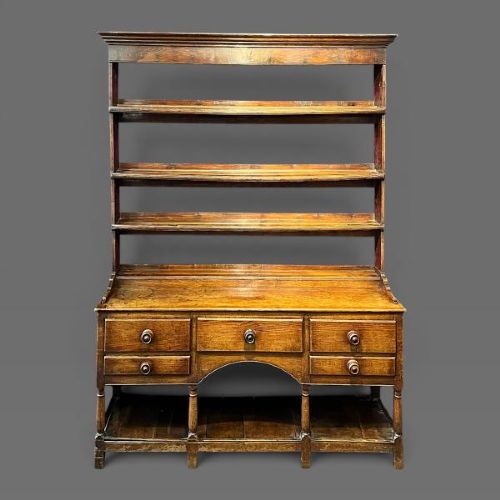
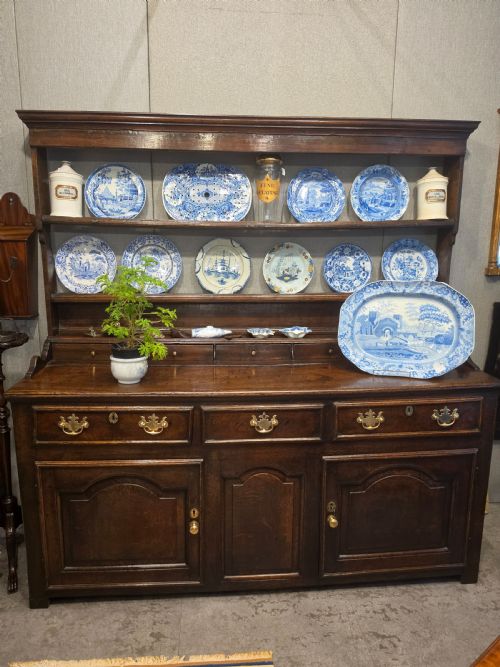
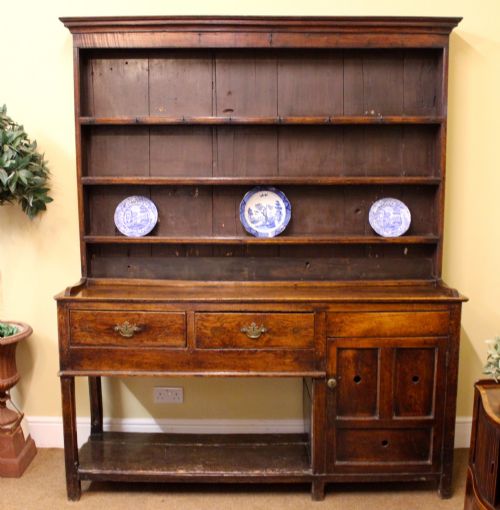

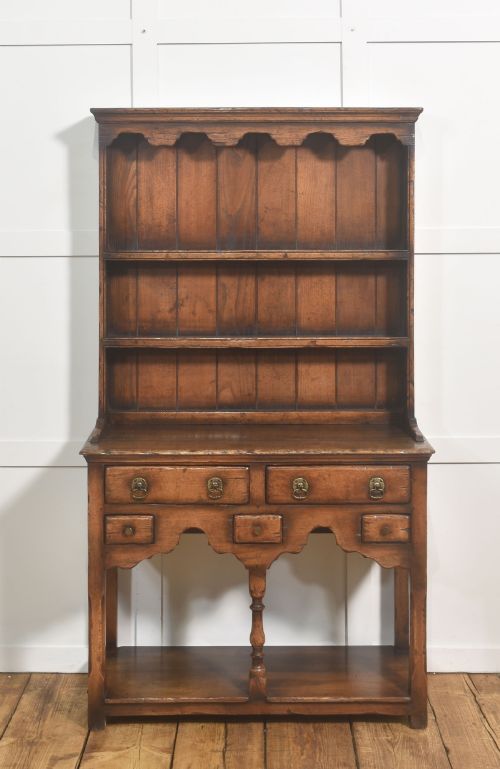


Georgian Kitchen Dresser Base
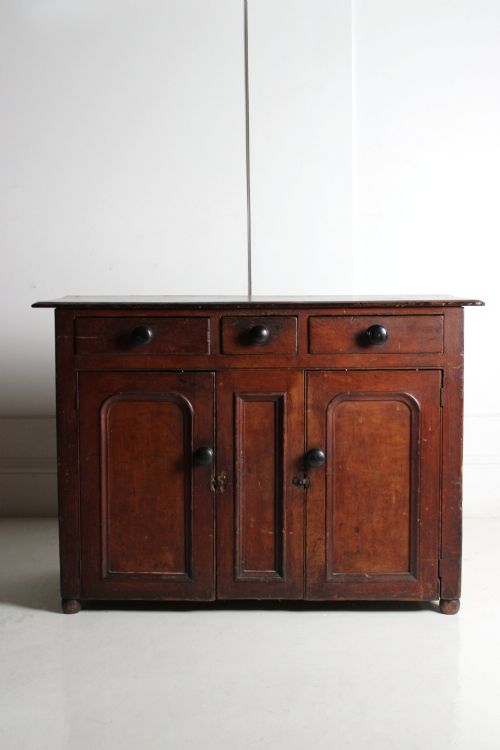
A georgian kitchen dresser base anchors a room with solid utility, offering sturdy work surfaces and deep storage built for practical daily life.
Georgian Kitchen Dresser Base
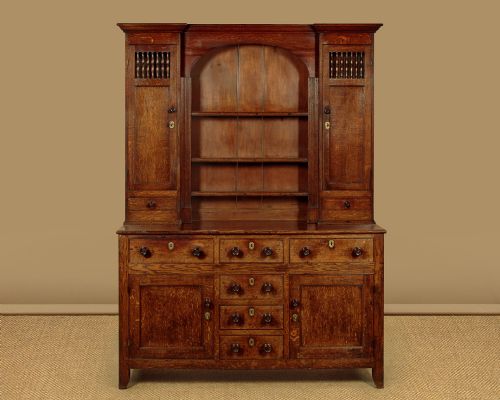
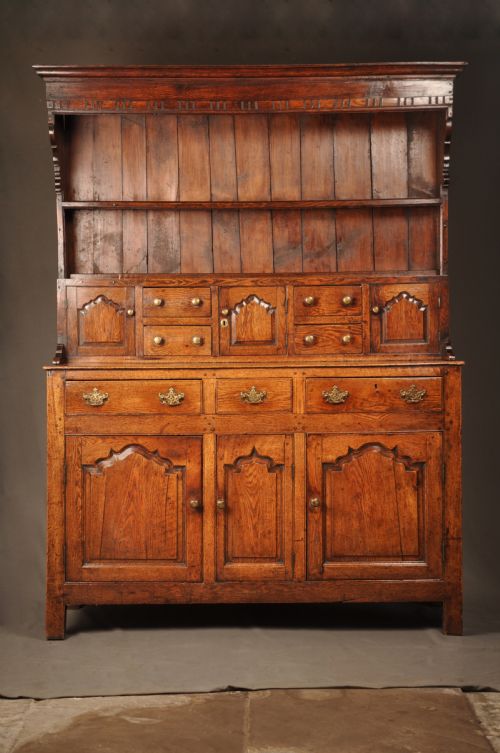
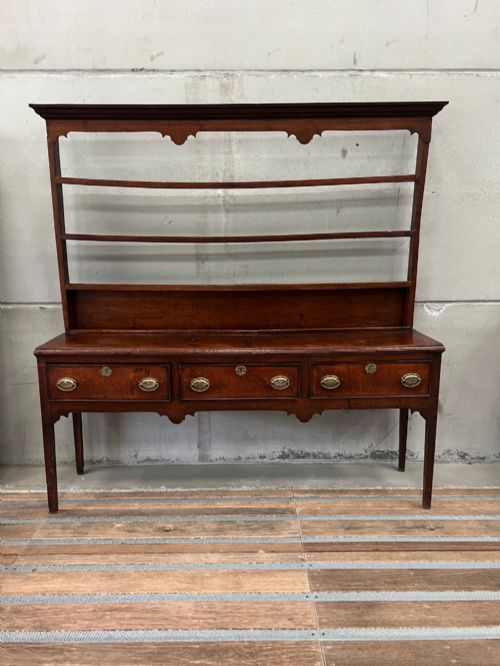
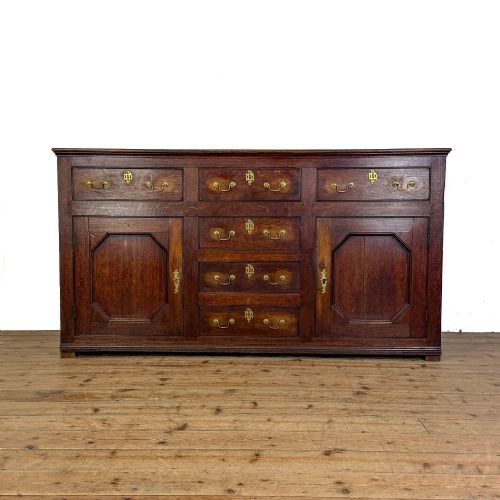
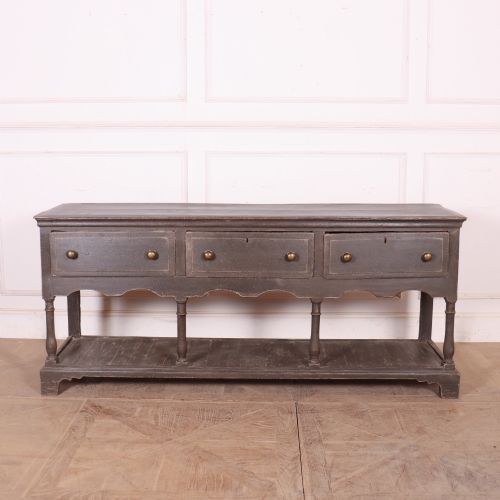
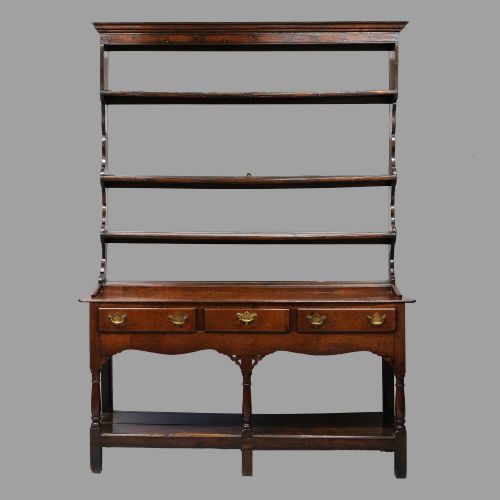
When searching for a georgian kitchen dresser base, buyers encounter substantial timber furniture designed primarily for storage and food preparation in domestic spaces. These pieces combine drawers, cupboards, and open potboards to hold kitchenware.
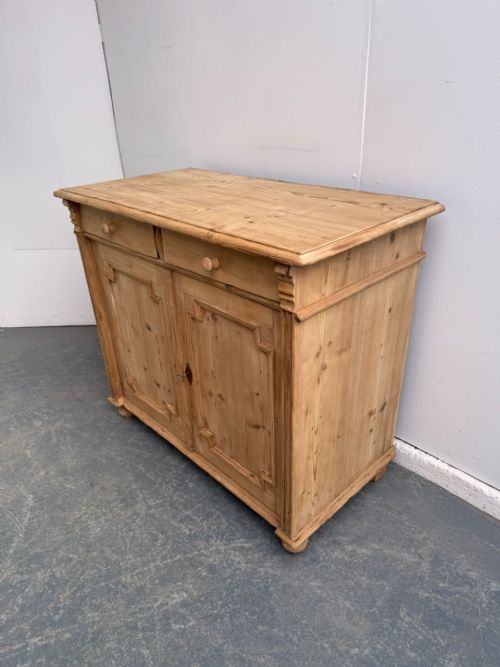
The selections on this page span the eighteenth and nineteenth centuries, originating from English and Welsh workshops in styles such as George III and rustic farmhouse. Oak and pine predominate, reflecting the practical materials chosen by makers of the period.
How they were made
Makers constructed these sturdy bases using native timbers like oak, pine, and sycamore, often combining sturdy boards with traditional joinery. Metal and brass hardware such as drawer pulls complete the construction.
Surfaces frequently show historical layers of paint or waxed timber finishes, applied to protect the wood from heavy use in busy kitchens over centuries.
Georgian Kitchen Dresser Base Retail Price Guide 2026
Typical asking prices for georgian kitchen dresser base among the pieces listed under this phrase on Sellingantiques today, from the lower quarter to the upper quarter. They describe what is for sale here now, not the wider market.
What varies in quality
The distinction between standard examples and finer pieces lies in the choice of native timber, the subtlety of the mouldings, and the integrity of the original potboard or drawer configuration. Early George II and George III periods often display more refined proportions.
Surviving original painted surfaces or untouched patination elevate certain examples, whilst later alterations or replacement hardware alter the historic character of the base.
The Georgian Kitchen Dresser Base Glossary
- Potboard
- A low slatted shelf fitted beneath the main body of a dresser base, traditionally used for storing pots and pans. This lower tier defines many English country examples.
- George III period
- The era spanning the mid-to-late eighteenth century, characterised by refined proportions and sturdy construction in English furniture. Pieces from this time often utilise native oak.
- Welsh dresser
- A regional form featuring substantial timber construction, sometimes incorporating an open plate rack above the base. These originate from Welsh workshops using local oak.
- Chiffonier
- A low sideboard or cabinet with drawers and doors, appearing in nineteenth-century contexts. This form provides compact storage similar to smaller dresser bases.
Georgian Kitchen Dresser Base: Frequently Asked Questions
How were these dresser bases used?
These pieces served as the central workspace and storage unit in historical kitchens, holding heavy cookware, ceramics, and dry goods. The top surface functioned as a table for food preparation.
Over time, they moved from working kitchens into dining spaces and living rooms, where they display decorative ceramics and store household linens.
Are these pieces made of solid oak?
Many examples are constructed entirely from native timbers such as oak and pine, reflecting the durable materials available to period cabinetmakers. Other variations utilise painted timber or secondary woods for internal framing.
Examining the construction reveals how regional workshops selected their materials based on local availability and the intended utility of the piece.
How do I tell an 18th century base from a 19th century one?
Eighteenth-century examples often display George II or George III stylistic markers, such as hand-cut dovetails, pegged joints, and rich patination accumulated over generations. The timber choice and overall proportions tend to reflect earlier vernacular traditions.
Nineteenth-century pieces frequently show different hardware styles, machine-sawn elements, or softer pine construction, sometimes bearing traces of later painted finishes or regional Welsh designs.
Can I use a dresser base in a modern kitchen?
A sturdy timber base provides a practical island or sideboard surface in contemporary homes, offering generous drawer and cupboard storage. Their robust construction handles daily use effectively.
Placing one against a kitchen or dining room wall creates a focal point that stores modern tableware whilst introducing historical character.