

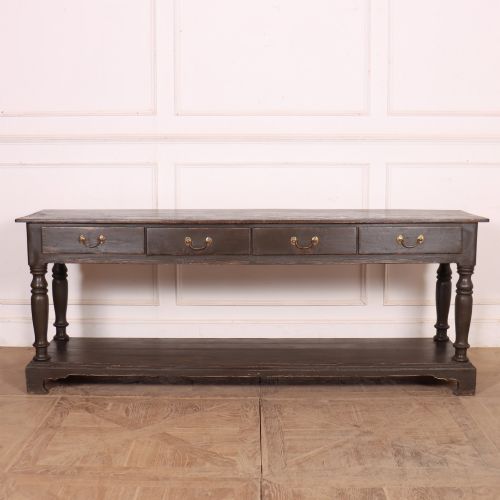
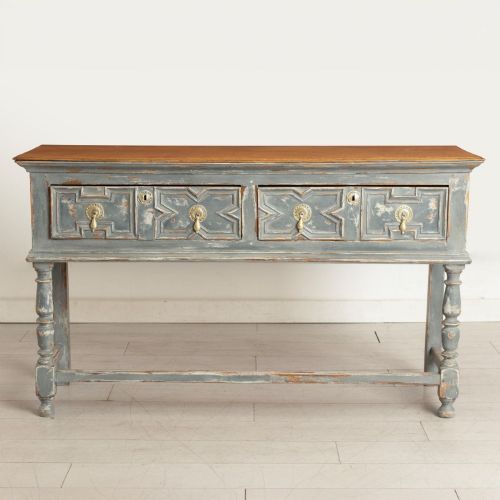
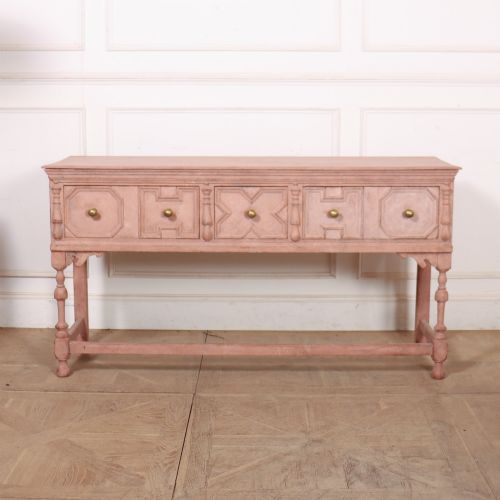
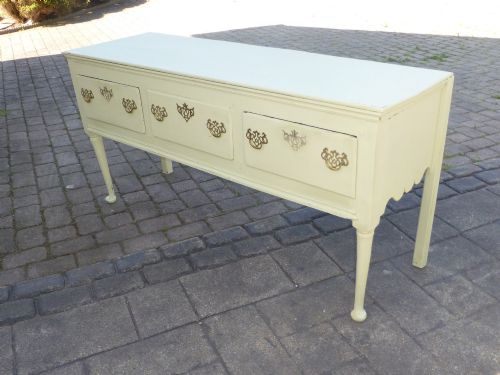
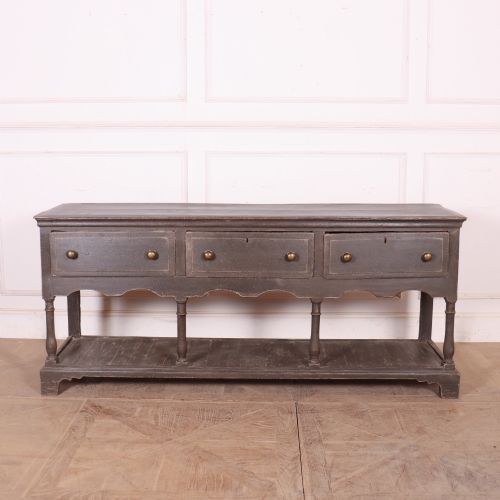


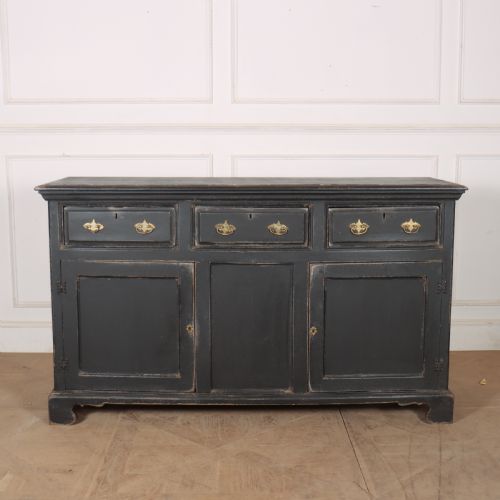


Painted Oak Server Sideboard
A painted oak server sideboard is a sturdy timber storage piece built for domestic use, offering surface space and cupboards or drawers.
Painted Oak Server Sideboard
A painted oak server sideboard brings together traditional timber construction and painted finishes found across centuries of English cabinetmaking. When you search for a painted oak server sideboard, you encounter items classified across multiple historical periods including the seventeenth, eighteenth, and nineteenth centuries, as well as around nineteen hundred.
The dominant forms appearing under this description are dresser bases and dresser units designed for storage and serving. These examples originate from English workshops and reflect regional country styles alongside revival movements.
Makers constructed these sturdy items primarily in oak, often paired with pine and other timbers. The integration of paint onto oak surfaces defines the distinct character of these functional dining and kitchen pieces.
Materials and construction methods
Cabinetmakers built these pieces using solid oak for structural frames and primary surfaces, frequently incorporating pine for secondary elements like drawer linings and backboards. Woodworkers shaped timbers using traditional jointry methods suited to heavy domestic furniture.
Surfaces received layers of paint, sometimes applied over older timber to update the appearance or protect the wood. Brass fittings such as drop handles and drawer pulls completed the functional hardware on many examples.
Painted Oak Server Sideboard Retail Price Guide 2026
Typical asking prices for painted oak server sideboard among the pieces listed under this phrase on Sellingantiques today, from the lower quarter to the upper quarter. They describe what is for sale here now, not the wider market.
Object types recorded across the inventory include dresser bases, sideboards, and English country buffets.
Factors that separate examples
Quality in these items rests on the integrity of the original timber framing and the proportional balance of drawers and potboards. Earlier periods typically exhibit hand-cut joinery and patination that develop through centuries of use.
The character of the painted finish influences the visual weight of the piece, with historical layers of paint holding more interest than recent applications. The retention of original brass hardware and untouched drawer construction distinguishes finer examples.
The Painted Oak Server Sideboard Glossary
- Dresser base
- A low wooden sideboard fitted with drawers and frequently a lower shelf known as a potboard, used historically for food preparation and serving. This form constitutes the primary object type seen in these listings.
- Potboard
- An open lower shelf built near the floor between the legs of a dresser base, traditionally utilised for storing pots and heavy kitchen utensils. It provides structural stability to the base frame.
- Jacobean Revival
- A nineteenth-century design movement inspired by seventeenth-century English furniture, characterised by heavy proportions, moulded panels, and dark finishes. Pieces from this style replicate earlier aesthetic traits.
- Patination
- The surface alteration of wood and paint caused by age, wear, and light exposure over long periods. This gradual change creates depth and character on antique timber surfaces.
- Georgian
- The period spanning the reigns of the first four Georges, noted for refined proportions and classical restraint in English cabinetmaking. Items from this era balance utility with architectural detail.
Painted Oak Server Sideboard: Frequently Asked Questions
What is a painted oak server sideboard?
A painted oak server sideboard is a traditional storage item, typically appearing as a dresser base or low sideboard from English traditions. These pieces combine oak timbers with painted surfaces for domestic utility.
They provide surface space for serving alongside drawer storage, reflecting periods ranging from the seventeenth century through to nineteen hundred.
How were these sideboards used historically?
Households utilised these pieces in kitchens and dining rooms for food preparation, serving meals, and storing tableware or cookware. The lower shelves and drawers accommodated heavy pots and utensils.
Over time, their role shifted toward display and storage as dining habits evolved within English homes.
How do I date an oak dresser base?
Dating relies on examining construction techniques, tool marks, timber selection, and hardware styles across the piece. Seventeenth and eighteenth-century examples feature hand-cut joinery and specific moulding profiles.
Later items from the nineteenth century or around nineteen hundred often incorporate revival styles and machine-sawn components that distinguish them from older work.
Are painted finishes original on these pieces?
Painted finishes on antique oak vary between original historical coats, later decorative updates, and modern applications. Examining the adhesion and wear patterns helps determine the age of the paint layer.
Many functional items received multiple coats of paint over their working lives as interior fashions changed.