


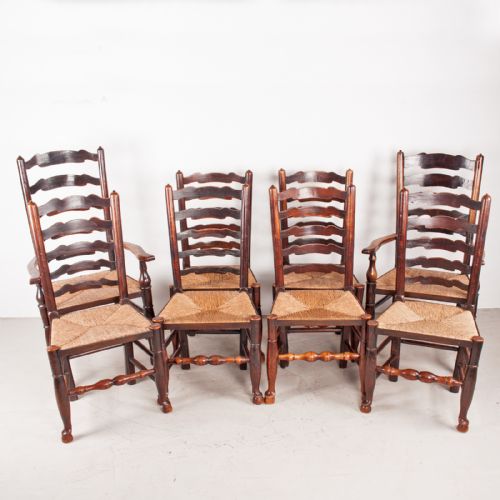


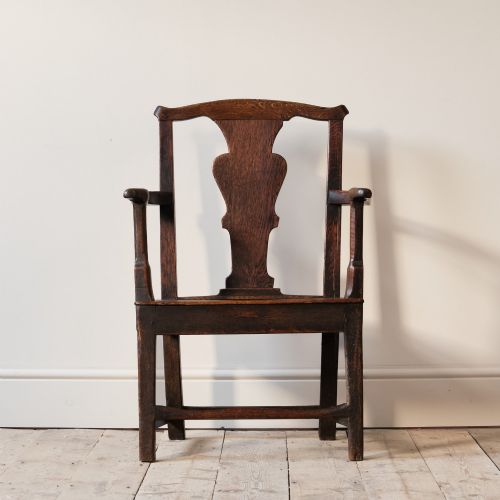

Rustic Oak Dining Carver
A rustic oak dining carver anchors a table with honest vernacular grain and generous armrests.
Rustic Oak Dining Carver
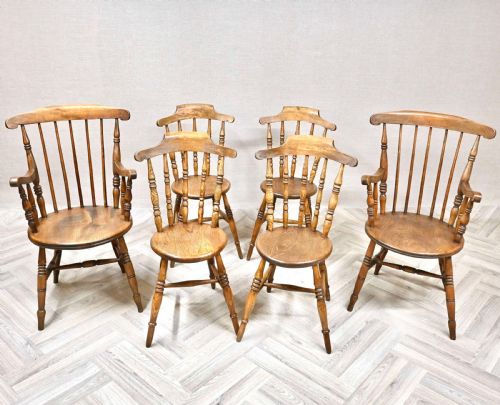
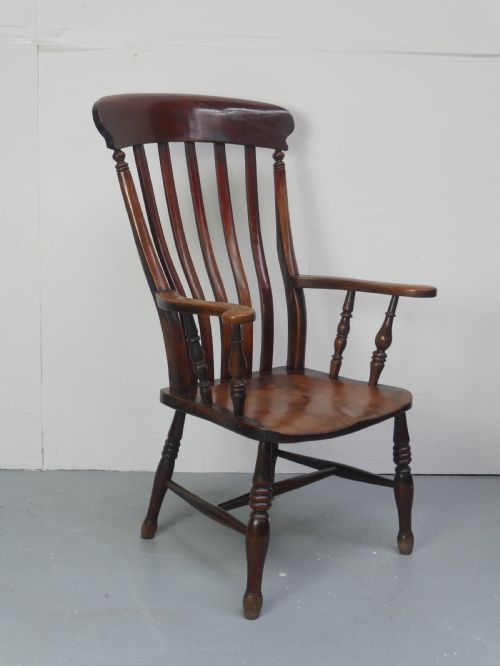
A rustic oak dining carver is a sturdy armchair designed for the head of the table, drawing on English country, Arts and Crafts, and Georgian traditions. These seats combine robust construction with practical comfort, often featuring high backs and substantial arms suited to long meals.
Makers often integrated mixed timbers such as elm, ash, and beech alongside solid oak frames. This pragmatic approach to material selection defines the vernacular character of the seating available here.
Construction and Materials
Makers built these carvers using solid native hardwoods like oak, elm, and ash, selecting timber for strength and local availability. Turnery, mortise and tenon joints, and steam-bent components formed the structural backbone of each chair.
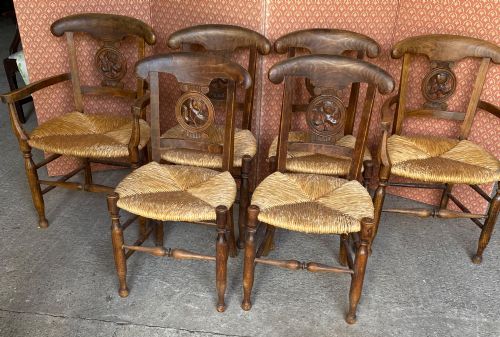
Seats frequently incorporated woven rush or carved solid timber depressions shaped to the body. Additional detailing included pegged joints, spindle turnings, and occasional metal or pewter inlay.
Surface treatments relied on wax or oil rubbed into the grain over decades of use. This built up a deep patina that highlights the natural figuring of the wood.
Rustic Oak Dining Carver Retail Price Guide 2026
Typical asking prices for rustic oak dining carver among the pieces listed under this phrase on Sellingantiques today, from the lower quarter to the upper quarter. They describe what is for sale here now, not the wider market.
Country carvers often bear the ink stains and worn armrests left by generations of letter-writers and evening readers.
Judging Quality and Character
Quality rests in the integrity of the joinery and the honesty of the timber selection. Carvers retaining their original pegged construction and untouched surface patination stand above examples with heavy replaced components.
Proportion and comfort distinguish finer vernacular pieces from standard utilitarian seating. Generously proportioned arms and well-turned spindles show the maker's eye for balance.
The survival of original rush seating or well-worn timber seats adds significantly to the character of a piece. Altered undercarriages or mismatched elements alter the historical cohesion of the chair.
The Rustic Oak Dining Carver Glossary
- Carver
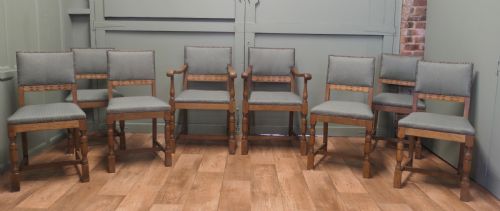
- An armchair designed specifically for the head of a dining table. These pieces match or complement the surrounding side chairs.
- Ladder back
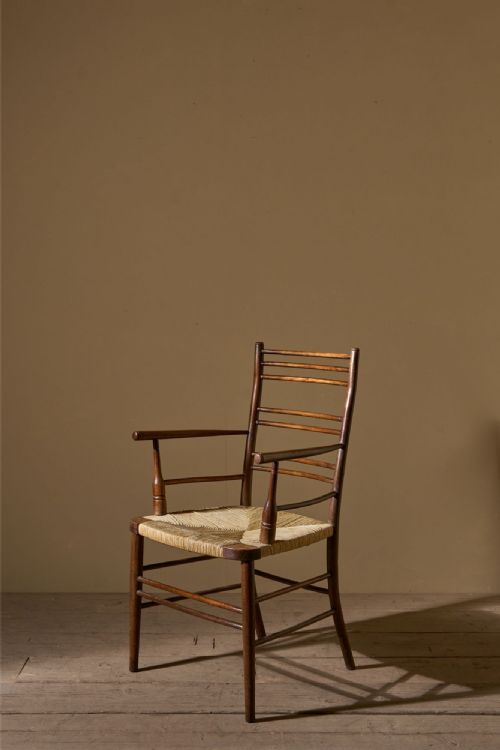
- A chair back constructed with horizontal arched slats between the upright posts. This traditional form provided strong lumbar support.
- Spindle back
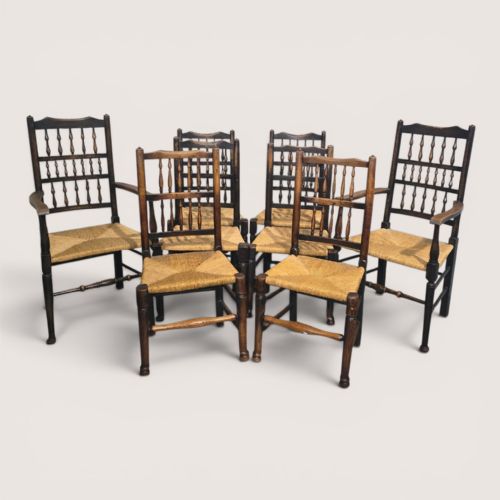
- A chair featuring numerous vertical turned wooden rods supporting the backrest. This technique lightened the frame while maintaining structural rigidity.
- Rush seat
- A woven seating surface made from dried marsh grasses twisted into cords. Skilled craftsmen wove these seats tightly around a wooden frame.
- Windsor
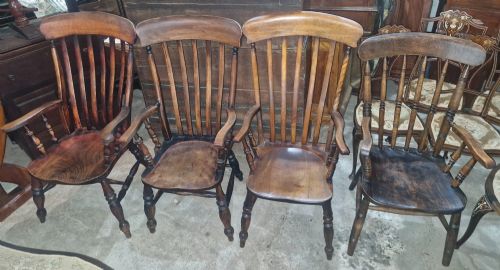
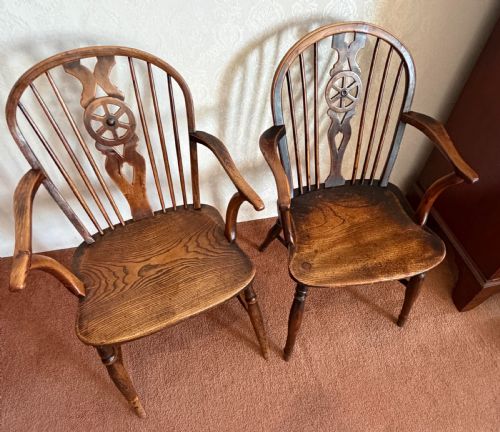
- A chair style featuring a solid sculpted wooden seat into which the legs and back spindles are wedged directly. Regional variations include wheelbacks and comb backs.
- Vernacular
- Regional furniture built by local joiners using traditional methods and native materials rather than adhering to formal metropolitan design rules.
Rustic Oak Dining Carver: Frequently Asked Questions
Are rustic oak carvers comfortable for daily dining?
These chairs were built for practical domestic life and offer solid ergonomic support through their high backs and wide armrests. Many feature contoured wooden seats or resilient woven rush that accommodates long sitting periods.
Pairing a sturdy carver with a dining table brings both historical character and reliable seating to everyday meals. Their robust frames easily handle frequent daily use.
How do I identify an eighteenth-century carver?
Eighteenth-century examples display hand-cut joinery, pegged tenons, and deep patination accumulated over generations of handling. The turning on the legs and spindles tends to be heavier and more individual than mass-produced later variants.
Regional traits, such as those found on Welsh or Lancashire pieces, point directly to local workshop traditions. Examining the underside reveals the tool marks characteristic of period hand-working.
Can I mix a single carver with different dining chairs?
Mixing a distinct carver with side chairs reflects traditional farmhouse practice where seating accumulated organically over time. Harlequin sets and near pairs offer an authentic, layered look rather than a rigid matching suite.
Matching the timber tone, such as oak or elm, helps tie disparate chairs together around the same table. The primary consideration is ensuring the seat height aligns comfortably with your dining surface.
How should I care for an antique oak carver?
Maintain the wood by applying a quality beeswax sparingly to nourish the dry grain and protect the surface. Avoid placing antique timber furniture near direct heat sources or in strong sunlight to prevent splitting.
Cleaning should be done with a soft, dry cloth to preserve the accumulated patina. Regular inspection of the joints ensures loose pegs can be secured before strain damages the frame.