

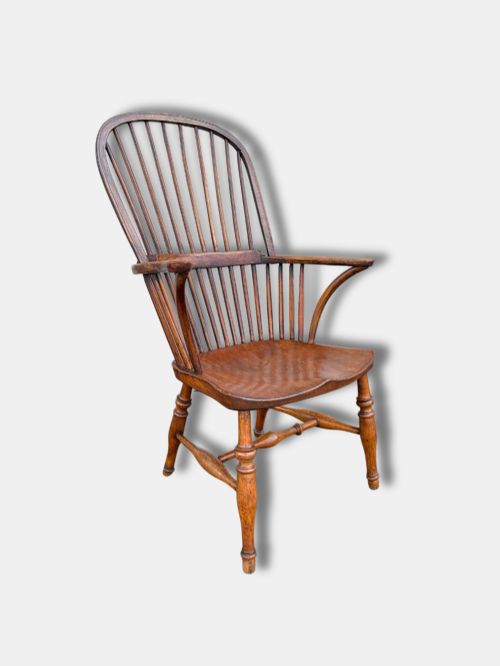
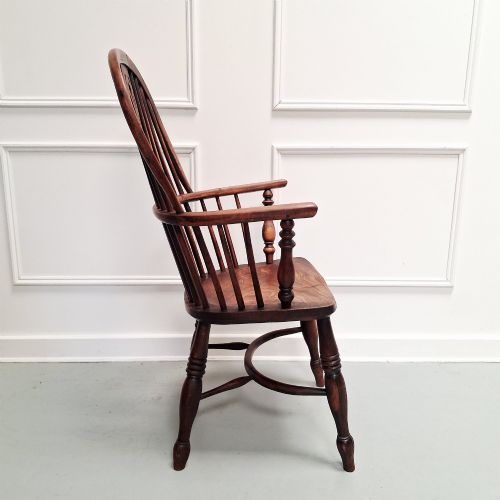
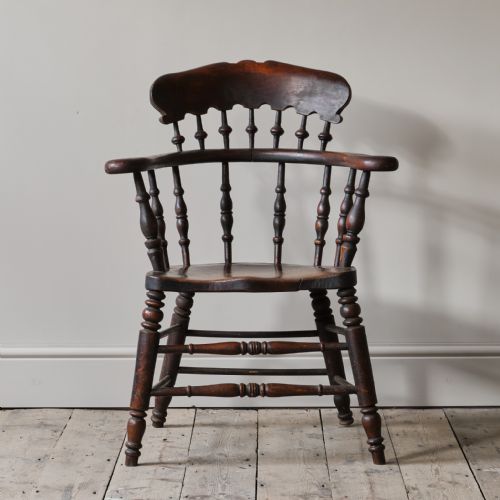
Victorian Elm Desk Chair
A victorian elm desk chair brings solid timber grain and vernacular craft into a working room.
Victorian Elm Desk Chair
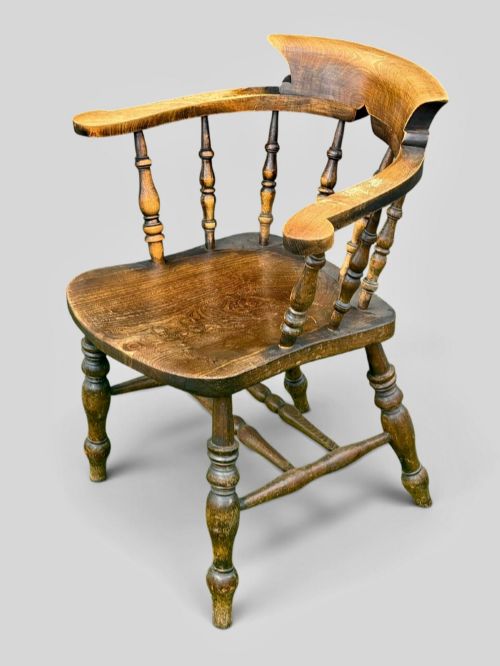
A victorian elm desk chair brings together country workshop traditions and nineteenth-century domestic or office utility. Buyers seeking this phrase encounter sturdy elbow seating designed for long hours of writing or administration at a desk.
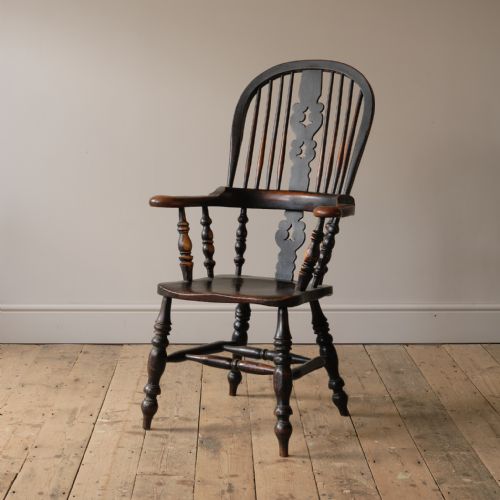
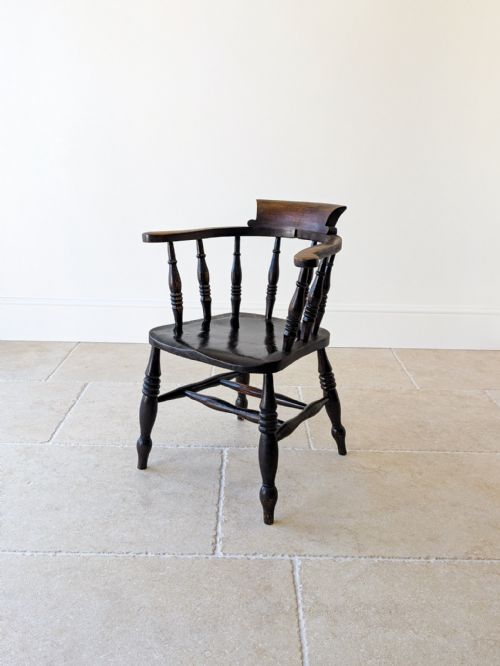
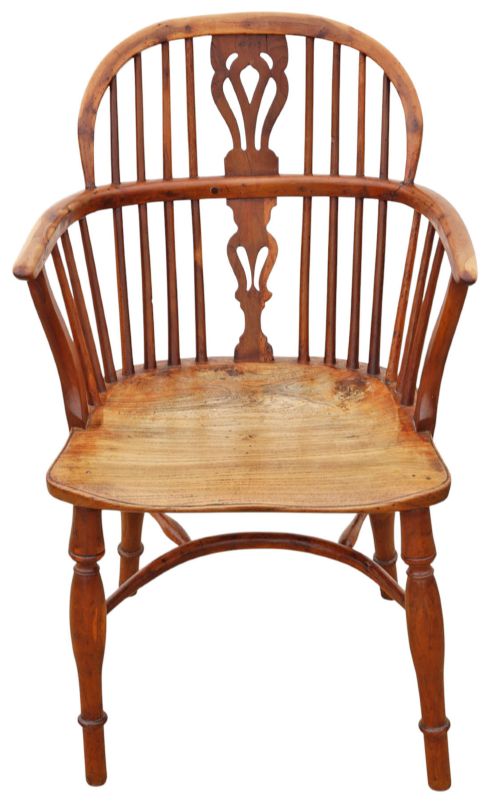
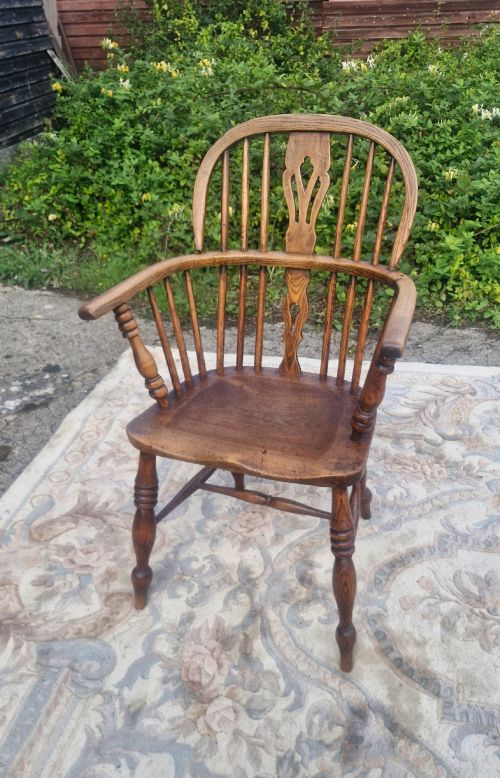
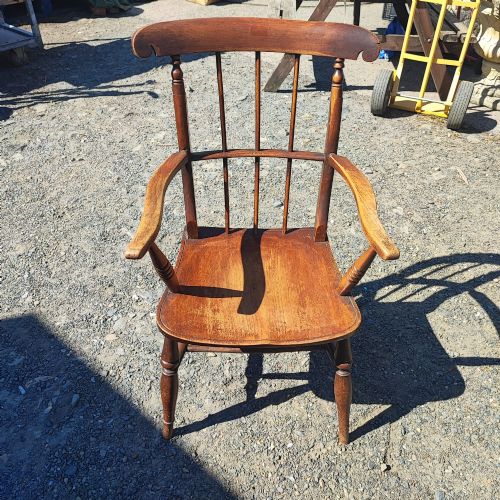
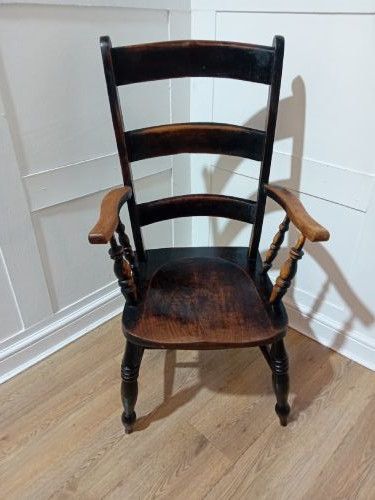
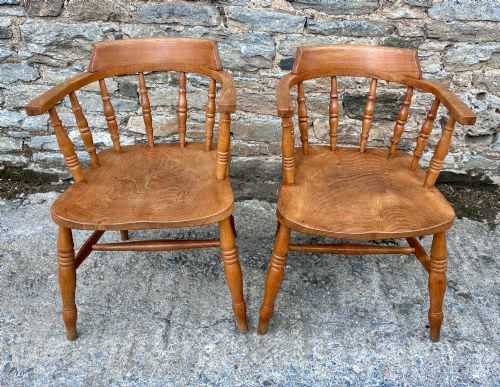
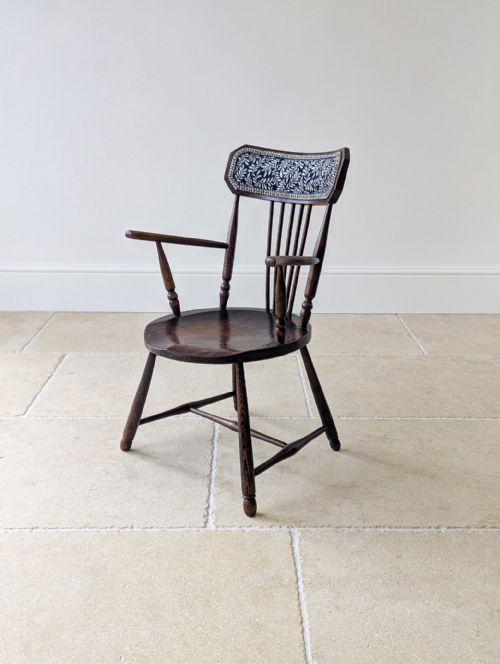
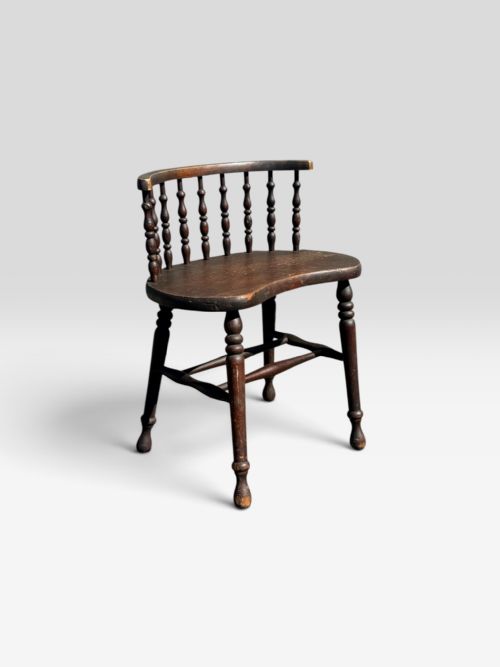
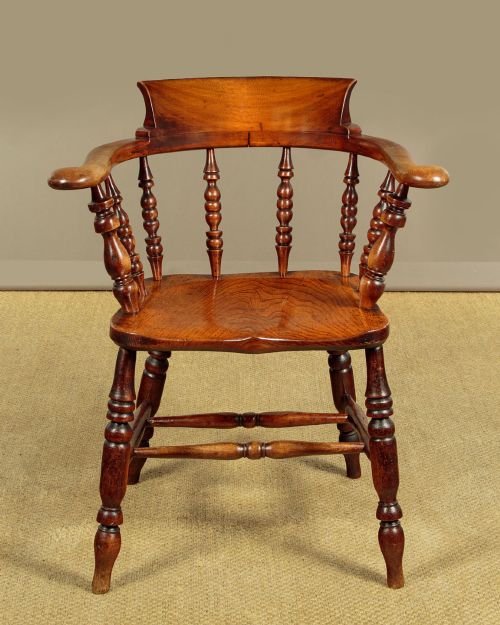
The prevailing form on this page is the Windsor variant, often called a captain's chair, smoker's bow, or wheel-back chair. These pieces draw on regional English vernacular styles, spanning low backs, high backs, and bar backs.
Originating predominantly from English rural and Thames Valley workshops during the Victorian era and the broader nineteenth century, these chairs pair domestic practicality with robust construction.
How They Were Made
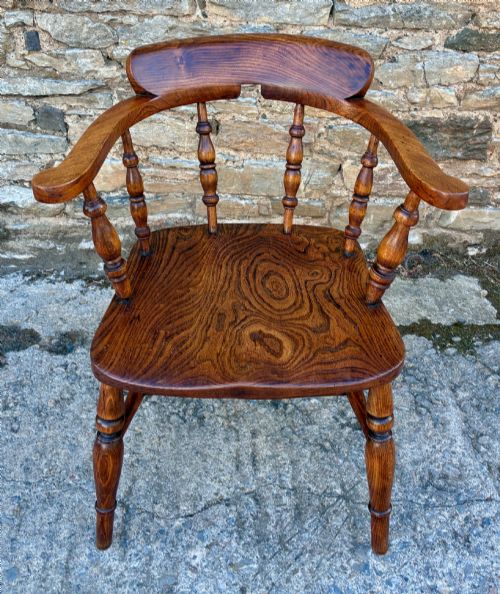
Maker-joiners built these seats using solid English hardwoods, combining a characterful elm saddle seat with turned beech, ash, or yew for the spindles, legs, and steam-bent armbows. Elm provided a tough, interlocking grain that resisted splitting under heavy use.
Construction relied on traditional Windsor framing techniques, where legs and spindles were wedged directly into bored holes in the thick plank seat. Steam-bending shaped the continuous bow arms and back rails from a single piece of timber.
Many nineteenth-century desk chairs bear the subtle indentations of past writers who sat a little too hard on the elm.
What Varies in Quality
Quality rests in the sculptural depth of the saddle seat and the harmony of the timber selections. Superior examples display highly figured elm grain paired with crisply turned spindles and well-proportioned steam-bent bows.
Richer pieces often incorporate regional markers such as crinoline stretchers, specialised back splats like the lyre or wheel design, or original surface patination that records decades of handling.
Glenisters of High Wycombe·J Spencer
The Victorian Elm Desk Chair Glossary
- Smoker's bow
- A low-backed Windsor armchair with a continuous curved armrail, commonly used in domestic smoking rooms or offices.
- Windsor chair
- A chair built with a solid wooden seat into which the legs and back spindles are tenoned directly.
- Crinoline stretcher
- An arched under-stretcher linking the legs of a Windsor chair to provide structural rigidity.
- Thames Valley
- A recognised regional English style of Windsor chair making known for refined turnings and rich timber selection.
Victorian Elm Desk Chair: Frequently Asked Questions
What is a smoker's bow chair?
A smoker's bow is a sturdy low-backed wooden armchair featuring a continuous curved arm rail attached to a solid plank seat. These chairs were widely utilised in offices, studies, and domestic settings throughout the nineteenth century.
The design provides comfortable elbow support while maintaining a compact footprint, making it well-suited for use at a writing desk or reading table.
How do I identify a Victorian desk chair?
Victorian desk chairs are typically constructed from solid English hardwoods like elm, ash, and beech, featuring turned spindles and saddle-shaped wooden seats. Look for construction methods that rely on wedged joints and steam-bent wooden bows.
The proportions and turning details often reflect regional English traditions, such as the Thames Valley or Nottinghamshire styles common during the nineteenth century.
Are these chairs comfortable for daily use?
The saddle-shaped elm seats are ergonomically carved to distribute weight naturally, offering surprising comfort during long periods of sitting at a desk. The low, curved armrests support the arms without restricting movement.
Adding a simple loose cushion can further enhance comfort while preserving the original wooden surface of the seat.
How do I care for antique elm furniture?
Protect antique elm by keeping chairs away from direct heat sources and sudden temperature fluctuations that can dry out the timber. Apply a traditional beeswax polish occasionally to nourish the wood and maintain its natural lustre.
Avoid using harsh modern chemical cleaners, which can strip the historic surface finish and accumulated patination.