
Wooden Smokers Armchair
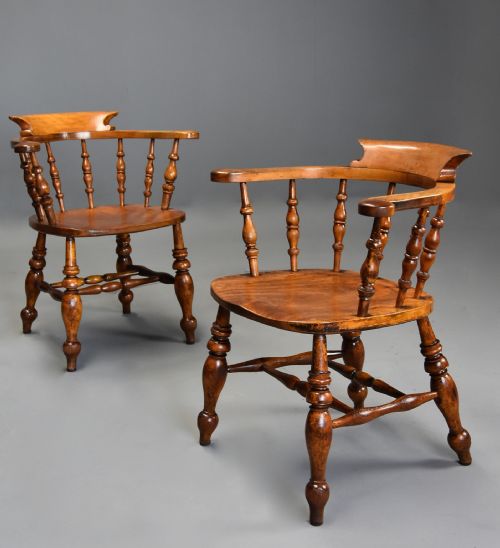
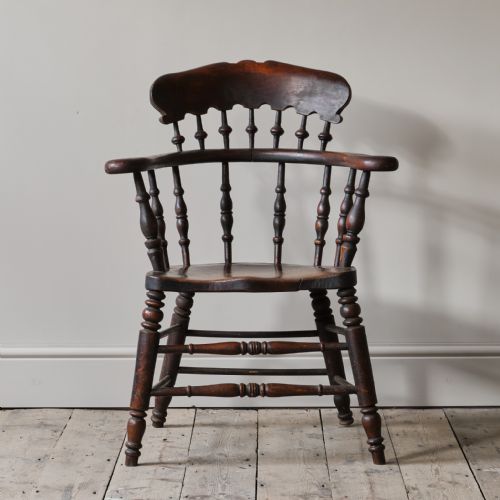
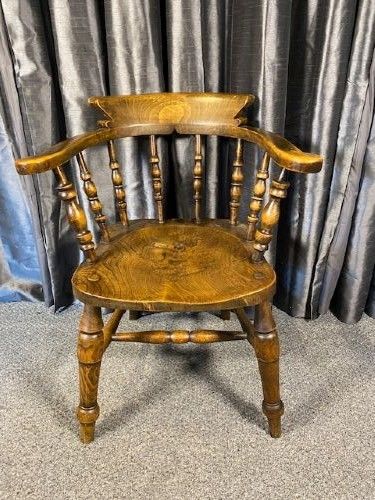
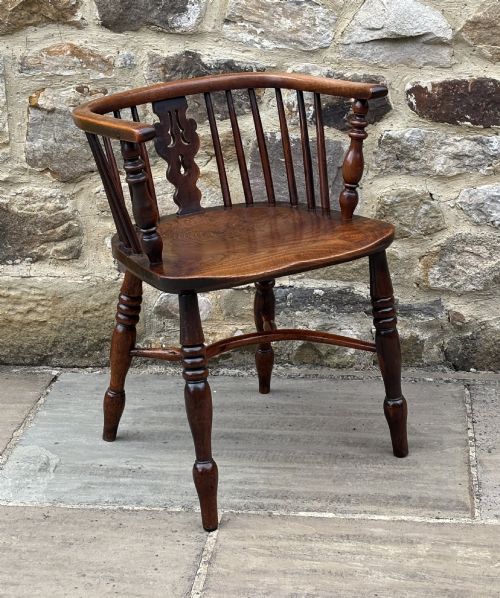
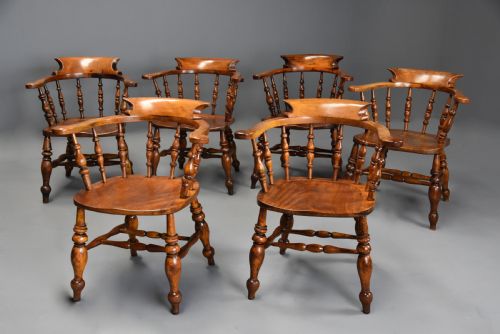
These wooden smokers armchairs combine robust provincial craftsmanship with deep saddle seats, offering sturdy comfort for daily seating.
Wooden Smokers Armchair
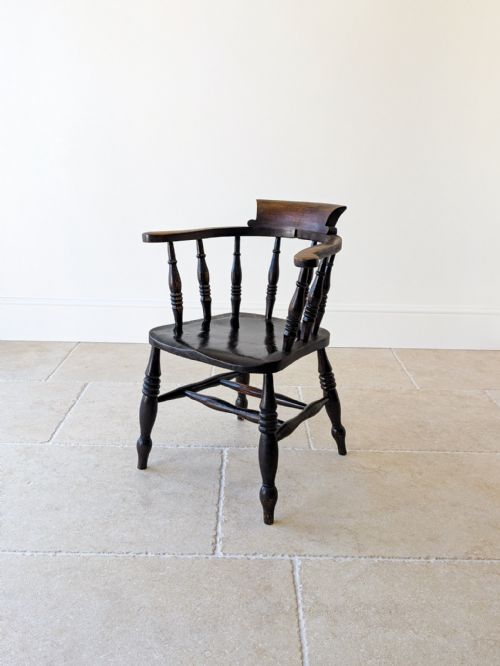
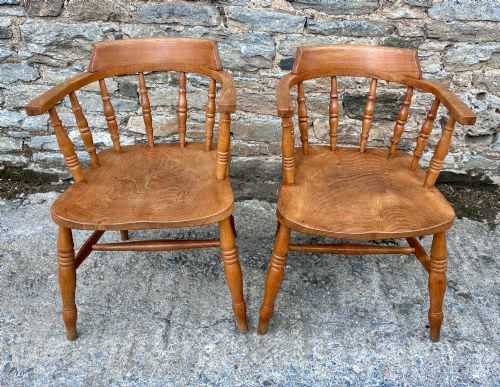
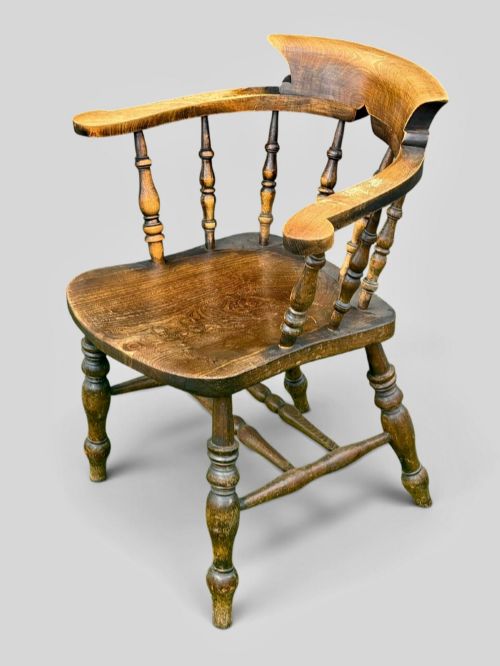
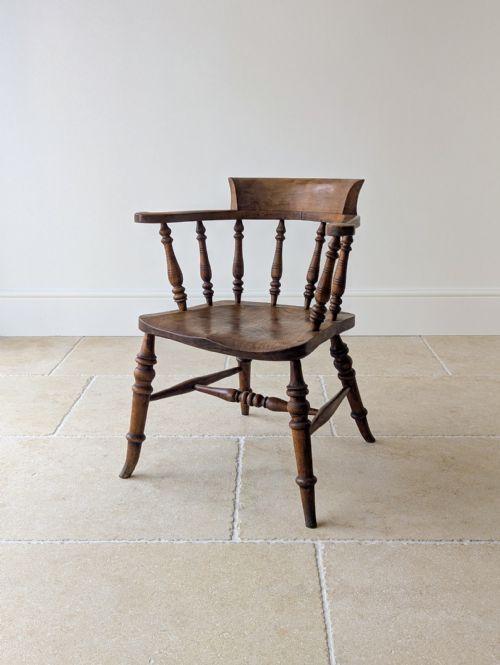
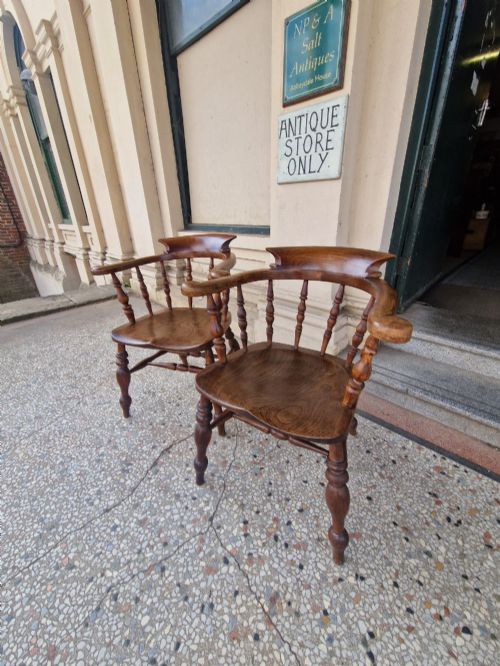
A wooden smokers armchair, often called a smoker's bow or captain's chair, provides a low-backed, sturdy seat designed for relaxed sitting in country houses and provincial parlours. You will frequently encounter Victorian and Edwardian examples shaped from resilient native timbers.
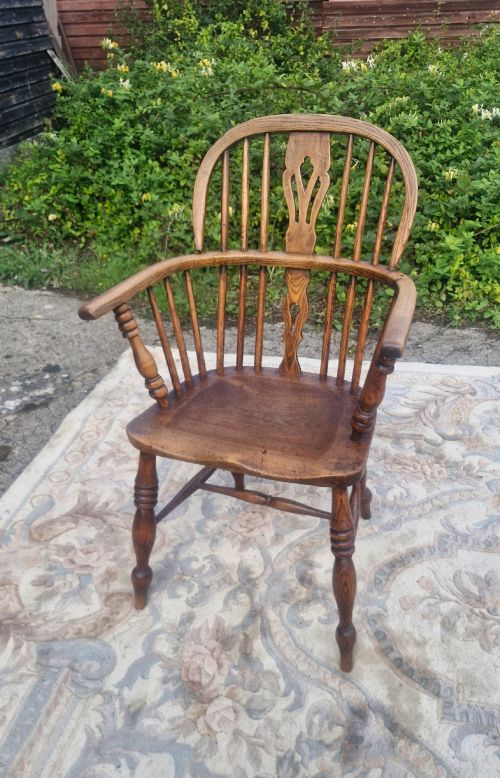
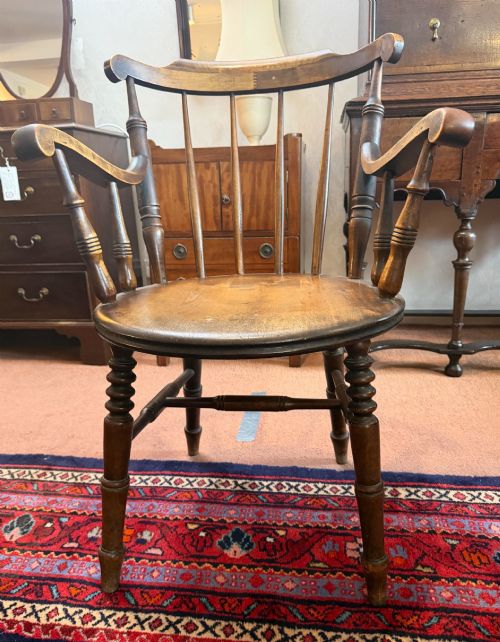
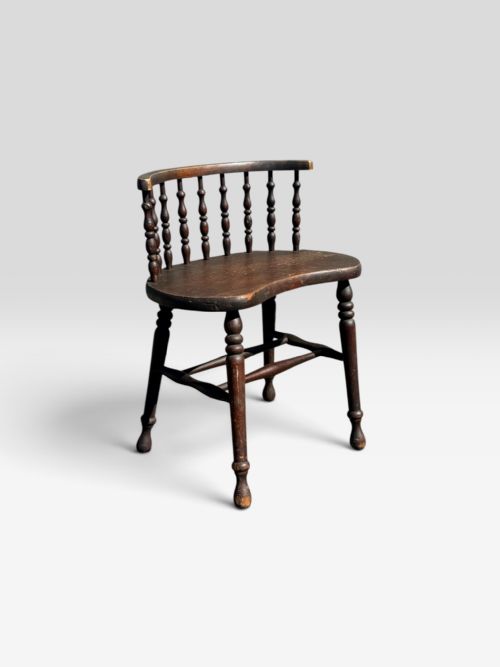
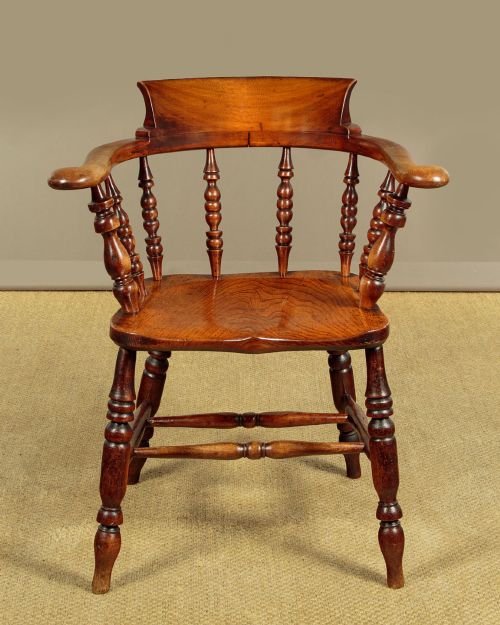
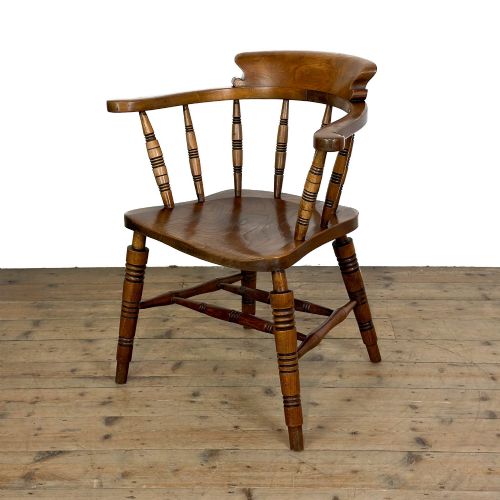
The form bridges the gap between traditional Windsor seating and heavy office armchairs, featuring a continuous bowed back rail supported by turned spindles. These chairs serve well at a desk or around a farmhouse dining table.
Originating across English provincial workshops, the design relies on a thick plank seat that accommodates the body comfortably. Most pieces on this page stem from the nineteenth and early twentieth centuries.
How they were made
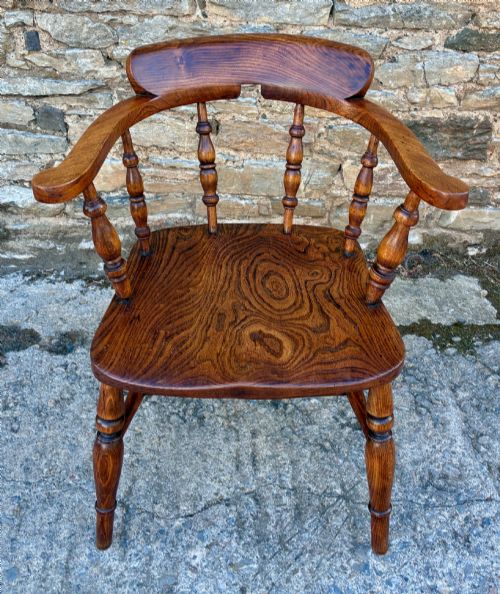
Joiners built these chairs using a combination of turned components and solid timber planks, employing elm for the scooped seats due to its resistance to splitting. Ash, beech, and oak formed the turned spindles, legs, and steam-bent back bows.
The construction typically relies on wedged through-tenons where the legs and spindles pierce the seat plank, creating a rigid frame without metal fasteners. Artisans finished the wood with polished wax or oil to highlight the natural grain and growth rings.
Listings feature timbers including elm, ash, beech, oak, yew, birch, and mahogany across nineteenth and early twentieth-century periods.
What varies in quality
The depth of the saddle shaping in the solid timber seat dictates much of the physical comfort and visual character. Deeper, more carefully carved contours demonstrate greater skill from the provincial maker.
Timber selection and matching also separate standard utility seating from finer examples. Using contrasting woods like elm for the seat and yew or ash for the bent bow elevates the overall presence of the armchair.
The Wooden Smokers Armchair Glossary
- Smoker's bow
- A low-backed wooden armchair with a continuous bentwood rail forming the arms and back. This form relates closely to the traditional Windsor chair family.
- Captain's chair
- A sturdy desk or elbow chair featuring a rounded upper backrest supported by turned spindles. The term often describes compact nineteenth-century office and library seating.
- Windsor chair
- A chair built with a solid wooden seat into which the legs and back spindles are bored directly. These pieces frequently combine multiple timber species like elm, beech, and ash.
- Spindle
- A slender, turned wooden rod used to support the back rail of an armchair. Makers shaped these on a lathe to provide structural rigidity alongside decorative rhythm.
Wooden Smokers Armchair: Frequently Asked Questions
What is a smoker's bow?
A smoker's bow is a sturdy vernacular armchair characterised by a low, curved back rail and a thick wooden seat. It evolved from regional Windsor chair designs to provide comfortable seating in domestic and public rooms.
These armchairs gained popularity during the nineteenth century across English country houses and farmhouses. Their low profile allowed sitters to rest comfortably while engaged in conversation or reading.
How do I use a captain's chair today?
These armchairs function naturally as desk chairs in a study or as occasional seating in a living room. Their solid construction makes them suitable for daily use.
Pairing one with a wooden writing table highlights the traditional proportions and rich wood tones. The compact arm height allows the chair to slide easily beneath most standard desk surfaces.
Which woods are most common?
Elm appears frequently in the scooped seats because the interlocking grain resists splitting under pressure. Ash, beech, and oak commonly form the turned legs, spindles, and curved arm rails.
Occasional examples utilise yew or birch, offering distinctive grain patterns and warmer natural colouration. Makers selected these native timbers for their local availability and structural resilience.
How can I tell the period?
Dating relies on observing construction marks, timber wear, and turning profiles across the legs and spindles. Mid-nineteenth-century examples often display deeper patination and heavier proportions than later Edwardian pieces.
Examining the underside of the seat reveals tool marks and joining methods characteristic of specific decades. Variations in the curvature of the back bow also reflect changing vernacular fashions through the Victorian era.