




Solid Elm Office Chair
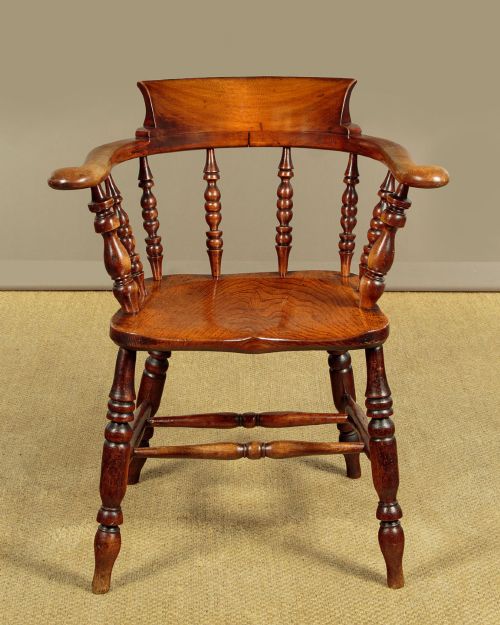
A solid elm office chair is a sturdy vernacular desk seat built to last generations, and you want one for its deep timber grain and ergonomic curved back.
Solid Elm Office Chair
A solid elm office chair brings together vernacular seating traditions and practical workspace utility. When you search for this phrase, you find robust armchairs, desk chairs, and captain's chairs designed for heavy daily use.
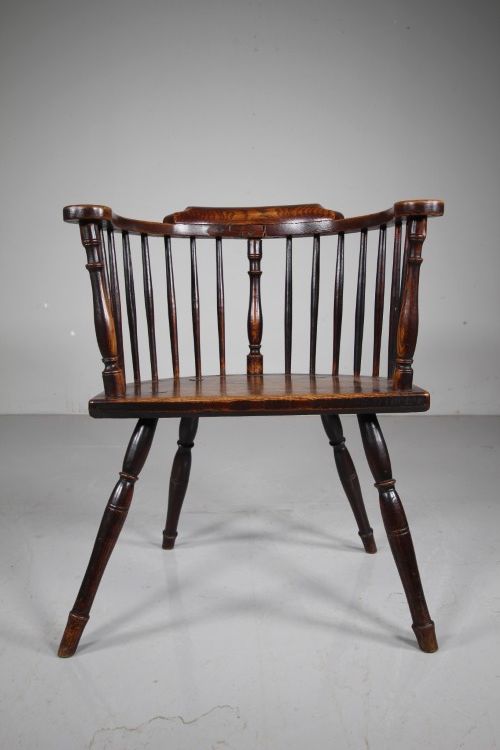
The versions you are most likely to meet on this page span the eighteenth, nineteenth, and early twentieth centuries. These encompass Georgian Country, Victorian, and Victorian Country styles, often featuring low or high bow backs.
Many examples double as smoker's bows or captain's chairs, adapted over time from domestic seating to office environments. Their origins are rooted in English regional cabinet-making, where durability trumped delicate ornamentation.
Construction and materials
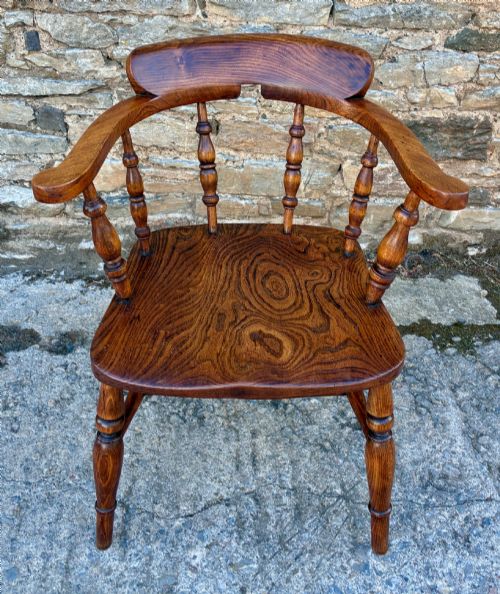
The primary material is solid elm, prized for its twisting grain and resistance to splitting, which makers shaped into deep saddle seats. This was frequently paired with beech, ash, or alder for turned legs, spindles, and steam-bent backbows.
Makers utilised traditional Windsor construction techniques, wedging legs directly through the thick plank seats and locking the bow assemblies with sturdy joints. This created a rigid, unified framework capable of withstanding constant shifting and leaning.
Solid Elm Office Chair Retail Price Guide 2026
Typical asking prices for solid elm office chair among the pieces listed under this phrase on Sellingantiques today, from the lower quarter to the upper quarter. They describe what is for sale here now, not the wider market.
Many a Victorian clerk likely polished the elm seat of these chairs to a high gloss simply through daily industrious squirming.
Assessing quality
Quality rests upon the sculptural depth of the seat plank and the grace of the steam-bent backrail. A superior piece displays a thick, heavily dished elm seat with pronounced figuring and rich patination accumulated over decades of use.
Proportion and timber selection dictate the hierarchy. Stronger examples integrate contrasting woods like beech or alder with deliberate care, maintaining tight joints and balanced Windsor framing without excessive modern reinforcement.
Glenisters of High Wycombe
The Solid Elm Office Chair Glossary
- Smoker's bow
- A low-backed Windsor armchair with a continuous curved armrail, commonly found in nineteenth-century offices and public houses. It provides compact lower back support.
- Captain's chair
- A sturdy timber armchair featuring a rounded spindle back that sits above a solid plank seat. Originally designed for ships, it became a staple desk chair.
- Windsor construction
- A method where all legs and back spindles are tenoned directly into a solid wooden seat rather than a frame. This technique ensures exceptional structural stability.
- Dished seat
- A wooden seat scooped out by hand or adzed into a concave shape for comfort. It matches the contours of the sitter.
- Steam bending
- A process where timber is treated with moisture and heat to make it pliable for curving into bows. This forms the continuous backrail characteristic of these chairs.
Solid Elm Office Chair: Frequently Asked Questions
What is a smoker's bow chair?
A smoker's bow is a sturdy vernacular armchair characterised by a low, continuous wooden backrail and turned spindles. These seats were widely used in nineteenth-century offices and domestic parlours alike.
Their compact frames and robust construction made them practical for daily seating. They share close ties with Windsor designs through their solid plank seats.
How do I date a wooden office chair?
Dating relies on observing tool marks, timber combinations, and the specific curvature of the backbow. Eighteenth-century pieces often display broader proportions and deeper hand-worked patination.
Victorian and later nineteenth-century examples frequently combine elm seats with beech or alder components. Examining the construction underneath reveals the age of the joinery.
Are these chairs comfortable for daily work?
These chairs offer strong lower back support and generous armrests suited for desk work. The carved wooden seats encourage upright posture during long periods of sitting.
While they lack modern padding, adding a simple loose cushion provides extra softness. Their ergonomic curved backs were originally shaped for hours of administrative tasks.
Why use elm for office chairs?
Elm timber possesses an interlocking grain that resists splitting under heavy pressure. This made it the ideal choice for thick saddle seats that needed to endure constant movement.
Cabinet-makers valued its tough resilience alongside its striking visual grain patterns. Combined with ash or beech frames, elm created furniture built to withstand decades of heavy use.